
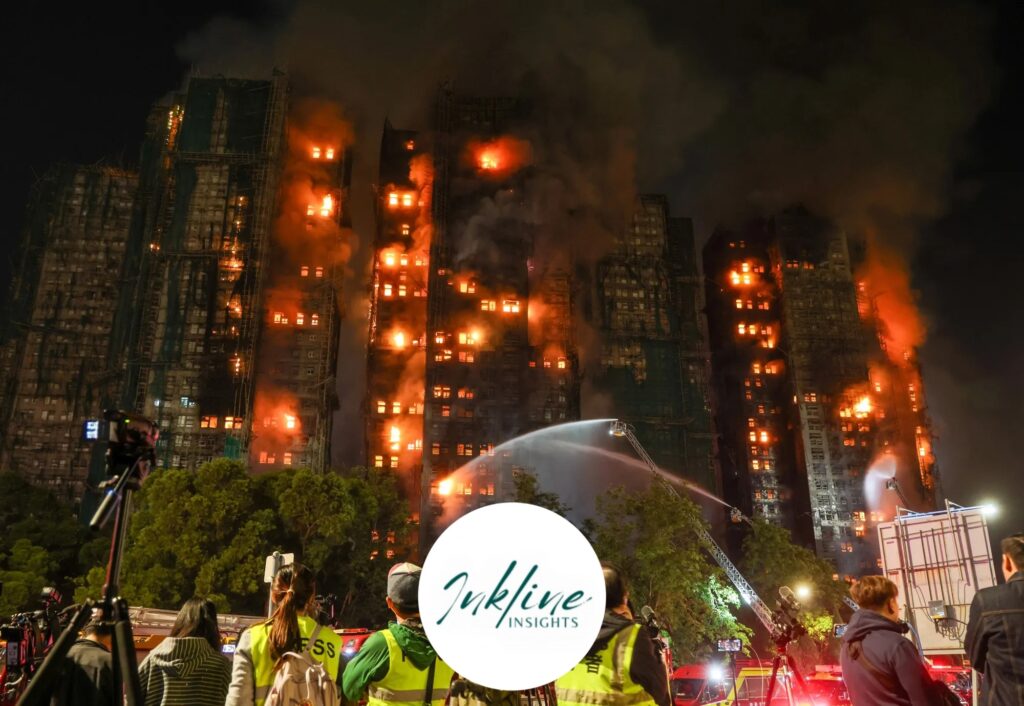
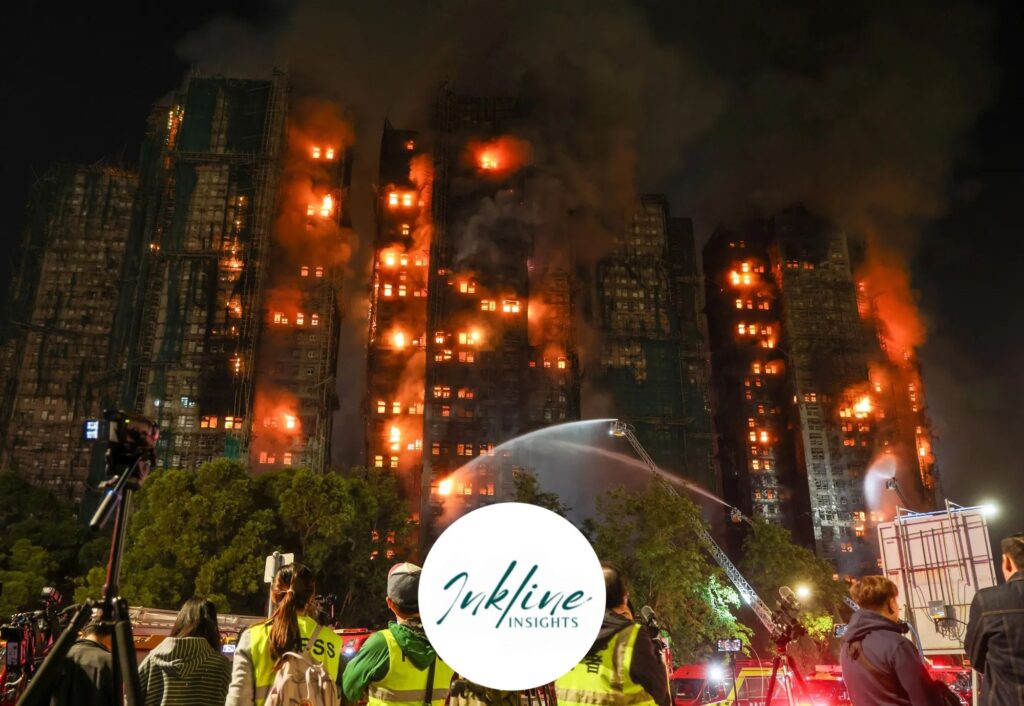
A massive fire at Hong Kong’s Wang Fuk Court housing complex in Tai Po has killed at least 146 people and displaced thousands, marking the city’s deadliest blaze since 1948. The fire spread rapidly across seven high-rise towers due to bamboo scaffolding, mesh netting, and Styrofoam renovation materials that ignited and fueled the flames. Fire alarms reportedly failed, many elderly residents struggled to escape, and several renovation contractors have been arrested for manslaughter and corruption. Rescue operations lasted more than 44 hours as firefighters battled extreme heat reaching 500°C.
The devastating fire at the Wang Fuk Court complex is more than an isolated tragedy — it is a painful indicator of deeper structural, regulatory, and societal failures that have been building for years. At the heart of this disaster lies a combination of aging public housing, lax safety enforcement, and renovation practices that prioritized speed and cost over human life.
For decades, bamboo scaffolding has been a hallmark of Hong Kong construction culture, but in an era of high-rise living, its risks have become increasingly evident. The fire demonstrated how quickly bamboo, plastic mesh, and Styrofoam insulation can transform a building into an uncontrollable inferno. These materials acted as fuel, helping the flames leap from one tower to another in minutes. Their continued use — despite years of warnings — reflects a troubling resistance to modernization in building standards.
Equally alarming is the failure of essential safety systems. Many residents reportedly never heard alarms, suggesting serious negligence in maintenance and inspection. In a residential complex where nearly forty percent of occupants are elderly, functioning alarms and evacuation systems are not just required — they are lifelines. The tragic loss of life shows what happens when those lifelines fail.
The arrests of renovation supervisors and individuals linked to corruption raise even deeper concerns. If shortcuts were taken or regulations ignored for profit, then this disaster is not just a natural tragedy — it is a human-made failure, created by carelessness and sustained by weak oversight. Public trust hinges on the government’s willingness to enforce accountability and introduce meaningful reforms.
Beyond the immediate response, Hong Kong must confront a long-standing issue: its reliance on outdated infrastructure and renovation materials in densely populated estates. This tragedy should serve as a catalyst for a complete overhaul of fire-safety requirements, renovation protocols, and building inspections. It is also a reminder that when a city grows vertically, safety standards must rise with it.
Ultimately, the Wang Fuk Court fire is a heartbreaking example of how preventable factors — ignored warnings, inadequate systems, and questionable construction practices — can converge into catastrophe. If Hong Kong is to prevent another disaster of this scale, the lessons from this fire must translate into urgent, long-term change rather than temporary outrage.