


Pakistan is steadily moving toward a digitally connected future, and this transformation has become increasingly visible over the last few years. While mobile applications are not a new concept globally, their growing adoption in Pakistan—particularly through government-led digital initiatives—marks a significant change in how citizens access public services. These developments indicate a shift toward efficiency, transparency, and convenience in everyday life.
One of the most notable aspects of this transformation is the expansion of official government mobile applications. Platforms such as the NADRA Pak Identity app, police service apps, online payment portals, and youth-focused digital initiatives have simplified processes that previously required physical visits and long waiting times. These efforts reflect Pakistan’s gradual move toward e-governance and smart public service delivery.
NADRA Digital Services and Identity Management
The NADRA mobile application represents a major breakthrough in Pakistan’s digital journey. Citizens can now apply for, modify, or renew their Computerized National Identity Cards (CNIC) through the app by uploading personal information, photographs, and documents online. This digital process reduces congestion at NADRA offices, saves time, and improves administrative efficiency. It also demonstrates how technology can make essential services more accessible to the public.
Online Payments and Digital Convenience
Digitalization in Pakistan has also improved financial and administrative convenience. Utility bills, government dues, and educational fees can now be submitted online through mobile apps and digital platforms. These services reduce paperwork, enhance transaction transparency, and make record-keeping easier for both institutions and individuals. For students and parents, online fee submission has simplified educational administration and reduced dependency on in-person visits.

Youth-Centered Digital Initiatives
Pakistan’s digital strategy increasingly focuses on youth empowerment. Government-backed platforms and applications launched in recent years aim to support skill development, employment opportunities, entrepreneurship, and digital learning. Given that a significant portion of Pakistan’s population is under the age of 30, these initiatives are particularly important. Digital access allows young people to explore opportunities, gain skills, and contribute to economic growth.
Smart Transport and Environmental Awareness
Beyond mobile apps, digital transformation is also visible in Pakistan’s infrastructure development. The introduction of electric buses (e-buses) in major cities reflects a move toward smart and environmentally responsible transport solutions. These buses help reduce fuel consumption, lower emissions, and promote cleaner urban mobility. Such initiatives show increasing awareness of sustainability and the role technology can play in addressing environmental challenges.
Public Awareness and Leadership Support
Digital progress is supported not only by policy decisions but also by growing public awareness. Citizens are becoming more familiar with digital tools and increasingly comfortable using online platforms for daily needs. Leadership at both federal and provincial levels has encouraged digital governance, infrastructure development, and modernization, helping create an environment where technology-driven solutions can grow.
Pakistan’s Digital Development Compared with a Developed Nation
To better understand Pakistan’s position, it is useful to compare its digital progress with that of a developed country known for advanced e-governance. Estonia is widely recognized as a global leader in digital public services and provides a useful benchmark.
Internet Penetration Comparison: Pakistan vs Estonia

The bar graph above compares internet penetration rates between Pakistan and Estonia. Estonia, a developed digital nation, has internet access available to more than 90% of its population, reflecting long-term investment in digital infrastructure and nationwide connectivity. Pakistan, with approximately 45–50% internet penetration, is still in a developing phase but shows steady improvement each year due to expanding mobile broadband and affordable internet services.
This visual comparison highlights the existing digital gap while also emphasizing Pakistan’s growth potential. With over 190 million mobile subscribers and a young, tech-aware population, Pakistan has a strong foundation to increase internet accessibility and expand digital government services in the coming years.
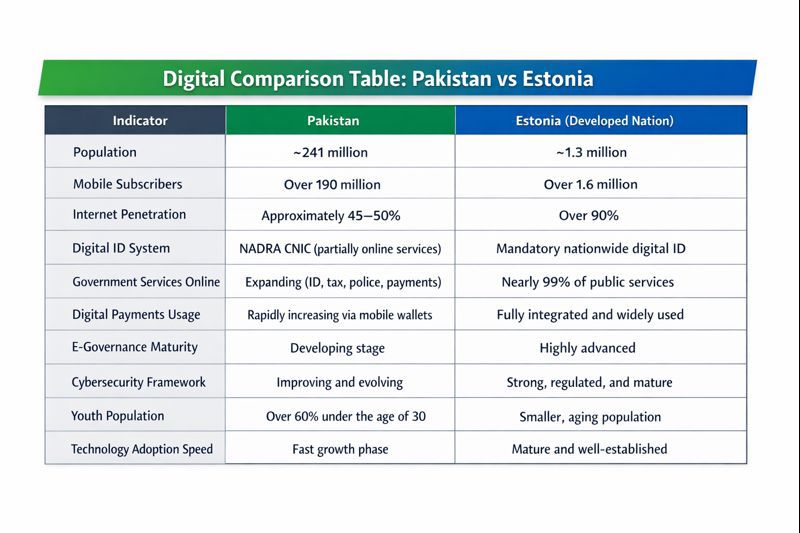
Digital Comparison Table: Pakistan vs Estonia
Comparative Analysis
Developed countries like Estonia benefit from decades of investment in digital infrastructure, cybersecurity, and nationwide digital literacy. Estonia introduced its digital identity system many years ago, allowing citizens to access healthcare, taxation, voting, and business services entirely online.
Pakistan, while still in the development phase, has shown rapid adoption of mobile-based services. According to international development data, Pakistan’s digital payments and mobile wallet usage have increased significantly in recent years. With more than 190 million mobile subscribers, the country has a strong foundation for digital expansion.
Although Pakistan currently lags behind developed nations in terms of service integration and infrastructure depth, its youth-driven adoption rate presents long-term potential. Continued investment in broadband access, digital education, cybersecurity, and regulatory reform can help Pakistan gradually narrow the digital divide.
Conclusion: A Gradual but Promising Digital Future
Pakistan may not yet match the digital maturity of developed countries, but its progress is steady and meaningful. Government apps, online services, smart transport initiatives, and youth-focused digital programs are transforming how citizens interact with public institutions. With sustained policy support and growing public participation, Pakistan has the potential to strengthen its digital economy and move closer to global standards in the years ahead.