
Introduction
Beauty standards around the world are deeply influenced by culture, history, media, and social values. While globalization has connected societies more than ever, perceptions of beauty remain diverse and complex. What one culture considers attractive may differ greatly from another, and even within the same country, beauty ideals for men and women can vary significantly.
In recent years, conversations around beauty have expanded beyond physical appearance to include confidence, individuality, and self-expression. However, traditional beauty standards still play a major role in shaping personal identity, self-esteem, and social expectations.
What Are Beauty Standards?
Beauty standards are socially constructed ideas that define what is considered attractive or desirable within a society. These standards often focus on:
- Facial features
- Body shape and size
- Skin tone
- Hair type and grooming
- Age and gender presentation
They are not fixed or universal. Instead, they evolve over time and are influenced by media, economic conditions, cultural traditions, and historical narratives.
Beauty Standards for Women Around the World
Body Shape and Size
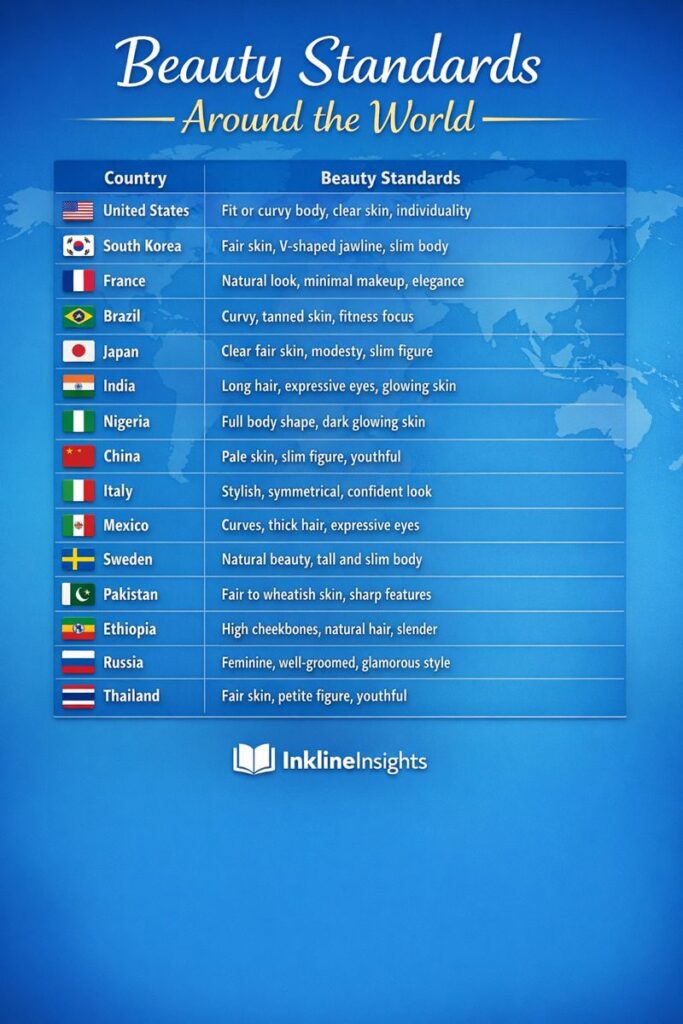
In many Western countries, slim yet toned bodies have long been idealized, although recent years have seen growing acceptance of diverse body types. In contrast, several African, Middle Eastern, and Latin cultures have traditionally valued curvier bodies, associating them with health and femininity.
Skin Tone
Skin tone remains one of the most sensitive aspects of beauty standards globally. In some Asian and South Asian societies, fair skin has historically been associated with higher social status, while in Western cultures, tanned skin has often symbolized leisure and vitality. Modern movements are actively challenging colorism and promoting inclusivity.
Facial Features
Soft facial features, symmetry, and clear skin are commonly admired traits worldwide. However, preferences differ—some cultures value sharp jawlines and high cheekbones, while others favor rounder, youthful faces.
Hair and Style
Hair length, texture, and grooming play a major role in women’s beauty ideals. Long, healthy hair is often associated with femininity, though natural textures and short styles are increasingly celebrated as expressions of identity and empowerment.
Beauty Standards for Men Around the World
Body Image and Masculinity
Male beauty standards often emphasize strength, height, and physical fitness. In many regions, a muscular or athletic build is seen as attractive, reflecting ideals of masculinity, protection, and discipline.
Facial Appearance
For men, strong jawlines, facial symmetry, and well-maintained facial hair are frequently admired. Grooming standards have evolved significantly, with skincare and personal care becoming socially acceptable and even expected.
Style and Grooming
Fashion sense, posture, and grooming now play a major role in male attractiveness. Clean, confident appearance is often valued more than extreme physical traits.
The Role of Media in Shaping Beauty Standards
Traditional media—films, television, and advertising—has historically promoted narrow definitions of beauty. These portrayals often excluded diverse body types, ages, and ethnic features.
Social media has transformed this dynamic. While filters and editing tools can still reinforce unrealistic expectations, digital platforms have also given rise to body positivity, representation, and authentic storytelling. Influencers and creators from diverse backgrounds now challenge traditional beauty norms on a global scale.
Beauty Standards in Pakistan: A Detailed Look
Beauty standards in Pakistan are shaped by a blend of cultural traditions, regional diversity, religious values, and modern media influence. While ideals vary across provinces and communities, certain common perceptions exist.
Beauty Standards for Women in Pakistan
Skin Tone
Fair to wheatish skin has traditionally been idealized in Pakistan, influenced by historical class distinctions and media representation. However, there is growing awareness and appreciation for all skin tones, particularly among younger generations.
Facial Features
Prominent eyes, well-defined eyebrows, and clear skin are commonly admired. Makeup trends often emphasize natural elegance rather than heavy styling, especially in everyday life.
Hair
Long, thick, and well-maintained hair is widely considered a symbol of femininity and beauty. Natural oils, traditional remedies, and hair care rituals remain popular.
Body Image
A balanced figure—neither extremely slim nor overly curvy—is often considered attractive. Modesty in dress also plays a significant role in how beauty is perceived, aligning appearance with cultural values.
Beauty Standards for Men in Pakistan
Height and Build
Men are often expected to be moderately tall with a lean or athletic build. Physical strength is admired, but extreme muscularity is not universally emphasized.
Facial Hair and Grooming
Beards are culturally accepted and often admired, symbolizing maturity and confidence. Clean grooming, neat hairstyles, and presentable clothing are key aspects of male attractiveness.
Skin and Appearance
Clear skin and a healthy appearance are valued, though men typically face less pressure regarding complexion compared to women. Grooming is increasingly seen as a sign of self-respect rather than vanity.
Gender Differences in Beauty Expectations
Across the world, women tend to face more intense scrutiny regarding appearance than men. Female beauty standards often involve multiple layers—skin tone, body shape, hair, clothing, and behavior—while male standards are generally narrower.
However, this gap is slowly narrowing. Men now face growing expectations around fitness, fashion, and skincare, especially in urban societies.
Psychological and Social Impact of Beauty Standards
Unrealistic beauty ideals can have serious consequences, including:
- Low self-esteem
- Anxiety and body image issues
- Social comparison and pressure
- Disordered eating or excessive grooming
In Pakistan and globally, increased awareness around mental health is encouraging healthier conversations about self-worth beyond physical appearance.
Changing Beauty Standards in the Modern World
Beauty standards are evolving rapidly due to:
- Greater representation in media
- Body positivity movements
- Acceptance of aging and natural features
- Emphasis on confidence and personality
In Pakistan, social media creators, fashion designers, and public figures are increasingly celebrating diversity, redefining beauty through authenticity rather than conformity.
Beauty Beyond Appearance
Modern perspectives increasingly recognize that beauty includes:
- Confidence and self-expression
- Kindness and emotional intelligence
- Cultural identity and authenticity
- Personal values and character
This broader understanding helps create inclusive societies where individuals feel valued for who they are, not just how they look.
Conclusion
Beauty standards around the world reflect cultural values, history, and social change. While traditional ideals still influence perceptions, the global conversation is shifting toward inclusivity, diversity, and self-acceptance.
In Pakistan, beauty standards for men and women continue to evolve, balancing tradition with modern influence. As societies grow more aware, beauty is increasingly seen not as a rigid ideal but as a personal and cultural expression.
True beauty lies in embracing individuality, respecting diversity, and valuing human worth beyond appearance.