
Introduction
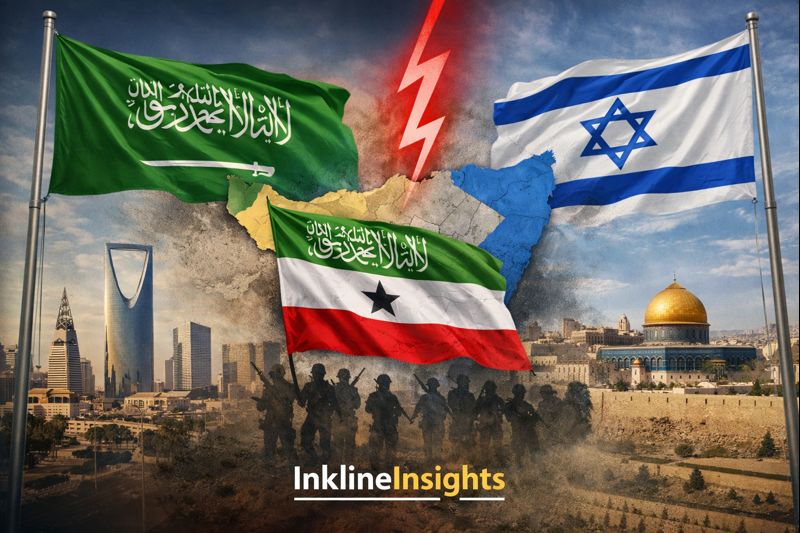
On December 26, 2025, the State of Israel made headlines by becoming the first United Nations member state to formally recognise Somaliland as an independent and sovereign nation, marking a significant shift in global diplomacy. Somaliland has operated independently of Somalia since 1991 but had never received formal international recognition.
While the announcement represented a major diplomatic achievement for Somaliland’s leadership, it immediately triggered strong international criticism, particularly from influential regional and global actors such as Saudi Arabia. Riyadh quickly rejected the move, stating that it violates established principles of international law and undermines Somalia’s territorial integrity.
This article explores the reasons behind Saudi Arabia’s rejection, its broader significance, and the potential consequences for regional stability and international norms.
What Happened: Israel Recognises Somaliland
Somaliland is located in the Horn of Africa, bordering Djibouti, Ethiopia, and the Gulf of Aden. It declared independence from Somalia in 1991 after the collapse of the Somali central government. For more than three decades, Somaliland has maintained its own government, constitution, currency, and security forces, functioning as a de facto independent state. Despite being more stable than much of Somalia, its pursuit of international recognition had repeatedly stalled, with no country formally acknowledging its sovereignty until Israel’s announcement.
On December 26, 2025, Israel declared the establishment of full diplomatic relations with Somaliland, describing the move as a milestone for cooperation and a partnership focused on economic, technological, and strategic interests. Israeli Prime Minister Benjamin Netanyahu welcomed the new diplomatic ties and outlined prospects for future collaboration.
Saudi Arabia’s Stance: Rejecting the Recognition
Within hours of Israel’s announcement, Saudi Arabia publicly rejected the decision. The Saudi Ministry of Foreign Affairs released a statement affirming full support for Somalia’s sovereignty, territorial integrity, and unity. The kingdom described the recognition as a violation of international law and an attempt to create parallel entities that weaken a sovereign state.
Saudi Arabia’s objections were based on several core concerns:
- Respect for State Sovereignty: Saudi officials stressed that recognising a region within a sovereign country without its consent contradicts the United Nations Charter and fundamental principles of diplomatic law.
- Regional Stability: Riyadh warned that unilateral actions of this nature could destabilise the already fragile Horn of Africa by encouraging separatist movements in other regions.
- Support for Somalia: The kingdom reaffirmed its backing of Somalia’s legitimate government institutions and pledged continued assistance to preserve national stability.
This response aligns with Saudi Arabia’s longstanding diplomatic principles that prioritise territorial integrity and oppose external interference in the internal affairs of sovereign states.
Broader Arab and African Backlash
Saudi Arabia was not alone in rejecting the recognition. Several Arab states, including Egypt, Kuwait, Iraq, Jordan, Qatar, and Palestine, condemned the move as unlawful and dangerous for regional peace. Many viewed it as a troubling precedent that could encourage further unilateral recognition of separatist territories.
Regional organisations also issued strong responses:
- The Gulf Cooperation Council described Israel’s decision as a violation of international law that threatens stability in the Horn of Africa.
- The Organisation of Islamic Cooperation condemned the recognition and reaffirmed solidarity with Somalia, calling for respect for internationally recognised borders.
- The African Union and the Intergovernmental Authority on Development also rejected the move, emphasising the need to preserve Somalia’s territorial integrity.
Somalia itself denounced the recognition as an act of state aggression, accusing Israel of interfering in its internal affairs and attempting to divide the country.
Why This Matters: International Law & Geopolitics
Saudi Arabia’s response carries important implications for global diplomacy:
- International Law and Precedent: Most states avoid recognising secessionist regions without broad international consensus. Saudi Arabia’s position reinforces adherence to recognised borders and legal norms enshrined in the UN Charter.
- Horn of Africa Stability: The region remains highly fragile due to ongoing security challenges and political complexities. Any action that risks further fragmentation is widely viewed as a threat to regional stability.
- Regional Power Dynamics: Saudi Arabia’s rejection also reflects wider geopolitical considerations. As a key diplomatic actor across Africa and the Middle East, Riyadh seeks to maintain influence while avoiding encouragement of separatist movements.
- Israeli–Arab Relations: Although some Arab states have normalised relations with Israel, Saudi Arabia’s reaction highlights that major disagreements persist, particularly when actions are perceived as destabilising or dismissive of regional concerns.
Conclusion
Saudi Arabia’s rejection of Israel’s recognition of Somaliland underscores deep divisions over statehood, sovereignty, and regional stability. While Israel’s decision represents a historic milestone for Somaliland, Saudi Arabia and many other nations view it as a breach of international norms and a potentially destabilising development.
As the situation continues to unfold, the dispute highlights a fundamental tension in contemporary geopolitics between national aspirations and established international law. The strong response from Saudi Arabia and other global actors indicates that attempts to alter recognised borders will remain a source of intense debate and diplomatic resistance.