
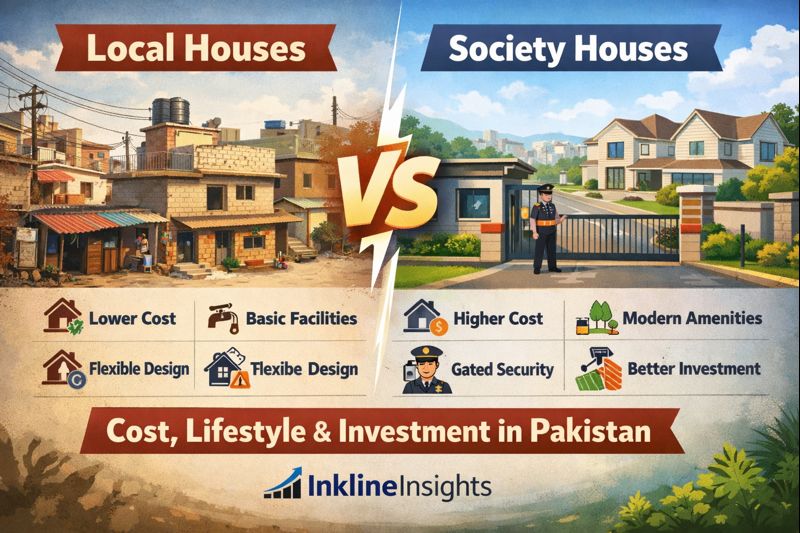
Choosing a home is one of the most important decisions in life, especially in countries like Pakistan where real estate is considered both a secure investment and a symbol of stability. Buyers often face a common question: Should I buy a local house or a society house?
Both options come with their own advantages and challenges related to cost, facilities, lifestyle, legal security, and long-term investment value. This detailed guide explains the difference between local houses and society houses, supported by facts, figures, and real-life examples, to help you make an informed decision.

What Are Local Houses?
Local houses are residential properties built in traditional neighborhoods, towns, or villages. These areas usually develop organically over time rather than through formal planning by a housing authority or private developer.
Local houses are commonly found in older city areas, semi-urban locations, and rural regions. They are typically constructed individually by owners based on personal needs, available land, and budget.
Key Characteristics of Local Houses
- Located in non-gated or open neighborhoods
- Usually managed by municipal committees
- Construction quality varies from house to house
- Limited or basic facilities
- Greater freedom in design and modifications
What Are Society Houses?
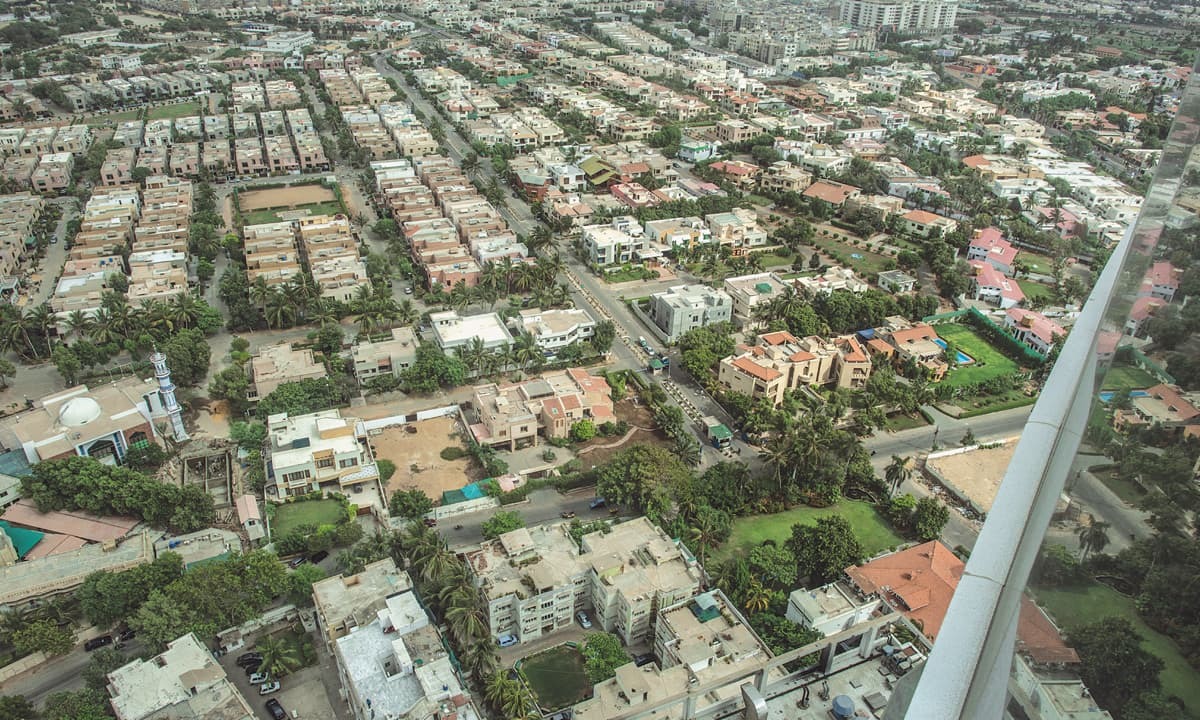
Society houses are residential properties located within planned housing societies developed by government bodies or private developers such as DHA, Bahria Town, or Capital Smart City.
These societies follow approved layouts, zoning regulations, and standardized infrastructure plans. Society houses have become increasingly popular in urban Pakistan due to better security, organized development, and improved lifestyle standards.
Key Characteristics of Society Houses
- Located in gated and planned communities
- Managed by housing authorities or professional management companies
- Uniform construction and development rules
- Modern facilities and amenities
- Higher resale and investment appeal
Major Differences Between Local Houses and Society Houses
1. Planning and Infrastructure
Local houses usually develop without a master plan. Roads may be narrow, drainage systems outdated, and electricity wiring inconsistent. Urban planning studies indicate that over 55% of older localities in Pakistan face sewerage and drainage issues, especially during the monsoon season.
Society houses, on the other hand, are built according to approved master plans. They feature wider roads, underground sewerage systems, and standardized gas and electricity networks. Planned societies reduce infrastructure-related issues by 40–50%, according to real estate development reports.
2. Cost and Affordability
Local houses are generally 30–50% cheaper than society houses in the same city.
For example:
- A 5-marla local house in an older Lahore area may cost PKR 1.2–1.5 crore
- A similar house in a well-developed society may cost PKR 2–2.5 crore
Society houses are more expensive due to:
- Development charges
- Maintenance fees
- Security services
- Higher infrastructure quality
Local houses remain a practical option for middle- and lower-income families and first-time buyers.
3. Legal Status and Documentation
One of the biggest advantages of society houses is clear legal documentation. Approved societies typically provide:
- Ownership files
- Registry and intiqal
- Approved building maps
- Valid NOCs
Local houses may face issues such as:
- Incomplete ownership records
- Disputed land history
- Unauthorized constructions
Experts estimate that nearly 20% of local property disputes occur due to unclear documentation, whereas approved societies significantly reduce legal risks.
4. Security and Safety
Security is a major concern for homeowners. Local areas often rely on community vigilance with limited CCTV coverage and no controlled entry or exit points.
Society houses usually offer:
- 24/7 security guards
- Gated entrances
- CCTV surveillance
- Emergency response systems
Crime data suggests that gated societies report 25–35% fewer street crimes compared to open local neighborhoods in major Pakistani cities.
5. Facilities and Lifestyle
Local houses generally have limited access to facilities. Residents rely on nearby public schools, government hospitals, and local markets, which may lack modern standards.
Society houses provide:
- Parks and green spaces
- Schools and colleges
- Hospitals and clinics
- Commercial areas
- Mosques and community centers
A real estate survey revealed that 70% of society residents rate their lifestyle as better due to easy access to essential facilities within walking distance.
6. Maintenance and Cleanliness
Local houses depend on municipal services, which are often underfunded. Garbage collection, street cleaning, and road maintenance may be irregular.
In housing societies, residents pay monthly maintenance charges ranging from PKR 3,000 to 10,000, depending on services. In return, they receive:
- Regular waste management
- Clean streets
- Maintained parks
- Functional street lighting
7. Customization and Freedom
Local houses offer greater flexibility. Owners can modify layouts, add floors, or redesign structures without strict oversight.
Society houses follow building bylaws. While this limits customization, it ensures:
- Structural safety
- Uniform appearance
- Higher overall neighborhood value
8. Investment and Resale Value
From an investment standpoint, society houses usually offer higher appreciation rates. Well-developed societies in Pakistan have shown 10–15% annual price growth, compared to 5–8% in most local areas.
Local houses can still be profitable in prime old-city locations, especially for rental income, but long-term capital gains are generally stronger in societies.
Which Option Is Better for You?
Your choice depends on personal priorities:
- Choose a local house if you value affordability, customization freedom, and strong community ties
- Choose a society house if you prioritize security, modern facilities, legal clarity, and better investment returns
Families with children and overseas Pakistanis often prefer society houses, while local houses remain popular among residents with limited budgets or long-standing neighborhood connections.
Conclusion
Both local houses and society houses serve different needs. Local houses are budget-friendly and flexible but may lack planning, security, and modern facilities. Society houses offer a structured lifestyle, better security, and strong investment potential, though at a higher cost.
Understanding these differences allows buyers to make informed decisions and avoid future complications. Regardless of your choice, proper research, legal verification, and financial planning are essential for a safe and successful property purchase.