
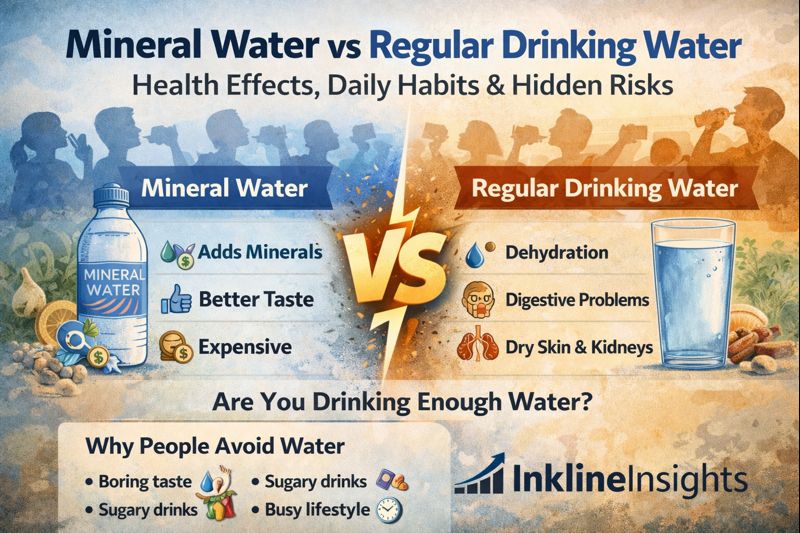
Water is the foundation of life, yet many people admit that drinking plain or “boring” water feels like a daily struggle. In modern lifestyles, especially in urban areas, people often replace regular water with sugary drinks, flavored beverages, tea, coffee, or energy drinks. At the same time, mineral water has gained popularity as a healthier alternative, marketed for its added nutrients and purity.
This article explores the role of mineral water in daily life, why people avoid plain water, and how poor hydration habits can silently lead to health issues. Backed by facts and figures, this detailed guide will help you understand whether mineral water is truly better and how to improve your daily water intake safely.
Why Do People Find Plain Water “Boring”?
Many people struggle to drink enough water not because it is unavailable, but because it lacks taste and excitement. Several factors contribute to this behavior:
Busy lifestyles reduce conscious water intake
High consumption of soft drinks and tea/coffee replaces water
Marketing of flavored drinks makes plain water less appealing
Lack of awareness about dehydration symptoms
According to global health studies, nearly 60–75% of adults do not meet the recommended daily water intake, especially in warmer regions like South Asia and the Middle East. This habit can quietly affect energy levels, digestion, skin health, and even mental focus.
What Is Mineral Water?
Mineral water is water that contains natural minerals such as calcium, magnesium, potassium, and sodium. These minerals are either naturally present at the source or added later under regulated standards.
Common Minerals Found in Mineral Water
Calcium – supports bones and teeth
Magnesium – helps muscle and nerve function
Potassium – supports heart health
Sodium – maintains fluid balance
Unlike tap water, mineral water is usually bottled at the source and undergoes strict quality checks, making it popular among health-conscious consumers.
Mineral Water vs Regular Drinking Water
1. Nutritional Value
Regular drinking water mainly hydrates the body. Mineral water, on the other hand, can contribute 5–20% of daily mineral needs, depending on the brand and source.
2. Taste Factor
Many people prefer mineral water because minerals naturally enhance taste, making it less “boring” and easier to drink regularly.
3. Safety and Purity
In areas where tap water quality is unreliable, mineral water is often considered safer. However, purified tap water can be equally safe if treated properly.
4. Cost and Accessibility
Mineral water is more expensive and not always affordable for daily use, especially for large families.
Health Issues Linked to Low Water Intake
Avoiding water or drinking it inadequately can lead to several short-term and long-term health problems.
1. Dehydration
Even mild dehydration can cause:
Fatigue
Headaches
Dizziness
Dry mouth and skin
Studies show that losing just 1–2% of body water can reduce concentration and physical performance.
2. Digestive Problems
Water is essential for digestion. Low intake often results in:
Constipation
Acid reflux
Slow metabolism
3. Kidney and Urinary Issues
Insufficient hydration increases the risk of:
Kidney stones
Urinary tract infections
Medical data suggests people who drink less than 1.5 liters daily have a significantly higher risk of kidney-related issues.
4. Skin and Aging Effects
Poor hydration leads to dull skin, fine lines, and reduced elasticity, making people look older than their age.
Is Mineral Water Healthier for Daily Use?
Mineral water can be beneficial, but it is not a miracle solution.
Benefits
Improves hydration compliance due to better taste
Adds essential minerals
Helpful for people with mineral deficiencies
Limitations
Excess sodium in some brands may not suit people with high blood pressure
Overdependence increases household expenses
Not necessary if diet already provides sufficient minerals
Health experts agree that hydration matters more than the source, as long as the water is safe and clean.
How Much Water Should You Drink Daily?
The general recommendation varies by climate, age, and activity level.
Adults: 2–3 liters per day
Hot climates: Up to 3.5 liters
Physically active individuals: Additional intake needed
About 20–30% of water intake also comes from foods like fruits and vegetables.
Tips to Make Water Less Boring Without Harming Health
If plain water feels boring, try healthy alternatives instead of sugary drinks:
Add lemon, cucumber, or mint to water
Drink chilled or slightly warm water based on preference
Use a reusable bottle as a reminder
Set daily hydration goals
These small changes can significantly increase water intake without extra cost or health risks.
Mineral Water and Daily Life in Developing Countries
In countries like Pakistan and India, water quality concerns push people toward bottled mineral water. However, experts emphasize that filtered or boiled water can be equally effective for hydration at a lower cost.
Government and health organizations recommend focusing on:
Safe water sources
Affordable purification methods
Public awareness about hydration
Conclusion
Water may seem boring, but its importance is far from ordinary. Whether you choose mineral water or regular drinking water, consistent hydration is essential for overall health. Mineral water can be a helpful option for those who dislike plain water or lack minerals in their diet, but it is not mandatory for everyone.
The real health issue is not choosing between mineral water and regular water—it is not drinking enough water at all. By understanding your body’s needs and making hydration enjoyable in simple ways, you can protect yourself from dehydration-related health problems and improve your daily quality of life.
Staying hydrated is one of the easiest, most affordable steps toward better health—boring or not. 💧