

Ramzan (Ramadan) holds a central place in the religious, social, and cultural life of Pakistan. As a country where the majority of the population follows Islam, the arrival of Ramzan brings nationwide changes in daily routines, working hours, markets, media content, and community activities. In 2026, Ramzan is expected to fall in late February, subject to the traditional moon-sighting process that determines the official start of the holy month.
This article provides a detailed, fact-based, and easy-to-understand overview of Ramzan 2026 in Pakistan, including how the moon is sighted, expected dates, and why the final announcement depends on religious authorities. The content is written purely for informational purposes and follows Google AdSense-friendly guidelines.
Understanding Ramzan and Its Importance
Ramzan is the ninth month of the Islamic lunar calendar, which is based on the movement of the moon rather than the sun. During this month, Muslims observe fasting (Roza) from dawn (Fajr) until sunset (Maghrib). Fasting is one of the Five Pillars of Islam and is meant to promote self-discipline, patience, and empathy for those in need.
In Pakistan, Ramzan is observed nationwide with deep respect. Mosques become more active, families gather daily for Iftar, and charitable activities increase significantly. According to estimates by local welfare organizations, charitable giving during Ramzan increases by 50–70% compared to other months.
Why Moon Sighting Is Necessary
The Islamic calendar is lunar, meaning each month begins only after the new crescent moon (Hilal) is sighted. Because lunar months are either 29 or 30 days, Ramzan does not start on a fixed Gregorian date each year.
In Pakistan, the beginning of Ramzan depends on actual moon sighting, not just astronomical calculations. This system ensures religious accuracy and follows centuries-old Islamic tradition.
Expected Ramzan 2026 Dates in Pakistan
Based on astronomical forecasts and moon visibility calculations:
The Ramzan moon is expected to be visible on the evening of February 18, 2026
If confirmed, the first fast (1st Ramzan) will likely be observed on February 19, 2026
Ramzan is expected to last 29 or 30 days, depending on the Shawwal moon sighting
Eid-ul-Fitr 2026 is expected around March 20 or March 21
It is important to note that these dates are estimates only. The final and official announcement will be made by Pakistan’s moon sighting authorities.
Official Moon Sighting System in Pakistan
Role of Ruet-e-Hilal Committee
Pakistan follows an organized and official system for moon sighting led by the Central Ruet-e-Hilal Committee, supported by regional and zonal committees across the country.
The process includes:
- Collection of moon sighting reports from different cities and regions
- Verification of eyewitness testimonies
- Consultation with religious scholars
- Review of meteorological data
- Official declaration through media and government channels
The committee usually meets on the 29th day of Sha’ban to decide whether Ramzan will begin the next day.
Use of Science and Astronomy
Although moon sighting relies on physical observation, scientific data plays a supporting role. The Pakistan Meteorological Department (PMD) provides information on:
Moon birth timing
Moon age
Visibility conditions
Weather forecasts
This data helps authorities assess whether moon sighting is possible, but final decisions are based on confirmed visual evidence, maintaining religious authenticity.
Daily Life in Pakistan During Ramzan
Ramzan significantly affects daily routines across Pakistan:
Working Hours
Government offices and banks usually operate on reduced schedules
Educational institutions adjust timings
Private businesses often offer flexible hours
Sehri and Iftar
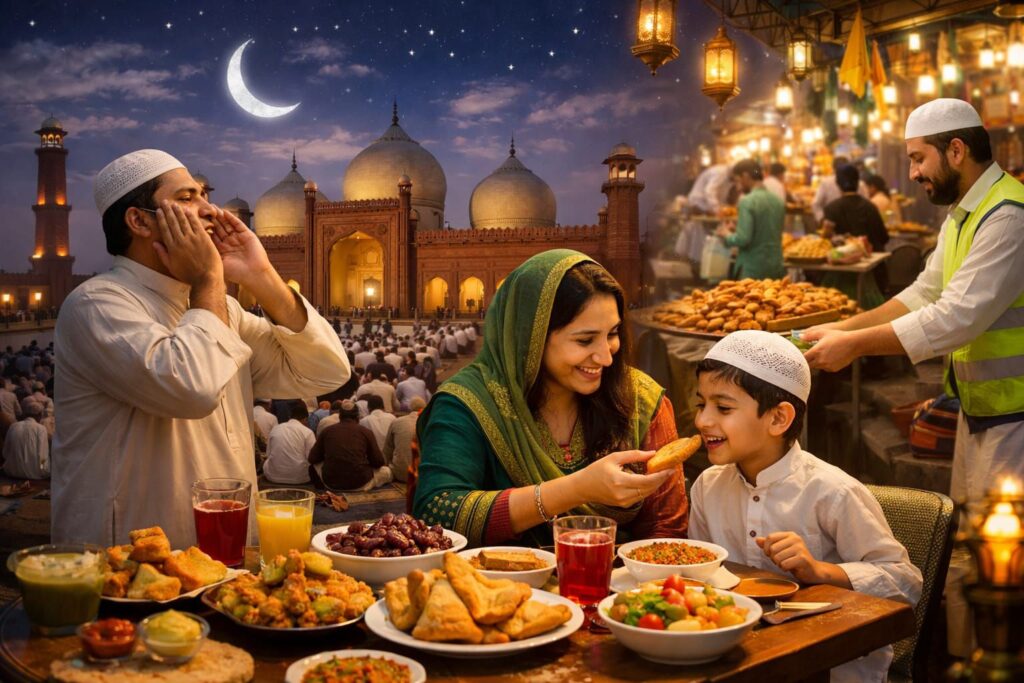
Sehri is eaten before dawn and includes items like paratha, eggs, yogurt, and tea
Iftar begins at sunset, traditionally with dates and water
Popular Iftar foods include samosas, pakoras, fruit chaat, and beverages
According to market reports, demand for food essentials increases by 30–45% during Ramzan.
Economic Impact of Ramzan
Ramzan brings both opportunities and challenges for Pakistan’s economy:
Increased Consumer Spending
Grocery sales rise significantly
Clothing brands launch Ramzan and Eid collections
Online food delivery services experience higher evening orders
Price Control Challenges
Despite government price control committees, inflation in food items may rise by 5–10% due to increased demand. Ramzan bazaars are set up in many cities to provide subsidized items to the public.
Charity, Zakat, and Social Responsibility
Charity is one of the most visible aspects of Ramzan in Pakistan. Muslims are encouraged to give:
Zakat (obligatory charity)
Sadaqah (voluntary charity)
Fitrana before Eid
Millions of people benefit from free Iftar meals, ration distributions, and financial aid. Hospitals, mosques, NGOs, and welfare trusts organize large-scale relief efforts during the month.
Health Considerations During Fasting
Medical experts in Pakistan emphasize balanced eating habits during Ramzan. Healthy fasting includes:
Drinking enough water between Iftar and Sehri
Avoiding excessive fried and sugary foods
Eating fruits, vegetables, and proteins
Getting adequate rest
When observed properly, fasting may help improve digestion and self-control.
Conclusion
Ramzan 2026 in Pakistan is expected to begin around February 19, subject to official moon sighting confirmation on February 18. The holy month represents much more than fasting — it reflects unity, compassion, discipline, and social responsibility across the nation.
By combining religious tradition, community spirit, and scientific support, Pakistan continues to observe Ramzan in a structured and respectful manner. As always, the final dates will be officially announced by the Ruet-e-Hilal Committee, ensuring clarity and consistency nationwide.