
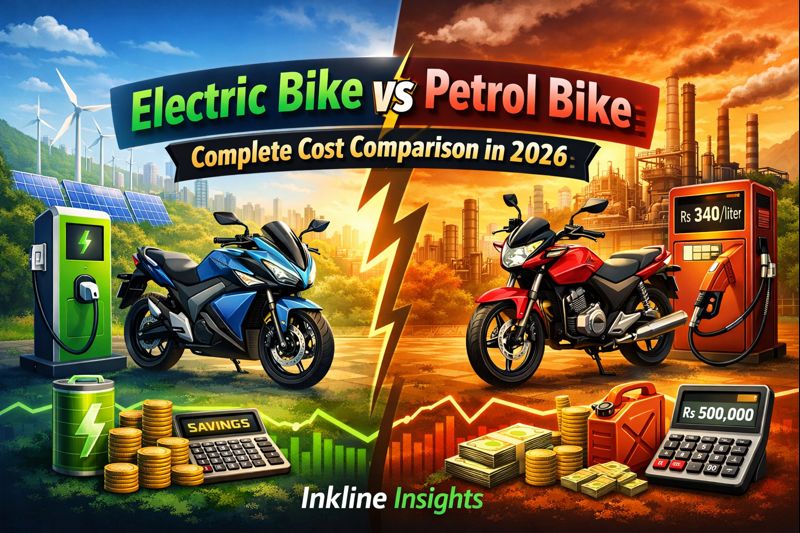
With fuel prices constantly on the rise and increasing environmental concerns, the question of “Should I buy an electric bike or a petrol bike?” has become common among commuters and bike enthusiasts in Pakistan. In this article, we provide a comprehensive cost comparison, including purchase price, running costs, maintenance, and long-term savings, so you can make an informed decision.
1. Upfront Cost: Petrol Bikes Are Cheaper to Buy
When comparing electric and petrol bikes, the first consideration is the purchase price. Petrol bikes generally cost less initially, making them attractive for budget-conscious buyers.
Petrol Bikes in Pakistan (2025–26)
- 70cc: Rs. 140,000–170,000
- 100cc: Rs. 180,000–220,000
- 125cc: Rs. 240,000–330,000
- Premium bikes: Rs. 350,000+
Electric Bikes in Pakistan (2025–26)
- Entry-level EV bike: Rs. 180,000–200,000
- Mid-range EV bike: Rs. 220,000–260,000
- Premium EV bike: Rs. 280,000–330,000
Observation: Petrol bikes are often cheaper upfront, but government incentives, financing options, and low-interest loans can make electric bikes more affordable.
2. Running Costs: Electric Bikes Save Money Monthly
Fuel is the largest ongoing expense for petrol bikes. Electric bikes, powered by electricity, are much cheaper to run.
Monthly Fuel & Charging Cost Comparison
TypeAverage Monthly Cost (Rs.)NotesPetrol Bike5,300–6,000Based on 16–20 liters/month at Rs. 320–340 per literElectric Bike1,800–2,200Based on electricity cost of Rs. 60–65 per kWh and 900 km/month usage
Annual Savings: Choosing an electric bike can save Rs. 45,000–55,000 per year. Over 5 years, running costs for a petrol bike can exceed Rs. 500,000, while an electric bike may cost under Rs. 30,000 for electricity.
💡 Key Insight: Lower running costs make electric bikes extremely cost-efficient for daily commuters.
3. Maintenance Costs: Less Is More with Electric Bikes
Maintenance is another area where electric bikes outperform petrol bikes.
Petrol Bike Maintenance (5 Years)
- Oil changes every 1,000–1,500 km
- Engine tuning, spark plugs, clutch repairs
- 5-year maintenance cost: Rs. 100,000–120,000
Electric Bike Maintenance (5 Years)
- Minimal moving parts; no oil or spark plugs
- Battery maintenance every few years (Rs. 35,000–45,000 if replacement needed)
- 5-year maintenance cost: Rs. 25,000–30,000
Verdict: Electric bikes cost 60–70% less to maintain over 5 years.
4. Total 5-Year Ownership Cost
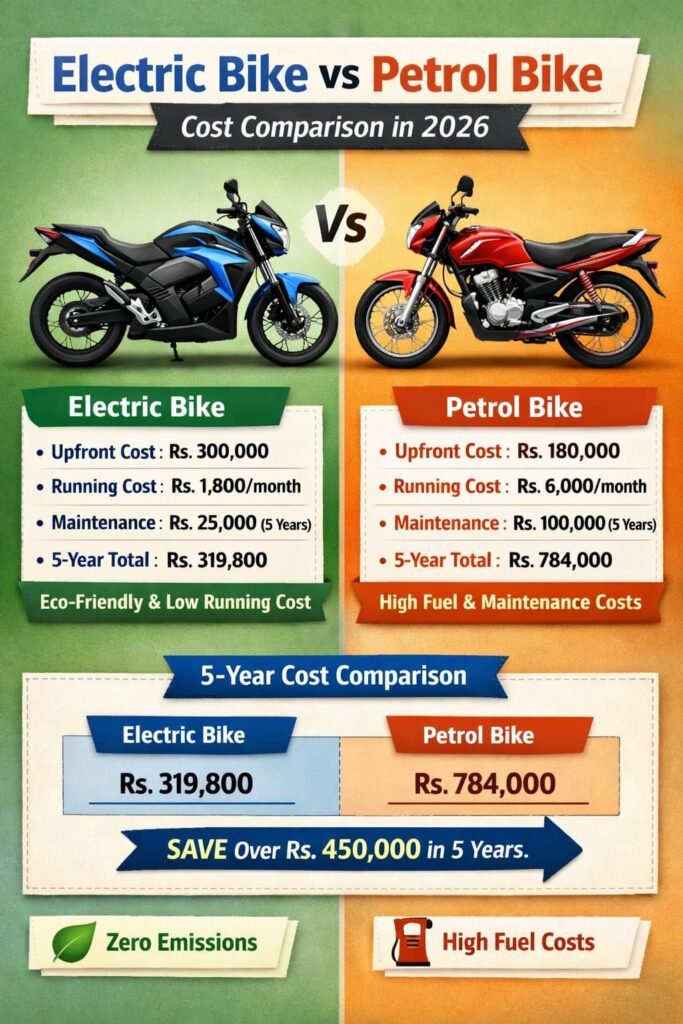
A side-by-side comparison of total expenses over 5 years:TypeUpfront CostRunning CostMaintenanceTotal 5-Year CostPetrol BikeRs. 180,000Rs. 504,000Rs. 100,000Rs. 784,000Electric BikeRs. 300,000Rs. 28,800Rs. 25,000Rs. 319,800
Savings: Electric bike owners could save over Rs. 450,000 in 5 years, even after a higher initial investment.
5. Resale Value and Insurance
Petrol Bikes
- Stable resale value due to widespread demand
- Insurance costs are predictable
Electric Bikes
- Resale value depends on battery life and market growth
- Insurance premiums are generally lower, and some government incentives apply
Tip: As EV adoption grows, resale value of electric bikes is expected to rise, making them even more attractive.
6. Environmental Benefits
Though not directly financial, environmental impact is a key consideration:
- Electric Bikes: Zero emissions, quiet operation, and reduced pollution
- Petrol Bikes: Produce CO₂ and other harmful gases, contribute to noise pollution
Eco-friendly riding also aligns with government policies promoting electric vehicles, which may result in tax breaks and subsidies.
7. Who Should Buy Which Bike?
Electric Bike
- Ideal for city commuting and short distances
- Budget-friendly in long-term running costs
- Low-maintenance and eco-conscious riders
Petrol Bike
- Better for long-distance or highway riders
- Cheaper upfront and easy resale
- Strong network of service stations
Conclusion
While petrol bikes remain cheaper initially, electric bikes are far more economical over time due to lower fuel and maintenance costs. For daily commuting in cities, students, delivery riders, and environmentally conscious riders, electric bikes offer substantial financial and ecological benefits.
Switching to an electric bike could save hundreds of thousands of rupees over 5 years while contributing to cleaner air and a quieter, greener environment.
Final Recommendation
For long-term savings and sustainability, electric bikes are the smarter choice in 2026.