
In today’s digital world, social media has become an essential part of daily life. Platforms such as Facebook, Instagram, TikTok, YouTube, and X (formerly Twitter) allow people to communicate, share information, and stay connected across the globe. While social media offers many benefits, excessive and uncontrolled use has given rise to a growing concern known as social media addiction. This issue often develops quietly and brings several hidden dangers that affect mental health, productivity, relationships, and overall well-being.
Understanding these risks is important, especially as screen time continues to increase among both young people and adults.
What Is Social Media Addiction?
Social media addiction refers to a pattern of behavior where individuals feel a strong urge to constantly check social media platforms, even when it interferes with daily responsibilities. Unlike casual browsing, addiction involves:
Spending excessive hours scrolling feeds
Feeling restless or uncomfortable when not online
Ignoring work, studies, or family time
Repeated failed attempts to reduce usage
Although it is not officially classified as a medical disorder, experts agree that problematic social media use shows similarities to behavioral addictions due to its impact on the brain’s reward system.
Rising Usage and Global Trends
The rapid expansion of internet access has significantly increased social media usage worldwide. Recent estimates show:
Over 4.5 billion people actively use social media globally
The average user spends more than 2 hours per day on social platforms
Teenagers and young adults are the most active users
A noticeable percentage of users report difficulty controlling their usage
These figures highlight how deeply social media is embedded in modern lifestyles, increasing the risk of overuse and dependency.
Hidden Dangers of Social Media Addiction
While social media may seem harmless, excessive use can quietly create long-term problems. Below are some of the most common hidden dangers.
1. Impact on Mental Well-Being
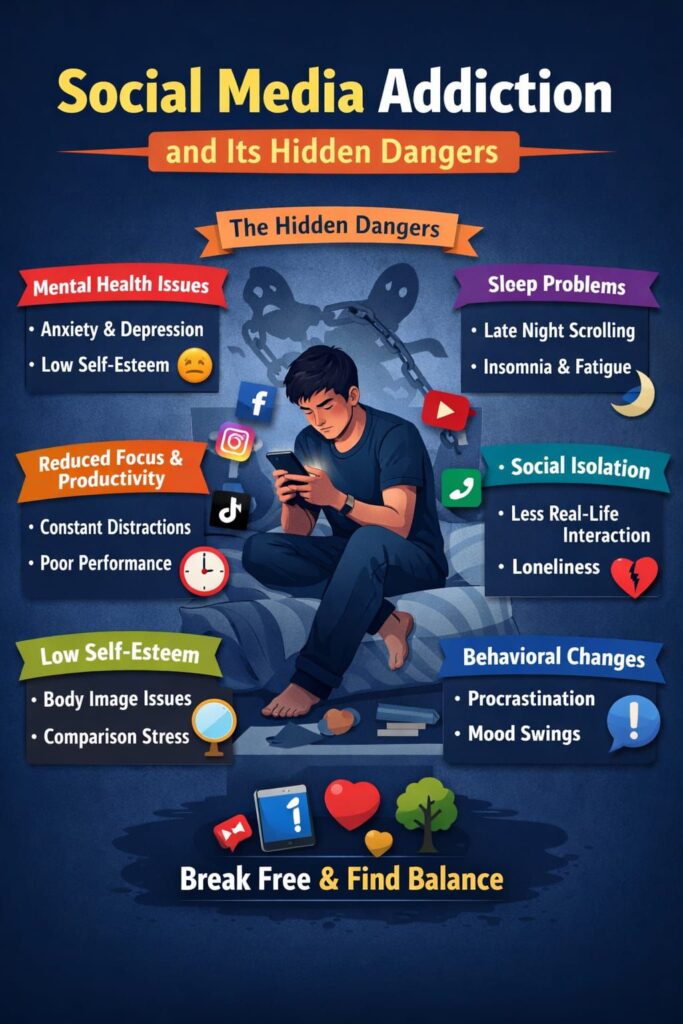
One of the most serious effects of social media addiction is its impact on mental health. Constant exposure to carefully curated images and lifestyles can lead to unhealthy comparisons. Over time, this may result in:
Increased stress and emotional fatigue
Feelings of inadequacy or low self-confidence
Mood swings and irritability
Difficulty managing emotions without online engagement
Endless scrolling and the desire for likes or validation can create emotional dependence, reducing inner satisfaction and self-worth.
2. Reduced Focus and Productivity
Excessive social media use often leads to frequent interruptions throughout the day. Notifications, messages, and updates can make it difficult to concentrate on tasks such as work or studies.
Research indicates that multitasking between social media and important activities reduces efficiency and increases errors. Students and professionals who frequently check their phones may struggle with time management, delayed deadlines, and reduced performance.
3. Sleep Disruption and Fatigue
Another hidden danger of social media addiction is its effect on sleep patterns. Many users scroll through social media late at night, which can:
Delay sleep onset
Reduce sleep quality
Cause morning fatigue and low energy
Prolonged sleep deprivation can affect memory, mood, and physical health, making daily routines more challenging.
4. Social Isolation Despite Connectivity
Although social media is designed to connect people, addiction can lead to reduced real-world interaction. Spending too much time online may result in:
Less face-to-face communication
Weakening of family bonds
Reduced social skills
Feelings of loneliness despite being digitally connected
This imbalance can gradually affect emotional health and personal relationships.
5. Effects on Self-Esteem and Body Image
Social media platforms often showcase edited images, achievements, and ideal lifestyles. Continuous exposure to such content can create unrealistic expectations, particularly among young users.
As a result, individuals may experience dissatisfaction with their appearance, lifestyle, or progress, which can lower self-esteem and increase self-doubt.
6. Behavioral and Emotional Changes
Addictive use of social media can also influence behavior patterns, including:
Increased procrastination
Short attention span
Reduced patience
Difficulty enjoying offline activities
Over time, these changes can affect personal growth and emotional stability.
Why Social Media Becomes Addictive
Social media platforms are designed to keep users engaged. Features such as infinite scrolling, notifications, and instant feedback activate reward mechanisms in the brain. Other contributing factors include:
Fear of missing out (FOMO)
Desire for social approval
Boredom or emotional escape
Peer pressure and online trends
Without proper limits, these elements can turn normal usage into compulsive behavior.
Signs of Social Media Addiction
Recognizing the early signs can help prevent long-term harm. Common indicators include:
Constant urge to check social media
Anxiety when internet access is limited
Neglecting responsibilities or hobbies
Using social media to escape stress frequently
If these signs persist, it may be time to reassess digital habits.
Practical Ways to Control Social Media Use
Managing social media addiction does not require complete withdrawal. Instead, healthy balance is key.
Set Daily Time Limits
Use built-in phone tools to track and limit screen time.
Disable Unnecessary Notifications
Reducing alerts can lower the urge to check apps repeatedly.
Create Screen-Free Zones
Avoid phone usage during meals, family time, and before sleep.
Engage in Offline Activities
Exercise, reading, and hobbies help reduce dependence on digital entertainment.
Practice Mindful Usage
Use social media with intention rather than habit.
Conclusion
Social media addiction is a growing concern that often develops unnoticed. While these platforms offer valuable opportunities for connection and learning, excessive use can lead to mental stress, reduced productivity, sleep problems, and weakened relationships.
By understanding the hidden dangers and adopting healthier digital habits, individuals can enjoy the benefits of social media without allowing it to control their lives. Awareness, moderation, and balance remain the most effective tools for maintaining digital well-being in an increasingly connected world.