
Introduction
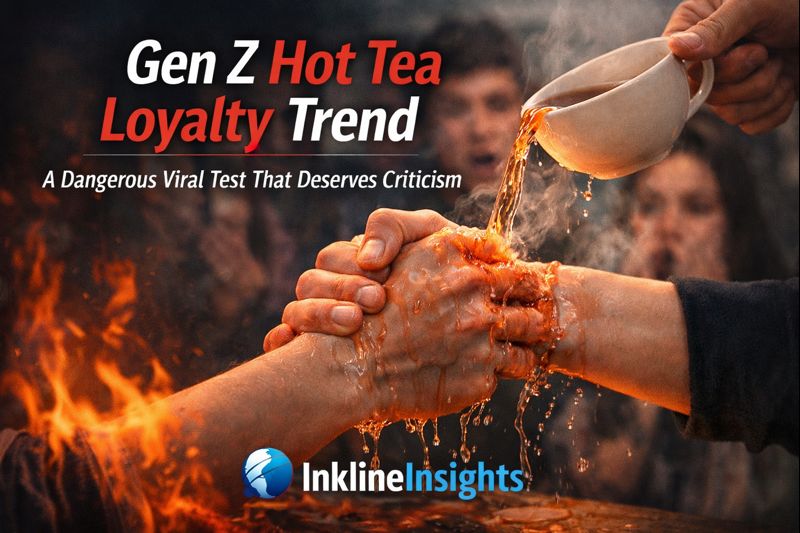
Social media trends come and go, but some leave behind real harm. One troubling example associated with Gen Z is the hot tea on hands loyalty trend, where individuals pour or splash hot tea on their hands to prove loyalty, trust, or emotional commitment. Although often presented as harmless fun or a joke, this trend highlights serious issues around peer pressure, online validation, and the growing normalization of pain as proof of loyalty.
What Is the Hot Tea on Hands Loyalty Trend?
The trend involves participants deliberately letting hot tea touch their hands, sometimes poured by a friend or partner, while recording the act for social media. The message behind it is unsettlingly simple: if someone is truly loyal, they should be willing to endure pain.
It is often portrayed as:
- A test of loyalty or trust
- Proof of emotional strength
- A public display of commitment
Even when the tea is described as “not boiling,” hot liquids can still cause burns, blisters, and long-term skin damage, especially on the hands.
How Did the Trend Spread?
The trend spread mainly through short-form video platforms like TikTok, where shocking or dramatic content gains attention quickly. Unlike awareness or charity-based challenges, this trend serves no constructive purpose. Its only reward is views, comments, and momentary online attention.
Peer tagging, reaction videos, and captions questioning someone’s loyalty have helped push the behavior further, particularly among teenagers and young adults.
Why Some Gen Z Users Participate
One major reason is the desire for validation. In online spaces, attention often feels like proof of worth. For some young users, brief approval from peers outweighs concerns about personal safety.
Another factor is social pressure. Refusing to participate can lead to ridicule, exclusion, or being labeled disloyal. What appears to be a choice is often silent coercion.
There is also a cultural shift toward performative relationships, where loyalty is no longer built through time and trust but through dramatic gestures designed for public display.
Why the Trend Deserves Criticism
This trend is problematic on multiple levels.
First, pain is not proof of loyalty. Healthy relationships do not require physical suffering to demonstrate trust or care. Any dynamic that demands harm as validation is inherently unhealthy.
Second, it normalizes behavior that sits dangerously close to self-harm. Intentionally causing injury, even in a social context, can desensitize individuals to pain and blur psychological boundaries.
Third, it promotes emotional manipulation. The unspoken message is clear: if you truly care, you will hurt yourself. This logic encourages control rather than mutual respect.
Finally, there is no accountability. The internet applauds the act, but it does not deal with the consequences. Once the video ends, the injuries remain.
Health Risks Often Ignored
Medical professionals warn that exposure to hot liquids can result in:
- First- and second-degree burns
- Permanent scarring
- Nerve damage in the hands
- Increased risk of infection
These injuries can affect daily activities long after the trend has faded.
The Bigger Cultural Issue
The hot tea loyalty trend reflects a wider problem in digital culture: the belief that suffering equals sincerity. When pain becomes content, empathy is replaced by entertainment, and personal well-being is sacrificed for visibility.
Calling out this trend is not an attack on Gen Z. It is a necessary criticism of a system that rewards harmful behavior while disguising it as loyalty or fun.
Conclusion
The hot tea on hands loyalty trend is not brave, meaningful, or harmless. It is reckless, manipulative, and unnecessary. Loyalty is shown through respect, consistency, and care—not through burns or public pain.
Trends disappear. The damage they cause does not.