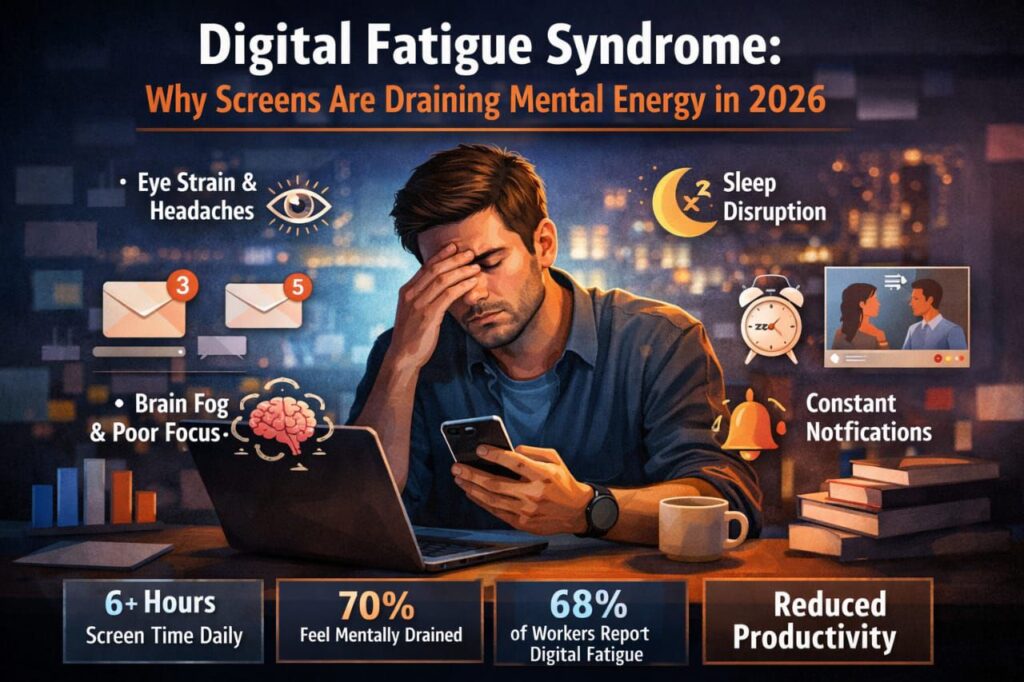
In 2026, digital screens have become inseparable from daily life. From remote work and online education to social media and entertainment, people spend more hours in front of screens than ever before. While technology has improved efficiency and connectivity, it has also introduced a growing concern known as Digital Fatigue Syndrome — a condition linked to mental exhaustion caused by prolonged screen exposure.
Unlike physical tiredness, digital fatigue affects concentration, emotional balance, and cognitive performance. This article explores why screens are draining mental energy in 2026, supported by data, behavioral trends, and practical solutions — all presented in a Google AdSense-compliant and SEO-optimized format.
What Is Digital Fatigue Syndrome?
Digital Fatigue Syndrome refers to a state of mental and cognitive exhaustion caused by extended use of digital devices such as smartphones, laptops, tablets, and desktop screens. It develops gradually and often goes unnoticed until productivity, focus, and motivation begin to decline.
In modern digital environments, the brain is continuously processing information — notifications, messages, visuals, and multitasking demands — without sufficient recovery time. This constant stimulation places stress on attention systems and mental energy reserves.
Surveys conducted in recent years indicate that more than two-thirds of frequent screen users report feeling mentally drained rather than refreshed after long digital sessions, highlighting the scale of this emerging issue.
Why Screen Time Is Increasing in 2026
Several factors have contributed to rising screen exposure worldwide:
- Remote and hybrid work models
- Online education and digital learning platforms
- Increased reliance on smartphones for daily tasks
- Social media consumption and short-form video content
- Digital payments, services, and entertainment
On average, adults now spend 6 to 8 hours per day interacting with screens, while students and office workers often exceed this limit. This continuous exposure creates conditions where mental recovery becomes difficult.
How Screens Drain Mental Energy
1. Constant Cognitive Stimulation
Digital platforms are designed to keep users engaged. Endless scrolling, alerts, and rapid content changes force the brain to stay alert without rest. Over time, this leads to mental overload and reduced attention capacity.
Unlike focused tasks with clear completion points, digital activities rarely provide mental closure, leaving the brain in a constant state of alertness.
2. Fragmented Attention and Multitasking
Switching between apps, emails, messages, and tasks reduces deep focus. Research shows that frequent task-switching increases mental fatigue and lowers efficiency, even if users believe they are multitasking effectively.
This fragmented attention pattern makes it harder for the brain to recover, contributing to long-term cognitive exhaustion.
3. Visual and Sensory Strain
Extended screen use places strain on the eyes and nervous system. Reduced blinking, close viewing distances, and prolonged focus can lead to discomfort, headaches, and visual fatigue, which indirectly increase mental tiredness.
In 2026, many professionals spend entire workdays looking at screens without sufficient visual breaks, amplifying this effect.
4. Sleep Disruption
Excessive screen use, especially in the evening, interferes with natural sleep patterns. Poor sleep quality reduces mental recovery, leading to daytime fatigue, slower thinking, and reduced emotional regulation.
Sleep disruption remains one of the strongest contributors to digital fatigue in modern lifestyles.
Common Symptoms of Digital Fatigue Syndrome
Digital fatigue does not appear suddenly. Common warning signs include:
- Persistent mental tiredness
- Difficulty concentrating or remembering information
- Reduced productivity
- Eye discomfort or headaches
- Irritability and mood changes
- Feeling mentally overwhelmed despite low physical activity
Because these symptoms develop gradually, many people ignore them or attribute them to stress or workload alone.
Impact on Productivity and Mental Well-Being
In workplaces, digital fatigue has been linked to lower efficiency, increased errors, and reduced creativity. Employees experiencing mental exhaustion often require more time to complete tasks and struggle with decision-making.
Students affected by digital fatigue report difficulty maintaining focus during online learning sessions, which can impact academic performance and motivation.
At a broader level, constant mental exhaustion can reduce overall quality of life, even when physical health appears unaffected.
Why Digital Fatigue Is a 2026 Problem
What makes digital fatigue especially relevant in 2026 is not just screen time — it is how screens are used. Always-connected lifestyles, fast content consumption, and pressure to remain digitally available have normalized mental overload.
Technology itself is not the problem. The lack of structured digital boundaries and recovery time is what turns useful tools into sources of mental drain.
Practical Ways to Reduce Digital Fatigue
1. Set Clear Screen Boundaries
Define specific times for work, social media, and rest. Avoid continuous screen exposure without breaks.
2. Follow the 20-20-20 Rule
Every 20 minutes, look away from the screen at something 20 feet away for 20 seconds to reduce eye and mental strain.
3. Limit Non-Essential Notifications
Reducing unnecessary alerts lowers attention interruptions and mental overload.
4. Create Screen-Free Zones
Avoid screens during meals and before bedtime to support mental recovery and better sleep.
5. Focus on Purposeful Screen Use
Engage in tasks with clear goals rather than endless scrolling. Purpose-driven usage is less mentally draining.
Conclusion
Digital Fatigue Syndrome is becoming a defining mental health challenge of the digital age. In 2026, screens are essential tools — but without balance, they can quietly drain mental energy, focus, and well-being.
By understanding the causes of digital fatigue and adopting mindful digital habits, individuals can protect their mental clarity while still benefiting from technology. Screens should enhance life, not exhaust it.
Leave a Reply