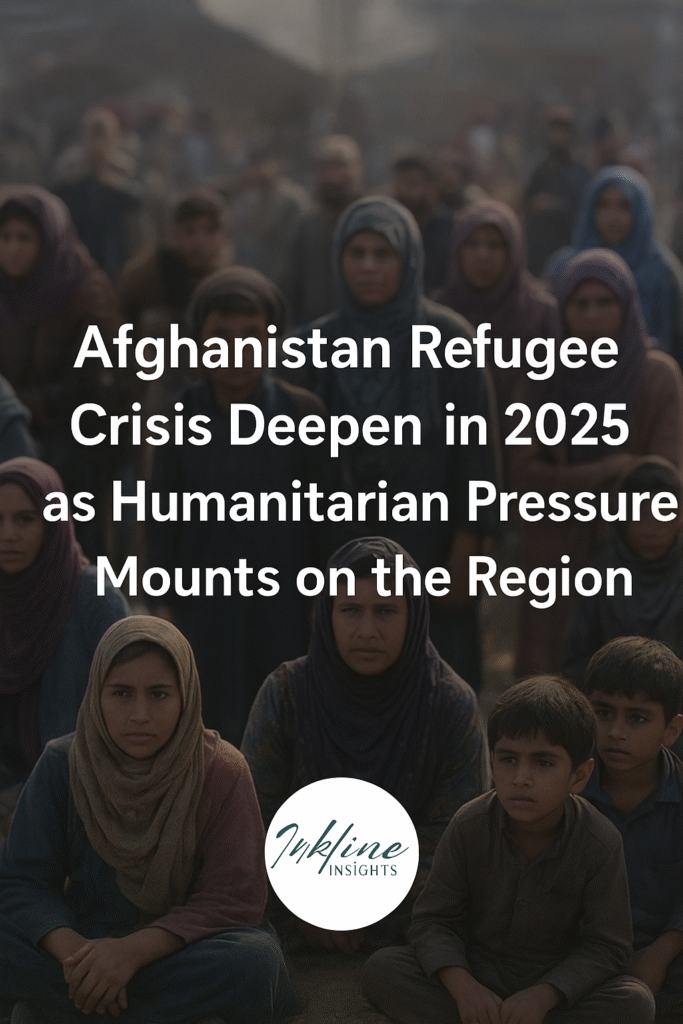
The Afghan refugee crisis has deepened significantly in 2025, placing mounting humanitarian pressure on neighboring countries already grappling with economic and security challenges. A combination of persistent instability, limited economic opportunities, and ongoing restrictions under the Taliban government has pushed thousands of Afghans to seek safety and livelihoods across borders. Pakistan, Iran, and Central Asian states continue to receive the largest influx, straining their social services and resources. Camps and urban settlements are becoming overcrowded, with aid agencies warning that conditions are deteriorating as winter intensifies.
International organizations report that funding gaps are widening, leaving millions of displaced Afghans without adequate access to food, healthcare, and shelter. Despite repeated appeals from the UN and humanitarian partners, global attention has shifted toward emerging crises elsewhere, reducing the flow of donor support. As a result, essential aid programs are being scaled back, forcing refugees to rely heavily on host communities that themselves face high inflation and unemployment. The shortage of medical supplies and educational facilities is particularly severe, putting vulnerable women and children at increased risk.
Host countries are also tightening border controls and residency regulations in an attempt to manage the surge. Pakistan and Iran have both intensified documentation checks, while some provinces have initiated relocation drives to move undocumented Afghans away from major urban centers. These policies, though aimed at maintaining internal order, often lead to heightened fear and uncertainty among refugees, many of whom have lived in host nations for decades. Reports of deportations and forced returns have further raised concerns about the safety of those sent back to Afghanistan, where economic instability and limited services offer little support.
Regional analysts caution that unless the global community renews its commitment to supporting both refugees and their host countries, the crisis may escalate further. Sustainable solutions require a combination of increased international funding, coordinated regional diplomacy, and long-term development programs inside Afghanistan to reduce the need for displacement. Without these measures, 2025 could mark yet another year where humanitarian pressures outpace available resources, leaving millions of Afghan families trapped in cycles of insecurity and uncertainty.
Leave a Reply