Category: AI, Science, Innovation and Technology

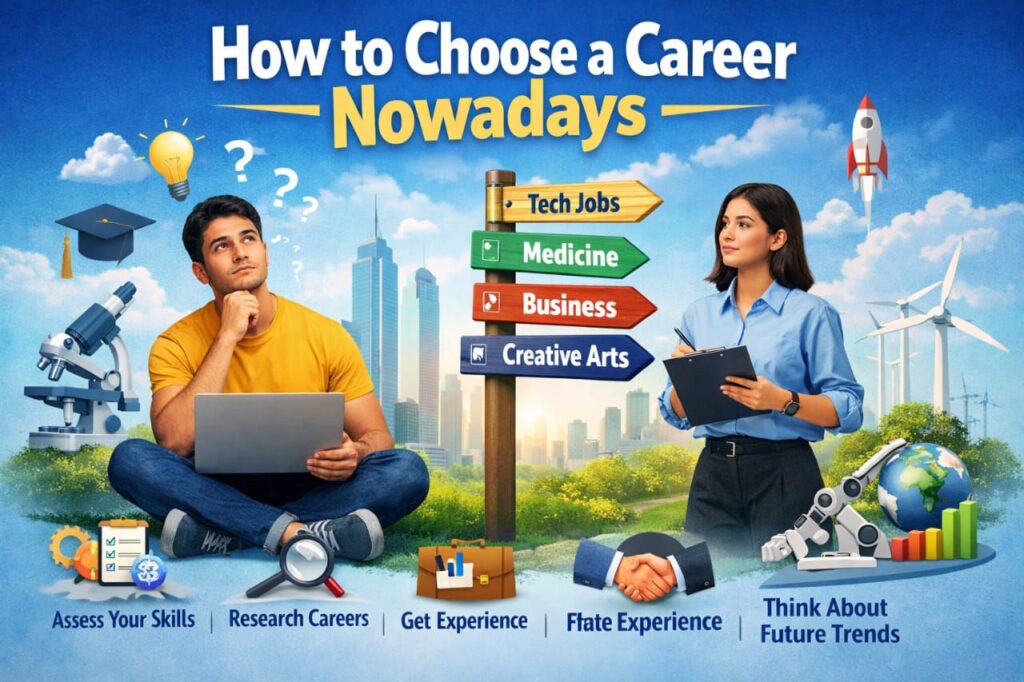
  • How to Choose a Career Nowadays: Smart Tips for Long-Term Success

    Introduction

    Choosing a career in today’s fast-changing world has become more complex than ever before. Unlike the past, when career paths were limited and predictable, modern students and professionals now face hundreds of options influenced by technology, globalization, and changing job markets. Making the right career choice is crucial because it affects not only income but also job satisfaction, mental health, and long-term growth.

    Understand the Changing Job Market
    -The modern job market is evolving rapidly due to automation, artificial intelligence, and digital transformation.
    -According to global employment studies:
    -Nearly 60% of jobs today require digital skills at some level.
    -Technology-driven roles are growing faster than traditional occupations.
    -Remote and freelance work has increased by over 30% in recent years.
    These figures show that career planning must align with future job trends, not just current popularity.


    Start with Self-Assessment
    Before selecting a career, understanding yourself is essential. Many people choose careers based on pressure from family or society, which often leads to dissatisfaction later.


    Key self-assessment areas
    Interests: Subjects or activities you enjoy
    Skills: Natural abilities or learned competencies
    Values: Work-life balance, job security, or social impact
    Personality: Introverted or extroverted tendencies
    Career assessment tools and aptitude tests can help identify suitable fields based on these factors.


    Research Career Options Thoroughly
    Once you understand your strengths, research potential career paths carefully. Do not rely on assumptions or outdated information.


    Important factors to research
    – Job demand and growth rate
    -Required education and skills
    -Average salary range
    -Career advancement opportunities
    For example, sectors like information technology, healthcare, renewable energy, and digital marketing show consistent global growth due to rising demand.


    Focus on Skills, Not Just Degrees
    In today’s world, skills matter as much as formal education.
    Surveys indicate that:
    -Employers prioritize practical skills and experience over academic grades.
    -Many high-paying roles accept alternative certifications and online learning.
    -Skills such as problem-solving, communication, data analysis, and digital literacy are valuable across multiple industries. Continuous skill development increases employability and career flexibility.Also consider Technology-Driven Careers.

    Popular technology-related career paths
    Software development
    -Data analysis
    -Cybersecurity
    -Artificial intelligence
    -Digital content creation


    Even non-technical fields now require basic technological knowledge, making digital skills a necessity rather than an option.


    Evaluate Job Stability and Income Potential
    While passion is important, financial stability cannot be ignored. A balanced career choice considers both interest and earning potential.


    Key points to evaluate:
    -Is the career resistant to automation?
    -Does it offer long-term growth?
    -Are salaries aligned with living costs?
    -Healthcare, education, engineering, and skilled technical professions often provide stable income and long-term demand.
    -Seek Guidance from Professionals
    Career counseling can provide clarity and reduce confusion. Talking to professionals already working in a field offers real-world insight that online research may not provide.


    Ways to seek guidance:
    -Career counselors
    -Industry mentors
    -Educational advisors
    -Professional networking platforms
    This guidance helps in understanding daily work routines, challenges, and growth paths.


    Gain Practical Experience Early
    Internships, volunteer work, and part-time jobs allow individuals to test their career choices before committing fully.


    Benefits of early experience:
    -Better understanding of workplace culture
    -Skill development
    -Stronger resume
    -Professional networking
    Studies show that candidates with practical experience are more likely to secure employment after graduation.


    Be Open to Change and Growth
    Modern careers are no longer linear. Many professionals change careers multiple times during their working life.


    Key mindset shifts include:
    -Accepting lifelong learning
    -Adapting to new technologies
    -Being open to career transitions
    -Flexibility increases resilience and long-term success in a rapidly changing job market.
    -Balance Passion with Practicality
    A successful career lies at the intersection of passion and practicality. Choosing a career you love but that offers limited opportunities can be risky, while selecting a high-paying job you dislike can lead to burnout.


    The ideal approach
    -Align interests with market demand
    -Develop relevant skills
    -Plan long-term growth
    This balance ensures both professional satisfaction and financial stability.


    Conclusion
    Choosing a career nowadays requires careful planning, self-awareness, and market research. The modern job market rewards adaptability, skill development, and informed decision-making. By understanding personal strengths, researching emerging industries, focusing on skills, and gaining practical experience, individuals can make confident career choices.
    In an era of constant change, the most successful careers are built on continuous learning and flexibility. A well-chosen career not only provides income but also contributes to personal growth and long-term happiness.

  • Best Mobile Phones for Gaming in 2025:Top Picks for Powerful Performance


    Mobile gaming has evolved rapidly, and in 2025 smartphones are no longer just communication tools — they are powerful gaming machines. Popular games like PUBG Mobile, Call of Duty Mobile, Free Fire, and Genshin Impact demand high processing power, smooth graphics, and stable performance. Choosing the best gaming phone can significantly improve your gaming experience by reducing lag, overheating, and battery drain.


    This article explains which mobile phone is best for gaming in 2025, highlights the top gaming smartphones, and helps you choose the right device according to your needs and budget.


    🎮 What Makes a Mobile Phone Best for Gaming?
    Before selecting a gaming phone, it is important to understand the features that truly matter for gamers.


    🔹 1. Powerful Processor and GPU
    A strong chipset ensures smooth gameplay. Flagship processors such as Snapdragon 8 Elite, Snapdragon 8 Gen 4, and Apple A-series chips can handle high-end games at maximum graphics settings without frame drops.


    🔹 2. High Refresh Rate Display
    Gaming phones usually offer 120Hz to 185Hz refresh rates, which make gameplay smoother and more responsive. Higher refresh rates give competitive gamers a clear advantage.


    🔹 3. Advanced Cooling System
    Long gaming sessions produce heat. Phones with vapor chamber cooling, liquid cooling, or built-in fans maintain consistent performance and prevent throttling.


    🔹 4. Large Battery with Fast Charging
    Gaming consumes a lot of power. A battery capacity of 5000mAh or more with fast charging ensures uninterrupted gameplay.


    🏆 Best Gaming Phones in 2025 (Expert Picks)


    🔥 1. ASUS ROG Phone 9 Pro – Best Overall Gaming Phone
    The ASUS ROG Phone 9 Pro is considered the most powerful gaming smartphone in 2025.
    Key Specifications:
    Processor: Snapdragon 8 Elite
    Display: 6.78-inch AMOLED, 185Hz refresh rate
    RAM & Storage: Up to 24GB RAM and 1TB storage
    Battery: Around 5800mAh
    Cooling: Advanced vapor chamber cooling system
    Why It’s Ideal for Gaming This phone is designed specifically for gamers. Features like shoulder AirTriggers, ultra-high refresh rate, and gaming performance modes make it perfect for professional and competitive players.


    🍏 2. iPhone 16 Pro Max – Best iOS Gaming Phone
    For Apple users, the iPhone 16 Pro Max is the best choice for mobile gaming.
    Key Specifications:
    Processor: Apple A18/A19 Pro chip
    Display: OLED with 120Hz ProMotion
    Storage: Up to 1TB
    Battery Optimization: Excellent iOS efficiency
    Why Gamers Love It Apple’s processors deliver excellent graphics performance and stability. iOS games are highly optimized, resulting in smoother gameplay and longer sustained performance compared to many Android devices.


    📱 3. Samsung Galaxy S25 Ultra – Premium Gaming Flagship
    The Samsung Galaxy S25 Ultra combines flagship features with strong gaming performance.
    Key Specifications:
    Processor: Snapdragon 8 Elite
    Display: Large Dynamic AMOLED, 144Hz refresh rate
    Battery: 5000mAh
    Cooling: Improved vapor chamber
    Why It’s a Strong Choice Although not a dedicated gaming phone, it handles heavy games smoothly while offering top-class camera quality, display clarity, and long-term reliability.


    💰 4. iQOO 13 5G – Best Gaming Phone for Value
    The iQOO 13 5G is ideal for gamers who want flagship-level performance at a lower price.
    Key Specifications:
    Processor: Snapdragon 8 Gen 4
    Display: AMOLED with 144Hz adaptive refresh rate
    Battery: 5000mAh with ultra-fast charging
    Cooling: Liquid vapor cooling technology
    Why It Stands Out It delivers high performance, fast charging, and effective cooling, making it one of the best value-for-money gaming phones in 2025.


    ❄️ 5. Nubia RedMagic 10 Pro – Best for Hardcore Gamers
    The RedMagic 10 Pro is built for long gaming sessions and heavy usage.
    Key Specifications:
    Processor: Snapdragon 8 Gen 4 / Elite
    Display: AMOLED with up to 165Hz refresh rate
    Battery: Massive 7000mAh
    Cooling: Built-in active cooling fan
    Why It’s Perfect for Long Gaming ? Its built-in cooling fan and large battery allow users to play for hours without overheating or performance drops.


    📊 Best Gaming Phone According to Budget
    Budget Category
    Recommended Phone
    Premium Gaming
    ASUS ROG Phone 9 Pro
    iOS Gaming
    iPhone 16 Pro Max
    Flagship All-Rounder
    Samsung Galaxy S25 Ultra
    Best Value
    iQOO 13 5G
    Hardcore Gaming
    RedMagic 10 Pro


    ⚙️ Tips to Improve Mobile Gaming Performance
    Enable Game Mode or Performance Mode
    Keep your phone software and games updated
    Lower graphics settings slightly for longer battery life.
    Avoid gaming while charging to reduce heat.


    Final Verdict
    In 2025, the best mobile phone for gaming depends on your budget, operating system preference, and gaming intensity. If you want unmatched gaming power, the ASUS ROG Phone 9 Pro is the top choice. Apple users will find the iPhone 16 Pro Max extremely reliable for smooth and optimized gameplay.
    For users seeking high performance at a reasonable price, phones like the iQOO 13 5G and RedMagic 10 Pro offer excellent value. Choosing a phone with a powerful processor, high refresh rate display, and strong cooling system will ensure a smooth and enjoyable gaming experience.

  • Which SIM Is Best in Pakistan? Complete Network Comparison Guide


    Choosing a mobile SIM network in Pakistan can be challenging due to multiple options offering similar services. Coverage quality, internet performance, pricing, and package flexibility often vary depending on location and usage habits.

    This guide provides a clear, unbiased, and informational comparison of Pakistan’s four major SIM networks — Jazz, Zong, Ufone, and Telenor — based on availability, packages, internet services, and internet strength. The purpose of this article is to help readers understand their options and make informed decisions.


    SIM Networks Operating in Pakistan

    Pakistan currently has four major mobile network operators providing nationwide services:

    • Jazz
    • Zong
    • Ufone
    • Telenor

    All four networks offer prepaid and postpaid SIMs, 4G/LTE internet, and official mobile applications for account and package management. However, the user experience differs based on infrastructure, coverage reach, and network capacity.


    Availability & Network Coverage

    Jazz

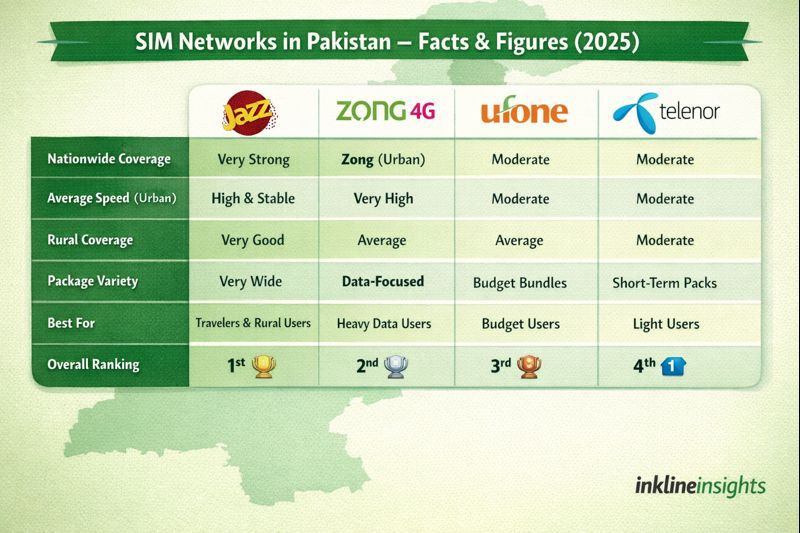
    Jazz has the largest network footprint in Pakistan. It provides coverage in major cities, towns, highways, and many rural areas. Users who frequently travel between cities often experience more consistent signal availability on this network.

    Availability: Very strong nationwide


    Zong

    Zong performs particularly well in large urban centers, where network density and capacity are higher. Coverage may vary in less populated or remote regions.

    Availability: Strong in cities, moderate outside urban areas


    Ufone

    Ufone has expanded its network over recent years, improving coverage in several cities. However, coverage consistency may still vary depending on location.

    Availability: Good in cities, average in rural areas


    Telenor

    Telenor provides reasonable coverage in urban locations and some towns. Signal strength may be less consistent in rural or high-traffic areas.

    Availability: Moderate overall


    Packages & Pricing Structure

    Jazz Packages

    Jazz offers a wide range of daily, weekly, monthly, and regional packages. These packages often combine mobile data, call minutes, and SMS in one bundle. Pricing may be slightly higher, but flexibility is a key advantage.

    Package range: Extensive and customizable


    Zong Packages

    Zong is known for its data-focused bundles, particularly monthly internet packages. These are often suitable for users who rely heavily on mobile internet for work, study, or entertainment.

    Package range: Data-centric and competitive


    Ufone Packages

    Ufone frequently provides budget-friendly all-in-one bundles, making it an appealing option for users who want a balance of calls and internet at lower costs.

    Package range: Cost-effective and balanced


    Telenor Packages

    Telenor specializes in short-term and daily packages, which are useful for light or occasional users.

    Package range: Short-term and flexible


    Internet Services & Performance

    Zong Internet

    Zong generally delivers higher 4G internet speeds, especially in major cities. It is suitable for activities such as video streaming, online classes, and downloading large files.

    Internet performance: Fast in urban areas


    Jazz Internet

    Jazz provides stable and reliable internet performance across a wide geographic area. While speeds may vary, consistency is a notable strength.

    Internet performance: Reliable and steady


    Ufone Internet

    Ufone’s internet services are sufficient for everyday tasks like browsing and social media. Performance may slow during peak usage times.

    Internet performance: Average


    Telenor Internet

    Telenor supports basic internet usage, such as messaging and light browsing. It may not be ideal for high-speed or heavy usage.

    Internet performance: Basic


    Internet Strength & Network Stability

    • Jazz maintains strong signal stability due to extensive infrastructure
    • Zong offers high signal strength in densely populated areas
    • Ufone shows improving but inconsistent stability
    • Telenor may experience congestion in peak hours

    Overall Ranking of SIM Networks in Pakistan (2025)

    1. Jazz – Best overall coverage and reliability
    2. Zong – Strongest internet speeds
    3. Ufone – Best value for money
    4. Telenor – Suitable for light usage

    This ranking is based on general performance trends and may vary by location.


    Which SIM Network Should You Choose?

    The best SIM network depends on individual needs:

    • Choose Jazz if coverage reliability is your priority
    • Choose Zong if high-speed internet is essential
    • Choose Ufone if affordability matters most
    • Choose Telenor if you prefer short-term usage

    This article is intended to provide neutral and informational insights into Pakistan’s mobile networks. Network performance and packages change over time, so users are encouraged to check official operator sources for the latest updates.

    Selecting the right SIM network can improve daily connectivity, productivity, and overall mobile experience.


  • How Artificial Intelligence Is Changing the Value of University Degrees

    Higher education has long played a central role in career development. For generations, earning a university degree has been seen as a reliable path toward professional stability and personal growth.

    However, the rapid advancement of artificial intelligence (AI) is reshaping how skills are learned, evaluated, and applied in the workforce. As a result, many educators, employers, and students are beginning to question whether traditional degree programs are keeping pace with modern demands.

    This article explores how AI is influencing higher education, which types of degrees face the most disruption, and how universities and learners can adapt constructively.


    The Traditional Role of University Degrees

    Universities have historically provided:

    • Structured learning environments
    • Foundational theoretical knowledge
    • Recognized credentials for employers
    • Access to research, mentorship, and networks

    These functions remain valuable. However, the economic and technological environment in which degrees operate has changed significantly.

    AI tools can now perform tasks that once required years of formal education, particularly in information-heavy fields.


    How AI Is Transforming Skill Acquisition

    One of AI’s most significant impacts is its ability to accelerate learning.

    Modern AI systems can:

    • Explain complex concepts on demand
    • Provide instant feedback
    • Generate practice scenarios
    • Assist with problem-solving in real time

    This reduces the time required to acquire certain practical skills, especially in digital and analytical domains.

    Example: Learning Data Analysis

    Previously, learners relied heavily on textbooks, lectures, and expensive software. Today, AI-powered tools can guide users through real datasets, suggest improvements, and simulate business problems, allowing faster and more applied learning.


    Case Study 1: Computer Science Education and Industry Expectations

    Computer science remains a valuable field, but employers increasingly emphasize practical experience alongside formal education.

    Many hiring teams now look for:

    • Project portfolios
    • Real-world applications
    • Experience working with modern tools and frameworks

    Graduates who combine a degree with hands-on projects and AI-assisted development often perform better in job markets than those relying solely on academic credentials.

    This shift highlights the growing importance of applied learning rather than replacing formal education altogether.


    Case Study 2: Business Education in an AI-Driven Economy

    Business degrees traditionally focus on strategy, management theory, and case-based learning. While these foundations are important, AI has introduced new operational realities.

    Modern businesses use AI for:

    • Market analysis
    • Financial forecasting
    • Customer engagement
    • Process automation

    Professionals who understand how to integrate AI tools into business operations gain a competitive advantage, regardless of whether their knowledge was acquired through formal education, professional training, or self-directed learning.


    Degrees Facing Greater Pressure to Adapt

    AI’s impact is not uniform across all disciplines.

    Fields Experiencing Faster Change:

    • General business studies
    • Marketing and communications
    • Information technology
    • Administrative and clerical disciplines

    These areas rely heavily on information processing, which AI systems perform efficiently. This does not eliminate the need for human professionals but increases the importance of specialization and adaptability.


    Fields That Remain Strongly Degree-Dependent

    Many professions still require extensive formal education, certification, and regulation, including:

    • Medicine
    • Law
    • Engineering
    • Architecture
    • Scientific research

    In these areas, universities provide critical training, ethical frameworks, and supervised practice that AI cannot replace.


    Curriculum Update Challenges in Higher Education

    One of the primary challenges universities face is pace.

    AI technologies evolve rapidly, while academic curricula often require years to update due to accreditation and governance processes. This can lead to gaps between what students learn and what employers expect.

    Institutions that integrate:

    • Project-based learning
    • Industry collaboration
    • AI literacy across disciplines

    are better positioned to remain relevant.


    The Growing Importance of Demonstrated Skills

    Across many industries, employers increasingly value:

    • Evidence of problem-solving ability
    • Practical experience
    • Continuous learning habits

    Degrees are still respected, but they are often evaluated alongside portfolios, certifications, and work samples.

    This reflects a broader shift toward skills-based hiring, rather than a rejection of higher education.


    Education Is Evolving, Not Disappearing

    AI is not replacing education. Instead, it is reshaping how knowledge is delivered and assessed.

    The future of higher education likely includes:

    • Hybrid learning models
    • Shorter, modular programs
    • Stronger links between theory and application
    • Ongoing professional upskilling

    Universities that embrace these changes can continue to provide significant value.

    Impact of AI in Pakistan

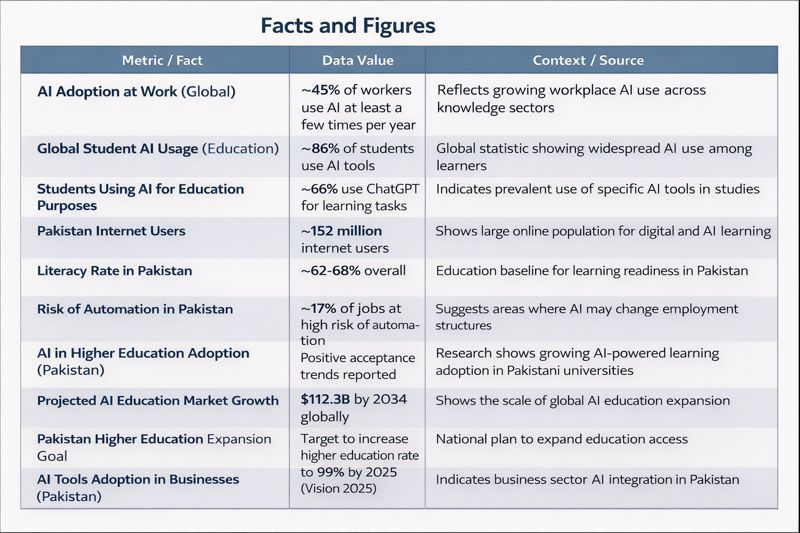
    In Pakistan, the impact of artificial intelligence on the value of university degrees is becoming increasingly visible. Each year, thousands of graduates enter the job market with traditional degrees in business, IT, and social sciences, yet many struggle to find roles aligned with their education. At the same time, AI-powered tools are enabling students and professionals to acquire practical, job-ready skills outside formal degree programs. Freelancers, software developers, digital marketers, and data analysts in Pakistan are using AI to learn faster, work more efficiently, and compete globally through platforms like Upwork and Fiverr. This shift highlights a growing gap between conventional academic curricula and the skills demanded by both local employers and international clients.

    However, this transformation also presents an opportunity for Pakistan rather than a setback. Universities that integrate AI literacy, hands-on projects, and industry collaboration into their programs can significantly improve graduate employability. For a country with a young population and rising internet access, AI-enabled learning can help bridge skill gaps, reduce unemployment, and support participation in the global digital economy. Degrees in Pakistan are still valuable, but their relevance increasingly depends on how well they are combined with practical experience, continuous learning, and the effective use of artificial intelligence.


    Conclusion

    Artificial intelligence is influencing the perceived value of some traditional university degrees, particularly those that rely heavily on static knowledge. At the same time, it is creating new opportunities for institutions and learners willing to adapt.

    Degrees remain important, but they are no longer the sole indicator of readiness or capability. In an AI-enabled world, education works best when combined with practical experience, adaptability, and lifelong learning.

    Rather than signaling the end of higher education, AI represents a transition toward a more flexible and skills-focused learning ecosystem.

  • Swiss Government Excellence Scholarship 2026–2027: Fully Funded Opportunity for International Students


    The Swiss Government Excellence Scholarship (SGES) is one of the most prestigious fully funded scholarships offered by Switzerland to outstanding international students. Every year, the Federal Commission for Scholarships for Foreign Students selects talented researchers, scholars and artists from more than 180 countries to study at top Swiss universities. For students from Pakistan and around the world, this is a golden chance to pursue advanced research, PhD, post-doctoral studies or arts-related education in a world-class academic environment.

    What is the Swiss Government Excellence Scholarship?

    The Swiss Government Excellence Scholarship is designed to promote global academic exchange and research cooperation. The program offers opportunities for:

    Research Fellowships

    PhD Scholarships

    Post-doctoral Scholarships

    Arts Master’s Scholarships (for selected countries)


    This scholarship is highly competitive and focuses on academic excellence, research quality and international collaboration.

    Who Can Apply?

    The scholarship is open to highly qualified international students who meet the following criteria:

    Applicants must hold a Master’s degree (for PhD or research programs).

    Post-doctoral candidates must hold a PhD degree.

    Arts applicants must have a valid Bachelor’s degree.

    A strong research proposal is required for research and PhD categories.

    A letter of acceptance or supervision agreement from a Swiss professor is mandatory.

    Applicants should not have lived in Switzerland for more than one year before starting the scholarship.


    Benefits of the Scholarship

    The Swiss Government Excellence Scholarship is fully funded and offers:

    Monthly stipend to cover living expenses

    Tuition fee support (waived or reduced depending on university)

    Health insurance coverage for international scholars

    Housing allowance upon arrival

    Travel support (for selected countries)

    Public transportation discount card


    These benefits make it an ideal opportunity for students seeking high-quality education without financial stress.

    How to Apply for the SGES 2026–2027

    The application process is detailed but straightforward. Here are the key steps:

    1. Select your program: Choose between research fellowship, PhD, post-doc or arts scholarship.


    2. Prepare your research plan: Write a clear, well-structured proposal.


    3. Find a Swiss supervisor: Contact professors in your field and request a supervision letter.


    4. Download the application package from the official Swiss Government website when the call opens.


    5. Submit your documents to the Swiss Embassy in your country before the deadline.


    6. Wait for the Federal Commission to evaluate your application based on academic merit and research quality.


    Why Study in Switzerland?

    Switzerland is known for its strong universities, cutting-edge laboratories, safe environment and multicultural society. Swiss institutions consistently rank among the world’s best, making it a perfect destination for advanced research, innovation and academic growth.

    Final Thoughts

    The Swiss Government Excellence Scholarship 2026–2027 is a life-changing opportunity for ambitious students who aim for excellence. With full financial support and access to top universities, this scholarship opens the door to world-leading research and academic success in Switzerland. If you are passionate about your field and ready to take your career to the next level, this program is the perfect platform to begin your journey.

  • How Often Can You Dye Your Hair Without Damaging It?


    Dyeing your hair is a great way to refresh your look, but doing it too often can lead to dryness, breakage, and dull color. The ideal time gap between each coloring session depends on the type of dye you use and how healthy your hair is. Generally, experts recommend waiting long enough for your hair to recover before applying chemicals again.

    For permanent hair dyes, a safe gap of 6 to 8 weeks is ideal. These dyes contain strong ingredients like ammonia and peroxide, which can weaken your hair if used too frequently. If you prefer semi-permanent color, you can refresh it every 2 to 4 weeks because it is much gentler and fades naturally. Demi-permanent dyes fall in between and can be safely applied every 4 to 6 weeks.

    Bleaching is the harshest chemical process, so it’s best to wait 8 to 12 weeks before lightening your hair again. Bleach removes natural pigment and can make your hair dry and fragile if done too close together.

    To keep your hair healthy, focus on good aftercare. Use sulfate-free products, deep-condition regularly, reduce heat styling, and apply nourishing oils. If you notice dryness, split ends, or hair breakage, extend the time between your coloring sessions.

    By following a healthy hair-care routine and spacing out your dye appointments, you can enjoy vibrant color without risking long-term damage.


  • South Asia’s Climate Crisis Worsens: Floods, Water Shortages, and Extreme Weather Intensify

    South Asia’s climate crisis is worsening rapidly in 2025, with floods, water shortages, and extreme weather events becoming more frequent and more destructive. Countries like Pakistan, India, Bangladesh, Nepal, and Sri Lanka are experiencing record-breaking heatwaves and unpredictable monsoon patterns that disrupt agriculture and threaten millions of livelihoods. Scientists warn that rising temperatures in the Indian Ocean are amplifying cyclones and altering rainfall cycles, leaving densely populated regions increasingly vulnerable. The combination of rapid urbanization and weak climate infrastructure further intensifies the impact on local communities.

    Major river systems such as the Indus, Ganges, and Brahmaputra are at the center of growing water stress. Glacial melt in the Himalayas, driven by higher temperatures, is initially causing flash floods but is also expected to reduce long-term water availability for hundreds of millions of people. Rural areas dependent on agriculture are witnessing crop losses due to erratic rains and prolonged droughts, driving food insecurity and forcing migration to already overburdened cities. Governments across the region are under mounting pressure to strengthen water management and invest in climate-resilient technologies to prevent further economic damage.

    Extreme flooding remains one of the region’s most persistent threats. Seasonal monsoons that used to be predictable now bring sudden cloudbursts and urban flooding, submerging infrastructure and displacing millions. Bangladesh and Pakistan, in particular, have seen entire districts inundated, with experts attributing much of the destruction to poor drainage systems and unchecked development in flood-prone zones. The financial cost of climate-driven disasters is rising sharply, stretching national budgets and slowing overall economic growth.

    Climate experts warn that without coordinated regional action, South Asia could face even more severe consequences in the coming decade. Cross-border cooperation on river systems, renewable energy expansion, and early warning systems is becoming essential as climate patterns grow more volatile. While several nations have initiated adaptation strategies, implementation remains slow compared to the scale of the threat. The worsening climate crisis not only jeopardizes human security but also poses long-term risks to regional stability and development.

  • Deadly Pakistan–Taliban Border Clash Sparks Renewed Fears of Escalation

    A deadly clash between Pakistani security forces and Taliban fighters along the border has reignited fears of a broader escalation in one of the region’s most volatile zones. According to local reports, the confrontation erupted after militants attempted to infiltrate a high-security area, prompting a swift military response. Heavy gunfire, mortar exchanges, and ground assaults resulted in multiple casualties on both sides, marking one of the most serious incidents in recent months. Residents living near the frontier described hours of intense fighting, with many families forced to take shelter as the situation rapidly deteriorated.

    This latest violence comes at a time when Pakistan has repeatedly raised concerns about the growing presence and mobility of Taliban-linked groups operating near the frontier. Islamabad has long maintained that cross-border militant activity is undermining national security, especially as attacks on military convoys and checkpoints continue to rise. The deadly clash has amplified these concerns, with officials warning that unchecked militant movement could embolden extremist factions and destabilize already fragile border districts. The situation is further complicated by rugged terrain that makes surveillance and response operations difficult.

    Analysts argue that the clash highlights deeper structural tensions between Pakistan and the Taliban authorities across the border. Despite ongoing communication, both sides often disagree on how to manage militant networks and enforce security protocols. Pakistan accuses Taliban factions of providing safe havens to groups targeting its forces, while Taliban officials deny direct involvement and blame the violence on historical border disputes. This persistent mistrust has made de-escalation challenging, increasing the risk that similar confrontations could erupt again with little warning.

    Security experts warn that without a coordinated effort to address cross-border militancy, the region could face a new wave of instability. The latest clash has already heightened alert levels among Pakistani forces, leading to tightened movement controls and increased patrols. Observers stress that diplomatic engagement, intelligence sharing, and clear enforcement mechanisms are essential to prevent further violence. As tensions rise, communities along the border remain caught in the middle—living with uncertainty as fears of a larger escalation grow.

  • Green Packaging Innovations: Eco-Friendly Materials Shaping a Sustainable Future

    Green packaging is a game-changer for businesses looking to reduce their environmental footprint. It’s all about using eco-friendly materials and designs that minimize waste and pollution.

    Eco-Friendly Packaging Solutions

    • Recycled Materials: Use recycled paper, cardboard, or plastics to reduce waste.
    • Biodegradable Alternatives: Explore bioplastics, jute bags, or mushroom-based packaging.
    • Minimalist Designs: Simplify packaging to save resources and reduce costs.

    Benefits of Green Packaging

    • Reduce Greenhouse Gas Emissions: Sustainable packaging lowers carbon footprint.
    • Conserve Natural Resources: Eco-friendly materials and designs reduce waste.
    • Boost Brand Reputation: Customers love brands that care about the environment.

    Implementing Green Packaging

    • Assess Your Packaging: Identify areas for improvement.
    • Choose Sustainable Materials: Select eco-friendly materials that meet business needs.
    • Communicate with Customers: Share green packaging initiatives to build trust and loyalty.
  • Environment and Global Warming: Key Causes, Impacts, and Future Solutions

    Global warming has become one of the most urgent environmental challenges of the 21st century. As climate patterns shift and natural systems come under pressure, scientists warn that the window to prevent irreversible damage is closing rapidly. Today, rising temperatures, extreme weather, and declining ecosystems pose serious threats not only to the planet but also to human health, food security, and economic stability. Understanding the causes, impacts, and solutions to global warming is essential for governments, industries, and individuals who aim to build a sustainable future.

    What Is Global Warming?

    Global warming refers to the long-term increase in Earth’s average temperature primarily caused by the buildup of greenhouse gases—such as carbon dioxide, methane, and nitrous oxide—in the atmosphere. These gases trap heat, leading to the greenhouse effect, which intensifies as emissions continue to rise due to human activities

    Major Causes of Global Warming

    1. Burning of Fossil Fuels

    Power plants, transportation, and industrial activities are the largest contributors to carbon emissions. Countries dependent on coal and oil experience the highest rise in atmospheric pollution.

    1. Deforestation

    Forests act as natural carbon sinks. When millions of trees are cut down for farming, urbanization, and timber, CO₂ levels increase significantly.

    1. Industrial Production

    Factories release gases, chemicals, and pollutants that degrade air quality and contribute to global temperature rise.

    1. Agricultural Activities

    Livestock farming and large-scale agriculture release methane and nitrous oxide—two potent greenhouse gases.

    Current Facts & Figures (2025)

    Global temperatures are now 1.1°C higher than pre-industrial levels.

    The world must reduce emissions by 45% by 2030 to avoid crossing the 1.5°C temperature limit.

    More than 70% of natural disasters in recent years are linked to climate change.

    The past decade has been the warmest ever recorded in human history.

    These numbers highlight the critical need for immediate global action.

    Impacts of Global Warming on the Environment

    1. Extreme Weather Events

    Heatwaves, floods, wildfires, droughts, and powerful storms are becoming more frequent and intense.

    1. Melting Glaciers & Rising Sea Levels

    Ice loss in the Arctic and Antarctic has accelerated, increasing the risk of coastal flooding and loss of habitable land.

    1. Ocean Acidification

    Excess CO₂ is absorbed by oceans, harming coral reefs, marine species, and global fish populations.

    1. Loss of Biodiversity

    Thousands of plant and animal species are threatened due to changing habitats and rising temperatures.

    5. Impact on Human Health

    Air pollution, heat stress, and contaminated water lead to respiratory illnesses, dehydration, and the spread of infectious diseases.

    Solutions to Combat Global Warming

    1. Transition to Renewable Energy

    Solar, wind, hydropower, and other renewables can significantly cut carbon emissions and reduce dependency on fossil fuels.

    1. Reforestation & Afforestation

    Planting billions of trees worldwide restores ecosystems and improves carbon absorption.

    1. Sustainable Transportation

    Electric vehicles, public transport, and non-motorized mobility can greatly reduce urban emissions.

    1. Energy-Efficient Technologies

    Smart grids, green buildings, and low-energy appliances help lower consumption and environmental impact.

    1. Waste Reduction & Recycling

    Recycling materials, reducing single-use plastics, and promoting circular economy practices help protect ecosystems.

    1. Climate Education & Policy Support

    Strong government policies, carbon taxes, and environmental education encourage wider participation in climate action.

    Global Warming and Its Impact on Pakistan

    Pakistan is among the countries most vulnerable to climate change, facing severe floods, heatwaves, water scarcity, and glacial melt. The 2022 floods alone displaced millions of people and caused billions in damages—highlighting the urgent need for climate resilience. Rising temperatures also threaten agriculture, which employs a large portion of the population. Investments in clean energy, reforestation programs like the Billion Tree initiative, and improved water management systems are essential for Pakistan’s future sustainability.

    Conclusion: A Collective Responsibility

    Global warming is no longer a distant concern—it is a present reality affecting every continent and community. While the challenge is enormous, solutions are within reach if the world works together. By adopting renewable energy, protecting forests, implementing sustainable policies, and making eco-conscious choices, humanity can slow climate change and preserve the environment for future generations. The time for action is now, and every effort—big or small—brings us closer to a greener, safer planet.