Category: Education System & Reforms in Pakistan

  • Why Pakistan’s Youth Is Quietly Winning Online — And Nobody Is Talking About It


    Image

    For years, the global conversation around Pakistan has focused on challenges—economic pressure, unemployment, and uncertainty about the future. What rarely makes headlines, however, is a powerful transformation happening quietly across the country.

    Pakistan’s youth is building something new.
    Not in factories or offices—but online.

    From small cities to major urban centers, young Pakistanis are earning, learning, and competing globally through the internet. This shift isn’t loud. It doesn’t come with breaking news alerts. But it is real—and it’s changing lives.


    A Silent Digital Revolution

    Unlike traditional career paths, the digital economy doesn’t require a famous university degree, family connections, or relocation abroad. All it demands is skill, consistency, and internet access.

    Millions of young people in Pakistan are now working as:

    • Freelancers
    • Remote employees
    • Content creators
    • E-commerce sellers
    • Online educators
    • Tech and AI service providers

    Most of them started with nothing more than a laptop or a smartphone.

    This is not luck. This is adaptation.


    From Unemployment to Online Income

    Job scarcity has pushed many young Pakistanis to look beyond conventional employment. Instead of waiting for opportunities, they began creating their own.

    Online platforms allowed them to:

    • Earn in foreign currencies
    • Work with international clients
    • Build personal brands
    • Learn skills without expensive education

    For many families, this income has become a financial lifeline—supporting education, rent, and daily expenses.

    And yet, these success stories rarely go viral.


    Small Cities, Big Impact

    One of the most remarkable aspects of this shift is where it’s happening.

    Young people from cities that rarely appear in national conversations are now:

    • Designing websites for global businesses
    • Managing social media for international brands
    • Editing videos viewed by millions
    • Selling products worldwide through online marketplaces

    Location is no longer a limitation. Talent is the only currency that matters.


    Why No One Is Talking About It

    There are several reasons this transformation stays under the radar:

    1. No Central Platform – These stories are scattered, personal, and rarely documented.
    2. Cultural Modesty – Many achievers don’t publicly share their success.
    3. Negative Bias – Bad news travels faster than good news.
    4. Lack of Media Focus – Traditional media still prioritizes old economic models.

    As a result, a generation redefining Pakistan’s future remains invisible.


    The Skills Powering This Change

    Pakistan’s online success is driven by practical, high-demand skills such as:

    • Graphic and UI design
    • Web and app development
    • Digital marketing and SEO
    • Video editing and animation
    • Content writing and blogging
    • Artificial intelligence and automation

    These are skills learned through:

    • Free online resources
    • Affordable courses
    • Self-practice and experimentation

    This self-learning culture is one of the strongest signs of long-term progress.


    More Than Just Money

    This movement is not only about income.

    It has also given young people:

    • Confidence and independence
    • Global exposure
    • Control over their time
    • Hope during uncertainty

    Perhaps most importantly, it has changed the mindset from “waiting for jobs” to “creating opportunities.”


    Challenges Still Exist

    This progress does not mean everything is perfect.

    Youth still face:

    • Internet accessibility issues
    • Power outages
    • Payment platform limitations
    • Lack of local recognition
    • Mental pressure and burnout

    But despite these obstacles, they continue moving forward—quietly, consistently.


    The Future Is Already Online

    Pakistan’s youth is not waiting for permission to succeed.
    They are learning, adapting, and competing in a global digital economy on their own terms.

    This is not a future prediction.
    It is already happening.

    The real question is not whether Pakistan’s digital generation will succeed—but whether the world will finally start paying attention.


    If more people talked about this transformation, inspired others, and supported digital skill development, Pakistan’s greatest export might not be labor or products—but talent.

    Do you think Pakistan’s real revolution is happening online?


  • Tragic Incident at the University of Lahore: Student Falls from Campus Building


    A tragic incident at the University of Lahore has left the academic community and the nation in shock. A fifth-semester pharmacy student lost his life after falling from a campus building. This unfortunate event has raised concerns about campus safety, student mental health, and the importance of preventive measures in educational institutions across Pakistan.


    The Incident

    The student, Awais Sultan, reportedly fell from the fourth floor of a university building on December 19, 2025. Immediate medical assistance was provided, and he was rushed to the University of Lahore Teaching Hospital. Despite doctors’ best efforts, he succumbed to his injuries, confirming the tragic loss.

    Authorities are currently investigating the circumstances surrounding the fall. CCTV footage is being reviewed, and statements from students, faculty, and staff are being collected to determine whether the incident was an accident or an intentional act.


    University’s Response

    The University of Lahore administration expressed deep sorrow over the incident. In a formal statement, the university assured the public that a dedicated inquiry committee has been formed to investigate the event, assess campus safety, and recommend measures to prevent future incidents.

    Officials also addressed rumors circulating on social media, particularly claims regarding academic pressure or attendance restrictions. The university clarified that these claims are false and urged students and parents to rely only on official statements.


    Campus Safety and Mental Health Concerns

    This incident highlights the urgent need for enhanced safety measures and mental health support on university campuses. According to the Higher Education Commission (HEC, 2024), over 20% of university students experience significant academic stress that can affect mental well-being.

    Experts suggest that institutions should implement:

    Regular counseling services for students

    Emergency response protocols for accidents

    Safety awareness programs

    Secure infrastructure, including railings and CCTV surveillance

    Such measures can significantly reduce risks and create a safer, more supportive learning environment.


    Social and Community Reactions

    The news has sparked widespread discussion on social media platforms. While many posts speculate about the reasons behind the fall, authorities have cautioned against jumping to conclusions. Local communities and student groups have expressed condolences to the family and emphasized the importance of mental health awareness and preventive support systems in academic institutions.


    Government and Police Investigation

    Law enforcement officials have confirmed that the case is under investigation. Police are reviewing all available evidence, including surveillance footage and witness statements. No formal conclusion has been released yet, and authorities are maintaining a neutral stance while ensuring that the investigation is thorough and transparent.


    Importance of Awareness Programs

    Experts stress that universities must prioritize mental health awareness and counseling programs. Providing students with stress management workshops, peer support groups, and professional counseling can help prevent tragic incidents. Academic pressures, personal challenges, or social issues are often overlooked factors that can escalate if support is unavailable.


    Important Facts & Figures

    Student Name: Awais Sultan

    Semester: Fifth, Pharmacy

    Date of Incident: December 19, 2025

    Location: University of Lahore, Campus Building

    Hospital: University of Lahore Teaching Hospital

    Investigation: Ongoing by police and university inquiry committee

    Mental Health Stats: 20%+ university students face significant academic stress (HEC 2024)


    Conclusion

    The death of Awais Sultan at the University of Lahore is a tragic reminder of the importance of campus safety and student mental health. As investigations continue, universities, parents, and students must work together to ensure a safe, supportive, and stress-aware academic environment. Proactive measures, safety awareness, and mental health support are no longer optional—they are essential for preventing such tragedies in the future.


  • How Artificial Intelligence Is Changing the Value of University Degrees

    Higher education has long played a central role in career development. For generations, earning a university degree has been seen as a reliable path toward professional stability and personal growth.

    However, the rapid advancement of artificial intelligence (AI) is reshaping how skills are learned, evaluated, and applied in the workforce. As a result, many educators, employers, and students are beginning to question whether traditional degree programs are keeping pace with modern demands.

    This article explores how AI is influencing higher education, which types of degrees face the most disruption, and how universities and learners can adapt constructively.


    The Traditional Role of University Degrees

    Universities have historically provided:

    • Structured learning environments
    • Foundational theoretical knowledge
    • Recognized credentials for employers
    • Access to research, mentorship, and networks

    These functions remain valuable. However, the economic and technological environment in which degrees operate has changed significantly.

    AI tools can now perform tasks that once required years of formal education, particularly in information-heavy fields.


    How AI Is Transforming Skill Acquisition

    One of AI’s most significant impacts is its ability to accelerate learning.

    Modern AI systems can:

    • Explain complex concepts on demand
    • Provide instant feedback
    • Generate practice scenarios
    • Assist with problem-solving in real time

    This reduces the time required to acquire certain practical skills, especially in digital and analytical domains.

    Example: Learning Data Analysis

    Previously, learners relied heavily on textbooks, lectures, and expensive software. Today, AI-powered tools can guide users through real datasets, suggest improvements, and simulate business problems, allowing faster and more applied learning.


    Case Study 1: Computer Science Education and Industry Expectations

    Computer science remains a valuable field, but employers increasingly emphasize practical experience alongside formal education.

    Many hiring teams now look for:

    • Project portfolios
    • Real-world applications
    • Experience working with modern tools and frameworks

    Graduates who combine a degree with hands-on projects and AI-assisted development often perform better in job markets than those relying solely on academic credentials.

    This shift highlights the growing importance of applied learning rather than replacing formal education altogether.


    Case Study 2: Business Education in an AI-Driven Economy

    Business degrees traditionally focus on strategy, management theory, and case-based learning. While these foundations are important, AI has introduced new operational realities.

    Modern businesses use AI for:

    • Market analysis
    • Financial forecasting
    • Customer engagement
    • Process automation

    Professionals who understand how to integrate AI tools into business operations gain a competitive advantage, regardless of whether their knowledge was acquired through formal education, professional training, or self-directed learning.


    Degrees Facing Greater Pressure to Adapt

    AI’s impact is not uniform across all disciplines.

    Fields Experiencing Faster Change:

    • General business studies
    • Marketing and communications
    • Information technology
    • Administrative and clerical disciplines

    These areas rely heavily on information processing, which AI systems perform efficiently. This does not eliminate the need for human professionals but increases the importance of specialization and adaptability.


    Fields That Remain Strongly Degree-Dependent

    Many professions still require extensive formal education, certification, and regulation, including:

    • Medicine
    • Law
    • Engineering
    • Architecture
    • Scientific research

    In these areas, universities provide critical training, ethical frameworks, and supervised practice that AI cannot replace.


    Curriculum Update Challenges in Higher Education

    One of the primary challenges universities face is pace.

    AI technologies evolve rapidly, while academic curricula often require years to update due to accreditation and governance processes. This can lead to gaps between what students learn and what employers expect.

    Institutions that integrate:

    • Project-based learning
    • Industry collaboration
    • AI literacy across disciplines

    are better positioned to remain relevant.


    The Growing Importance of Demonstrated Skills

    Across many industries, employers increasingly value:

    • Evidence of problem-solving ability
    • Practical experience
    • Continuous learning habits

    Degrees are still respected, but they are often evaluated alongside portfolios, certifications, and work samples.

    This reflects a broader shift toward skills-based hiring, rather than a rejection of higher education.


    Education Is Evolving, Not Disappearing

    AI is not replacing education. Instead, it is reshaping how knowledge is delivered and assessed.

    The future of higher education likely includes:

    • Hybrid learning models
    • Shorter, modular programs
    • Stronger links between theory and application
    • Ongoing professional upskilling

    Universities that embrace these changes can continue to provide significant value.

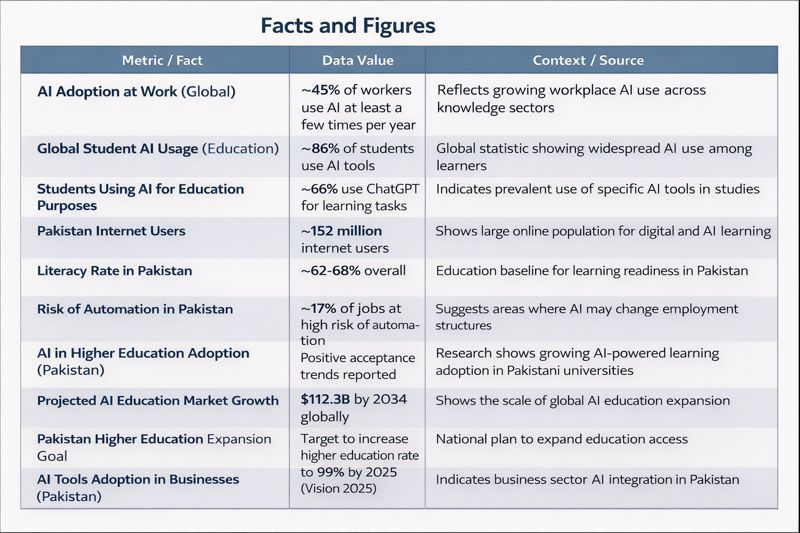
    Impact of AI in Pakistan

    In Pakistan, the impact of artificial intelligence on the value of university degrees is becoming increasingly visible. Each year, thousands of graduates enter the job market with traditional degrees in business, IT, and social sciences, yet many struggle to find roles aligned with their education. At the same time, AI-powered tools are enabling students and professionals to acquire practical, job-ready skills outside formal degree programs. Freelancers, software developers, digital marketers, and data analysts in Pakistan are using AI to learn faster, work more efficiently, and compete globally through platforms like Upwork and Fiverr. This shift highlights a growing gap between conventional academic curricula and the skills demanded by both local employers and international clients.

    However, this transformation also presents an opportunity for Pakistan rather than a setback. Universities that integrate AI literacy, hands-on projects, and industry collaboration into their programs can significantly improve graduate employability. For a country with a young population and rising internet access, AI-enabled learning can help bridge skill gaps, reduce unemployment, and support participation in the global digital economy. Degrees in Pakistan are still valuable, but their relevance increasingly depends on how well they are combined with practical experience, continuous learning, and the effective use of artificial intelligence.


    Conclusion

    Artificial intelligence is influencing the perceived value of some traditional university degrees, particularly those that rely heavily on static knowledge. At the same time, it is creating new opportunities for institutions and learners willing to adapt.

    Degrees remain important, but they are no longer the sole indicator of readiness or capability. In an AI-enabled world, education works best when combined with practical experience, adaptability, and lifelong learning.

    Rather than signaling the end of higher education, AI represents a transition toward a more flexible and skills-focused learning ecosystem.

  • Best Online Jobs in Pakistan for Students (Work From Home)

    For students in Pakistan, earning money while continuing education has become much easier because of online jobs. With rising expenses and limited part-time opportunities, many students are now turning to work-from-home options. Online jobs allow students to earn without affecting their studies and without investing any money upfront. All that is needed is a basic device, internet access, and willingness to learn.

    Online work is especially attractive for students because of its flexibility 😊. You can work according to your own schedule, whether early in the morning, late at night, or on weekends. This flexibility helps students focus on their education while still supporting their personal or family expenses.

    One of the most popular online jobs for students in Pakistan is freelancing. Freelancing allows students to offer services such as content writing, graphic design, video editing, data entry, or social media management. Many Pakistani students start freelancing with little experience and improve their skills while working. Although income may be low in the beginning, consistency and quality work can lead to better-paying projects over time 💰.

    Online tutoring is another trusted and respectable option for students. If a student is good at subjects like English, Mathematics, Science, or Quran teaching, online tutoring can be a great way to earn. Teaching students through online platforms or video calls does not require expensive tools and is considered a halal and stable income source. Many students find tutoring rewarding because it also improves their own knowledge and communication skills 📚.

    Content creation is also becoming a strong income source for students in Pakistan. Platforms such as YouTube, blogging, and social media allow students to share educational content, tutorials, or even daily life experiences. While content creation does not give instant results, it can turn into a long-term income stream if done with patience and creativity. Many students have built successful channels and blogs by staying consistent and focused 🎥✨.

    Affiliate marketing is another simple way for students to earn online. In this method, students promote products or services using special links. When someone purchases through those links, the student earns a commission. This method works well for students who are active on social media or have a blog. It does not require customer handling or investment, making it suitable for beginners 👍.

    Some students also prefer micro online jobs such as surveys, small online tasks, or app testing. These jobs usually pay less, but they are easy to start and help students understand how online earning works. However, students should be careful and avoid websites that promise high earnings for very little work 🚫.

    Payment is often a concern for students working online in Pakistan. Most international platforms pay through Payoneer, which can be linked to local bank accounts. Some local platforms also support JazzCash and Easypaisa, making it easier for students to receive payments securely and on time.

    While online jobs offer many benefits, students should stay alert and avoid scams. Any job that asks for registration fees or promises instant earnings is usually fake. Real online jobs require time, effort, and skill development. Students should focus on learning and improving instead of looking for shortcuts 🚀.

    In conclusion, online jobs in Pakistan provide a valuable opportunity for students to earn money from home while continuing their studies. Whether through freelancing, tutoring, content creation, or affiliate marketing, students can start small and grow gradually. With dedication, honesty, and patience, online work can help students achieve financial independence and build a strong future 🌟.

  • Top 5 Online Teaching Websites for Pakistani Teachers in 2025 (Apply & Earn)


    Earn by teaching students locally and worldwide — with flexible hours and competitive pay.

    With the rise of digital learning, Pakistani teachers now have more opportunities than ever to earn through online teaching platforms. Whether you want part-time income or build a full teaching career online, these platforms connect you with students around the world. Here’s a detailed, SEO-friendly guide to the top five websites, how to apply, and expected pay.


    1. Preply — Teach Worldwide, Set Your Rates

    Overview:
    Preply is one of the most popular international online tutoring marketplaces. It connects teachers with global students eager to learn subjects like languages, academics, and test prep. (Preply)

    Who It’s For:
    Language teachers (especially English), math/science tutors, and other educators who want global reach.

    How to Apply:

    1. Visit Preply’s tutor signup page.
    2. Create a profile with your qualifications, experience, and teaching subjects.
    3. Upload a profile photo and introductory video.
    4. Await approval (usually 3–5 business days). (Preply)

    Pay & Structure:

    • You set your hourly rate (average tutors often charge $15–$25/hr).
    • Earnings depend on experience and subject demand.
    • Preply takes a commission on lessons but allows rate flexibility. (Preply)

    Why It’s Great:
    High earning potential with flexible hours — you choose when to teach.


    2. TeacherOn — Free Global Teaching Marketplace

    Overview:
    TeacherOn is an international platform with tutors from 170+ countries connecting with students online and offline. (TeacherOn)

    Who It’s For:
    Teachers offering academic subjects, language lessons, assignment help, and exam coaching.

    How to Apply:

    1. Register as a tutor on TeacherOn.
    2. Add your profile with subjects, qualifications, and teaching modes.
    3. Students contact you directly — no heavy recruitment process. (TeacherOn)

    Pay & Structure:

    • You negotiate your own price with students.
    • Many Pakistani tutors set rates from $10–$30/hr depending on subject and student location.
    • No platform fee for connecting with learners. (TeacherOn)

    Why It’s Great:
    No registration fees and a large global student base.


    3. TutorBees — Pakistan’s Local Online Tutor Community

    Overview:
    TutorBees is a Pakistan-focused tutoring portal that connects educators with students for online tuition. (TutorBees.net)

    Who It’s For:
    Teachers of all levels (primary to university subjects), especially those focusing on Pakistan curricula.

    How to Apply:

    1. Register on TutorBees.net.
    2. Complete their application and assessment (may include qualification checks).
    3. Join the approved tutor pool and start teaching. (TutorBees.net)

    Pay & Structure:

    • Tutors typically earn by charging hourly rates agreed with parents/students.
    • Rates can vary depending on level and subject (often competitive for local markets).
    • Earnings are paid directly by parents/students or through the platform. (TutorBees.net)

    Why It’s Great:
    Focus on the Pakistani market means reliable student demand and reduced competition from global tutors.


    4. Beacon Tutors — Flexible Online & Home Tuition

    Overview:
    Beacon Tutors is a networking platform that helps teachers connect with students for both online and home tuition across Pakistan. (beacontutorspk.com)

    Who It’s For:
    Part-time tutors, fresh graduates, and experienced educators for subjects across all grades.

    How to Apply:

    1. Sign up on Beacon Tutors as a teacher.
    2. Complete profile and verification.
    3. Beacon Tutors assigns students based on your profile and preferences. (beacontutorspk.com)

    Pay & Structure:

    • Teachers set their fees for private tuition sessions.
    • Beacon Tutors takes just a small commission (if any).
    • Students pay directly via bank, EasyPaisa, or cash. (beacontutorspk.com)

    Why It’s Great:
    No hefty platform fees and you maintain control over your schedule and earnings.


    5. TutorOcean — Global Tutoring Marketplace

    Overview:
    TutorOcean is a flexible tutoring platform where teachers globally (including Pakistani tutors) offer sessions in various subjects. (TutorOcean)

    Who It’s For:
    Educators experienced in core subjects or specialized skills (languages, tech, etc.).

    How to Apply:

    1. Create a TutorOcean account.
    2. Build a professional profile listing subjects, rates, schedules.
    3. Start getting booked by students. (TutorOcean)

    Pay & Structure:

    • Typical rates start around $15/hr or more depending on expertise.
    • You manage availability and pricing. (TutorOcean)

    Why It’s Great:
    International teaching opportunities with potentially higher foreign currency pay.


    Tips for Pakistani Teachers Before You Start

    Verify your identity and credentials — most platforms require degree or experience proof.
    Set a professional profile with a clear photo, intro video, and teaching methodology.
    Be flexible with hours — evenings and weekends often have high demand.
    Start with competitive pricing then increase your rate as your reviews grow.


    Online teaching can be a rewarding career path for Pakistani educators — offering flexibility, independence, and income in both local and global markets. Platforms like Preply, TeacherOn, TutorBees, Beacon Tutors, and TutorOcean open doors to thousands of students and steady earnings. Just choose the ones that best align with your skills, register, and start teaching!

  • Pakistan’s HEC Introduces New Blockchain-Based Degree Verification


    The Higher Education Commission (HEC) of Pakistan has officially announced a major technological upgrade in the degree verification process. Instead of relying on manual paperwork and long queues, HEC is shifting to a blockchain-powered, digital degree attestation system. This new technology aims to make degree verification faster, safer and completely transparent.

    What Is the Blockchain Degree System by HEC?

    Tamper-proof

    Easily verifiable

    Impossible to alter or fake

    HEC’s blockchain initiative is not a new “degree program.” Instead, it is a digital verification system where all verified degrees and transcripts will be stored on a secure blockchain network. Once a degree is added to the blockchain, it becomes:

    This system eliminates the old manual attestation method and makes the entire process online.

    How the New System Works

    1. For Universities With ERP Systems

    HEC has identified several universities that already use updated ERP technology. For students from these institutions:

    Their degree data will be automatically shared with HEC.

    Attestation will be completed instantly after graduation.

    No physical documents or office visits will be required.

    1. For Universities Without ERP Systems

    Students will upload clear scans of their degree and transcript on the HEC portal.
    The university will verify these documents digitally, after which HEC will add them to the blockchain.

    In both cases, students receive a digitally verified, blockchain-secured degree.

    Why This System Matters

    The blockchain degree system offers several benefits for students, employers and international institutions:

    ✔ Zero Chances of Fake Degrees

    Blockchain technology makes every record unchangeable, which helps eliminate degree fraud in the country.

    ✔ Faster Verification for Jobs and Abroad Studies

    Employers, embassies and universities abroad can verify degrees online within minutes.

    ✔ No More Long Lines or Delays

    Students won’t need to visit HEC offices. All processes will be handled online through a user-friendly portal.

    ✔ Globally Accepted Verification

    Because blockchain records are secure and transparent, they meet international verification standards.

    What This Is Not

    Many people think HEC is launching a “blockchain degree program.”
    In reality:

    HEC is not offering a degree in blockchain.

    It is only using blockchain technology to improve degree attestation and verification.

    Conclusion

    HEC’s blockchain degree attestation system is a major step toward digital transformation in Pakistan’s education sector. It will reduce fraud, simplify verification and help graduates access their attested degrees quickly and securely.