Category: Entertainment & Media

  • Marriage Is No Longer a Priority: How Economic Pressure Is Changing Family Systems

    In many societies, marriage was once considered a natural and necessary step into adulthood. It symbolized stability, social acceptance, and long-term security. However, in recent years, this long-standing tradition has been steadily losing priority—especially among younger generations. One of the most influential reasons behind this shift is economic pressure.

    Rising living costs, job uncertainty, housing shortages, and financial stress are reshaping how people view marriage and family life. Instead of being a life goal, marriage is increasingly seen as a financial responsibility that many feel unprepared to take on. This article explores how economic realities are transforming family systems across the world.

    Declining Marriage Rates: A Global Trend

    Across both developed and developing countries, marriage rates have declined noticeably over the last two decades. Many nations are reporting fewer registered marriages and a rise in delayed unions. Younger adults are choosing to wait until they feel financially stable—or, in some cases, opting out of marriage altogether.

    Economic uncertainty plays a major role in this trend. When incomes are unstable and expenses continue to rise, people become cautious about making long-term commitments. Marriage, which often involves shared housing, family planning, and social obligations, feels like a financial risk rather than a security.

    Rising Cost of Living and Financial Stress

    One of the strongest factors affecting marriage decisions today is the cost of living. Essentials such as food, transportation, healthcare, and utilities have become significantly more expensive in many regions. At the same time, wages have not increased at the same pace.

    For many young adults, managing daily expenses already feels overwhelming. Adding the costs of marriage—such as ceremonies, housing, and future family responsibilities—can seem unrealistic. As a result, many individuals delay marriage until they feel financially confident, which may take years or never happen at all.

    Housing Affordability and Delayed Family Formation

    Affordable housing has become one of the biggest challenges for couples considering marriage. In urban areas especially, property prices and rental costs have reached record highs. Without access to affordable housing, couples often feel they cannot start a stable married life.

    Traditionally, marriage was closely tied to setting up a household. Today, many young adults live with parents longer or share accommodation to reduce costs. This situation makes marriage feel impractical and further delays family formation.

    Job Insecurity and Changing Career Paths

    Modern employment patterns are very different from the past. Permanent jobs with long-term security are becoming less common, while contract work, freelancing, and temporary employment are increasing. Although these options offer flexibility, they often lack financial stability.

    Job insecurity affects confidence in long-term planning. When individuals are unsure about their income or future career prospects, committing to marriage becomes difficult. Many prioritize career growth and financial independence first, placing marriage lower on their list of priorities.

    Education, Independence, and New Life Goals

    Higher education levels and increased workforce participation—especially among women—have also influenced attitudes toward marriage. Financial independence allows individuals to support themselves without relying on a partner for economic security.

    As a result, marriage is no longer viewed as a necessity for survival or social respect. Many people now focus on personal development, professional success, and emotional compatibility before considering marriage. For some, marriage becomes a choice rather than an obligation.

    Inflation and the Cost of Weddings

    In many cultures, weddings involve significant expenses. Inflation has made traditional wedding arrangements more costly than ever, including venues, clothing, food, and guest management. Families often face financial pressure to meet social expectations, which can discourage couples from marrying early.

    To avoid debt or financial stress, many couples prefer to postpone marriage or opt for simpler arrangements. However, social pressure and expectations can still make marriage feel financially demanding.

    Changing Family Structures

    The decline in marriage does not mean the disappearance of family life. Instead, family systems are evolving. Cohabitation, delayed parenthood, and alternative family arrangements are becoming more common.

    Some couples choose to live together without marrying, while others focus on emotional partnerships rather than legal commitments. These changes reflect flexibility but also highlight how economic conditions shape personal choices.

    Social and Economic Impact

    Changing marriage patterns have wider social implications. Delayed or fewer marriages can affect population growth, household structures, and long-term economic planning. Many countries are now facing aging populations and declining birth rates, which influence labor markets and social support systems.

    Governments and policymakers are increasingly discussing ways to reduce financial pressure through affordable housing, employment opportunities, and family support programs. While these measures may help, economic stability remains a key factor in restoring confidence in marriage.

    The Future of Marriage in an Economic World

    Marriage is not disappearing, but its role is changing. It is no longer automatically linked to adulthood or social success. Instead, it has become a carefully considered decision influenced by financial readiness and personal priorities.

    As economic conditions continue to evolve, family systems will adapt accordingly. A balanced approach—where financial stability, emotional well-being, and social support coexist—may redefine marriage in the modern era.

    Conclusion

    Economic pressure has significantly reshaped how people view marriage and family life. Rising living costs, housing challenges, job insecurity, and inflation have made marriage less accessible for many. As a result, individuals are redefining priorities, delaying marriage, or choosing alternative family structures.

    Marriage may no longer be a universal goal, but the desire for stability, connection, and family remains strong. Understanding the economic factors behind this shift helps explain how modern societies are transforming and how family systems continue to evolve in response.

  • When is the world going to end?

    Image
    Image
    Image
    Image

    Perspectives from Religion, Philosophy, and Science

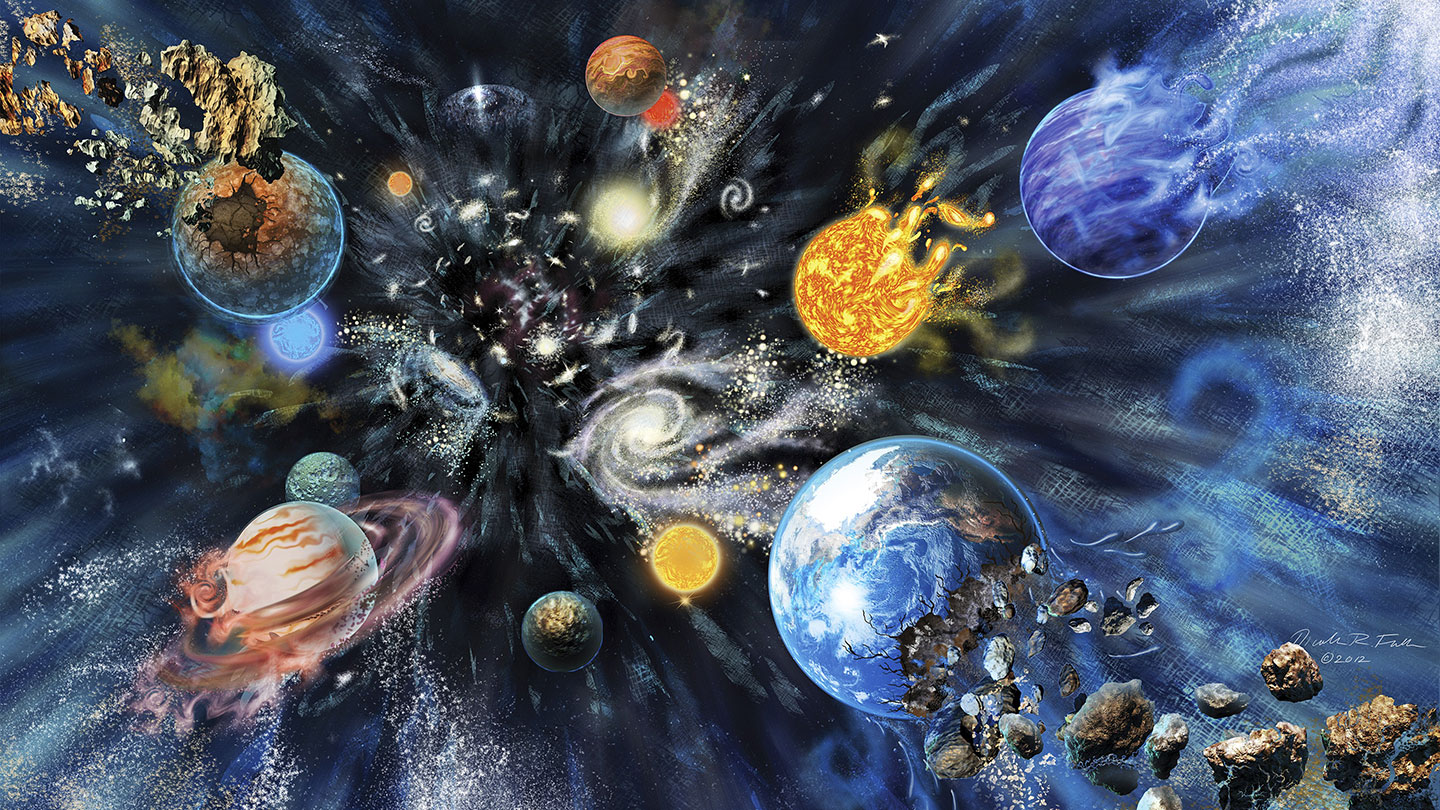
    The question “When will the world end?” is one of the oldest and most universal questions humanity has ever asked. Across civilizations, cultures, and eras, people have looked to the skies, sacred texts, and later to scientific equations in search of an answer. Sometimes the question arises from fear—of death, chaos, or punishment. At other times, it emerges from curiosity, wonder, or a desire for meaning in an impermanent universe.

    Importantly, the idea of “the end of the world” does not mean the same thing everywhere. In some traditions, it is a moral reckoning. In others, it is a cosmic reset or a transformation rather than annihilation. In science, it is not a prophecy at all, but a projection based on physical laws.

    This article offers a comprehensive, balanced exploration of how different religions and modern science understand the end of the world. Rather than predicting a date, it aims to explain why humans think about endings at all—and what those endings truly signify.


    1. The Concept of the “End” Across Human Thought

    Before examining specific traditions, it is essential to clarify what “end of the world” actually means.

    • Literal destruction of Earth or the universe
    • Moral or spiritual judgment of humanity
    • Collapse of civilization, not the planet
    • Transformation or renewal into a new age
    • End of time itself

    Many religious traditions emphasize cycles, not finality. Science, meanwhile, speaks of vast timescales where “end” means entropy, heat death, or cosmic decay rather than divine judgment.

    Understanding this distinction prevents confusion when comparing religion and science.


    2. The End of the World in Major Religious Traditions

    2.1 Christianity: Judgment Day and the Second Coming

    In Christianity, the end of the world is closely tied to eschatology—the study of last things. The primary sources are the Bible, particularly the Book of Revelation.

    Core Beliefs

    • Jesus Christ will return (the Second Coming)
    • The dead will be resurrected
    • A Final Judgment will occur
    • Evil will be defeated
    • A new heaven and new earth will be established

    The Book of Revelation uses symbolic language: beasts, seals, trumpets, and cosmic disasters. Many theologians emphasize that these symbols are not literal predictions, but moral and spiritual warnings.

    “But about that day or hour no one knows…” — Matthew 24:36

    Christian theology explicitly rejects date-setting. Historically, every attempt to predict the end has failed, reinforcing the belief that the timing is known only to God.


    2.2 Islam: The Day of Judgment (Yawm al-Qiyāmah)

    In Islam, the end of the world is a central and clearly articulated belief. It is described in the Qur’an and Hadith literature.

    Key Events

    • Major and minor signs precede the end
    • Moral decay and injustice increase
    • The appearance of the Mahdi
    • The return of Isa (Jesus)
    • The defeat of Dajjal (false messiah)
    • Resurrection of all humans
    • Final judgment by Allah

    Unlike apocalyptic panic, Islamic teaching frames the end as a moral accountability process. The universe ends because its purpose—testing humanity—has been fulfilled.

    No exact time is given. Even the Prophet Muhammad stated that knowledge of the Hour belongs to Allah alone.


    2.3 Judaism: The Messianic Age, Not Destruction

    Judaism does not focus on the destruction of the world. Instead, it emphasizes tikkun olam—the repair of the world.

    Jewish Eschatology Includes:

    • The coming of the Messiah
    • Restoration of justice and peace
    • Resurrection of the dead (in some interpretations)
    • Renewal of the world, not its end

    The Hebrew Bible avoids detailed apocalyptic timelines. The focus remains ethical: how humans should live now, not when the world will end.


    2.4 Hinduism: Cycles of Creation and Destruction

    Hinduism presents one of the most sophisticated cosmic timelines in religious thought, detailed in texts like the Bhagavad Gita and the Puranas.

    The Yuga Cycle

    • Satya Yuga (Golden Age)
    • Treta Yuga
    • Dvapara Yuga
    • Kali Yuga (current age)

    Each cycle ends with pralaya—dissolution—after which creation begins again.

    Time spans are enormous:

    • One full cycle (Mahayuga): ~4.32 million years
    • One day of Brahma: ~4.32 billion years

    The world does not “end” permanently; it transforms and restarts. This aligns surprisingly well with modern cosmological models of cycles and long timescales.


    2.5 Buddhism: Impermanence, Not Apocalypse

    Buddhism does not teach a dramatic end of the world. Instead, it emphasizes anicca—impermanence.

    Core View

    • All compounded things decay
    • Worlds arise and dissolve naturally
    • No eternal beginning or final end
    • Liberation comes from enlightenment, not survival

    In some Buddhist cosmologies, universes expand and contract over vast eons, but these events are morally neutral, not punishments or judgments.


    2.6 Indigenous and Ancient Traditions

    Many Indigenous cultures describe world-ending events such as floods, fires, or darkness—not as final destruction, but as resets.

    Examples include:

    • Mayan calendar cycles
    • Hopi prophecies of world ages
    • Norse Ragnarök (destruction followed by rebirth)

    These stories emphasize renewal after collapse, reflecting humanity’s lived experience with natural disasters and social upheaval.


    3. The End of the World According to Science

    Image
    Image
    Image

    Science approaches the end of the world not through prophecy, but through observation, mathematics, and physical laws. Importantly, science does not predict a sudden, moral apocalypse.


    3.1 The End of Earth (Not the Universe)

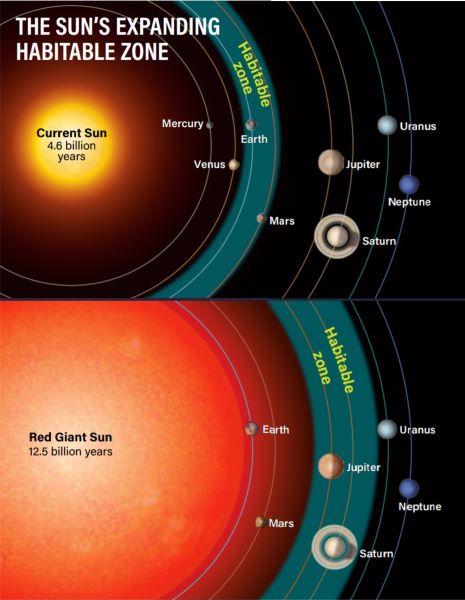
    The Sun’s Death

    • In ~5 billion years, the Sun becomes a red giant
    • Earth’s oceans evaporate
    • The planet becomes uninhabitable

    This is not speculation—it is based on stellar physics.

    Other Earth-Level Threats

    • Asteroid impacts (rare but real)
    • Supervolcanic eruptions
    • Nuclear war (civilization-ending, not planetary)
    • Climate change (human survival threat, not world-ending)

    Science distinguishes between extinction events and planetary destruction.


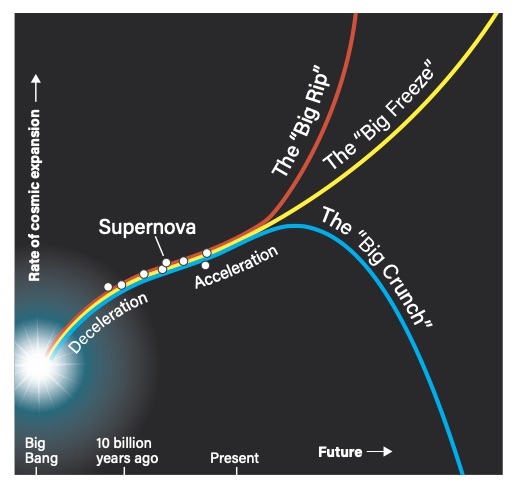
    3.2 The End of the Universe

    Heat Death (Most Accepted Theory)

    • The universe expands forever
    • Energy becomes evenly distributed
    • No usable energy remains
    • Time continues, but nothing happens

    This would occur in trillions of years.

    Big Crunch (Less Likely)

    • Expansion reverses
    • Universe collapses into itself

    Big Rip (Speculative)

    • Expansion accelerates infinitely
    • Atoms themselves tear apart

    All these scenarios occur on timescales so vast they defy human intuition.


    3.3 What Science Cannot Answer

    Science does not address:

    • Moral meaning
    • Purpose of existence
    • Why there is something rather than nothing

    This is where religion and philosophy remain relevant.


    4. Why Humans Obsess Over the End

    The idea of the world ending reflects:

    • Fear of death
    • Awareness of impermanence
    • Desire for justice
    • Need for narrative closure

    Psychologically, endings give meaning to beginnings. Religions use end-time narratives to encourage ethical behavior. Science uses end models to understand physical limits.


    5. Comparing Religion and Science

    AspectReligionScienceTimelineUnknown or symbolicExtremely long, calculableCauseDivine willPhysical lawsPurposeMoral judgment or renewalNone (descriptive only)FinalityOften renewalLikely irreversible

    Rather than contradicting each other, religion and science answer different questions.


    6. So, When Is the World Going to End?

    Short answer:
    No religion gives a date.
    Science predicts no sudden end anytime soon.

    Long answer:

    • Civilizations may collapse
    • Species may go extinct
    • The planet will eventually die
    • The universe will eventually fade

    But none of this implies an imminent, dramatic “doomsday.”


    7. Conclusion: The End as a Mirror of Humanity

    The question “When will the world end?” reveals more about us than about the universe.

    Religion uses the end to teach responsibility, humility, and hope.
    Science uses it to explore the limits of matter, energy, and time.

    Both agree on one thing: nothing lasts forever.

    The real question may not be when the world ends, but:

    How should we live, knowing that it will?

  • Hot Air Balloon Rides in Park View City: A Complete Guide to the Experience

    Hot air balloon rides in Park View City have emerged as one of the most talked-about recreational attractions for families, tourists, and adventure lovers. Combining scenic beauty with a calm yet thrilling aerial experience, these rides offer a rare opportunity to view the city from a completely different perspective. This article provides a detailed, well-explained overview of hot air balloon rides in Park View City, covering everything from the experience itself to safety, pricing, and why it has become so popular.


    Introduction to Hot Air Balloon Rides in Park View City

    Park View City is known for its modern infrastructure, green landscapes, and family-friendly environment. The introduction of hot air balloon rides has added a new dimension to entertainment within the society. These rides are usually organized during special events, festivals, weekends, or promotional occasions, attracting visitors from across the city.

    The experience is designed to be peaceful rather than extreme, making it suitable for people of different age groups who want to enjoy adventure without high risk.


    What to Expect During the Ride

    A hot air balloon ride in Park View City typically begins early in the morning or just before sunset. These time slots are chosen because of stable wind conditions and pleasant weather.

    The experience includes:

    • A short safety briefing before boarding
    • Inflation of the balloon, which itself is a visual attraction
    • A slow and smooth ascent into the air
    • Aerial views of parks, roads, residential blocks, and surrounding greenery

    The ride usually lasts between 10 to 20 minutes, depending on weather conditions and the package offered. The balloon does not move aggressively; instead, it floats gently, providing a calm and memorable journey.


    Scenic Views and Visual Appeal

    One of the biggest highlights of hot air balloon rides in Park View City is the view. From above, riders can see:

    • Wide green belts and landscaped parks
    • Organized residential blocks
    • Nearby natural surroundings
    • Sunrise or sunset views, depending on the time of the ride

    This makes the experience especially popular among photographers, couples, and families looking for a unique leisure activity.


    Safety Measures and Regulations

    Safety is a major concern for any aerial activity, and organizers usually follow standard safety protocols. These include:

    • Trained staff and professional balloon operators
    • Regular inspection of balloons and burners
    • Weight and passenger limits per ride
    • Mandatory safety instructions before takeoff

    Flights are strictly weather-dependent. In case of strong winds, rain, or poor visibility, rides are postponed or canceled to ensure passenger safety.


    Ticket Prices and Booking Information

    Ticket prices for hot air balloon rides in Park View City can vary depending on:

    • Event type or season
    • Ride duration
    • Demand and availability

    On average, prices range from moderate to premium, reflecting the exclusive nature of the experience. Tickets are often available through:

    • On-site booking during events
    • Official event organizers
    • Advance online or phone reservations

    Early booking is usually recommended, especially during weekends and public holidays.


    Who Can Enjoy the Ride?

    Hot air balloon rides in Park View City are suitable for:

    • Families looking for a memorable outing
    • Couples seeking a romantic experience
    • Tourists exploring new attractions
    • Photography and travel enthusiasts

    However, individuals with serious medical conditions, fear of heights, or mobility issues are usually advised to consult the organizers before booking.


    Why the Attraction Is Gaining Popularity

    Several factors contribute to the growing popularity of hot air balloon rides in Park View City:

    • Safe and controlled environment
    • Unique aerial views not available elsewhere
    • Social media appeal and visual content
    • Family-friendly and non-extreme adventure

    The activity also enhances the overall lifestyle image of the housing society, positioning it as a destination rather than just a residential area.


    Best Time to Visit

    The best time to enjoy hot air balloon rides in Park View City is during:

    • Spring and autumn seasons
    • Early mornings or late afternoons
    • Special festivals or community events

    Pleasant weather improves visibility and makes the ride more enjoyable.


    Final Thoughts

    Hot air balloon rides in Park View City offer a rare blend of adventure, relaxation, and scenic beauty. With proper safety arrangements and a visually stunning setting, the experience stands out as a premium recreational activity within the city. Whether you are a resident or a visitor, this aerial journey provides a fresh and unforgettable way to explore Park View City from above.

  • Gen Z Hot Tea Loyalty Trend: A Dangerous Viral Test That Deserves Criticism

    Introduction

    Social media trends come and go, but some leave behind real harm. One troubling example associated with Gen Z is the hot tea on hands loyalty trend, where individuals pour or splash hot tea on their hands to prove loyalty, trust, or emotional commitment. Although often presented as harmless fun or a joke, this trend highlights serious issues around peer pressure, online validation, and the growing normalization of pain as proof of loyalty.


    What Is the Hot Tea on Hands Loyalty Trend?

    The trend involves participants deliberately letting hot tea touch their hands, sometimes poured by a friend or partner, while recording the act for social media. The message behind it is unsettlingly simple: if someone is truly loyal, they should be willing to endure pain.

    It is often portrayed as:

    • A test of loyalty or trust
    • Proof of emotional strength
    • A public display of commitment

    Even when the tea is described as “not boiling,” hot liquids can still cause burns, blisters, and long-term skin damage, especially on the hands.


    How Did the Trend Spread?

    The trend spread mainly through short-form video platforms like TikTok, where shocking or dramatic content gains attention quickly. Unlike awareness or charity-based challenges, this trend serves no constructive purpose. Its only reward is views, comments, and momentary online attention.

    Peer tagging, reaction videos, and captions questioning someone’s loyalty have helped push the behavior further, particularly among teenagers and young adults.


    Why Some Gen Z Users Participate

    One major reason is the desire for validation. In online spaces, attention often feels like proof of worth. For some young users, brief approval from peers outweighs concerns about personal safety.

    Another factor is social pressure. Refusing to participate can lead to ridicule, exclusion, or being labeled disloyal. What appears to be a choice is often silent coercion.

    There is also a cultural shift toward performative relationships, where loyalty is no longer built through time and trust but through dramatic gestures designed for public display.


    Why the Trend Deserves Criticism

    This trend is problematic on multiple levels.

    First, pain is not proof of loyalty. Healthy relationships do not require physical suffering to demonstrate trust or care. Any dynamic that demands harm as validation is inherently unhealthy.

    Second, it normalizes behavior that sits dangerously close to self-harm. Intentionally causing injury, even in a social context, can desensitize individuals to pain and blur psychological boundaries.

    Third, it promotes emotional manipulation. The unspoken message is clear: if you truly care, you will hurt yourself. This logic encourages control rather than mutual respect.

    Finally, there is no accountability. The internet applauds the act, but it does not deal with the consequences. Once the video ends, the injuries remain.


    Health Risks Often Ignored

    Medical professionals warn that exposure to hot liquids can result in:

    • First- and second-degree burns
    • Permanent scarring
    • Nerve damage in the hands
    • Increased risk of infection

    These injuries can affect daily activities long after the trend has faded.


    The Bigger Cultural Issue

    The hot tea loyalty trend reflects a wider problem in digital culture: the belief that suffering equals sincerity. When pain becomes content, empathy is replaced by entertainment, and personal well-being is sacrificed for visibility.

    Calling out this trend is not an attack on Gen Z. It is a necessary criticism of a system that rewards harmful behavior while disguising it as loyalty or fun.


    Conclusion

    The hot tea on hands loyalty trend is not brave, meaningful, or harmless. It is reckless, manipulative, and unnecessary. Loyalty is shown through respect, consistency, and care—not through burns or public pain.

    Trends disappear. The damage they cause does not.

  • Social Media Addiction and Its Hidden Dangers

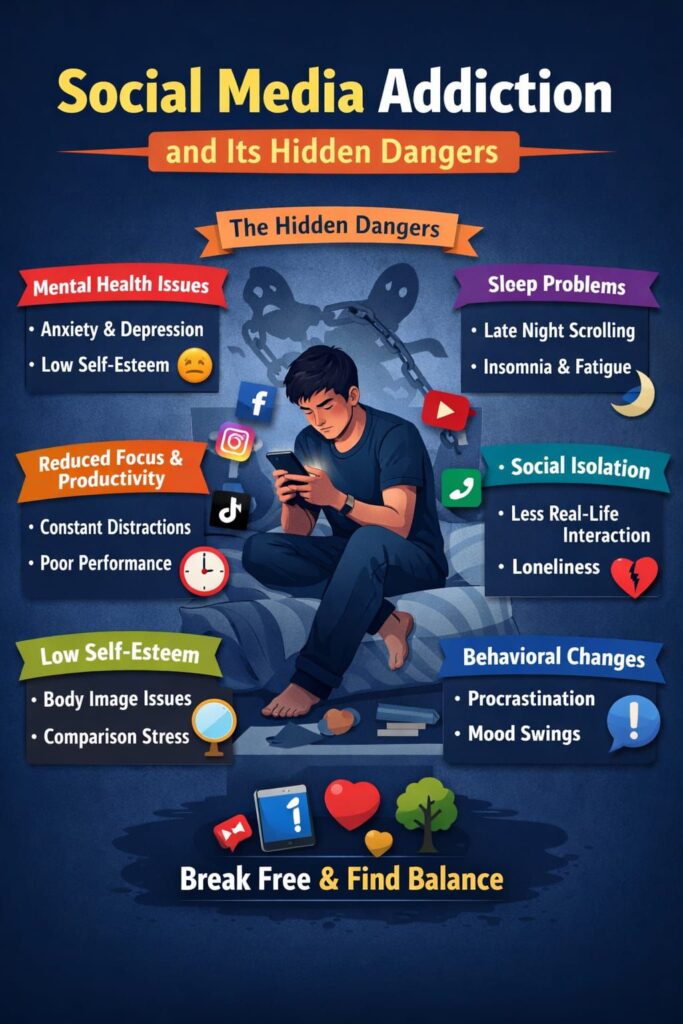
    In today’s digital world, social media has become an essential part of daily life. Platforms such as Facebook, Instagram, TikTok, YouTube, and X (formerly Twitter) allow people to communicate, share information, and stay connected across the globe. While social media offers many benefits, excessive and uncontrolled use has given rise to a growing concern known as social media addiction. This issue often develops quietly and brings several hidden dangers that affect mental health, productivity, relationships, and overall well-being.

    Understanding these risks is important, especially as screen time continues to increase among both young people and adults.


    What Is Social Media Addiction?

    Social media addiction refers to a pattern of behavior where individuals feel a strong urge to constantly check social media platforms, even when it interferes with daily responsibilities. Unlike casual browsing, addiction involves:

    Spending excessive hours scrolling feeds
    Feeling restless or uncomfortable when not online
    Ignoring work, studies, or family time
    Repeated failed attempts to reduce usage

    Although it is not officially classified as a medical disorder, experts agree that problematic social media use shows similarities to behavioral addictions due to its impact on the brain’s reward system.


    Rising Usage and Global Trends

    The rapid expansion of internet access has significantly increased social media usage worldwide. Recent estimates show:

    Over 4.5 billion people actively use social media globally
    The average user spends more than 2 hours per day on social platforms
    Teenagers and young adults are the most active users
    A noticeable percentage of users report difficulty controlling their usage

    These figures highlight how deeply social media is embedded in modern lifestyles, increasing the risk of overuse and dependency.


    Hidden Dangers of Social Media Addiction

    While social media may seem harmless, excessive use can quietly create long-term problems. Below are some of the most common hidden dangers.


    1. Impact on Mental Well-Being

    One of the most serious effects of social media addiction is its impact on mental health. Constant exposure to carefully curated images and lifestyles can lead to unhealthy comparisons. Over time, this may result in:

    Increased stress and emotional fatigue
    Feelings of inadequacy or low self-confidence
    Mood swings and irritability
    Difficulty managing emotions without online engagement

    Endless scrolling and the desire for likes or validation can create emotional dependence, reducing inner satisfaction and self-worth.


    2. Reduced Focus and Productivity

    Excessive social media use often leads to frequent interruptions throughout the day. Notifications, messages, and updates can make it difficult to concentrate on tasks such as work or studies.

    Research indicates that multitasking between social media and important activities reduces efficiency and increases errors. Students and professionals who frequently check their phones may struggle with time management, delayed deadlines, and reduced performance.


    3. Sleep Disruption and Fatigue

    Another hidden danger of social media addiction is its effect on sleep patterns. Many users scroll through social media late at night, which can:

    Delay sleep onset
    Reduce sleep quality
    Cause morning fatigue and low energy

    Prolonged sleep deprivation can affect memory, mood, and physical health, making daily routines more challenging.


    4. Social Isolation Despite Connectivity

    Although social media is designed to connect people, addiction can lead to reduced real-world interaction. Spending too much time online may result in:

    Less face-to-face communication
    Weakening of family bonds
    Reduced social skills
    Feelings of loneliness despite being digitally connected

    This imbalance can gradually affect emotional health and personal relationships.


    5. Effects on Self-Esteem and Body Image

    Social media platforms often showcase edited images, achievements, and ideal lifestyles. Continuous exposure to such content can create unrealistic expectations, particularly among young users.

    As a result, individuals may experience dissatisfaction with their appearance, lifestyle, or progress, which can lower self-esteem and increase self-doubt.


    6. Behavioral and Emotional Changes

    Addictive use of social media can also influence behavior patterns, including:

    Increased procrastination
    Short attention span
    Reduced patience
    Difficulty enjoying offline activities

    Over time, these changes can affect personal growth and emotional stability.


    Why Social Media Becomes Addictive

    Social media platforms are designed to keep users engaged. Features such as infinite scrolling, notifications, and instant feedback activate reward mechanisms in the brain. Other contributing factors include:

    Fear of missing out (FOMO)
    Desire for social approval
    Boredom or emotional escape
    Peer pressure and online trends

    Without proper limits, these elements can turn normal usage into compulsive behavior.


    Signs of Social Media Addiction

    Recognizing the early signs can help prevent long-term harm. Common indicators include:

    Constant urge to check social media
    Anxiety when internet access is limited
    Neglecting responsibilities or hobbies
    Using social media to escape stress frequently

    If these signs persist, it may be time to reassess digital habits.


    Practical Ways to Control Social Media Use

    Managing social media addiction does not require complete withdrawal. Instead, healthy balance is key.

    Set Daily Time Limits

    Use built-in phone tools to track and limit screen time.

    Disable Unnecessary Notifications

    Reducing alerts can lower the urge to check apps repeatedly.

    Create Screen-Free Zones

    Avoid phone usage during meals, family time, and before sleep.

    Engage in Offline Activities

    Exercise, reading, and hobbies help reduce dependence on digital entertainment.

    Practice Mindful Usage

    Use social media with intention rather than habit.


    Conclusion

    Social media addiction is a growing concern that often develops unnoticed. While these platforms offer valuable opportunities for connection and learning, excessive use can lead to mental stress, reduced productivity, sleep problems, and weakened relationships.

    By understanding the hidden dangers and adopting healthier digital habits, individuals can enjoy the benefits of social media without allowing it to control their lives. Awareness, moderation, and balance remain the most effective tools for maintaining digital well-being in an increasingly connected world.

  • Why Youth Are Losing Interest in Marriage: Causes, Trends & Impacts

    Marriage has long been considered a cornerstone of adulthood across cultures — a transition into stability, family life, and social recognition. However, in recent decades, this view has shifted dramatically. Around the world, young people are marrying later or not at all, and this change is reshaping societies, economies, and even future demographics. In this article, we explore why youth are losing interest in marriage, backed by statistics, global trends, and cultural insights.

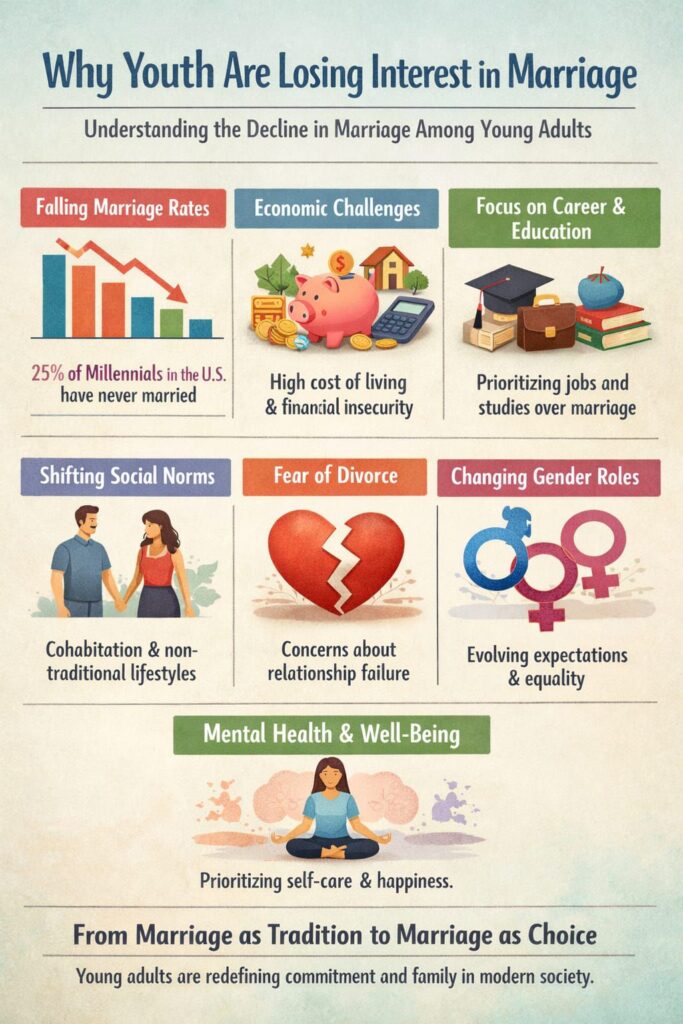
    1. A Clear Trend: Marriage Rates Are Falling Worldwide

    Marriage rates have been declining for years, particularly among Millennials (born ~1981–1996) and Gen Z (born ~1997–2012). Research shows that:

    • 25% of 40-year-old Millennials in the U.S. have never married, a record high and far above past generations.
    • In the United States, the median age of first marriage has risen to nearly 29.8 for men and 28.4 for women — significantly older than a few decades ago.
    • Among high school seniors, only about 61% of girls now say they want to get married someday, down from 83% in 1993.

    Globally, countries like China have witnessed dramatic declines in marital registrations — about 20% fewer marriages in 2024 compared with 2023, the lowest in decades.

    These trends indicate not just delayed marriage, but a shift in how young adults perceive marriage’s importance in life.

    2. Economic Pressures & Financial Instability

    One of the strongest reasons youth delay or avoid marriage is money.

    Rising Costs of Living and Financial Insecurity

    • High housing prices, stagnant wages, and job market uncertainty make setting up a household difficult for many young adults.
    • Weddings themselves can be expensive — in some countries, costs can reach tens of thousands of dollars, making marriage feel like a financial luxury.
    • Young people often prioritize financial stability (secure job, saving for housing) before marriage, which delays family formation.

    For many, marriage is no longer a milestone but a financial risk, especially in economies with high unemployment or inflation.

    3. Career, Education and Personal Development

    Young adults today are more focused on education and career goals than prior generations.

    • With widespread access to higher education, many delay marriage until after postgraduate studies or stable employment.
    • Professional aspirations often mean putting social milestones — including marriage and children — on hold.

    This shift is especially true among women, whose participation in higher education and the workforce has increased sharply in recent decades, giving them greater autonomy and life choices.

    In many cultures, this change reflects a broader emphasis on self-actualization, skill development, and individual identity before committing to lifelong partnership.

    4. Changing Social Norms & Cultural Values

    Marriage used to be viewed as a necessary rite of passage. Today, that assumption is weakening.

    • Couples are increasingly choosing cohabitation without marriage, viewing it as equally legitimate.
    • Non-traditional relationships, including long-term partnerships without legal ties, are now socially acceptable in many regions.
    • Social media and globalized culture expose youth to diverse lifestyles where independence and personal choice are emphasized.

    This cultural shift is part of a broader acceptance of alternative life paths — travel, entrepreneurship, creative pursuits — which don’t always involve marriage.

    5. Gender Roles, Expectations & Perceptions

    Expectations around marriage roles — within family, economy, and gender — continue to evolve.

    • Historical stereotypes about marriage being “necessary for women” are fading as women gain financial independence.
    • Research highlights that young women today are less inclined to view marriage as essential compared to even a generation ago.
    • Meanwhile, pressures on men to be financially established before marriage can create mismatches in readiness and expectations.

    These trends reflect broader societal conversations about gender equity, partnership dynamics, and emotional fulfillment vs. tradition.

    6. Fear of Divorce and Relationship Fragility

    Divorce rates — particularly in urban and developed societies — have influenced young people’s perspective on marriage.

    • Many youth witness divorce in families or social circles, leading to uncertainty about long-term commitment.
    • Marriage is often seen as a risk rather than a guarantee of happiness.

    This fear of relationship breakdown motivates some to favor flexible arrangements over legal or traditional marriage.

    7. Mental Health, Individual Well-Being & Priorities

    Today’s youth often prioritize mental health, well‐being, and personal growth over conventional milestones.

    • Large numbers report that emotional health and self-discovery are core goals in early adulthood.
    • Many view marriage as potentially restrictive or stressful rather than inherently fulfilling.

    This trend shows how self-care and personal satisfaction have become central drivers of life decisions.

    Conclusion: Marriage Is Not Dead — It’s Evolving

    The idea that young people are “losing interest in marriage” can be misleading. Rather than rejecting love or partnership entirely, many are redefining what commitment and family mean in the modern world.

    Marriage rates are declining or delayed due to economic realities, educational priorities, cultural shifts, and changes in personal values. Young adults today seek financial stability, personal fulfillment, emotional intelligence, and flexible life planning.

    This transformation doesn’t signal the end of marriage as an institution, but its evolution — from a default life stage to a deliberate choice shaped by contemporary realities.

  • When Influencers Share Their Family Lives Online: Where Does Transparency End and Privacy Begin?

    Rajab Butt and Eman Marriage Status: Truth Behind the Rumours and Facts

    In the digital age, where social media updates travel faster than verified news, public figures often find their personal lives under constant scrutiny. Recently, Pakistani YouTuber and social media influencer Rajab Butt and his wife Eman have been at the center of online discussion, with claims circulating that the couple has ended their marriage. This has raised a key question among fans and followers: Is this news real, or just another social media rumour?

    Who Is Rajab Butt and Why Is His Personal Life So Visible?

    Rajab Butt is a well-known Pakistani content creator with millions of followers across YouTube, Instagram, and TikTok. He gained popularity through family-oriented vlogs, lifestyle content, and daily routines, which helped him build a strong connection with his audience.

    His marriage to Eman attracted widespread attention when it was announced publicly. Due to the openness of his online content, viewers naturally became invested in his personal life. However, this same visibility also made the couple vulnerable to public assumptions whenever changes were noticed.

    How Did Divorce Rumours Begin?

    The rumours surrounding Rajab Butt and Eman’s marriage began primarily due to changes in social media activity, not because of any official announcement.

    Key factors that contributed to speculation include Eman appearing less frequently in Rajab’s vlogs, a noticeable reduction in joint social media posts, third-party commentary on TikTok and YouTube, and fan pages spreading unverified claims.

    It is important to note that social media silence or reduced visibility does not confirm marital separation. Many public figures choose to limit personal exposure for privacy reasons.

    Has Any Official Divorce Been Confirmed?

    No official confirmation of divorce exists.

    As of now, there are no verified legal records, court documents, or public statements confirming that Rajab Butt and Eman have ended their marriage. Rajab Butt himself has addressed these rumours on multiple occasions, stating that claims circulating online are inaccurate.

    He has publicly clarified that the rumours are based on assumptions, not facts, personal matters are being kept private, and social media speculation should not be treated as truth.

    From a journalistic and legal perspective, a divorce cannot be considered real unless officially announced or legally documented, neither of which has occurred.

    What Has Rajab Butt Said About the Situation?

    Rajab Butt has openly responded to online rumours, urging followers not to rely on gossip or unofficial sources. While acknowledging that every relationship faces challenges, he has not declared a separation or divorce.

    His responses have focused on correcting misinformation, requesting privacy, and highlighting the emotional impact of rumours. These statements indicate transparency without revealing private details, which aligns with responsible public communication.

    Why Has Eman Stayed Quiet?

    Eman has largely remained out of the public spotlight. Unlike many influencer spouses, she does not actively engage with controversy or online debates. Her silence has been misinterpreted by some users as confirmation of rumours, but in reality, silence is not evidence.

    There are many valid reasons why someone may choose not to respond publicly, including a desire for privacy, avoidance of online negativity, and personal comfort with staying offline.

    The Role of Social Media in Spreading Unverified News

    Social media platforms often reward sensational content, which can lead to the rapid spread of unverified information. Algorithms prioritize engagement, not accuracy, making rumours appear more credible than they are.

    Common issues include clickbait headlines, edited clips taken out of context, and opinion-based commentary presented as facts. This highlights the importance of relying on credible sources and direct statements rather than speculation.

    What Do Media Ethics and Experts Say?

    Media experts emphasize that marital status is a private legal matter. Without official confirmation, reporting such claims as facts can be misleading and harmful.

    Responsible journalism requires verified sources, neutral language, avoidance of assumptions, and respect for privacy. Most credible platforms covering this issue have clearly stated that the divorce claims remain unproven.

    Final Verdict: Rumour or Reality?

    Based on all available and verified information, there has been no confirmed divorce announcement, no legal documentation, public denial of rumours exists, and the issue is driven mainly by online speculation.

    Conclusion

    The claim that Rajab Butt and Eman have ended their marriage is currently a rumour, not a confirmed reality. Until an official statement or legal confirmation is provided, such news should be treated with caution. Readers are encouraged to rely on verified sources and avoid spreading unconfirmed information.

    When influencers choose to share every detail of their daily lives on social media, it inevitably begins to affect their routine and personal well-being. While family vlogging and constant online presence can be a significant source of income, it also opens the door to unnecessary interference, criticism, and at times abusive behavior—both from outsiders and within online exchanges involving family members. Such public exposure often turns private disagreements into public spectacles, leading to verbal abuse, disrespect, and emotional distress, none of which can be considered healthy or well-mannered. Family matters are deeply personal and should ideally be resolved within the family, not debated or displayed on social media platforms. Even for those who rely on family content for their livelihood, it is not necessary—or responsible—to show every aspect of personal life. Maintaining boundaries and hiding certain private moments is essential, as privacy is not a weakness but a necessity for preserving dignity, relationships, and mental peace.

  • How to Choose the Right Life Partner: A Practical Guide for People in Pakistan

    Choosing a life partner is one of the most important decisions a person makes in their lifetime. In Pakistan and across much of Asia, marriage is not only a personal commitment but also a social and family-centered institution. The decision affects emotional well-being, financial stability, family harmony, and future generations. Making this choice thoughtfully can lead to a peaceful and fulfilling life, while a rushed or pressured decision can result in long-term challenges.

    Understanding Compatibility in Marriage

    Compatibility is the foundation of a successful marriage. In Pakistani society, marriages often begin through family arrangements, but long-term happiness depends on how well two individuals align in their thinking, values, and lifestyle. Compatibility does not mean being identical; it means being able to understand, respect, and support each other despite differences.

    Key areas of compatibility include emotional maturity, religious and moral values, communication style, financial mindset, and expectations from family life. When these areas are ignored, problems often surface after marriage.

    Case Study: Value Alignment in an Arranged Marriage

    A couple from Faisalabad entered an arranged marriage with family approval. Before finalizing the proposal, both families allowed several supervised meetings where religious views, lifestyle expectations, and long-term goals were discussed. Because both partners shared similar values regarding faith, simplicity, and mutual respect, they were able to build trust early. Five years into marriage, the couple reports strong emotional stability despite facing financial ups and downs.

    Cultural Realities of Marriage in Pakistan

    Marriage in Pakistan is deeply influenced by cultural traditions, religious beliefs, and family involvement. Common factors include early marriage expectations, caste or sect preferences, and limited interaction before marriage. While these traditions aim to protect family values, they can sometimes limit open discussion between potential partners.

    Being aware of these cultural realities allows individuals to approach marriage more consciously. Respecting tradition while also ensuring personal compatibility creates a healthier balance.

    Case Study: Balancing Tradition and Choice

    In a joint-family household in Rawalpindi, a young woman accepted an arranged proposal mainly due to family pressure. However, she requested time to communicate with her potential spouse. During this period, both realized their expectations about career and household roles differed significantly. With open discussion and family support, the proposal was respectfully declined, preventing future conflict.

    Essential Qualities to Look for in a Life Partner

    A good life partner demonstrates honesty, respect, patience, and responsibility. Character matters more than appearance or social status. Someone with emotional intelligence can handle disagreements calmly, listen with empathy, and show respect in difficult situations.

    Shared values are equally important. Similar views on religion, ethics, and life priorities help couples make decisions together without constant conflict. Differences can exist, but core beliefs should align.

    Case Study: Emotional Intelligence in Marriage

    A couple from Multan faced disagreements during their first year of marriage due to misunderstandings with in-laws. Instead of reacting emotionally, the husband communicated calmly and addressed concerns respectfully with both his wife and family. This approach helped reduce tension and strengthened trust within the marriage.

    Financial Understanding and Responsibility

    Marriage involves shared responsibilities, so financial understanding is crucial. Discussing income expectations, spending habits, savings, and career plans before marriage helps avoid stress later.

    Case Study: Financial Transparency Prevents Conflict

    In Karachi, a newly married couple struggled because financial responsibilities were never discussed before marriage. After seeking guidance and openly discussing budgets and priorities, they developed a shared financial plan. This transparency significantly reduced conflict and improved their relationship.

    The Importance of Family Compatibility

    In Pakistan, marriage often connects two families, not just two individuals. Family compatibility matters, but it should not override mutual respect between spouses. A supportive partner understands how to balance family obligations while prioritizing the marriage.

    Healthy boundaries are essential. A life partner should be able to stand up respectfully for their spouse and maintain harmony without allowing unnecessary interference.

    Case Study: Setting Healthy Family Boundaries

    A couple living in a joint family in Gujranwala faced continuous interference in personal matters. Through respectful communication, the husband set clear boundaries with his family while maintaining respect. This balance improved both marital satisfaction and family relationships.

    Red Flags That Should Not Be Ignored

    Certain warning signs should never be dismissed, even under family or social pressure. These include dishonesty, aggressive behavior, lack of respect, extreme control, and unwillingness to communicate.

    Case Study: Ignoring Red Flags

    A woman from Hyderabad noticed controlling behavior before marriage but ignored it due to social pressure. After marriage, the behavior intensified, leading to emotional distress. This case highlights the importance of recognizing and addressing red flags early.

    Communication Before Marriage

    Open communication before marriage is essential, even in traditional or arranged settings. Discussing expectations about career, education, children, living arrangements, and responsibilities builds clarity and trust.

    Case Study: Power of Pre-Marital Communication

    A couple from Islamabad engaged in structured pre-marital discussions with family involvement. By clearly discussing expectations, they avoided misunderstandings and built a strong foundation of trust before marriage.

    Religious and Moral Perspective

    From an Islamic perspective, marriage is based on character, faith, and responsibility. While attraction is important, good character and moral values are emphasized for long-term success. This approach aligns well with the cultural and religious values of Pakistani society.

    Case Study: Faith as a Foundation

    A religiously aligned couple from Peshawar relied on shared faith during difficult times, including job loss and health challenges. Their commitment to patience and mutual support strengthened their bond.

    Balancing Emotions and Logic

    Choosing a life partner should involve both the heart and the mind. Decisions based purely on emotion or purely on pressure often lead to regret. A balanced approach—considering feelings, practical realities, family guidance, and personal values—leads to wiser choices.

    Conclusion

    Choosing the right life partner is not about finding someone perfect, but about finding someone compatible, respectful, and willing to grow together. For people in Pakistan, the key lies in balancing cultural traditions with personal understanding and mutual respect. A well-chosen partner brings peace, stability, and companionship, forming the foundation of a successful and meaningful life.

  • Why AI Tools Are the Most Searched Topic Worldwide Right Now

    Artificial intelligence has moved from being a futuristic concept to a daily-use technology. Today, millions of people around the world search for AI tools to help with writing, studying, business, design, coding, and productivity. This rapid shift has made AI one of the most searched and discussed topics globally, cutting across countries, professions, and age groups.

    AI tools are no longer limited to tech experts. Students, freelancers, entrepreneurs, and everyday users are actively searching for ways to use artificial intelligence to save time, increase efficiency, and gain a competitive advantage.

    The Sudden Rise in AI-Related Searches

    Search interest in AI tools has increased dramatically because people want practical solutions. Instead of reading about what AI is, users now search for how to use it. Queries related to AI writing tools, image generators, video creation, automation, and data analysis appear daily in trending searches.

    This rise is driven by accessibility. AI tools are now easy to use, affordable, and available online, which encourages more people to search, test, and adopt them.

    Why People Are Turning to AI Tools

    One of the main reasons people search for AI tools is time-saving. Tasks that once took hours can now be completed in minutes. Writing emails, creating content, designing visuals, or summarizing information has become faster and easier.

    Another reason is cost efficiency. Many individuals and small businesses cannot afford large teams, so they search for AI tools that can perform multiple tasks at a lower cost. This practical benefit has pushed AI-related searches to record levels.

    AI Tools in Daily Life

    AI tools are now part of everyday routines. Students search for AI tools to help with assignments, summaries, and explanations. Content creators look for AI to generate ideas, scripts, and visuals. Business owners search for AI tools to manage marketing, customer support, and analytics.

    This wide range of use cases explains why AI searches are not limited to one region or industry. The demand is global and continuous.

    The Role of Social Media in AI Popularity

    Social media has played a major role in increasing AI-related searches. Short videos demonstrating AI capabilities often go viral, leading users to search for the same tools. When people see impressive results, curiosity drives them to search and try the technology themselves.

    This cycle keeps AI tools consistently trending across search engines.

    AI and Job-Related Searches

    Another major driver of AI searches is career concern. People search for how AI will affect jobs, which skills are future-proof, and how to use AI to stay relevant. This has increased searches for AI learning resources, tools, and certifications.

    Rather than avoiding AI, users are actively searching for ways to work alongside it.

    Why AI Tool Articles Perform Extremely Well for SEO

    AI-related content performs well because search intent is strong. Users are not browsing casually; they are looking for solutions. Articles that explain tools, use cases, benefits, and limitations attract high engagement and repeat visits.

    AI topics also allow both short-term trending traffic and long-term evergreen growth, making them ideal for new and growing websites.

    Global Interest in AI Tools

    AI tool searches are not limited by geography. People from developed and developing countries alike search for the same solutions. This global interest makes AI one of the strongest topics for international traffic.

    Clear and simple explanations perform best because users come from different educational and language backgrounds.

    Trust and Accuracy in AI Content

    As interest grows, users also search for reliable and honest information. They want to know what AI can and cannot do. Articles that explain AI realistically, without exaggeration, tend to build more trust and perform better over time.

    Accuracy and clarity help content stay relevant even as tools evolve.

    The Future of AI Searches

    AI searches are expected to continue growing as tools become more advanced and integrated into daily life. New updates, features, and applications will keep generating fresh search demand.

    This makes AI-related topics one of the most sustainable content opportunities available today.

    Final Thoughts

    AI tools have become a central part of modern life, which is why they dominate global search trends. People search for AI to save time, improve productivity, and adapt to a changing world. This topic offers massive potential for organic traffic because demand is high, global, and ongoing.

    Writing high-quality, easy-to-understand content about AI tools gives websites a powerful opportunity to grow and stay relevant in the digital age.

  • The Biggest Viral Internet Moments That Captured Global Attention

    The internet has become the fastest place where moments turn into history. Every year, and sometimes every single day, something unexpected captures global attention and spreads across platforms within minutes. These viral internet moments are not limited by borders, languages, or cultures. They reflect how people react, connect, and communicate in the digital age.

    From emotional videos to shocking news, funny clips, and unexpected events, viral moments shape online conversations and drive massive search traffic worldwide.

    What Makes an Internet Moment Go Viral

    A viral internet moment usually starts with a strong emotional reaction. Content that makes people laugh, feel surprised, inspired, angry, or curious spreads faster than anything else. When users feel something, they share it.

    Another key factor is simplicity. Viral content is often easy to understand within seconds. Short videos, images, or clear messages perform better because people consume content quickly on their phones.

    Timing also plays a major role. When content aligns with current events, social moods, or ongoing discussions, it spreads rapidly across social media and search engines.

    How Social Media Platforms Fuel Virality

    Social media platforms are the main engines behind viral moments. Algorithms are designed to promote content that receives fast engagement. Once a post starts gaining likes, comments, and shares, it is pushed to more users.

    As content spreads on social media, people turn to search engines to learn more. This creates a surge in search volume related to the viral topic. Articles explaining the background, meaning, or consequences of the moment perform extremely well during this phase.

    Types of Viral Internet Moments

    Viral moments usually fall into a few recognizable categories. Understanding these helps explain why people search for them so intensely.

    Emotional and Inspirational Moments

    Videos showing kindness, personal achievements, reunions, or life-changing events often go viral because they create positive emotional connections. People search for these moments to rewatch, share, and understand the story behind them.

    Shocking or Unexpected Events

    Unexpected incidents, public mistakes, or surprising announcements quickly capture attention. Curiosity drives people to search for explanations, updates, and reactions.

    Funny and Relatable Content

    Humor spreads faster than almost anything else online. Relatable jokes, everyday struggles, and humorous situations often go viral because people see themselves in them.

    Celebrity and Public Figure Moments

    Anything involving well-known personalities attracts massive attention. A single appearance, statement, or unexpected action can dominate searches worldwide within hours.

    Social Media Challenges and Trends

    Challenges, hashtags, and online movements often encourage participation. As more users join in, search volume grows as people look for rules, origins, and examples.

    Why People Search for Viral Moments

    People search for viral moments for several reasons. Some want to understand what everyone is talking about. Others want context after seeing a short clip online. Many users search to confirm facts, read opinions, or see different reactions.

    This behavior turns viral content into a powerful driver of organic traffic. When people feel left out of a conversation, they search to catch up.

    The Role of Search Engines in Viral Content

    Search engines act as the second stage of virality. Social media introduces the moment, but search engines provide depth. Users look for timelines, explanations, and detailed coverage.

    Articles that answer common questions such as what happened, why it matters, and how people reacted tend to rank well. This is why viral moment coverage is highly valuable for content creators and websites.

    How Viral Moments Impact Online Culture

    Viral internet moments influence language, humor, opinions, and even behavior. Memes are created, phrases become popular, and online discussions shape public perception.

    Some viral moments also lead to real-world consequences, such as social change, brand growth, or public accountability. This impact increases long-term interest and keeps search traffic active beyond the initial spike.

    Why Viral Moment Articles Perform Well for SEO

    Content about viral moments performs well because it matches high user intent. People actively search for information when something goes viral. Competition is often lower in the early stages, allowing well-written articles to rank quickly.

    Additionally, viral moment articles often receive backlinks, social shares, and repeat visits, which strengthens overall website authority.

    Global Reach of Viral Internet Moments

    One of the most powerful aspects of viral content is its global reach. A video uploaded in one country can trend worldwide within hours. Language barriers matter less when visuals and emotions are strong.

    This makes viral moment content ideal for websites targeting international audiences, including readers from different regions and cultures.

    How Long Viral Moments Stay Relevant

    Some viral moments disappear within days, while others remain relevant for months or even years. Moments connected to larger issues, cultural shifts, or ongoing discussions tend to last longer.

    By updating articles and adding new developments, websites can extend the lifespan of viral content and maintain search visibility.

    How to Write About Viral Moments Effectively

    Effective viral moment coverage focuses on clarity and neutrality. Explaining what happened, providing context, and summarizing public reactions helps readers quickly understand the situation.

    Using simple language and structured sections improves readability and search performance. Avoiding unnecessary opinions helps content remain trustworthy and widely shareable.

    Final Thoughts

    Viral internet moments are a reflection of how the world connects online. They capture attention, spark conversations, and drive massive global searches. From emotional stories to shocking events and humorous trends, these moments shape digital culture and search behavior.

    Writing about viral internet moments is one of the most powerful ways to attract global traffic. By providing clear, timely, and human-centered content, a website can stay relevant and grow alongside the ever-changing internet landscape.