Category: Entertainment & Media

  • Most Popular Car Colors in Pakistan: Why White, Silver, and Black Dominate the Market


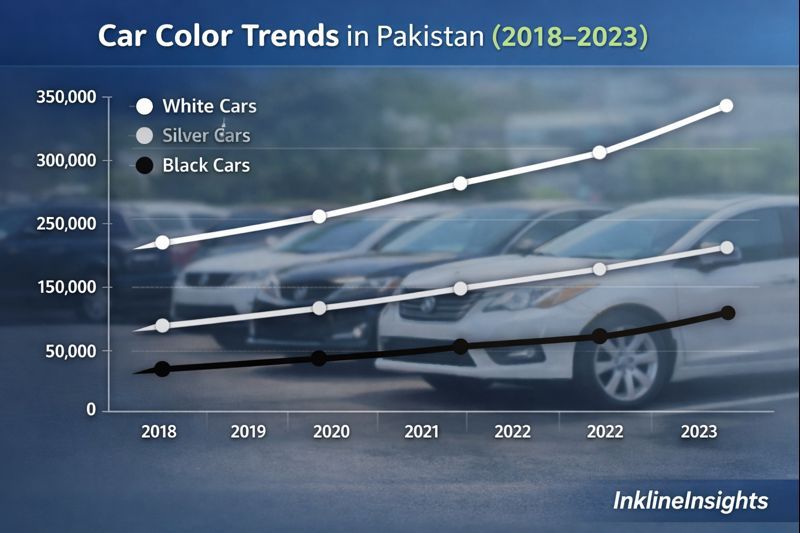
    Choosing the right car color in Pakistan is more than just a style decision. Due to climate conditions, resale value, fuel efficiency, and market demand, certain colors dominate the automotive industry. White, silver, and black are the most popular car colors in Pakistan, and they continue to overwhelm the local market year after year.

    This article explores the most common car colors in Pakistan, their scientific impact on heat absorption, price comparison, and how color choice affects comfort, maintenance, and resale value.


    Why White Cars Are Most Popular in Pakistan

    White is the best-selling car color in Pakistan, especially for locally manufactured vehicles. One major reason for this trend is Pakistan’s hot climate.

    Scientific Benefits of White Cars

    From a scientific point of view, white and light-colored cars reflect most of the sunlight and heat energy. Unlike dark colors, white surfaces are poor absorbers of heat and act as effective reflectors.

    Advantages of white cars in Pakistan:

    • Lower interior temperature in summer
    • Reduced air conditioner usage
    • Better fuel efficiency
    • Increased comfort during long drives
    • Longer life of interior materials

    Because white reflects heat waves efficiently, it helps the car remain cooler even when parked under direct sunlight.

    Resale Value and Market Demand

    White cars also offer higher resale value in Pakistan. They are easier to sell, cheaper to repaint, and widely accepted by buyers. Due to their popularity, white cars often maintain stable prices in the used car market.


    Silver Cars in Pakistan: A Balance of Style and Practicality

    Silver is another high-demand car color in Pakistan, particularly among office users and families.

    Advantages of Silver Color Cars

    Silver cars:

    • Reflect heat better than dark colors
    • Hide dust, scratches, and swirl marks
    • Require less frequent cleaning
    • Maintain a modern and professional appearance

    In cities with high pollution and dust, silver cars are considered low-maintenance vehicles, making them ideal for daily commuting.


    Black Cars in Pakistan: Luxury with a Cost

    Black cars are widely associated with luxury, power, and prestige. They are especially popular in executive and high-end vehicle categories.

    Scientific Drawbacks of Black Cars

    Scientifically, black is a strong absorber of heat. Dark-colored vehicles absorb more thermal energy, which increases the cabin temperature.

    Disadvantages of black cars:

    • Higher heat absorption
    • Increased AC usage
    • Slightly higher fuel consumption
    • Visible dust, scratches, and fading

    Despite these drawbacks, black remains a preferred color for those who prioritize aesthetics and status.


    Car Color and Price Comparison in Pakistan

    Car color can also influence vehicle pricing.

    • White cars are generally more affordable and widely available
    • Silver cars fall in the mid-price range
    • Black cars are often slightly more expensive due to higher demand in premium segments

    Black vehicles may cost more due to maintenance expenses, detailing requirements, and luxury perception rather than production cost.


    Best Car Color for Pakistan’s Climate

    Considering Pakistan’s weather conditions, light-colored and shiny cars perform better. These colors reflect more sunlight, reducing heat absorption and improving driving comfort.

    Best choices by priority:

    • For hot weather and fuel efficiency: White
    • For low maintenance and durability: Silver
    • For luxury and appearance: Black

    Final Verdict: Which Car Color Should You Choose?

    In Pakistan, white, silver, and black dominate the automobile market for practical and economic reasons. White remains the most preferred due to its cooling effect, high resale value, and affordability. Silver offers a balance between style and maintenance, while black delivers elegance at the cost of comfort and upkeep.

    Understanding the science of car colors, market trends, and climate impact can help buyers make a smarter investment decision.

  • Rajab Butt and Nadeem Nani Wala Arrest News: Latest Reality and Court Updates


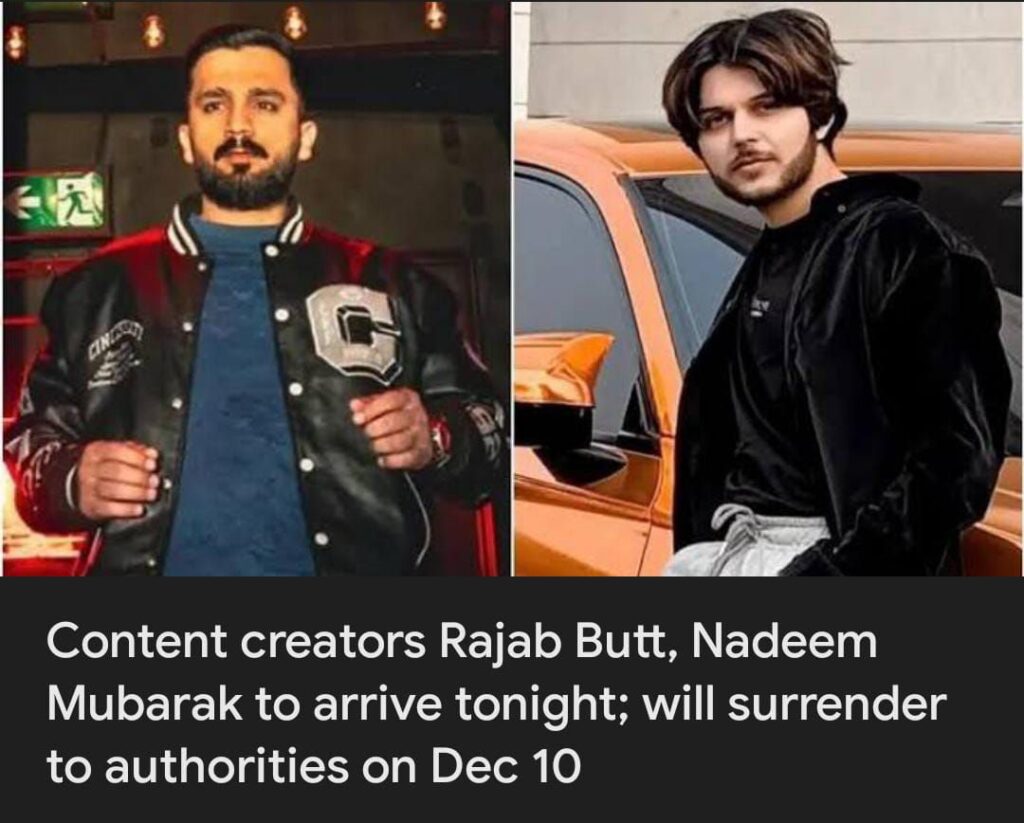
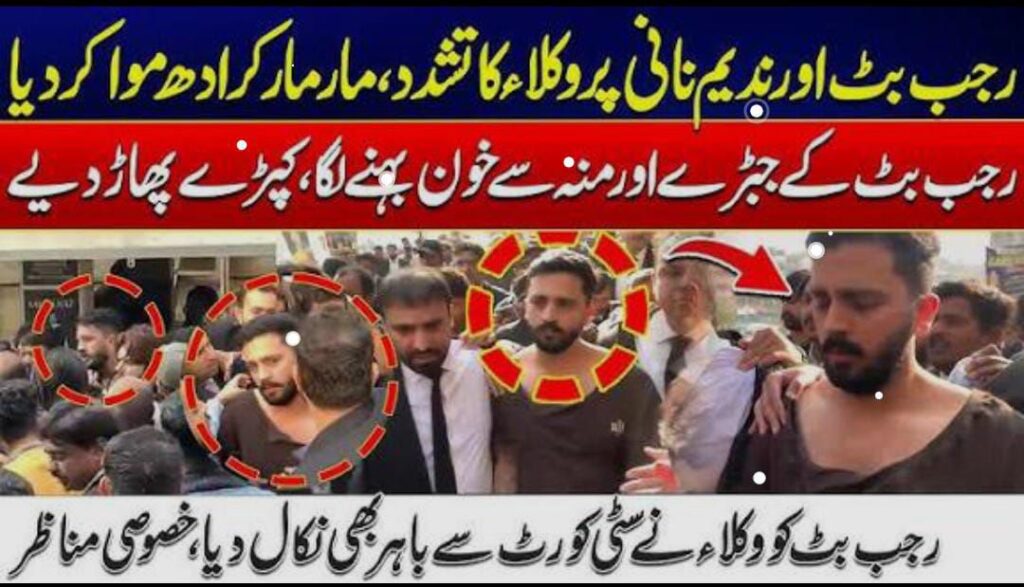
    Social media has been flooded with claims that Rajab Butt and Nadeem Nani Wala were “arrested tonight,” creating confusion among followers. Here is the authentic and verified update about their arrest news.

    ✔ No Arrest Took Place on Their Arrival

    Although multiple rumours claimed that both creators were arrested at Islamabad Airport, no arrest actually happened. Before their arrival in Pakistan, the Islamabad High Court approved a 10-day protective (transit) bail, stopping authorities from taking them into custody immediately.

    ✔ They Returned to Face Ongoing Cases

    Rajab Butt and Nadeem Nani Wala landed in Islamabad to respond to several ongoing cases, including allegations of promoting gambling applications, misuse of online platforms, and cybercrime violations. However, due to the protective bail, they walked out of the airport without arrest.

    ✔ Legal Proceedings Are Still Active

    While they were not arrested, the legal issues are still active. They must appear before the respective courts within the bail period. If they fail to comply, further action — including potential arrest — may follow.

    ❌ “Arrest Tonight” Claim Is False

    No credible news source or official authority has confirmed any arrest. The viral claim appears to be misinformation spread on social media.

    Conclusion

    The viral “arrest tonight” news regarding Rajab Butt and Nadeem Nani Wala is not true. Both influencers are currently free under a legal bail order and will present their cases in court in the coming days.


    Rajab Butt and Nadeem Nani Wala Arrest News: What’s the Real Story?

    Social media has been flooded with claims that Rajab Butt and Nadeem Nani Wala were “arrested tonight,” creating confusion among followers. Here is the authentic and verified update about their arrest news.

    ✔ No Arrest Took Place on Their Arrival

    Although multiple rumours claimed that both creators were arrested at Islamabad Airport, no arrest actually happened. Before their arrival in Pakistan, the Islamabad High Court approved a 10-day protective (transit) bail, stopping authorities from taking them into custody immediately.

    ✔ They Returned to Face Ongoing Cases

    Rajab Butt and Nadeem Nani Wala landed in Islamabad to respond to several ongoing cases, including allegations of promoting gambling applications, misuse of online platforms, and cybercrime violations. However, due to the protective bail, they walked out of the airport without arrest.

    ✔ Legal Proceedings Are Still Active

    While they were not arrested, the legal issues are still active. They must appear before the respective courts within the bail period. If they fail to comply, further action — including potential arrest — may follow.

    ❌ “Arrest Tonight” Claim Is False

    No credible news source or official authority has confirmed any arrest. The viral claim appears to be misinformation spread on social media.


    Conclusion

    The viral “arrest tonight” news regarding Rajab Butt and Nadeem Nani Wala is not true. Both influencers are currently free under a legal bail order and will present their cases in court in the coming days.


  • The Truth Behind the Ducky Bhai Arrest: Selective Justice, Corruption & the 9 Crore NCCIA Scandal

    Introduction

    The arrest of Pakistan’s top YouTuber Saad ur Rehman, famously known as Ducky Bhai, shook the entire digital community. What began as a supposed crackdown on the promotion of gambling apps quickly turned into a story of loopholes, corruption, selective targeting, and blatant abuse of authority.

    And based on everything that surfaced — yes, I stand firmly in favour of Ducky Bhai.


    🗓 Timeline of the Case

    📍 17 August 2025 — Arrest at Lahore Airport

    Ducky Bhai was detained by NCCIA officers at Allama Iqbal International Airport while traveling abroad.
    Charges included:

    • Promotion of gambling/betting apps
    • Electronic fraud
    • Misuse of digital platforms

    📍 100 Days in Custody

    His judicial custody was repeatedly extended, despite lack of conclusive evidence and many visible loopholes from the beginning.

    📍 26 November 2025 — Release on Bail

    After months of silence and suffering, he finally returned home and later shared his side of the story through a YouTube video.


    ⚖️ Why Only Ducky Bhai? The First Red Flag

    From day one, something felt off — and this is exactly where my strong personal opinion aligns with thousands of Pakistanis.

    If promoting gambling apps is a crime, then:

    ❗ Why was ONLY Ducky Bhai arrested?

    He wasn’t the only creator who promoted such apps. Several other big Pakistani YouTubers did the same.

    ❗ Why were PSL teams not questioned?

    PSL jerseys carried sponsorship tags from companies indirectly associated with gambling.
    If the law applies, it should apply equally.

    But it didn’t.

    And that selective enforcement is the first proof that this case was never about justice — it was about power and money.


    💰 The 9 Crore Scandal: What Really Happened Behind Bars

    In his video, Ducky revealed something explosive:

    His trading account, containing nearly 9 crore PKR, was forcefully shut down… and then that amount was transferred into personal wallets of the NCCIA officer heading the investigation.

    Later, when he spoke to a caretaker at the prison facility, the information leaked — forcing the officers to quickly present the money in court to cover themselves.

    This shows clear intent:
    They already knew which creators had money, and they went after the biggest name to loot the biggest amount.


    💔 Extortion of 60 Lakhs — A Step Too Far

    Ducky also revealed that he was told:

    “Give 60 lakhs if you want to save your wife.”

    At that point, this was no longer a legal investigation.
    This was extortion, blackmail, and emotional torture.

    And it confirms what many influencers feared:
    The goal was not justice — it was to squeeze money out of creators.


    😡 Abuse of Power: The Officer’s Behavior Was Horrific

    Ducky mentioned the name of the NCCIA officer in his video and exposed how he:

    • Verbally abused him
    • Physically intimidated him
    • Humiliated him repeatedly
    • Treated him like a personal enemy, not an accused person

    This officer has now been suspended — which silently confirms that Ducky’s allegations were not baseless.


    🛡 The Role of “Big Brother” — The Only Good Side in This Story

    In his closing statements, Ducky thanked a high-ranking institution — indirectly referring to the Army Chief of Pakistan — whom he called “Big Brother.”

    He mentioned that Big Brother:

    • Helped him silently
    • Ensured he was eventually treated fairly
    • Protected him from further injustice

    But the identity was intentionally kept hidden.

    This proves something important:

    👉 Pakistan’s system is not the problem. The corrupt individuals working inside it are.


    💥 My Final Take — This Case Exposed the Ugly Truth

    As someone firmly supporting Ducky Bhai, here’s my conclusion:

    1️⃣ The NCCIA officer acted out of personal interest, not national interest.

    The law was used as a weapon, not a tool for justice.

    2️⃣ The case was selectively targeted.

    If gambling promotion is illegal, all promoters should have been arrested — not just the one with the largest following.

    3️⃣ The purpose was money, influence, and control.

    The extortion demands and the 9-crore scandal make this undeniable.

    4️⃣ Ducky Bhai survived, but the system’s misuse stands exposed.

    Creators, influencers, and even ordinary citizens now fear misuse of authority.

    5️⃣ Pakistan needs accountability — not selective justice.


    📌 Conclusion

    The Ducky Bhai case will be remembered not just as the arrest of a YouTuber — but as a moment that exposed institutional corruption, abuse of power, and selective justice in Pakistan’s cybercrime system.

    He may have walked out of prison, but the questions raised by his 100 days behind bars will echo for years.

    And in this entire story, one thing is clear:

    👉 Ducky Bhai was targeted — not for justice, but for someone’s personal gain.

  • The Reality of TikTok Earning Games – Are They Real or Fake?

    TikTok is full of short videos claiming that you can earn quick money just by playing simple mobile games. These clips often show “proof” of huge payouts and promise easy income with no skills required. But the real question is: Are TikTok earning games genuinely paying, or are they fake?

    Most TikTok Earning Games Are Misleading

    The truth is that most TikTok earning games do not actually pay real money. These apps are designed to attract downloads, increase ad views, and keep users engaged. While they allow you to collect virtual coins, rewards, or points, you rarely reach the payout stage. Even if you do, the app usually blocks the withdrawal.

    Common tricks include:

    Setting very high minimum withdrawal limits

    Showing fake payment screenshots

    Asking users to watch ads to “unlock” rewards

    Showing errors during cash-out

    In short, you end up wasting time while the app earns through advertisements.Creators Promote These Games for Their Own Benefit

    Many TikTok creators promote these apps because they earn:

    Affiliate commissions

    Rewards for app installs

    More views and followers

    Their income comes from promotions—not from the game itself—so they share exaggerated results to convince viewers.

    A Few Platforms Are Genuine, but Rare

    Some legitimate online earning apps exist, but they are usually:

    Registered companies

    Skill-based platforms

    Freelancing or micro-task apps

    Random games promoted on TikTok, such as “spin and win,” “merge and earn,” or “watch ads for cash,” are almost always fake.

    How to Identify Fake TikTok Earning Games

    Avoid apps that:

    Promise instant or guaranteed cash

    Offer high payouts for simple tasks

    Ask for bank details or personal data

    Show unrealistic earning claims (₨5,000–₨10,000 daily)

    If something sounds too easy, it is usually not real.

    Safe and Real Ways to Earn Online

    If you truly want to make money online, focus on trusted methods:

    Freelancing (content writing, graphic design, video editing)

    Online tutoring

    Affiliate marketing

    YouTube or TikTok content creation

    Government digital skills programs

    These require effort but provide genuine and long-term earning opportunities.

  • Former PM’s Adviser Declared Offender in Case Linked to Controversial Social Media Posts

    The declaration of a former prime minister’s adviser as a “proclaimed offender” in a case tied to controversial social media posts has intensified debate over digital expression, political accountability, and the judiciary’s authority in Pakistan’s fast-moving online landscape. According to court officials, the decision followed repeated absences from scheduled hearings, prompting prosecutors to argue that the accused was deliberately evading the legal process while continuing to disseminate content described as defamatory and damaging to the integrity of state institutions. Investigators contend that several of the posts under scrutiny included statements, screenshots, and commentary that allegedly attempted to undermine public confidence in judicial decisions during sensitive political proceedings, contributing to an environment of online hostility and deepening polarization. Cybercrime units have been ordered to compile a complete digital trail of the posts in question, including metadata, cross-platform activity, and any indications of coordinated dissemination, while prosecutors prepare to extend the inquiry into whether the narratives were amplified intentionally to influence public perception at critical political moments.

    Legal specialists observing the case note that the proclamation status significantly raises the stakes, as it authorizes authorities to pursue more assertive measures, including property attachment or expanded warrants, if the accused does not comply with summons. At the same time, political analysts argue that the case illustrates the growing tension between personal online commentary and legal boundaries in an era where a single social media post can trigger far-reaching ripple effects within minutes. Supporters of the former adviser insist that the posts represented opinion and criticism within the democratic space, pointing to long-standing concerns about shrinking room for political expression. Meanwhile, legal officials maintain that criticisms cross into unlawful territory when they “erode trust in judicial independence,” a standard that remains the subject of intense public debate. As proceedings advance, the case is expected to test how Pakistan navigates the delicate balance between safeguarding institutional respect and allowing robust political discourse online, particularly at a time when the country’s digital sphere plays an increasingly central role in shaping political narratives and influencing public sentiment.

  • PTI Social Media Team Members Remanded as Court Investigates Online Political Activity

    Authorities in Pakistan have tightened their focus on politically active digital networks after two social media volunteers associated with the Pakistan Tehreek-e-Insaf were placed on a 10-day physical remand, a decision issued by an anti-terrorism court following allegations that their online activity contributed to escalating tensions during recent demonstrations. Investigators stated that the pair were part of a group that regularly produced and circulated content during politically sensitive moments, often publishing videos, slogans, and commentary that rapidly spread through various platforms, including “X,” Facebook, and TikTok. Officials claimed that some of the material shared from these accounts coincided with moments of public unrest, prompting law enforcement agencies to examine whether the posts played a role in mobilizing crowds or intensifying confrontations between protestors and police. According to sources linked to the inquiry, digital forensic teams have begun retrieving posting histories, device logs, and communication patterns to determine whether the activists were acting independently or as part of a coordinated online effort aligned with broader political mobilization strategies.

    The investigation has drawn attention to how swiftly political narratives can travel within Pakistan’s highly active social media ecosystem, especially during protests or court proceedings involving major political figures. Analysts monitoring the situation noted that several posts linked to the detained individuals reached thousands of users within minutes, with share rates that suggested algorithmic amplification or synchronized engagement from supporters. Authorities believe such rapid dissemination may have contributed to rising tensions on the ground, though digital rights advocates argue that virality alone cannot be treated as evidence of wrongdoing without assessing intent, context, and the authenticity of engagement metrics. The court’s decision to approve an extended remand reflects what officials describe as a need for comprehensive analysis of digital devices, including the recovery of deleted files, encrypted chats, and draft content that may reveal the internal strategy behind the online activity.

    The detentions have reignited national debate surrounding the intersection of political expression, online activism, and law enforcement oversight. Supporters of the activists maintain that their posts represented routine political commentary rather than incitement, emphasizing that social media has long served as a platform for grassroots mobilization in Pakistan. Meanwhile, security agencies insist that recent unrest has demonstrated the potential of online narratives to escalate into real-world disruption, and they argue that understanding the digital dimensions of protests is essential for public safety. As the case progresses, it has underscored broader questions about how political communication is regulated in an era where a single post can shift public sentiment at unprecedented speed, and where the boundary between activism and agitation is becoming increasingly complex within the country’s evolving political landscape.

  • Pakistan Identifies Network of Anti-State Social Media Accounts in Major Probe

    Pakistan has intensified its efforts to uncover digital networks accused of spreading “anti-state narratives,” marking one of the country’s most significant investigations into online propaganda in recent years. According to officials involved in the probe, data analysts and cybercrime units have been tracing patterns of coordinated activity across multiple platforms, including “X,” Facebook, and TikTok, where clusters of accounts were reportedly amplifying misleading stories, fabricated political claims, and content deemed harmful to national security. Investigators noted that many of these accounts displayed “synchronized posting behaviour,” suggesting central planning rather than organic user engagement, and their activity peaked during heightened political tensions, especially around major legal proceedings and government policy decisions. Authorities revealed that some of the traced accounts were operating behind VPNs and foreign IP addresses, complicating the tracking process, yet forensic cyber tools allowed teams to map posting frequencies, device fingerprints, and connection histories, leading to what officials describe as a “credible reconstruction” of the network’s structure. Sources within the inquiry claim that the number of accounts under observation has crossed “several hundred,” though the exact figure has not been officially disclosed, as the investigation is ongoing and additional user profiles are still being evaluated for links to coordinated digital manipulation.

    The probe also highlighted concerns regarding the rapid spread of unverified information, noting that manipulated screenshots, AI-generated images, and repurposed video clips played a major role in influencing online audiences. Analysts reported that some posts reached “tens of thousands of interactions within minutes,” indicating the presence of automated boosting or bot-like behaviour. Cybersecurity experts assisting the government suggested that at least a portion of these accounts may be tied to external actors seeking to exploit political divides for strategic gain, though this remains under verification. Meanwhile, digital rights groups have urged the government to ensure that the investigation distinguishes between malicious activity and legitimate political expression, warning against overreach in an already sensitive online environment.

    Officials stated that the ongoing inquiry aims not only to identify the individuals behind the accounts but also to evaluate the economic and political impact of the disinformation network, particularly its influence on public opinion during key national developments. As part of the operation, teams are compiling data on engagement patterns, geographical distribution of account origins, and the financial incentives that may be driving the creation of high-traffic misinformation pages. The government has also indicated plans to collaborate with international platforms to request metadata and enforce stricter monitoring of harmful content, a move that may shape the future of digital governance in the country.

    The investigation, still expanding in scope, signifies Pakistan’s attempt to confront the increasing sophistication of online influence campaigns, and officials argue that strengthening digital security is essential to national stability. However, the broader public debate continues over issues of transparency, data protection, and the potential implications for freedom of speech in a rapidly evolving social media landscape.

  • Green Entertainment Introduces a New Era of Dramas in Pakistan’s TV Industry

    Green Entertainment has redefined Pakistan’s TV landscape by introducing a slate of highly original and socially intelligent dramas such as “Siyaah Series,” “Abdullahpur Ka Devdas,” “Idiot,” “72 Hours,” “Kabli Pulao,” “Jeevan Nagar,” “College Gate,”and “Gunjal.” Each of these dramas represents the channel’s commitment to breaking away from formula-based storytelling and moving toward cinematic narratives grounded in cultural realities. “Kabli Pulao,” one of the network’s most celebrated productions, gained extraordinary traction for its sensitive portrayal of an unconventional marriage between an older Pakistani man and an Afghan girl—an idea rarely explored on mainstream TV. It became one of the most-discussed dramas online, recording more than 40 million combined digital views across platforms due to its heartfelt writing, subtle performances, and exploration of migration, identity, and human dignity. “Idiot,” starring Ahmed Ali Akbar, tackled the psychology of rebellion, addressing how young Pakistanis struggle with societal expectations; it resonated strongly with university students and recorded a significant 15% rise in viewership during its mid-season episodes. Similarly, “Abdullahpur Ka Devdas” brought a poetic, literature-inspired storyline back into mainstream attention, combining visually rich cinematography with themes of unfulfilled love and emotional rivalry, showcasing the channel’s ability to balance artistry with entertainment.

    Green Entertainment’s anthology horror-thriller “Siyaah Series”also marked a bold move, offering high-quality genre storytelling that Pakistani TV rarely attempts. Through allegorical supernatural tales, the series explored deep-rooted issues such as domestic trauma, mental illness, and moral corruption, making it both socially relevant and visually compelling. Meanwhile, “College Gate,” a youth-centered drama, accurately depicted modern student life, addressing peer pressure, class divides, friendship dynamics, and career anxieties; the show became widely followed by teenagers and young adults, indicating that Green Entertainment successfully tapped into an audience historically underserved by mainstream channels. “Jeevan Nagar,” starring Sohail Ahmed, delivered sharp political satire blended with small-town storytelling, subtly reflecting Pakistan’s socio-political tensions while maintaining humor and emotional grounding. “72 Hours” and “Gunjal” tackled crime, investigative journalism, and moral dilemmas, reinforcing the network’s commitment to realism and societal critique. These dramas collectively demonstrate that Green Entertainment is not only producing content but reshaping the ideological fabric of Pakistani television—moving it toward thoughtful conversation, psychological depth, and aesthetic elevation.

    Industry analysts reveal that since the release of these titles, Green Entertainment has achieved a remarkable 30–35% increase in digital audience retention, especially on YouTube where its storytelling style aligns with binge-watching behavior. Its scripts often undergo research-based development cycles, where writers map character arcs based on sociological studies, leading to narratives that mirror real Pakistani experiences rather than exaggerated melodrama. This modern approach, combined with the introduction of fresh faces and experimental directors, continues to position Green as Pakistan’s most progressive entertainment space. As audiences increasingly demand meaningful stories, authentic characters, and high production quality, Green Entertainment stands at the forefront of a cultural shift—one that may ultimately push the entire drama industry toward innovation and narrative courage.

  • “Lazwaal Ishq” Faces Criticism in Pakistan Despite Its Growing Viewership

    “Lazwaal Ishq,” the new Urdu reality show hosted by Ayesha Umar, has become one of the most talked-about programs in Pakistan—not because it reflects local culture, but because it challenges it. The show attempts to introduce a Western-style love-based reality format to Pakistani viewers, placing contestants together in a glamorous villa setup where they interact, form connections, express emotions, and navigate attraction in front of the camera. While this formula works in many countries, it has sparked intense debate in Pakistan due to the country’s cultural, traditional, and religious expectations regarding modesty, privacy, and public displays of affection.

    In Pakistan’s cultural landscape, matters of love, relationships, and personal bonds are usually kept private and handled with a sense of dignity and restraint. For many viewers, a reality show centered entirely on public expressions of romance feels disconnected from social norms. Critics argue that the show gives visibility to a lifestyle that contradicts Islamic values and the conservative identity of Pakistani society. Several people online have stated that such formats do not align with the moral, ethical, or religious boundaries the country traditionally upholds, and for this reason, it has been labeled “misfit content” for the local environment.

    Despite the heavy criticism, an interesting contradiction has emerged. Even those who strongly oppose the show continue to watch it, react to it, and make reels, memes, and commentary videos about it. Their constant analysis and ongoing discussions are indirectly contributing to the show’s popularity and online reach. Viewers who claim they dislike the content are also the ones generating engagement by dissecting episodes, sharing clips, and uploading reaction videos. This cycle boosts the algorithm, increases visibility, and ultimately promotes the show. The irony is clear: if someone genuinely believes the show is harmful, culturally inappropriate, or against religious values, then the most logical response would be to stop watching it entirely. Watching something only to criticize it still counts as viewership and helps it grow.

    Public opinion on social media is divided, yet several repeating sentiments have surfaced among critics. Many argue that the format feels forced and borrowed from Western reality shows, making it appear out of touch with Pakistani values. Others express discomfort at scenes where contestants openly discuss attraction, emotions, or personal pasts. Some viewers say that the show intentionally uses glamour and controversy as tools to attract attention, rather than offering meaningful content. One common comment seen on social media is that “content like this may reflect global trends but has no place in a country built on modesty and Islamic guidelines.” Another viewer wrote that watching people compete for romantic attention on screen “feels awkward, unnatural, and unnecessary in a society where relationships are treated with seriousness and respect.”

    Even with these reactions, the show continues to receive significant traffic online. The digital generation, curious about new content forms, tends to click on episodes even if they disagree with them. As long as people keep watching it out of curiosity or criticism, the viewership numbers will stay strong. This reveals a broader truth about modern media: audience engagement—positive or negative—adds to a show’s momentum. The more people talk about Lazwaal Ishq, the more it spreads, regardless of whether the conversation is supportive or disapproving.

    In reality, Lazwaal Ishq may not represent Pakistani culture, nor does its format align with Islamic principles. For those who find it inappropriate, deliberately avoiding it would be the most effective form of protest. Continuing to watch it only contradicts the criticism and helps the program thrive. The show exists in a space between fascination and rejection, and its rise in viewership, despite widespread disapproval, highlights the complexity of how modern digital audiences consume and react to controversial content.

  • Bad Impacts of Cocomelon on Children: Are Mobile Rhymes Really Good for Kids?

    Many parents today use mobile rhymes and shows like Cocomelon to keep their children entertained, but experts have noticed that constant exposure to fast digital content can influence how young children think, react, and learn. Kids under the age of five are still developing their focus and emotional stability. When they watch videos that change scenes quickly, use bright flashing colors, and keep the pace extremely fast, their brains begin to expect the same level of stimulation all the time. As a result, normal daily experiences like playing with toys, listening to a story, or interacting with family members may start to feel boring in comparison.

    Some families have observed that their toddlers become easily frustrated when the screen is turned off. This is often a sign of overstimulation. One parent shared that her three-year-old son would watch Cocomelon for long periods and repeat its songs constantly, but he rarely used his own words to communicate. After reducing screen time and replacing it with simple conversations and outdoor play, she noticed that within a few weeks he began expressing his needs more clearly. Cases like this highlight the importance of balancing screen content with real-world interaction.

    Another concern involves emotional behavior. Shows designed for toddlers often solve problems instantly, use exaggerated reactions, or present every situation in an overly exciting way. Children who get used to such patterns sometimes struggle in real life where patience, waiting, and slow problem-solving are normal. A kindergarten teacher mentioned that several children who watched high-stimulation cartoons regularly had difficulty staying calm during group activities. They expected constant excitement and reacted strongly when things didn’t go their way.

    This doesn’t mean that mobile rhymes are always bad. They can be fun and educational in small amounts. The problem begins when screen time replaces activities that naturally support development, such as talking with parents, exploring objects, or playing with other children. A healthier approach is to limit viewing time and stay involved when children watch. Asking simple questions like “What is he doing?” or “What color is that?” helps shift watching from a passive activity to an interactive one.

    In the end, Cocomelon and similar content are not harmful by themselves—what matters is how much time they replace real-world learning. Children grow best when their day includes real voices, real people, and real experiences, with screens used only as a small part of their routine.

    Bad Impacts of Cocomelon on Children: Are Mobile Rhymes Really Good for Kids?