Category: General Knowledge & Pakistan Affairs

  • Why Salary Is No Longer Enough to Survive a Month in 2026

    In 2026, a growing number of salaried individuals are finding it increasingly difficult to manage their monthly expenses. What was once considered a stable income is now often insufficient to cover basic living costs. From housing and food to utilities and transportation, everyday expenses are rising faster than salaries. This widening gap between income and expenses has turned monthly survival into a challenge for many working families.

    This article explores the key reasons why salary alone is no longer enough to survive a full month in 2026, supported by facts, economic trends, and real-world observations.

    Rising Inflation Continues to Reduce Purchasing Power

    Inflation remains one of the biggest reasons salaries feel inadequate in 2026. While inflation rates have slowed in some regions, prices have not returned to earlier levels. Everyday goods such as groceries, fuel, electricity, and healthcare services still cost significantly more than they did just a few years ago.

    When salaries increase at a slower pace than inflation, purchasing power declines. This means employees may earn more on paper, but their income buys fewer goods and services. Over time, this creates financial stress, even for people with full-time jobs and steady incomes.

    Wages Are Not Keeping Up with Living Costs

    Although many employers have announced salary increments, these increases are often minimal. In most cases, wage growth does not match the rising cost of living. This results in what economists call “real wage decline,” where income growth fails to compensate for higher expenses.

    For middle-income earners, this gap is especially noticeable. Expenses such as rent, education, healthcare, and transportation consume a larger portion of income each month. As a result, workers are left with little or no room for savings or emergencies.

    Housing Has Become the Biggest Financial Burden

    Housing costs have increased dramatically in recent years. Rent prices in urban areas continue to rise due to high demand and limited supply. Similarly, home ownership has become less affordable because of higher property prices and increased interest rates.

    For many households, rent alone takes up 40% to 60% of monthly income. When housing consumes such a large share of earnings, it leaves little money for food, utilities, education, and healthcare.

    Food and Grocery Prices Are Increasing Steadily

    Food inflation has directly impacted household budgets. Essential items such as wheat, rice, cooking oil, vegetables, and dairy products have seen consistent price increases. Even basic groceries now cost significantly more than before.

    Families that once managed comfortably are now forced to reduce portion sizes, switch to cheaper alternatives, or cut back on nutritional quality. For lower- and middle-income earners, food expenses have become a major monthly concern.

    Utilities and Transportation Add Extra Pressure

    Electricity, gas, water, and internet bills have increased in many regions due to rising energy costs and infrastructure expenses. These bills are unavoidable and must be paid every month, regardless of income level.

    Transportation costs have also increased. Fuel prices, vehicle maintenance, and public transport fares place additional strain on monthly budgets. For salaried workers who commute daily, transportation alone can consume a significant portion of income.

    Debt Has Become a Survival Tool

    As salaries fall short, many people rely on credit cards, personal loans, or informal borrowing to cover basic expenses. Debt is no longer used only for emergencies or investments—it has become a regular survival strategy.

    This creates a dangerous cycle. Monthly income is spent repaying previous debt, leaving less money for current expenses. Over time, interest payments increase financial pressure and reduce long-term stability.

    Savings Are Becoming Nearly Impossible

    In earlier years, saving a portion of salary was considered a basic financial habit. In 2026, saving has become a luxury for many households. After covering rent, food, utilities, transportation, and debt payments, very little income remains.

    Without savings, individuals are more vulnerable to emergencies such as medical expenses, job loss, or unexpected repairs. This lack of financial security increases stress and uncertainty among salaried workers.

    Changing Job Market and Income Instability

    The job market has also changed significantly. While employment opportunities exist, many jobs offer contract-based or performance-linked pay rather than long-term stability. Benefits such as health insurance, bonuses, and pensions are less common than before.

    Additionally, automation and digital transformation have increased competition, limiting wage growth in many industries. This makes it harder for workers to negotiate better salaries, even as living costs rise.

    Impact on Quality of Life

    The financial imbalance has affected lifestyle and mental well-being. Many people delay major life decisions such as marriage, home ownership, or starting a family due to financial uncertainty. Leisure activities, travel, and personal development are often sacrificed to manage monthly expenses.

    Financial stress also impacts mental health, productivity, and overall life satisfaction. Surviving paycheck to paycheck has become a common reality rather than an exception.

    Possible Ways Forward

    While the situation is challenging, certain steps can help reduce financial pressure: improved financial planning and budgeting, skill development to access higher-paying roles, exploring additional income sources, policy measures to align wages with inflation, and support for affordable housing and essential services.

    Long-term solutions require combined efforts from individuals, employers, and policymakers.

    Conclusion

    In 2026, salary alone is no longer sufficient for many people to survive a full month. Rising inflation, increasing living costs, housing expenses, debt dependence, and slow wage growth have created a financial gap that affects millions of workers.

    This issue highlights the need for better income structures, cost control measures, and financial awareness. Until salaries align with real living costs, surviving on a single income will remain a daily struggle for many households.

  • NEPRA Reduces Electricity Prices: Relief for Pakistani Consumers Amid Rising Living Costs

    Pakistan’s power consumers are expected to receive some financial relief as the National Electric Power Regulatory Authority (NEPRA) has announced a reduction in electricity prices. According to official notifications and media reports, the price adjustment will reflect in consumer bills from the next billing cycle, offering temporary relief at a time when inflation and energy costs continue to strain household budgets.

    This development has been widely welcomed by domestic users, small businesses, and industrial consumers who have been facing consistently high electricity tariffs over the past few years.

    Why NEPRA Reduced Electricity Prices

    NEPRA regularly reviews electricity tariffs under its Fuel Charges Adjustment (FCA) and Quarterly Tariff Adjustment (QTA) mechanisms. These adjustments are made to reflect changes in fuel prices, power generation costs, exchange rates, and demand patterns.

    The recent reduction in electricity prices has been attributed to several key factors:

    • Lower fuel costs used in power generation, especially furnace oil and imported coal
    • Increased hydropower generation, which is significantly cheaper than thermal power
    • Improved efficiency in some power plants
    • Reduced dependence on expensive imported fuels during the review period

    Hydropower-based electricity costs far less than thermal generation, and during certain months, Pakistan benefits from increased water availability, allowing cheaper electricity to enter the national grid.

    How Much Relief Will Consumers Get?

    While the exact relief amount varies by consumer category and distribution company (DISCO), NEPRA-approved adjustments typically range between a few rupees per unit reduction.

    For example:

    • Domestic consumers using up to 300 units may see a noticeable but limited reduction
    • High-consumption domestic users and commercial consumers may receive slightly higher total bill relief
    • Industrial units benefit through lower per-unit costs, helping reduce production expenses

    It is important to note that these reductions are not permanent tariff cuts, but adjustments linked to fuel cost variations. The final impact on electricity bills depends on monthly electricity usage, applicable taxes and surcharges, provincial duties and GST, and fixed charges imposed by DISCOs.

    When Will Lower Bills Be Issued?

    NEPRA has clarified that the revised rates will be applicable in the upcoming billing month, not immediately. Consumers should expect the reduced charges to appear on bills issued one to two months after the approval, depending on the billing cycle of their electricity provider. This delay is standard practice, as billing systems require time to implement revised tariff structures.

    Who Will Benefit the Most?

    Domestic Consumers
    Middle- and lower-income households, especially those consuming electricity within protected or semi-protected slabs, are expected to experience moderate relief. With electricity bills forming a significant part of monthly expenses, even small reductions can ease financial pressure.

    Small Businesses
    Shops, clinics, and small enterprises that rely heavily on electricity may see a slight reduction in operational costs. This is particularly helpful amid rising rent, fuel, and raw material prices.

    Industrial Sector
    Lower electricity costs can improve industrial competitiveness, especially for export-oriented industries such as textiles, leather, and manufacturing. Reduced energy costs help control production prices and may support job retention.

    Challenges That Still Remain

    Despite the positive announcement, energy experts caution that Pakistan’s power sector challenges remain unresolved. Key concerns include high capacity payments to power producers, circular debt exceeding trillions of rupees, heavy reliance on imported fuels, transmission and distribution losses, and electricity theft. Even with periodic tariff reductions, overall electricity prices in Pakistan remain among the highest in the region due to structural inefficiencies.

    Government’s Role in Electricity Pricing

    While NEPRA determines tariffs independently, the federal government plays a major role by imposing taxes, subsidies, fuel surcharges, and debt servicing charges. In many cases, the relief approved by NEPRA is partially offset by government-imposed levies, limiting the net benefit for consumers. Authorities, however, have reiterated their commitment to stabilizing energy prices, improving governance in DISCOs, and expanding renewable energy sources.

    Impact on Inflation and Economy

    Electricity prices directly affect inflation, the cost of goods and services, and business confidence. A reduction in power tariffs, even temporary, can help slow inflationary pressure, particularly in energy-intensive sectors. Lower production costs may prevent further price hikes in essential goods. Economists emphasize that consistent and predictable energy pricing is crucial for long-term economic stability.

    What Consumers Should Do

    To maximize the benefit of reduced tariffs, consumers are advised to monitor monthly electricity usage, avoid unnecessary consumption during peak hours, use energy-efficient appliances, and check bills carefully for correct application of adjusted rates. Any discrepancies should be reported to the respective DISCO for correction.

    Conclusion

    The recent decision by NEPRA to reduce electricity prices brings much-needed relief to millions of Pakistani consumers struggling with high living costs. While the reduction may not completely offset the financial burden, it signals a positive step toward cost adjustment based on actual fuel prices and generation efficiency. However, for long-term and meaningful relief, Pakistan must address structural issues in its power sector, invest in renewable energy, reduce losses, and improve governance. Until then, consumers can expect periodic ups and downs in electricity prices rather than permanent reductions.

  • Ramzan 2026 in Pakistan: Moon Sighting Process, Expected Dates, and Complete Guide

    Ramzan (Ramadan) holds a central place in the religious, social, and cultural life of Pakistan. As a country where the majority of the population follows Islam, the arrival of Ramzan brings nationwide changes in daily routines, working hours, markets, media content, and community activities. In 2026, Ramzan is expected to fall in late February, subject to the traditional moon-sighting process that determines the official start of the holy month.

    This article provides a detailed, fact-based, and easy-to-understand overview of Ramzan 2026 in Pakistan, including how the moon is sighted, expected dates, and why the final announcement depends on religious authorities. The content is written purely for informational purposes and follows Google AdSense-friendly guidelines.


    Understanding Ramzan and Its Importance

    Ramzan is the ninth month of the Islamic lunar calendar, which is based on the movement of the moon rather than the sun. During this month, Muslims observe fasting (Roza) from dawn (Fajr) until sunset (Maghrib). Fasting is one of the Five Pillars of Islam and is meant to promote self-discipline, patience, and empathy for those in need.

    In Pakistan, Ramzan is observed nationwide with deep respect. Mosques become more active, families gather daily for Iftar, and charitable activities increase significantly. According to estimates by local welfare organizations, charitable giving during Ramzan increases by 50–70% compared to other months.


    Why Moon Sighting Is Necessary

    The Islamic calendar is lunar, meaning each month begins only after the new crescent moon (Hilal) is sighted. Because lunar months are either 29 or 30 days, Ramzan does not start on a fixed Gregorian date each year.

    In Pakistan, the beginning of Ramzan depends on actual moon sighting, not just astronomical calculations. This system ensures religious accuracy and follows centuries-old Islamic tradition.


    Expected Ramzan 2026 Dates in Pakistan

    Based on astronomical forecasts and moon visibility calculations:

    The Ramzan moon is expected to be visible on the evening of February 18, 2026

    If confirmed, the first fast (1st Ramzan) will likely be observed on February 19, 2026

    Ramzan is expected to last 29 or 30 days, depending on the Shawwal moon sighting

    Eid-ul-Fitr 2026 is expected around March 20 or March 21

    It is important to note that these dates are estimates only. The final and official announcement will be made by Pakistan’s moon sighting authorities.


    Official Moon Sighting System in Pakistan

    Role of Ruet-e-Hilal Committee

    Pakistan follows an organized and official system for moon sighting led by the Central Ruet-e-Hilal Committee, supported by regional and zonal committees across the country.

    The process includes:

    1. Collection of moon sighting reports from different cities and regions
    2. Verification of eyewitness testimonies
    3. Consultation with religious scholars
    4. Review of meteorological data
    5. Official declaration through media and government channels

    The committee usually meets on the 29th day of Sha’ban to decide whether Ramzan will begin the next day.


    Use of Science and Astronomy

    Although moon sighting relies on physical observation, scientific data plays a supporting role. The Pakistan Meteorological Department (PMD) provides information on:

    Moon birth timing
    Moon age
    Visibility conditions
    Weather forecasts

    This data helps authorities assess whether moon sighting is possible, but final decisions are based on confirmed visual evidence, maintaining religious authenticity.


    Daily Life in Pakistan During Ramzan

    Ramzan significantly affects daily routines across Pakistan:

    Working Hours

    Government offices and banks usually operate on reduced schedules
    Educational institutions adjust timings
    Private businesses often offer flexible hours

    Sehri and Iftar

    Sehri is eaten before dawn and includes items like paratha, eggs, yogurt, and tea
    Iftar begins at sunset, traditionally with dates and water
    Popular Iftar foods include samosas, pakoras, fruit chaat, and beverages

    According to market reports, demand for food essentials increases by 30–45% during Ramzan.


    Economic Impact of Ramzan

    Ramzan brings both opportunities and challenges for Pakistan’s economy:

    Increased Consumer Spending

    Grocery sales rise significantly
    Clothing brands launch Ramzan and Eid collections
    Online food delivery services experience higher evening orders

    Price Control Challenges

    Despite government price control committees, inflation in food items may rise by 5–10% due to increased demand. Ramzan bazaars are set up in many cities to provide subsidized items to the public.


    Charity, Zakat, and Social Responsibility

    Charity is one of the most visible aspects of Ramzan in Pakistan. Muslims are encouraged to give:

    Zakat (obligatory charity)
    Sadaqah (voluntary charity)
    Fitrana before Eid

    Millions of people benefit from free Iftar meals, ration distributions, and financial aid. Hospitals, mosques, NGOs, and welfare trusts organize large-scale relief efforts during the month.


    Health Considerations During Fasting

    Medical experts in Pakistan emphasize balanced eating habits during Ramzan. Healthy fasting includes:

    Drinking enough water between Iftar and Sehri
    Avoiding excessive fried and sugary foods
    Eating fruits, vegetables, and proteins
    Getting adequate rest

    When observed properly, fasting may help improve digestion and self-control.


    Conclusion

    Ramzan 2026 in Pakistan is expected to begin around February 19, subject to official moon sighting confirmation on February 18. The holy month represents much more than fasting — it reflects unity, compassion, discipline, and social responsibility across the nation.

    By combining religious tradition, community spirit, and scientific support, Pakistan continues to observe Ramzan in a structured and respectful manner. As always, the final dates will be officially announced by the Ruet-e-Hilal Committee, ensuring clarity and consistency nationwide.


  • Digital Wallets vs Bank Accounts — Which Is Safer in 2026?

    In the past decade, financial transactions have undergone a dramatic transformation. The rise of digital wallets — from Apple Pay and Google Wallet to PayPal and regional services like JazzCash — has challenged the dominance of traditional bank accounts. As we move into 2026, consumers increasingly ask: Which is safer — digital wallets or bank accounts? This article explores the security landscape, backed by recent data and expert insights, to help you make an informed choice.


    1. Understanding the Basics

    What Are Digital Wallets?

    Digital wallets, also known as e-wallets or mobile wallets, are apps or platforms that store payment information securely to enable electronic transactions. They often support features like tap-to-pay, QR payments, and peer-to-peer transfers without exposing card details directly.

    What Are Bank Accounts?

    Bank accounts — whether traditional or online — hold your money within an insured financial institution. These accounts offer services like savings, checking, loans, and investment products, with robust regulatory oversight and deposit protection systems in many countries.


    2. Security Features — Digital Wallets vs Banks

    Encryption and Tokenization

    One of the most significant advantages digital wallets have is advanced tokenization — generating a unique code for each transaction so your real card or bank details aren’t shared during payments. This dramatically reduces the impact of data breaches.

    Banks also use strong AES-256 encryption and secure servers, but the nature of wallet tokenization adds an extra layer of defense in retail environments.

    Authentication Layers

    Both digital wallets and banks now rely heavily on:

    • Multi-Factor Authentication (MFA)
    • Biometric verification (fingerprint or facial ID)
    • Real-time fraud detection with AI

    In fact, by 2025, nearly 98% of major digital wallets used two-factor authentication, and banks invested billions in cybersecurity systems to monitor threats continuously.

    Device and Network Risks

    Digital wallets are inherently tied to your device — usually a smartphone. Cases of mobile phone theft are rising globally, and if devices lack proper security, unauthorized access becomes possible.

    Banks are also accessed through digital channels but typically support more traditional recovery methods like branch visits or call-center support if credentials are compromised.


    3. Fraud and Recovery — Who Wins?

    Fraud Incidents

    Digital wallets are increasingly targeted by scammers. A recent forecast suggested that digital wallet fraud cases could reach 34.56 million incidents by 2026, indicating a significant escalation in cyber threats globally.

    At the same time, consumers report high concern about identity theft and unauthorized activity in digital payments.

    Recovery and Liability

    Here’s a critical difference:

    • Banks offer deposit insurance in many countries — for example, the FDIC in the U.S. protects customer deposits up to a certain limit if the bank fails.
    • Digital wallets themselves often do not provide deposit insurance unless linked to an insured partner bank.

    However, fraud liability protections for both systems can be similar if unauthorized activity is reported promptly.


    4. Regulation and Oversight

    In recent regulatory news, major U.S. digital payment platforms processing millions of transactions annually will now face bank-like oversight by federal authorities. This means enhanced compliance requirements for privacy, fraud prevention, and consumer protection — a major step toward strengthening digital wallet safety.

    Banks, historically, have been regulated for decades with stringent compliance, reporting, and security standards. This long-standing regulatory ecosystem has helped build trust in traditional financial institutions.


    5. Practical Safety — What Users Should Know

    For Digital Wallet Users

    Pros:

    • Faster transactions (often in seconds)
    • No need to share full financial details with merchants
    • Advanced tokenization and encryption

    Cons:

    • Fund recovery often slower without a physical branch
    • Higher risk if device security isn’t strong
    • Dependent on phone battery and connectivity

    For Bank Account Holders

    Pros:

    • Deposit insurance (in most regulated systems)
    • Structured dispute resolution and recovery
    • Broad financial service access

    Cons:

    • Potentially slower transaction speeds
    • Physical card theft and traditional banking fraud still exist

    6. Real-World Facts & Figures

    Here’s how adoption and trust look in the real world in 2025–2026:

    • Over 80% of account holders use digital payments regularly.
    • Digital wallets could process 49–56% of global e-commerce transactions.
    • Roughly 90% of financial institutions use AI for fraud detection, reducing fraud significantly.
    • Biometric authentication is used by 85% of digital banks to secure accounts.

    These figures show how mainstream digital wallets have become — but also underline the importance of robust security.


    7. Which Is Safer in 2026?

    The honest answer: Neither is absolutely safer than the other.
    Your safety depends more on how you use them rather than the platform itself.

    Digital wallets excel in encryption, convenience, and transaction security — but depend heavily on device security and user behavior.

    Bank accounts offer regulated safety nets like deposit insurance and traditional dispute support — but aren’t immune to digital threats.

    Best practice: Use both together. Link your digital wallet to a well-regulated bank account, enable MFA, regularly update passwords, and avoid public Wi-Fi during transactions.


    Conclusion

    In 2026, both digital wallets and bank accounts have matured significantly in terms of safety. Advanced technologies like AI-based fraud monitoring, biometric authentication, and tokenization make digital wallets remarkably secure for everyday use. At the same time, banks continue to offer structured protections and insurance that digital wallets often lack. Ultimately, the safest approach is to combine the strengths of both — protecting your money with careful habits, strong security settings, and awareness of emerging threats. Empower yourself with knowledge, and digital finance can be both safe and convenient.

  • ATM Cash Withdrawal Tax Rate 2026 in Pakistan – Latest Limits & Rules


    With the start of 2026, many bank account holders are searching for clear information about the ATM cash withdrawal tax rate, daily limits, and how these rules affect filers and non-filers. The Federal Board of Revenue (FBR) continues to use cash withdrawal taxation as a tool to promote documented transactions and improve tax compliance across Pakistan.


    What Is ATM Cash Withdrawal Tax?

    ATM cash withdrawal tax is a withholding tax deducted by banks when an account holder withdraws cash beyond a specific daily threshold. This tax is collected automatically and transferred to the government as part of income tax regulations.

    It is important to note that:

    • This is not a bank service fee
    • It is deducted only when the daily limit is crossed
    • It applies mainly to large cash withdrawals
    • The tax rate differs for tax filers and non-filers

    The objective behind this policy is to discourage excessive cash usage and encourage individuals to become part of the formal tax system.


    ATM Cash Withdrawal Tax Rates 2026 (Latest Update)

    As per the latest taxation framework continuing into 2026, different rules apply based on tax filer status.

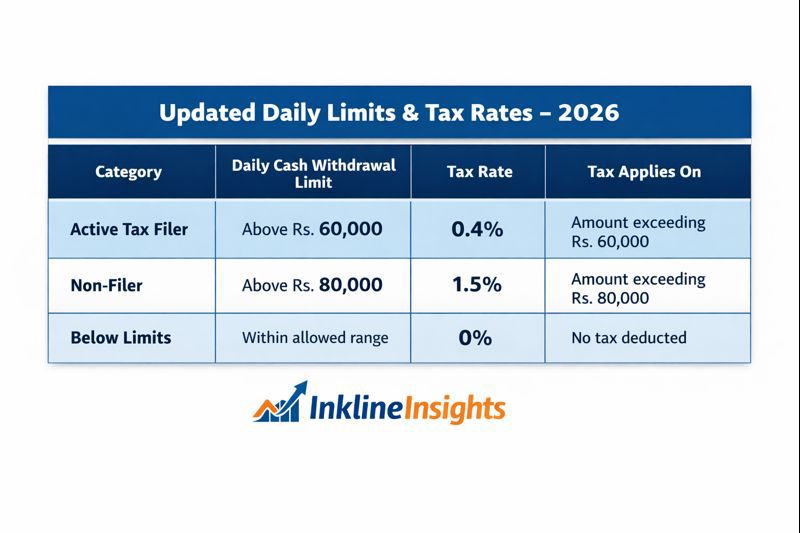
    Updated Daily Limits & Tax Rates

    The tax is not applied on the full amount, only on the portion that exceeds the daily limit.


    How ATM Cash Withdrawal Tax Is Calculated

    Understanding calculations with examples makes the rules easier to follow.

    Example 1: Tax Filer

    • Daily withdrawal: Rs. 70,000
    • Tax-free limit: Rs. 50,000
    • Taxable amount: Rs. 20,000
    • Tax @ 0.3%: Rs. 60

    Total tax deducted: Rs. 60

    Example 2: Non-Filer

    • Daily withdrawal: Rs. 100,000
    • Tax-free limit: Rs. 75,000
    • Taxable amount: Rs. 25,000
    • Tax @ 1.2%: Rs. 300

    Total tax deducted: Rs. 300

    These examples clearly show how being a filer significantly reduces tax impact.


    Why the Government Imposes This Tax

    The ATM withdrawal tax is part of broader economic reforms aimed at:

    • Reducing undocumented cash transactions
    • Encouraging digital payments and banking channels
    • Expanding the national tax base
    • Rewarding compliant taxpayers
    • Increasing transparency in financial activity

    Cash-heavy economies face challenges in tracking income, which is why governments worldwide encourage digital transactions.


    Who Is Required to Pay This Tax?

    Tax Filers

    • Individuals listed on the Active Taxpayer List (ATL)
    • Subject to a lower tax rate
    • Still taxed if daily withdrawal exceeds Rs. 50,000

    Non-Filers

    • Individuals not listed on ATL
    • Subject to a higher tax rate
    • Allowed a slightly higher withdrawal limit, but taxed heavily afterward

    Exemptions

    Certain entities may be exempt, including:

    • Government departments
    • Diplomatic missions
    • Accounts holding valid tax exemption certificates

    Exemptions depend on official documentation and bank verification.


    Is This Tax Adjustable or Refundable?

    Yes. ATM cash withdrawal tax is adjustable at the time of filing an income tax return.

    • Tax filers can adjust it against final tax liability
    • If excess tax is deducted, it may be refundable
    • Non-filers cannot claim adjustment unless they file returns

    This makes tax filing beneficial even for individuals with modest income.


    Additional Charges to Be Aware Of

    Besides tax, banks may also charge:

    • ATM service fees
    • Non-host ATM transaction charges
    • Daily withdrawal limit penalties (bank-specific)

    These charges are separate from government tax and vary from bank to bank. Always check your bank’s official schedule of charges.


    How to Reduce or Avoid ATM Withdrawal Tax

    1. Become an Active Tax Filer

    This is the most effective solution. Benefits include:

    • Lower tax rate
    • Easier refunds and adjustments
    • Fewer financial restrictions

    2. Plan Withdrawals Smartly

    • Withdraw amounts within daily limits
    • Avoid unnecessary large cash withdrawals

    3. Use Digital Alternatives

    • Bank transfers
    • Mobile banking
    • Debit card payments
    • Online transactions

    Digital methods often involve lower or zero tax exposure.


    Impact on Businesses & Freelancers

    Small businesses and freelancers who rely heavily on cash should be especially careful. Frequent large withdrawals may result in:

    • Repeated tax deductions
    • Cash flow pressure
    • Record-keeping challenges

    Maintaining proper accounts and switching to digital payment channels can significantly improve financial efficiency.


    Future Outlook for Cash Withdrawal Taxes

    Policy trends indicate that:

    • Tax rates for non-filers may increase further
    • Digital transaction incentives may expand
    • Cash-based restrictions may tighten
    • Filing income tax returns will become more important than ever

    Staying informed helps individuals avoid penalties and plan finances effectively.


    Final Words

    The ATM cash withdrawal tax in 2026 is not meant to penalize ordinary banking users but to promote transparency and tax compliance. Understanding the latest rates, limits, and rules allows individuals to make informed decisions and avoid unnecessary deductions.

    Whether you are salaried, self-employed, or a business owner, smart financial planning and tax compliance can save money and ensure peace of mind.


  • Why Divorce Rates Are Rising in Asian Countries: Causes, Trends, and Social Impact


    Introduction
    In recent decades, divorce rates in many Asian countries have grown significantly — a trend that challenges long-held cultural norms around family, marriage, and community cohesion. While Asia has traditionally been known for strong family values and lifelong marriages, rapid social, economic, and demographic changes are reshaping how couples view and practice marriage. This article explores the key reasons behind rising divorce rates in Asian countries, supports findings with facts and figures, and examines the deeper implications for society.

    Understanding Divorce Rates in Asia: Facts & Statistics
    Divorce patterns vary widely across Asia. According to global demographic data, several East Asian countries such as China, Taiwan, South Korea, and Japan show relatively higher divorce rates compared with South and Southeast Asian nations like India and Vietnam. For example:

    • Taiwan has one of the highest divorce rates in Asia — with a rate of about 2.28 divorces per 1,000 people and more than 53,000 couples divorcing annually. A divorce reportedly happens every 9.9 minutes in Taiwan.
      World Journal
    • China’s divorce rate climbed steadily over the last two decades, peaking in the mid-2010s before seeing slight adjustments after legal changes in 2021.
      CRC
    • In contrast, India’s divorce rate remains among the lowest in the world, with only about 0.01–0.1 divorces per 1,000 people.
      Divorce.com
    • Countries such as Vietnam also report low divorce rates (~0.2 per 1,000), primarily due to strong cultural pressures and family expectations.
      Divorce.com

    This variation highlights that divorce in Asia is not uniform — it reflects complex interactions between culture, law, economics, and gender roles.

    1. Social & Cultural Shifts
    One of the most significant drivers of rising divorce rates in Asia is the gradual shift from collectivist to individualistic values. Traditional Asian societies emphasized marriage as a lifelong commitment, deeply connected to family honor and community stability. However, younger generations increasingly value personal fulfillment, emotional compatibility, and independence over marriage at all costs.

    In countries like China and South Korea, media and culture play a role in de-stigmatizing divorce. Popular television shows that highlight marital struggles and separations — such as China’s See You Again — reveal a public appetite for open dialogue about marital realities, which also reduces shame around separation.
    The Guardian

    2. Economic Independence, Especially Among Women
    Economic empowerment — particularly for women — has reshaped marital dynamics. As female educational enrollment and labor force participation increase across Asia, women are less financially dependent on marriage. With greater financial security, many women feel empowered to leave unhappy or unhealthy relationships.

    This growth in economic independence is especially visible in urban areas where career opportunities are more abundant. In Singapore and South Korea, for instance, many women cite a mismatch between work expectations and household responsibilities as a reason for divorce. These changes illustrate how labor market shifts and gender equality policies indirectly influence divorce trends.
    Business Upturn

    3. Urbanization, Lifestyle Changes & Stress Factors
    Rapid urbanization has transformed family structures and lifestyle expectations. As Asian cities expand, nuclear families become more common, weakening traditional extended family support systems that once helped couples cope with marital stresses. Additionally:

    • Urban work culture, long hours, and high living costs put pressure on married couples.
    • Changing priorities — such as prioritizing travel, career growth, and personal goals — affect how couples navigate long-term commitments.

    These trends are particularly evident in densely populated East Asian cities like Seoul and Taipei, where high divorce rates correlate with busy, stressful urban living.

    4. Legal Reforms and Access to Divorce
    Another factor influencing divorce statistics is legal reforms that have made the process easier and more accessible. In some countries, changes in family law have removed barriers to filing for divorce, allowing couples to legally separate without insurmountable financial or bureaucratic hurdles.

    China’s introduction of a 30-day “cooling-off period” for divorce filings in 2021 was intended to reduce rash separations but did not stop the long-term upward trend of marital breakdowns. In Taiwan, changes in civil law have simplified divorce procedures, contributing to higher reported divorce counts.
    The Guardian
    Toxigon

    5. Changing Demographics: Age at Marriage and Education
    Demographic trends also play a role. Across Asia, the average age at first marriage has been rising. People are marrying later due to longer education periods, career prioritization, or delayed family formation. The OECD notes that the mean age at first marriage has increased by almost three years in many Asia/Pacific countries.
    OECD

    While later marriages sometimes correlate with more stability, they can also reflect shifting priorities that emphasize personal development over early family formation. Higher education levels — especially among women — can both increase marital satisfaction and raise expectations about partnership equity, leading some couples to divorce when these expectations are not met.

    6. Cultural Stigma and Variation Across Regions
    It’s noteworthy that not all Asian countries follow the same pattern. In South Asia (e.g., India, Sri Lanka) and parts of Southeast Asia, divorce remains socially discouraged, and familial pressure often keeps marriages intact even in difficult situations. Religious beliefs, community norms, and traditional family systems strongly cushion against divorce, maintaining relatively low marital dissolution rates.
    Divorce.com

    Implications for Society
    The rising divorce trend carries both challenges and opportunities:

    • Social Support Needs: There is a growing need for counselling, legal support, and welfare services to assist divorced individuals and children affected by marital breakdowns.
    • Policy Responses: Governments must balance cultural values with individual rights, ensuring legal protection without stigmatizing divorce.
    • Family Structures: Traditional extended family networks may weaken further as nuclear families and independent lifestyles become the norm.

    Conclusion
    The changing divorce landscape in Asian countries is the result of multiple interconnected factors — from economic independence and legal reforms to urbanization and cultural evolution. While divorce rates remain lower in many parts of Asia compared with Western countries, the upward trend reflects broader social transformation. Understanding these dynamics can help policymakers, families, and individuals navigate the complexities of modern marriage with empathy and insight.

  • Mineral Water vs Regular Drinking Water: Daily Life Choices, Boring Water Habits, and Hidden Health Issues


    Water is the foundation of life, yet many people admit that drinking plain or “boring” water feels like a daily struggle. In modern lifestyles, especially in urban areas, people often replace regular water with sugary drinks, flavored beverages, tea, coffee, or energy drinks. At the same time, mineral water has gained popularity as a healthier alternative, marketed for its added nutrients and purity.

    This article explores the role of mineral water in daily life, why people avoid plain water, and how poor hydration habits can silently lead to health issues. Backed by facts and figures, this detailed guide will help you understand whether mineral water is truly better and how to improve your daily water intake safely.


    Why Do People Find Plain Water “Boring”?

    Many people struggle to drink enough water not because it is unavailable, but because it lacks taste and excitement. Several factors contribute to this behavior:

    Busy lifestyles reduce conscious water intake
    High consumption of soft drinks and tea/coffee replaces water
    Marketing of flavored drinks makes plain water less appealing
    Lack of awareness about dehydration symptoms

    According to global health studies, nearly 60–75% of adults do not meet the recommended daily water intake, especially in warmer regions like South Asia and the Middle East. This habit can quietly affect energy levels, digestion, skin health, and even mental focus.


    What Is Mineral Water?

    Mineral water is water that contains natural minerals such as calcium, magnesium, potassium, and sodium. These minerals are either naturally present at the source or added later under regulated standards.


    Common Minerals Found in Mineral Water

    Calcium – supports bones and teeth
    Magnesium – helps muscle and nerve function
    Potassium – supports heart health
    Sodium – maintains fluid balance

    Unlike tap water, mineral water is usually bottled at the source and undergoes strict quality checks, making it popular among health-conscious consumers.


    Mineral Water vs Regular Drinking Water

    1. Nutritional Value
    Regular drinking water mainly hydrates the body. Mineral water, on the other hand, can contribute 5–20% of daily mineral needs, depending on the brand and source.

    2. Taste Factor
    Many people prefer mineral water because minerals naturally enhance taste, making it less “boring” and easier to drink regularly.

    3. Safety and Purity
    In areas where tap water quality is unreliable, mineral water is often considered safer. However, purified tap water can be equally safe if treated properly.

    4. Cost and Accessibility
    Mineral water is more expensive and not always affordable for daily use, especially for large families.


    Health Issues Linked to Low Water Intake

    Avoiding water or drinking it inadequately can lead to several short-term and long-term health problems.

    1. Dehydration
    Even mild dehydration can cause:
    Fatigue
    Headaches
    Dizziness
    Dry mouth and skin

    Studies show that losing just 1–2% of body water can reduce concentration and physical performance.

    2. Digestive Problems
    Water is essential for digestion. Low intake often results in:
    Constipation
    Acid reflux
    Slow metabolism

    3. Kidney and Urinary Issues
    Insufficient hydration increases the risk of:
    Kidney stones
    Urinary tract infections

    Medical data suggests people who drink less than 1.5 liters daily have a significantly higher risk of kidney-related issues.

    4. Skin and Aging Effects
    Poor hydration leads to dull skin, fine lines, and reduced elasticity, making people look older than their age.


    Is Mineral Water Healthier for Daily Use?

    Mineral water can be beneficial, but it is not a miracle solution.

    Benefits
    Improves hydration compliance due to better taste
    Adds essential minerals
    Helpful for people with mineral deficiencies

    Limitations
    Excess sodium in some brands may not suit people with high blood pressure
    Overdependence increases household expenses
    Not necessary if diet already provides sufficient minerals

    Health experts agree that hydration matters more than the source, as long as the water is safe and clean.


    How Much Water Should You Drink Daily?

    The general recommendation varies by climate, age, and activity level.

    Adults: 2–3 liters per day
    Hot climates: Up to 3.5 liters
    Physically active individuals: Additional intake needed

    About 20–30% of water intake also comes from foods like fruits and vegetables.


    Tips to Make Water Less Boring Without Harming Health

    If plain water feels boring, try healthy alternatives instead of sugary drinks:

    Add lemon, cucumber, or mint to water
    Drink chilled or slightly warm water based on preference
    Use a reusable bottle as a reminder
    Set daily hydration goals

    These small changes can significantly increase water intake without extra cost or health risks.


    Mineral Water and Daily Life in Developing Countries

    In countries like Pakistan and India, water quality concerns push people toward bottled mineral water. However, experts emphasize that filtered or boiled water can be equally effective for hydration at a lower cost.

    Government and health organizations recommend focusing on:

    Safe water sources
    Affordable purification methods
    Public awareness about hydration


    Conclusion

    Water may seem boring, but its importance is far from ordinary. Whether you choose mineral water or regular drinking water, consistent hydration is essential for overall health. Mineral water can be a helpful option for those who dislike plain water or lack minerals in their diet, but it is not mandatory for everyone.

    The real health issue is not choosing between mineral water and regular water—it is not drinking enough water at all. By understanding your body’s needs and making hydration enjoyable in simple ways, you can protect yourself from dehydration-related health problems and improve your daily quality of life.

    Staying hydrated is one of the easiest, most affordable steps toward better health—boring or not. 💧

  • Village School vs City School vs International School — A Comprehensive Comparison

    Education is the foundation of personal growth, social mobility, and economic development. However, the quality, exposure, and experience of education vary greatly depending on where and how students are educated. Village (rural) schools, city (urban) schools, and international schools represent three distinct educational environments, each with unique strengths, limitations, costs, and outcomes. Understanding these differences helps parents, educators, and policymakers make informed decisions that align with a child’s academic needs and long-term goals.


    1. Definition & Overview

    Village (Rural) Schools

    Village or rural schools are located in small towns and communities outside major urban centers. These schools often serve as the primary educational institutions for children in their locality. They are usually government-supported or low-fee community schools with limited funding and infrastructure. Enrollment sizes range from a few dozen to several hundred students, and these schools play a critical role in improving literacy and basic education in rural populations.

    City (Urban) Schools

    City schools are situated in metropolitan or urban areas and cater to a much larger and more diverse population. They can be public or private and serve students from various socioeconomic backgrounds. Compared to rural schools, urban schools generally have better access to educational resources, trained staff, and extracurricular opportunities.

    International Schools

    International schools are privately operated institutions that offer globally recognized curricula such as the International Baccalaureate (IB), Cambridge IGCSE, American, or British systems. These schools primarily serve expatriate families and local students seeking international education standards, often with English or bilingual instruction and a strong global outlook.


    2. Curriculum & Academic Focus

    Village Schools

    Village schools typically follow national or regional education boards, focusing on core subjects such as mathematics, language, science, and social studies. Due to limited funding and staff, subject choices and specialized programs are often restricted. The emphasis is usually on basic literacy and foundational learning rather than advanced or diversified academic tracks.

    City Schools

    Urban schools offer broader and more flexible curricula. In addition to core subjects, many city schools provide elective courses, advanced academic tracks, vocational education, and exam preparation programs. Private urban schools, in particular, often emphasize competitive academics and skill-based learning.

    International Schools

    International schools focus on global education standards designed to prepare students for universities worldwide. These curricula emphasize critical thinking, inquiry-based learning, interdisciplinary studies, and global citizenship. Students are encouraged to develop analytical skills, creativity, and cultural awareness alongside academic excellence.


    3. Infrastructure & Facilities

    Village Schools

    Infrastructure in rural schools is often limited. Many struggle with inadequate classrooms, outdated textbooks, minimal technology, and a lack of laboratories, libraries, or sports facilities. These limitations reflect broader challenges in rural development and public funding.

    City Schools

    City schools generally have better infrastructure, including proper classrooms, libraries, computer labs, and sports areas. However, disparities still exist within cities, where schools in low-income areas may face overcrowding and underfunding compared to those in affluent neighborhoods.

    International Schools

    International schools usually provide state-of-the-art facilities. These include modern classrooms, advanced science and computer labs, libraries, sports complexes, performing arts centers, and digital learning resources. Such infrastructure supports both academic and extracurricular excellence.


    4. Teacher Quality & Professional Development

    Village Schools

    Rural schools often face difficulties in attracting and retaining qualified teachers. Limited incentives, fewer training opportunities, and challenging living conditions can affect teacher availability and performance. Teachers may handle multiple subjects and responsibilities due to staff shortages.

    City Schools

    Urban schools have access to a larger pool of trained educators. Professional development opportunities, workshops, and subject-specific training are more common, especially in private institutions. This generally results in improved teaching quality.

    International Schools

    International schools recruit highly qualified teachers from different countries. Continuous professional development, exposure to modern teaching methodologies, and smaller class sizes allow teachers to deliver personalized and high-quality instruction.


    5. Class Size & Student-Teacher Ratio

    Village Schools

    Class sizes in rural schools are often smaller, which can allow for closer teacher-student interaction. However, limited resources and multitasking teachers may reduce the potential benefits of smaller classes.

    City Schools

    Urban public schools often have larger class sizes due to high enrollment, which can limit individualized attention. Private city schools may offer more balanced ratios, depending on fees and facilities.

    International Schools

    International schools typically maintain low student-teacher ratios, allowing for personalized learning, academic support, and emotional well-being monitoring.


    6. Cultural Exposure & Diversity

    Village Schools

    Village schools usually serve homogenous communities where students share similar cultural, linguistic, and social backgrounds. While this fosters strong community bonds, exposure to diverse perspectives is limited.

    City Schools

    City schools benefit from greater cultural, ethnic, and socioeconomic diversity. Interaction with students from varied backgrounds enhances social awareness, tolerance, and real-world understanding.

    International Schools

    International schools are highly multicultural, bringing together students and teachers from multiple countries. This environment promotes global awareness, intercultural communication, and multilingual skills, which are essential in today’s interconnected world.


    7. Extracurricular Activities & Holistic Growth

    Village Schools

    Extracurricular activities in rural schools are often limited due to resource constraints. Activities usually focus on basic sports, local cultural events, or simple arts programs.

    City Schools

    Urban schools offer a wider range of extracurricular options, including sports teams, debate clubs, science fairs, arts programs, and community service activities that support holistic development.

    International Schools

    International schools place strong emphasis on all-round development. Students participate in leadership programs, Model United Nations, service learning, international competitions, and exchange programs that build confidence and life skills.


    8. Costs & Accessibility

    Village Schools

    Village schools are usually free or very affordable, supported by government or community funding. This makes them accessible to most families in rural areas.

    City Schools

    Public city schools are generally affordable, but private urban schools can be costly. Additional expenses may include transportation, uniforms, books, and extracurricular activities.

    International Schools

    International schools are the most expensive option. Tuition fees are high due to advanced facilities, foreign faculty, and global curricula. However, some schools offer scholarships or financial aid.


    9. Student Outcomes & Future Opportunities

    Village Schools

    Students from rural schools may face challenges accessing higher education and competitive careers due to limited preparatory resources. However, strong foundational learning and community support can still lead to success.

    City Schools

    City schools generally provide better access to higher education, career guidance, and professional opportunities, particularly for students in well-resourced institutions.

    International Schools

    International schools prepare students for global universities and careers. Internationally recognized diplomas and global exposure give students a competitive edge in higher education and multinational work environments.


    Conclusion

    Choosing between village, city, and international schools is not about prestige alone but about aligning education with a child’s needs, family circumstances, and long-term goals. Village schools offer affordability and community-based learning, city schools balance resources and diversity, and international schools provide global exposure and advanced academic preparation. Each option has its strengths and limitations, and the best choice depends on thoughtful evaluation of educational quality, accessibility, and future aspirations.

  • Local Houses vs Society Houses: Key Differences, Costs, Lifestyle, and Investment Value Explained

    Choosing a home is one of the most important decisions in life, especially in countries like Pakistan where real estate is considered both a secure investment and a symbol of stability. Buyers often face a common question: Should I buy a local house or a society house?

    Both options come with their own advantages and challenges related to cost, facilities, lifestyle, legal security, and long-term investment value. This detailed guide explains the difference between local houses and society houses, supported by facts, figures, and real-life examples, to help you make an informed decision.

    Image
    Image

    What Are Local Houses?

    Local houses are residential properties built in traditional neighborhoods, towns, or villages. These areas usually develop organically over time rather than through formal planning by a housing authority or private developer.

    Local houses are commonly found in older city areas, semi-urban locations, and rural regions. They are typically constructed individually by owners based on personal needs, available land, and budget.


    Key Characteristics of Local Houses

    • Located in non-gated or open neighborhoods
    • Usually managed by municipal committees
    • Construction quality varies from house to house
    • Limited or basic facilities
    • Greater freedom in design and modifications

    What Are Society Houses?

    Society houses are residential properties located within planned housing societies developed by government bodies or private developers such as DHA, Bahria Town, or Capital Smart City.

    These societies follow approved layouts, zoning regulations, and standardized infrastructure plans. Society houses have become increasingly popular in urban Pakistan due to better security, organized development, and improved lifestyle standards.


    Key Characteristics of Society Houses

    • Located in gated and planned communities
    • Managed by housing authorities or professional management companies
    • Uniform construction and development rules
    • Modern facilities and amenities
    • Higher resale and investment appeal

    Major Differences Between Local Houses and Society Houses


    1. Planning and Infrastructure

    Local houses usually develop without a master plan. Roads may be narrow, drainage systems outdated, and electricity wiring inconsistent. Urban planning studies indicate that over 55% of older localities in Pakistan face sewerage and drainage issues, especially during the monsoon season.

    Society houses, on the other hand, are built according to approved master plans. They feature wider roads, underground sewerage systems, and standardized gas and electricity networks. Planned societies reduce infrastructure-related issues by 40–50%, according to real estate development reports.


    2. Cost and Affordability

    Local houses are generally 30–50% cheaper than society houses in the same city.

    For example:

    • A 5-marla local house in an older Lahore area may cost PKR 1.2–1.5 crore
    • A similar house in a well-developed society may cost PKR 2–2.5 crore

    Society houses are more expensive due to:

    • Development charges
    • Maintenance fees
    • Security services
    • Higher infrastructure quality

    Local houses remain a practical option for middle- and lower-income families and first-time buyers.


    3. Legal Status and Documentation

    One of the biggest advantages of society houses is clear legal documentation. Approved societies typically provide:

    • Ownership files
    • Registry and intiqal
    • Approved building maps
    • Valid NOCs

    Local houses may face issues such as:

    • Incomplete ownership records
    • Disputed land history
    • Unauthorized constructions

    Experts estimate that nearly 20% of local property disputes occur due to unclear documentation, whereas approved societies significantly reduce legal risks.


    4. Security and Safety

    Security is a major concern for homeowners. Local areas often rely on community vigilance with limited CCTV coverage and no controlled entry or exit points.

    Society houses usually offer:

    • 24/7 security guards
    • Gated entrances
    • CCTV surveillance
    • Emergency response systems

    Crime data suggests that gated societies report 25–35% fewer street crimes compared to open local neighborhoods in major Pakistani cities.


    5. Facilities and Lifestyle

    Local houses generally have limited access to facilities. Residents rely on nearby public schools, government hospitals, and local markets, which may lack modern standards.

    Society houses provide:

    • Parks and green spaces
    • Schools and colleges
    • Hospitals and clinics
    • Commercial areas
    • Mosques and community centers

    A real estate survey revealed that 70% of society residents rate their lifestyle as better due to easy access to essential facilities within walking distance.


    6. Maintenance and Cleanliness

    Local houses depend on municipal services, which are often underfunded. Garbage collection, street cleaning, and road maintenance may be irregular.

    In housing societies, residents pay monthly maintenance charges ranging from PKR 3,000 to 10,000, depending on services. In return, they receive:

    • Regular waste management
    • Clean streets
    • Maintained parks
    • Functional street lighting

    7. Customization and Freedom

    Local houses offer greater flexibility. Owners can modify layouts, add floors, or redesign structures without strict oversight.

    Society houses follow building bylaws. While this limits customization, it ensures:

    • Structural safety
    • Uniform appearance
    • Higher overall neighborhood value

    8. Investment and Resale Value

    From an investment standpoint, society houses usually offer higher appreciation rates. Well-developed societies in Pakistan have shown 10–15% annual price growth, compared to 5–8% in most local areas.

    Local houses can still be profitable in prime old-city locations, especially for rental income, but long-term capital gains are generally stronger in societies.


    Which Option Is Better for You?

    Your choice depends on personal priorities:

    • Choose a local house if you value affordability, customization freedom, and strong community ties
    • Choose a society house if you prioritize security, modern facilities, legal clarity, and better investment returns

    Families with children and overseas Pakistanis often prefer society houses, while local houses remain popular among residents with limited budgets or long-standing neighborhood connections.


    Conclusion

    Both local houses and society houses serve different needs. Local houses are budget-friendly and flexible but may lack planning, security, and modern facilities. Society houses offer a structured lifestyle, better security, and strong investment potential, though at a higher cost.

    Understanding these differences allows buyers to make informed decisions and avoid future complications. Regardless of your choice, proper research, legal verification, and financial planning are essential for a safe and successful property purchase.


  • Saudi Arabia Rejects Israel’s Recognition of Somaliland: Regional Politics, International Law & Stability Explained

    Introduction
    On December 26, 2025, the State of Israel made headlines by becoming the first United Nations member state to formally recognise Somaliland as an independent and sovereign nation, marking a significant shift in global diplomacy. Somaliland has operated independently of Somalia since 1991 but had never received formal international recognition.

    While the announcement represented a major diplomatic achievement for Somaliland’s leadership, it immediately triggered strong international criticism, particularly from influential regional and global actors such as Saudi Arabia. Riyadh quickly rejected the move, stating that it violates established principles of international law and undermines Somalia’s territorial integrity.

    This article explores the reasons behind Saudi Arabia’s rejection, its broader significance, and the potential consequences for regional stability and international norms.

    What Happened: Israel Recognises Somaliland
    Somaliland is located in the Horn of Africa, bordering Djibouti, Ethiopia, and the Gulf of Aden. It declared independence from Somalia in 1991 after the collapse of the Somali central government. For more than three decades, Somaliland has maintained its own government, constitution, currency, and security forces, functioning as a de facto independent state. Despite being more stable than much of Somalia, its pursuit of international recognition had repeatedly stalled, with no country formally acknowledging its sovereignty until Israel’s announcement.

    On December 26, 2025, Israel declared the establishment of full diplomatic relations with Somaliland, describing the move as a milestone for cooperation and a partnership focused on economic, technological, and strategic interests. Israeli Prime Minister Benjamin Netanyahu welcomed the new diplomatic ties and outlined prospects for future collaboration.

    Saudi Arabia’s Stance: Rejecting the Recognition
    Within hours of Israel’s announcement, Saudi Arabia publicly rejected the decision. The Saudi Ministry of Foreign Affairs released a statement affirming full support for Somalia’s sovereignty, territorial integrity, and unity. The kingdom described the recognition as a violation of international law and an attempt to create parallel entities that weaken a sovereign state.

    Saudi Arabia’s objections were based on several core concerns:

    • Respect for State Sovereignty: Saudi officials stressed that recognising a region within a sovereign country without its consent contradicts the United Nations Charter and fundamental principles of diplomatic law.
    • Regional Stability: Riyadh warned that unilateral actions of this nature could destabilise the already fragile Horn of Africa by encouraging separatist movements in other regions.
    • Support for Somalia: The kingdom reaffirmed its backing of Somalia’s legitimate government institutions and pledged continued assistance to preserve national stability.

    This response aligns with Saudi Arabia’s longstanding diplomatic principles that prioritise territorial integrity and oppose external interference in the internal affairs of sovereign states.

    Broader Arab and African Backlash
    Saudi Arabia was not alone in rejecting the recognition. Several Arab states, including Egypt, Kuwait, Iraq, Jordan, Qatar, and Palestine, condemned the move as unlawful and dangerous for regional peace. Many viewed it as a troubling precedent that could encourage further unilateral recognition of separatist territories.

    Regional organisations also issued strong responses:

    • The Gulf Cooperation Council described Israel’s decision as a violation of international law that threatens stability in the Horn of Africa.
    • The Organisation of Islamic Cooperation condemned the recognition and reaffirmed solidarity with Somalia, calling for respect for internationally recognised borders.
    • The African Union and the Intergovernmental Authority on Development also rejected the move, emphasising the need to preserve Somalia’s territorial integrity.

    Somalia itself denounced the recognition as an act of state aggression, accusing Israel of interfering in its internal affairs and attempting to divide the country.

    Why This Matters: International Law & Geopolitics
    Saudi Arabia’s response carries important implications for global diplomacy:

    • International Law and Precedent: Most states avoid recognising secessionist regions without broad international consensus. Saudi Arabia’s position reinforces adherence to recognised borders and legal norms enshrined in the UN Charter.
    • Horn of Africa Stability: The region remains highly fragile due to ongoing security challenges and political complexities. Any action that risks further fragmentation is widely viewed as a threat to regional stability.
    • Regional Power Dynamics: Saudi Arabia’s rejection also reflects wider geopolitical considerations. As a key diplomatic actor across Africa and the Middle East, Riyadh seeks to maintain influence while avoiding encouragement of separatist movements.
    • Israeli–Arab Relations: Although some Arab states have normalised relations with Israel, Saudi Arabia’s reaction highlights that major disagreements persist, particularly when actions are perceived as destabilising or dismissive of regional concerns.

    Conclusion
    Saudi Arabia’s rejection of Israel’s recognition of Somaliland underscores deep divisions over statehood, sovereignty, and regional stability. While Israel’s decision represents a historic milestone for Somaliland, Saudi Arabia and many other nations view it as a breach of international norms and a potentially destabilising development.

    As the situation continues to unfold, the dispute highlights a fundamental tension in contemporary geopolitics between national aspirations and established international law. The strong response from Saudi Arabia and other global actors indicates that attempts to alter recognised borders will remain a source of intense debate and diplomatic resistance.