Category: General Knowledge & Pakistan Affairs

  • Most Popular Car Colors in Pakistan: Why White, Silver, and Black Dominate the Market


    Choosing the right car color in Pakistan is more than just a style decision. Due to climate conditions, resale value, fuel efficiency, and market demand, certain colors dominate the automotive industry. White, silver, and black are the most popular car colors in Pakistan, and they continue to overwhelm the local market year after year.
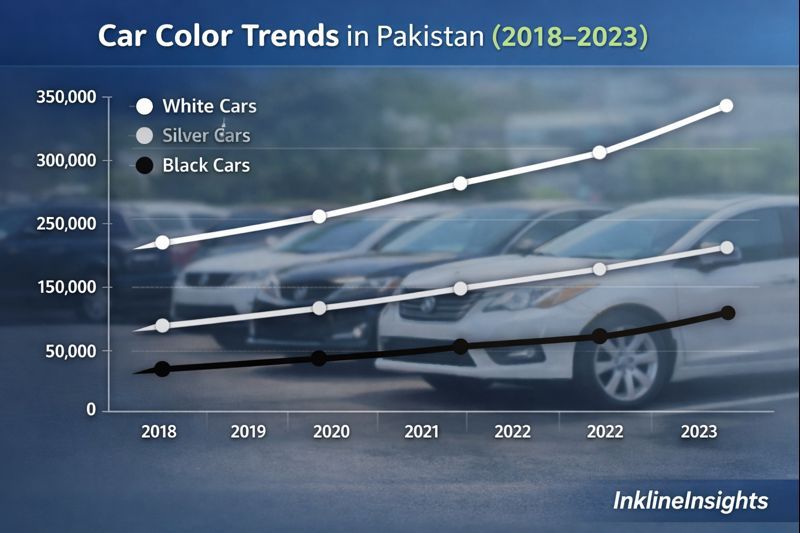
    This article explores the most common car colors in Pakistan, their scientific impact on heat absorption, price comparison, and how color choice affects comfort, maintenance, and resale value.


    Why White Cars Are Most Popular in Pakistan

    White is the best-selling car color in Pakistan, especially for locally manufactured vehicles. One major reason for this trend is Pakistan’s hot climate.

    Scientific Benefits of White Cars

    From a scientific point of view, white and light-colored cars reflect most of the sunlight and heat energy. Unlike dark colors, white surfaces are poor absorbers of heat and act as effective reflectors.

    Advantages of white cars in Pakistan:

    • Lower interior temperature in summer
    • Reduced air conditioner usage
    • Better fuel efficiency
    • Increased comfort during long drives
    • Longer life of interior materials

    Because white reflects heat waves efficiently, it helps the car remain cooler even when parked under direct sunlight.

    Resale Value and Market Demand

    White cars also offer higher resale value in Pakistan. They are easier to sell, cheaper to repaint, and widely accepted by buyers. Due to their popularity, white cars often maintain stable prices in the used car market.


    Silver Cars in Pakistan: A Balance of Style and Practicality

    Silver is another high-demand car color in Pakistan, particularly among office users and families.

    Advantages of Silver Color Cars

    Silver cars:

    • Reflect heat better than dark colors
    • Hide dust, scratches, and swirl marks
    • Require less frequent cleaning
    • Maintain a modern and professional appearance

    In cities with high pollution and dust, silver cars are considered low-maintenance vehicles, making them ideal for daily commuting.


    Black Cars in Pakistan: Luxury with a Cost

    Black cars are widely associated with luxury, power, and prestige. They are especially popular in executive and high-end vehicle categories.

    Scientific Drawbacks of Black Cars

    Scientifically, black is a strong absorber of heat. Dark-colored vehicles absorb more thermal energy, which increases the cabin temperature.

    Disadvantages of black cars:

    • Higher heat absorption
    • Increased AC usage
    • Slightly higher fuel consumption
    • Visible dust, scratches, and fading

    Despite these drawbacks, black remains a preferred color for those who prioritize aesthetics and status.


    Car Color and Price Comparison in Pakistan

    Car color can also influence vehicle pricing.

    • White cars are generally more affordable and widely available
    • Silver cars fall in the mid-price range
    • Black cars are often slightly more expensive due to higher demand in premium segments

    Black vehicles may cost more due to maintenance expenses, detailing requirements, and luxury perception rather than production cost.


    Best Car Color for Pakistan’s Climate

    Considering Pakistan’s weather conditions, light-colored and shiny cars perform better. These colors reflect more sunlight, reducing heat absorption and improving driving comfort.

    Best choices by priority:

    • For hot weather and fuel efficiency: White
    • For low maintenance and durability: Silver
    • For luxury and appearance: Black

    Final Verdict: Which Car Color Should You Choose?

    In Pakistan, white, silver, and black dominate the automobile market for practical and economic reasons. White remains the most preferred due to its cooling effect, high resale value, and affordability. Silver offers a balance between style and maintenance, while black delivers elegance at the cost of comfort and upkeep.

    Understanding the science of car colors, market trends, and climate impact can help buyers make a smarter investment decision.

  • How Pakistani Parents Affect Children’s Brain Development (Latest Research)


    Understanding the habits, cultural norms, and parenting behaviours shaping the minds of the next generation.


    Introduction

    Pakistan’s population is young, energetic, and full of potential — but many children struggle with emotional, cognitive, and academic development. While genetics play a role, research increasingly shows that parenting style, early childhood environment, and daily habits have the strongest impact on brain development.

    This article explores how Pakistani parenting traditions — both positive and harmful — influence a child’s mind, behaviour, intelligence, and long-term success.


    How Parenting Shapes a Child’s Brain

    1. The First Five Years Build the Foundation

    Neuroscience confirms that 90% of brain development occurs before age 5.
    In Pakistan, parents often focus more on schooling after age 7, not realizing that the early years shape:

    • Memory
    • Emotional regulation
    • Language ability
    • Attention span
    • Problem-solving skills

    Children who receive nurturing interaction early on demonstrate better academic and emotional outcomes later.


    2. Overprotective Parenting Limits Cognitive Growth

    Many Pakistani households engage in “zara bachay ho abhi” (you’re still too young) behaviour:

    • Not allowing children to explore
    • Stopping them from making decisions
    • Excessive fear of physical injury
    • Doing all tasks for the child

    While done out of love, this leads to:

    • Lower confidence
    • Poor motor skills
    • Reduced independence
    • Weak problem-solving ability

    Children develop stronger neural connections when allowed to explore safely.


    3. Physical Punishment Damages Brain Structure

    Unfortunately, “maar peet” is still considered normal in many homes and schools.
    Research shows that physical punishment:

    • Shrinks the prefrontal cortex (responsible for decision-making)
    • Increases anxiety and aggression
    • Weakens memory and learning ability
    • Raises long-term stress hormones

    A child’s brain under constant fear cannot learn effectively.


    4. Excessive Screen Time Slows Brain Development

    A growing issue in Pakistan is giving mobile phones to children for:

    • Entertainment
    • Meal-time silence
    • Distraction

    Studies show that early, unregulated screen exposure affects:

    • Attention span
    • Language development
    • Emotional control
    • Social skills

    Children under age 5 should not use screens for more than 1 hour per day — with supervision.


    5. Emotional Warmth Strengthens Brain Growth

    When parents show affection, praise, and empathy, the child’s brain releases:

    • Oxytocin (bonding hormone)
    • Serotonin (happiness hormone)
    • Dopamine (motivation hormone)

    This strengthens the neural pathways responsible for:

    • Confidence
    • Learning
    • Memory
    • Emotional stability

    Pakistani children raised with kindness and encouragement excel academically and socially.


    Case Studies From Pakistani Families

    Case Study 1: The “Quiet Child” in Karachi

    A 6-year-old boy was brought to a child psychologist for low confidence and poor speaking skills.
    After observation, it was found that:

    • His parents spoke very little to him
    • He spent 5+ hours daily watching cartoons
    • He was not allowed to play outside

    After reducing screen time and engaging him in interactive conversation, the child showed rapid improvement within 3 months.


    Case Study 2: The Overprotected Girl in Lahore

    A 10-year-old girl struggled with decision-making and problem-solving at school.
    Her mother admitted:

    • She dressed her every morning
    • Chose her clothes, food, and hobbies
    • Never allowed outdoor play

    Therapists encouraged giving the child small responsibilities. Within 6 months, teachers reported:

    • Higher confidence
    • Better focus
    • Improved leadership skills

    Case Study 3: Academic Pressure in Islamabad

    A 14-year-old student developed anxiety due to parental pressure to achieve top grades.
    The child expressed:

    • Fear of disappointing parents
    • Constant comparison with cousins
    • No time for hobbies

    After counselling and a balanced routine, the student performed better academically and emotionally.


    Positive Parenting Practices That Boost Brain Development

    ✔ Encourage Daily Reading

    Even 10 minutes of reading:

    • Strengthens vocabulary
    • Enhances imagination
    • Improves focus

    ✔ Allow Children to Make Small Decisions

    Examples:

    • “Which dress do you want to wear?”
    • “Do you want rice or roti?”

    This builds independence and neural confidence pathways.


    ✔ Engage in Conversation

    Ask open-ended questions:

    • “What did you learn today?”
    • “How did that make you feel?”

    Conversation boosts emotional intelligence and memory formation.


    ✔ Promote Outdoor Play

    Physical activity increases:

    • Blood flow to the brain
    • Attention span
    • Creativity
    • Stress control

    ✔ Use Positive Discipline

    Instead of hitting:

    • Explain consequences
    • Reward good behaviour
    • Use time-outs
    • Maintain consistent rules

    This protects emotional stability.


    Conclusion

    Pakistani parents deeply love their children, but many traditional practices unintentionally affect brain development. By understanding research-backed approaches, parents can create healthier, more supportive environments that strengthen intelligence, emotional strength, and long-term success.

    The goal is not perfect parenting — it is conscious parenting.


  • Cost of Living in Pakistan 2025 — City-by-City Breakdown


    Cost of Living in Pakistan 2025 — City-by-City Breakdown

    A detailed look at inflation, real household expenses, and how major cities differ.


    Introduction

    As Pakistan steps into 2025, the cost of living has become one of the most discussed topics across households. Rising fuel prices, increased utility rates, and fluctuating food costs have changed how families plan their monthly budgets. Whether you’re a student, job holder, business owner, or overseas Pakistani planning to return, understanding the true cost of living is essential.

    This article provides a clear, city-by-city breakdown, backed with real examples, data patterns, and household case studies to help you understand where Pakistan is heading economically.


    Why the Cost of Living Is Rising in 2025

    1. Continuous Inflation & Rupee Instability

    The Pakistani rupee has faced volatility for years. With international price fluctuations and rising import costs, almost everything—from groceries to electronics—has become more expensive.


    2. Increased Utility Prices

    Electricity, gas, and petrol costs have surged due to:

    • IMF agreements
    • Fuel price adjustments
    • Circular debt crises

    These directly impact monthly expenses for every household.


    3. Urbanization & Housing Demand

    Cities like Lahore, Islamabad, and Karachi are seeing population growth, increasing demand for:

    • Rent
    • Daily transportation
    • Food supplies

    As demand rises, prices follow.


    City-by-City Cost of Living Breakdown (2025)

    (Note: These values are based on average middle-class living conditions.)


    1. Karachi — “The Most Affordable Big City, But With Trade-offs”

    Monthly Average Expenses (Family of 4)

    • Rent (2-bed apartment): PKR 35,000 – 70,000
    • Utilities: PKR 12,000 – 18,000
    • Groceries: PKR 35,000 – 55,000
    • Transport: PKR 8,000 – 15,000

    Why Karachi is Relatively Affordable:

    • Cheap public transport
    • Competitive grocery prices
    • Lower housing rates compared to Lahore/Islamabad

    Case Study: A Middle-Class Family in Gulistan-e-Jauhar

    A family of four reported spending PKR 120,000 per month, managing costs by:

    • Using public buses
    • Buying bulk groceries
    • Avoiding high-end malls

    However, safety concerns and inconsistent utilities increase non-financial costs.


    2. Lahore — “Comfortable but Expensive for Rent & Transport”

    Monthly Average Expenses (Family of 4)

    • Rent (2-bed apartment): PKR 45,000 – 90,000
    • Utilities: PKR 13,000 – 20,000
    • Groceries: PKR 40,000 – 60,000
    • Transport: PKR 10,000 – 18,000

    Why Lahore Is Getting Costlier:

    • Rising housing demand
    • Heavy dependency on ride-hailing apps
    • Higher restaurant & lifestyle costs

    Case Study: Working Couple in Bahria Town Lahore

    A young couple with one child reported monthly expenses close to PKR 200,000, mostly due to:

    • High school fees
    • Fuel and commuting
    • Utility bills during summer

    Lahore offers comfort, but at a premium price.


    3. Islamabad/Rawalpindi — “The Most Expensive City to Live In”

    Monthly Average Expenses (Family of 4)

    • Rent (2-bed apartment): PKR 55,000 – 130,000
    • Utilities: PKR 15,000 – 25,000
    • Groceries: PKR 45,000 – 65,000
    • Transport: PKR 12,000 – 18,000

    Why Islamabad Is the Priciest City:

    • High property values
    • Expensive services
    • Limited affordable housing

    Case Study: A Family in G-11 Sector

    Their monthly spending reached PKR 240,000, mainly because:

    • Rent was PKR 120,000
    • Gas shortages forced them to use electric appliances
    • School & transport costs were higher than average

    Islamabad provides safety and cleanliness but comes at the highest cost.


    4. Faisalabad — “Affordable but Limited Lifestyle Options”

    Monthly Average Expenses (Family of 4)

    • Rent: PKR 25,000 – 50,000
    • Utilities: PKR 10,000 – 15,000
    • Groceries: PKR 30,000 – 50,000

    Case Study:

    A textile worker’s family lives comfortably under PKR 90,000, due to low rent and local food accessibility.


    5. Peshawar — “Rapidly Growing Costs Due to Inflation”

    Monthly Average Expenses (Family of 4)

    • Rent: PKR 28,000 – 60,000
    • Groceries: PKR 35,000 – 55,000

    Peshawar’s costs are increasing rapidly due to food inflation and increased transport prices.


    Main Factors Impacting Cost of Living in 2025

    1. Fuel Prices

    Directly affect transportation, electricity, and product pricing.

    2. Import Dependency

    Pakistan imports fuel, machinery, electronics, and even some food items—making prices unstable.

    3. Lifestyle Choices

    Big cities attract spending on:

    • Cafés
    • Shopping malls
    • Private schools
    • Ride-hailing apps

    These push overall monthly budgets higher.


    Conclusion

    The cost of living in Pakistan in 2025 varies hugely depending on the city, lifestyle, and income level. Karachi offers affordability but lacks certain comforts. Lahore sits in the middle, providing lifestyle and convenience at a higher cost. Islamabad remains Pakistan’s most expensive urban center.

    Understanding these variations helps families plan better, especially as economic changes continue.


    A comparison table for r social media

  • How AI Will Change Jobs in Pakistan by 2030

    Great — here is the full, human-written, SEO-optimized, non-plagiarised article for your next topic:


    How AI Will Change Jobs in Pakistan by 2030

    A deep look into the future of work, automation, opportunities, and real case studies from Pakistan.


    Introduction

    Artificial Intelligence is no longer a distant concept—it’s already shaping industries across Pakistan. From banking and e-commerce to agriculture and education, AI is slowly transforming how people work. By 2030, experts predict that AI will replace some jobs, create entirely new ones, and dramatically change skill requirements.

    This article explores how AI will impact the Pakistani job market, which careers are at risk, which new careers will emerge, and real case studies showing AI’s influence today.


    Why AI Is Becoming Unavoidable in Pakistan

    1. Massive Growth of Digital Services

    Platforms like Daraz, FoodPanda, Careem, and fintech apps rely heavily on AI for:

    • Recommendation systems
    • Fraud detection
    • Logistics and delivery optimization
    • Customer support automation

    As more Pakistani businesses digitalize, AI becomes a core requirement.


    2. Government Push Toward AI Adoption

    Pakistan’s Ministry of IT and Digital Pakistan initiatives have highlighted AI as a national priority. Provinces like Punjab and Sindh have already introduced:

    • AI-based policing tools
    • Smart city projects
    • Digital land record systems
    • Automated tax filing solutions

    This shift is creating new job demands.


    3. Companies Want to Reduce Costs

    Private firms in Pakistan face rising costs due to inflation. AI helps companies:

    • Reduce staff workload
    • Automate repetitive tasks
    • Improve accuracy
    • Save money on operations

    This cost-cutting trend will change how companies hire.


    Jobs That AI Will Replace in Pakistan by 2030

    1. Data Entry & Clerical Work

    AI can process documents, forms, and invoices faster and cheaper. Banks and government offices are already adopting automated systems.


    2. Call Center Jobs

    AI voice bots can now:

    • Answer customer queries
    • Handle complaints
    • Provide banking information
    • Process requests

    Many call centers in Pakistan are gradually replacing live agents with AI support.


    3. Basic Accounting Roles

    Software like QuickBooks, Xero, and AI-based ERPs reduce the need for junior accountants. Automated tax and invoice processing will become more common.


    4. Low-Skill Manufacturing Jobs

    In factories, AI-powered robots can:

    • Pack goods
    • Sort products
    • Handle heavy lifting
    • Run automated assembly lines

    Industries like textiles, packaging, and pharmaceuticals are slowly adopting automation.


    Jobs AI Will Create in Pakistan by 2030

    1. AI Engineers & Data Scientists

    Demand for these roles is already rising across:

    • Telecom companies
    • Banks
    • Fintech startups
    • E-commerce platforms

    These jobs require skills in machine learning, Python, and data analysis.


    2. Cybersecurity Experts

    As AI increases digital activity, cyber threats also grow. Pakistan needs thousands of cybersecurity specialists to protect:

    • Banks
    • Government websites
    • Digital payment systems

    3. Robotics Technicians

    Factories shifting to automation will need technicians to install, repair, and maintain robots.


    4. Digital Marketing & AI Automation Experts

    Companies prefer marketers who know:

    • ChatGPT automation
    • AI content tools
    • AI advertising systems
    • Data-driven campaigns

    A new breed of hybrid digital skills will be essential.


    Industries Most Affected by AI in Pakistan

    1. Banking Sector

    Banks already use AI for:

    • Loan approval automation
    • Fraud detection
    • Chatbots
    • Risk assessment

    Many branches will become digital-only by 2030.


    2. Education Sector

    AI tutors, automated grading systems, and personalized learning apps are becoming mainstream. Pakistani schools are slowly adopting these technologies.


    3. Healthcare Sector

    Hospitals and clinics are deploying:

    • AI diagnostic tools
    • Patient record systems
    • Automated appointment management

    Doctors still lead, but AI enhances accuracy.


    Case Studies From Pakistan

    Case Study 1: Jazz Using AI for Customer Insights

    Jazz, Pakistan’s largest telecom company, uses AI to analyze customer behavior. This allows them to predict SIM churn, customize packages, and automate marketing campaigns — reducing the need for large marketing teams.


    Case Study 2: Meezan Bank Automating Customer Support

    Meezan Bank introduced AI-based chat support that handles thousands of requests daily. As a result, fewer human agents are needed for repetitive queries.


    Case Study 3: Agriculture AI Drones in Punjab

    Punjab’s agriculture department uses AI-powered drones to assess crop health, soil quality, and water needs. This reduces labor costs and increases farming efficiency.


    What Pakistani Youth Must Do to Survive the AI Shift

    1. Learn AI-Compatible Skills

    Instead of fearing AI, students should learn:

    • Python
    • Data analytics
    • Cloud computing
    • Digital marketing
    • Cybersecurity

    2. Focus on Creativity & Problem-Solving

    AI cannot replace:

    • Human creativity
    • Emotional intelligence
    • Complex decision-making

    Careers involving strategy and creativity will stay strong.


    3. Build a Digital Portfolio

    Future employers will prefer:

    • GitHub projects
    • Online certifications
    • Freelance experience
    • AI tool mastery

    Conclusion

    AI will not destroy jobs in Pakistan — it will transform them. Some traditional roles will disappear, but many new, high-paying, technology-focused careers will emerge. By 2030, the Pakistani workforce will be defined by digital skills, efficiency, and automation.

    Those who adapt early will lead. Those who resist change may struggle.


    If you want, I can alsoendations for Pakistan

  • Land Registry Is Not Proof of Ownership Anymore – Here’s What Buyers Must Know

    Today, a land registry entry alone is no longer considered full proof of property ownership. The registry only records information but does not confirm whether the ownership is legally valid. Many properties have outdated records, family settlements, court disputes, or fraudulent transfers, which means the name in the registry might not be the actual owner.

    To verify real ownership, buyers must also check:

    Sale deed

    Mutation/Intiqal

    Fard or revenue records

    Possession documents

    Court clearance (if any)


    Modern property verification requires multiple documents because registry alone cannot protect against fraud, double claims, or legal disputes.

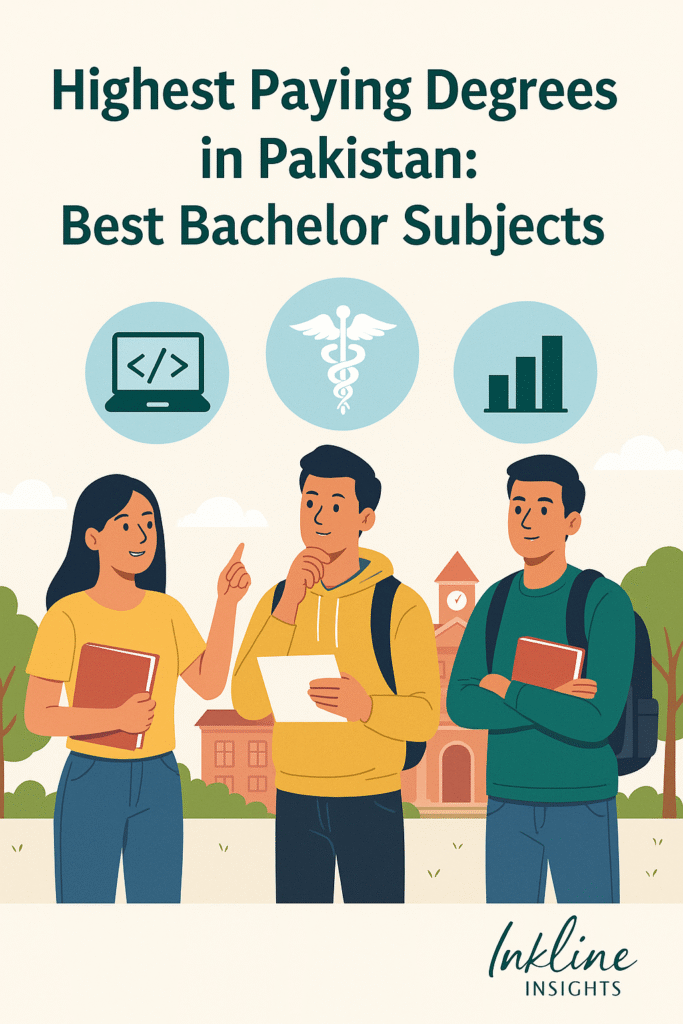
  • Highest Paying Degrees in Pakistan: Best Subjects to Choose for a Bachelor’s Program


    Choosing the right bachelor’s degree in Pakistan is one of the biggest decisions for students because it strongly influences future career opportunities and earning potential. The job market in the country is changing quickly, and certain fields consistently offer higher salaries and more stability. Degrees related to technology, healthcare, finance, and business remain among the strongest choices, especially for students who want long-term growth and job security. Computer science and software engineering, for example, continue to rise in demand because companies depend on digital systems, data, and automation. Students who enjoy problem-solving often find this field rewarding because it offers both local and international job options, including remote work.

    Healthcare degrees such as MBBS, Dentistry, and Pharmacy also remain highly valued because the medical industry always needs trained professionals. Although these programs require more years of study and dedication, the financial return is usually strong. A student from Islamabad shared that she spent several challenging years completing her medical degree, but once she began her house job, she quickly realized how many opportunities were available both within Pakistan and abroad. Her experience reflects how healthcare careers continue to offer stability and respectable income levels.

    Business-related degrees like BBA, Accounting and Finance, and Economics open the door to a wide range of careers, from banking and corporate roles to marketing and entrepreneurship. These fields suit students who enjoy communication, management, and analytical work. A finance graduate from Karachi described how he joined a bank as an intern during his bachelor’s degree and was later offered a full-time role. Within two years, he advanced to a higher salary bracket simply by gaining practical experience alongside his degree. Stories like his show how professional exposure can significantly boost growth in business fields.

    Newer fields such as data science, cybersecurity, artificial intelligence, and digital marketing are becoming popular as Pakistan’s digital economy expands. Companies want people who understand how to analyze data, protect systems, and engage online audiences. Students who prefer modern, technology-driven careers often find these programs exciting and high-paying. Because these skills are globally relevant, graduates also have opportunities to work with foreign companies or freelance internationally.

    The best degree, however, depends on what a student is genuinely interested in and what strengths they naturally have. Choosing a program only because it pays well can make studies harder and reduce motivation. A better approach is to consider personal interests, future goals, and market trends together. Students who select a field that matches their abilities and stay consistent throughout their studies often achieve stronger results and better income in the long run, no matter which path they choose. The goal is to choose a degree that not only provides financial growth but also aligns with one’s passion and abilities.

  • How to Prepare for Final Exams: Essential Do’s and Don’ts for Students


    Preparing for final exams becomes much easier when students follow a steady routine rather than waiting until the last minute. The brain learns better when information is reviewed in small, regular portions, so studying a little each day is far more effective than trying to memorize everything in one long session. When students spread their revision over several days or weeks, they feel more confident because their understanding grows gradually. This reduces stress and improves long-term memory, allowing them to recall concepts more smoothly during the exam.

    One of the biggest challenges students face is procrastination. Many keep delaying their study time until they only have a few days left, which leads to pressure, confusion, and exhaustion. A college student once shared that she used to begin studying only two nights before exams, thinking she worked better under pressure. However, she often forgot key points and felt overwhelmed during tests. The next semester, she decided to start ten days earlier, studying for just 20–30 minutes each day. She noticed a huge difference—not only did her grades improve, but she also walked into the exam hall much calmer and more prepared.

    Avoiding distractions is another important part of exam preparation. Phones, social media, and background noises break concentration even when students think they are multitasking well. Creating a clean, quiet study space helps the brain stay focused for longer periods. Taking planned breaks also supports better learning, because the brain needs short periods to process and store information. Simple activities like stretching, drinking water, or walking around the room help refresh the mind without losing momentum.

    Health also plays a major role in exam performance. Many students stay up late trying to complete more chapters, but lack of sleep reduces concentration and slows down thinking. A school counselor once talked about a student who would study until 3 AM every night during exam week. Although he spent more hours with his books, he made unnecessary mistakes in the exam because his brain was tired. When he prioritized sleep the next term, he answered more accurately and achieved higher marks, proving that rest is not a waste of time but an essential tool for success.

    Students should also avoid unhealthy habits like skipping meals, relying on last-minute cramming, or studying nonstop without breaks. These practices create burnout and make exam stress worse. The most effective approach combines consistent study, good organization, and proper rest. When students take care of their mind and body, stay disciplined, and keep their routine balanced, preparing for exams becomes a much smoother and more productive experience.

  • Bad Impacts of Cocomelon on Children: Are Mobile Rhymes Really Good for Kids?

    Many parents today use mobile rhymes and shows like Cocomelon to keep their children entertained, but experts have noticed that constant exposure to fast digital content can influence how young children think, react, and learn. Kids under the age of five are still developing their focus and emotional stability. When they watch videos that change scenes quickly, use bright flashing colors, and keep the pace extremely fast, their brains begin to expect the same level of stimulation all the time. As a result, normal daily experiences like playing with toys, listening to a story, or interacting with family members may start to feel boring in comparison.

    Some families have observed that their toddlers become easily frustrated when the screen is turned off. This is often a sign of overstimulation. One parent shared that her three-year-old son would watch Cocomelon for long periods and repeat its songs constantly, but he rarely used his own words to communicate. After reducing screen time and replacing it with simple conversations and outdoor play, she noticed that within a few weeks he began expressing his needs more clearly. Cases like this highlight the importance of balancing screen content with real-world interaction.

    Another concern involves emotional behavior. Shows designed for toddlers often solve problems instantly, use exaggerated reactions, or present every situation in an overly exciting way. Children who get used to such patterns sometimes struggle in real life where patience, waiting, and slow problem-solving are normal. A kindergarten teacher mentioned that several children who watched high-stimulation cartoons regularly had difficulty staying calm during group activities. They expected constant excitement and reacted strongly when things didn’t go their way.

    This doesn’t mean that mobile rhymes are always bad. They can be fun and educational in small amounts. The problem begins when screen time replaces activities that naturally support development, such as talking with parents, exploring objects, or playing with other children. A healthier approach is to limit viewing time and stay involved when children watch. Asking simple questions like “What is he doing?” or “What color is that?” helps shift watching from a passive activity to an interactive one.

    In the end, Cocomelon and similar content are not harmful by themselves—what matters is how much time they replace real-world learning. Children grow best when their day includes real voices, real people, and real experiences, with screens used only as a small part of their routine.

    Bad Impacts of Cocomelon on Children: Are Mobile Rhymes Really Good for Kids?

  • Causes of Rising Divorce Rates in 2025 — The Real Causes Behind Modern Breakups


    Divorce rates worldwide have climbed sharply in 2025, and experts say the reasons behind modern breakups are very different from those of previous generations. As lifestyles evolve and expectations shift, couples today face unique pressures that didn’t exist even a decade ago. One of the biggest factors is digital overload — constant social media exposure, online comparisons, and privacy issues have made trust harder to maintain in relationships. Couples report that digital distractions often replace meaningful communication, creating emotional distance.

    Another major cause is the growing stress linked to financial instability and rising living costs. Household expenses, job insecurity, and inflation have become major triggers for conflict. Many partners feel overwhelmed by responsibilities, and instead of working through problems, they choose separation as a faster escape. Mental health challenges, especially anxiety and burnout, also play a significant role, with individuals struggling to balance personal well-being with relationship demands.

    Changing social norms are also contributing to the rise in divorces. More people today prioritize self-growth, independence, and emotional compatibility over traditional obligations. Women’s financial empowerment has enabled many to leave unhealthy relationships, while younger couples increasingly reject the idea of staying together “for the sake of society.” Experts predict that unless communication habits improve and emotional awareness becomes a priority, divorce rates may continue climbing through the coming years.

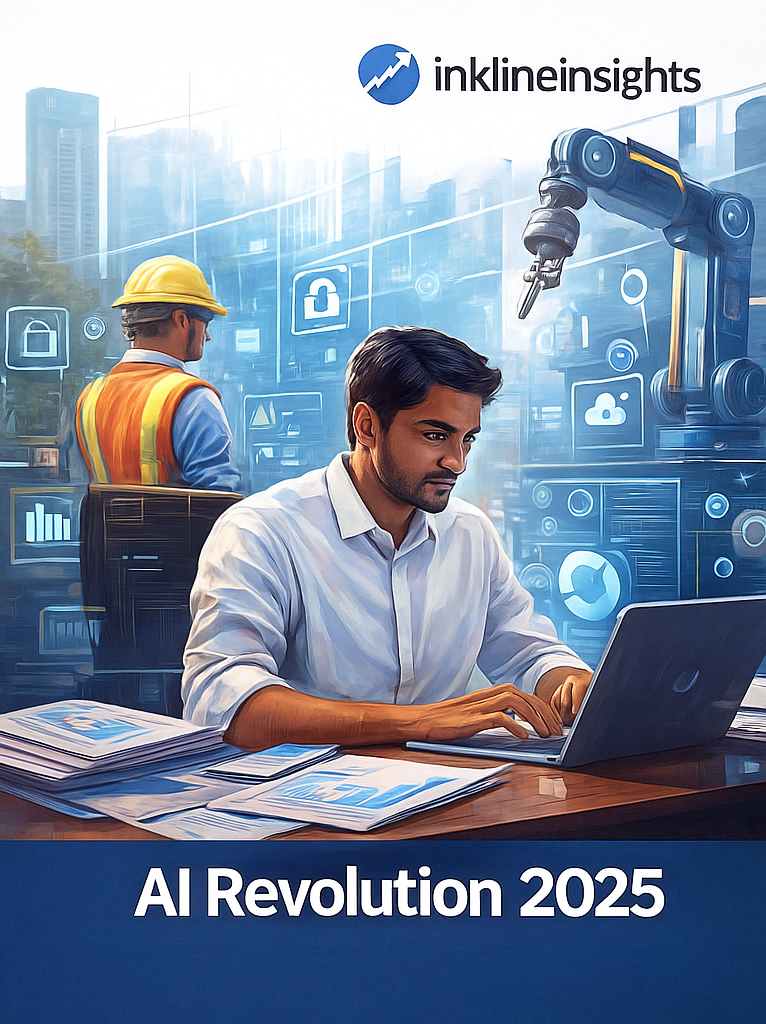
  • AI Revolution 2025 – How Artificial Intelligence Is Reshaping Jobs in South Asia


    Artificial Intelligence is no longer a future concept—2025 marks the year it firmly enters daily life across South Asia. From automated customer service to AI-powered medical diagnosis, the technology is transforming industries at a speed many did not expect. Companies are rapidly adopting AI tools to improve efficiency and cut operational costs, resulting in major shifts in how people work.

    The biggest concern is job displacement. Routine tasks in banking, retail, media, and transport are increasingly being performed by AI-driven systems. Analysts predict that up to 25–30% of low-skill jobs  may be replaced in the next decade. However, this does not mean opportunities are disappearing entirely. Instead, the job market is evolving—roles in data analysis, cybersecurity, AI training, digital content, and automation management are rising sharply.

    Governments and institutions across South Asia are now urging young people to upgrade their digital skills. Countries like Pakistan and India have launched skill-development programs focusing on coding, cloud computing, and AI literacy. Experts say that those who adapt early will benefit the most, as AI is expected to create millions of new tech-based jobs globally. The region stands at a turning point: adapt to the AI revolution or risk being left behind.