Category: International News Impacting Pakistan

  • Pakistan in Talks to Export JF-17 Thunder Fighter Jets After Rising Global Demand

    Image

    Prime Minister Shehbaz Sharif has announced that Pakistan is engaged in discussions with several countries regarding the potential export of its indigenously produced JF-17 Thunder fighter jets. The development comes amid a noticeable surge in international interest following Pakistan’s widely reported success in the May 2025 conflict with India, which brought renewed global attention to the country’s defense capabilities.

    Growing International Interest in JF-17 Thunder

    According to official statements, the JF-17 Thunder has emerged as a cost-effective and combat-proven multi-role fighter aircraft, making it an attractive option for air forces seeking modern capabilities without the high costs associated with Western jets. Defense analysts note that the aircraft’s performance during recent regional tensions significantly boosted its international profile.

    Defense Minister Raza Hayat Haraj confirmed that formal and informal talks are underway with multiple nations. He emphasized that Pakistan is carefully evaluating each proposal to ensure strategic alignment and long-term cooperation.

    China’s Role in Any Potential Deal

    The JF-17 Thunder is jointly developed by Pakistan and China, which means any export agreement must receive approval from Beijing. The Defense Minister highlighted that China’s involvement is a key factor in negotiations, underscoring the importance of mutual consent due to shared intellectual property and co-production arrangements.

    This collaborative framework, officials say, ensures quality control, technological consistency, and long-term support for potential buyers.

    Countries Showing Interest

    Unconfirmed reports suggest that several countries have expressed preliminary interest in acquiring the JF-17 Thunder. These include Libya, Sudan, Bangladesh, Indonesia, and Saudi Arabia. While no formal agreements have been finalized, officials describe the discussions as “encouraging.”

    Strategic and Economic Impact for Pakistan

    If concluded, these deals could significantly strengthen Pakistan’s defense exports sector, generating foreign exchange and reinforcing the country’s position as an emerging player in the global arms market. Analysts believe successful exports would also enhance Pakistan’s diplomatic ties and defense cooperation with partner nations.

    Prime Minister Shehbaz Sharif reiterated that Pakistan aims to pursue defense exports responsibly, focusing on transparency, international regulations, and regional stability.

    Outlook

    As negotiations continue, the JF-17 Thunder’s growing popularity reflects Pakistan’s expanding role in defense manufacturing and military technology. Any finalized export agreements are expected to mark a major milestone for the country’s defense industry in the coming years.


    Disclaimer: This content is for informational purposes only. The image is AI-generated and provided solely for reference.

  • SAUDI ARABIA INTRODUCES NEW SAUDIZATION RULES WITH SAR 8,000 MINIMUM SALARY FOR ENGINEERS

    Saudi Arabia has introduced new workforce localization measures under its Saudization policy, marking another significant step toward strengthening employment opportunities for Saudi nationals. One of the most notable changes is the introduction of a minimum monthly salary of SAR 8,000 for Saudi engineers, alongside increased localization targets in the engineering sector. These reforms are aligned with the Kingdom’s long-term economic vision and aim to create sustainable, high-quality jobs for citizens while supporting private-sector growth.

    UNDERSTANDING SAUDIZATION AND ITS PURPOSE

    Saudization is a national labor strategy implemented by Saudi Arabia to increase the participation of Saudi citizens in the private sector. Historically, many technical and professional roles in the Kingdom were filled by expatriate workers. While this supported rapid development, it also created a reliance on foreign labor.

    Through Saudization, the government requires companies to employ a defined percentage of Saudi nationals based on their industry and workforce size. The policy focuses on developing local talent, reducing unemployment among citizens, and ensuring that economic growth directly benefits the Saudi population.

    These updated regulations reflect a shift toward quality employment, ensuring that jobs offered to Saudi professionals are financially viable, skill-based, and aligned with national development goals.

    KEY HIGHLIGHTS OF THE NEW ENGINEERING REGULATIONS

    The latest update places strong emphasis on engineering professions, which are critical to Saudi Arabia’s infrastructure, energy, construction, and industrial sectors.

    Major Changes Include:

    Minimum Salary Requirement: Saudi engineers must earn at least SAR 8,000 per month to be counted under Saudization quotas.

    Localization Target: Companies are required to ensure that 30% of engineering roles are filled by Saudi nationals.

    Company Coverage: The rules apply to private and non-profit organizations employing five or more engineers.

    Professional Accreditation: Engineers must be officially registered with the Saudi Council of Engineers, ensuring professional competence and recognized qualifications.

    Implementation Timeline: While announced at the end of 2025, companies have been given a six-month adjustment period before full enforcement begins.

    The policy covers dozens of engineering disciplines, including civil, electrical, mechanical, industrial, architectural, marine, and electronics engineering.

    WHY THE SAR 8,000 SALARY BENCHMARK IS IMPORTANT

    Setting a minimum salary threshold serves several strategic purposes:

    1. Financial Stability for Professionals

    SAR 8,000 per month provides Saudi engineers with a stable income that reflects their education and technical expertise. This helps make engineering careers more attractive to young Saudis entering the workforce.

    2. Preventing Token Employment

    The salary requirement discourages superficial compliance, where companies might otherwise hire nationals at very low wages simply to meet quotas. Instead, it promotes meaningful and fair employment.

    3. Encouraging Skill Development

    By linking employment to professional accreditation, the policy incentivizes engineers to maintain certifications, enhance skills, and pursue continuous professional development.

    Overall, the wage requirement raises employment standards while protecting the dignity and value of skilled labor.

    IMPACT ON THE PRIVATE SECTOR

    Private-sector companies will need to review their workforce planning strategies to comply with the updated Saudization rules. This includes:

    Revising salary structures
    Recruiting qualified Saudi engineers
    Investing in training and onboarding programs
    Aligning job descriptions with professional standards

    While this may increase short-term operational costs for some employers, policymakers emphasize that a skilled local workforce can reduce long-term expenses related to turnover, recruitment, and dependency on overseas talent.

    The government’s phased implementation approach allows businesses time to adapt without disrupting ongoing projects.

    BROADER EXPANSION OF SAUDIZATION POLICIES

    The engineering sector is not the only area affected by recent localization efforts. Saudi Arabia has gradually expanded Saudization targets across multiple industries, including:

    Procurement and supply chain roles
    Accounting and finance professions
    Healthcare services
    Retail and customer service sectors

    In some professions, localization targets now reach 60% to 70%, reflecting the government’s confidence in the growing capabilities of the national workforce.

    This structured expansion demonstrates a balanced approach—strengthening local employment while maintaining business continuity.

    ECONOMIC AND SOCIAL BENEFITS

    1. Reduced Unemployment

    By prioritizing Saudi nationals in skilled professions, the policy directly contributes to lowering unemployment rates among graduates and technical professionals.

    2. Stronger Human Capital

    Investing in local talent helps build long-term expertise within the country, supporting innovation and productivity across industries.

    3. Sustainable Economic Growth

    A stable, skilled workforce supports economic diversification and reduces dependence on external labor markets.

    4. Alignment WITH VISION 2030

    The reforms are closely aligned with Saudi Arabia’s Vision 2030 objectives, which emphasize workforce localization, private-sector empowerment, and sustainable development.

    CHALLENGES AND ADJUSTMENTS

    Despite its advantages, the policy may pose challenges for some employers, particularly those accustomed to relying heavily on expatriate engineers. Finding qualified local talent, adjusting compensation frameworks, and meeting compliance requirements may require strategic planning.

    However, government officials view these challenges as transitional and necessary for long-term economic resilience. Support initiatives, training programs, and partnerships with educational institutions are expected to play a key role in easing the transition.

    FUTURE OUTLOOK

    Saudi Arabia’s updated Saudization rules signal a clear commitment to building a skilled, well-paid national workforce. The SAR 8,000 minimum salary for engineers sets a new benchmark for professional employment and reflects a shift toward quality-focused localization.

    As enforcement begins, the policy is expected to reshape hiring practices, encourage skill development, and enhance the role of Saudi professionals in key sectors. Over time, these reforms are likely to strengthen both the labor market and the broader economy.

    By balancing workforce localization with professional standards and fair compensation, Saudi Arabia continues to move steadily toward a more inclusive and sustainable economic future.

  • Saudi Arabia Rejects Israel’s Recognition of Somaliland: Regional Politics, International Law & Stability Explained

    Introduction
    On December 26, 2025, the State of Israel made headlines by becoming the first United Nations member state to formally recognise Somaliland as an independent and sovereign nation, marking a significant shift in global diplomacy. Somaliland has operated independently of Somalia since 1991 but had never received formal international recognition.

    While the announcement represented a major diplomatic achievement for Somaliland’s leadership, it immediately triggered strong international criticism, particularly from influential regional and global actors such as Saudi Arabia. Riyadh quickly rejected the move, stating that it violates established principles of international law and undermines Somalia’s territorial integrity.

    This article explores the reasons behind Saudi Arabia’s rejection, its broader significance, and the potential consequences for regional stability and international norms.

    What Happened: Israel Recognises Somaliland
    Somaliland is located in the Horn of Africa, bordering Djibouti, Ethiopia, and the Gulf of Aden. It declared independence from Somalia in 1991 after the collapse of the Somali central government. For more than three decades, Somaliland has maintained its own government, constitution, currency, and security forces, functioning as a de facto independent state. Despite being more stable than much of Somalia, its pursuit of international recognition had repeatedly stalled, with no country formally acknowledging its sovereignty until Israel’s announcement.

    On December 26, 2025, Israel declared the establishment of full diplomatic relations with Somaliland, describing the move as a milestone for cooperation and a partnership focused on economic, technological, and strategic interests. Israeli Prime Minister Benjamin Netanyahu welcomed the new diplomatic ties and outlined prospects for future collaboration.

    Saudi Arabia’s Stance: Rejecting the Recognition
    Within hours of Israel’s announcement, Saudi Arabia publicly rejected the decision. The Saudi Ministry of Foreign Affairs released a statement affirming full support for Somalia’s sovereignty, territorial integrity, and unity. The kingdom described the recognition as a violation of international law and an attempt to create parallel entities that weaken a sovereign state.

    Saudi Arabia’s objections were based on several core concerns:

    • Respect for State Sovereignty: Saudi officials stressed that recognising a region within a sovereign country without its consent contradicts the United Nations Charter and fundamental principles of diplomatic law.
    • Regional Stability: Riyadh warned that unilateral actions of this nature could destabilise the already fragile Horn of Africa by encouraging separatist movements in other regions.
    • Support for Somalia: The kingdom reaffirmed its backing of Somalia’s legitimate government institutions and pledged continued assistance to preserve national stability.

    This response aligns with Saudi Arabia’s longstanding diplomatic principles that prioritise territorial integrity and oppose external interference in the internal affairs of sovereign states.

    Broader Arab and African Backlash
    Saudi Arabia was not alone in rejecting the recognition. Several Arab states, including Egypt, Kuwait, Iraq, Jordan, Qatar, and Palestine, condemned the move as unlawful and dangerous for regional peace. Many viewed it as a troubling precedent that could encourage further unilateral recognition of separatist territories.

    Regional organisations also issued strong responses:

    • The Gulf Cooperation Council described Israel’s decision as a violation of international law that threatens stability in the Horn of Africa.
    • The Organisation of Islamic Cooperation condemned the recognition and reaffirmed solidarity with Somalia, calling for respect for internationally recognised borders.
    • The African Union and the Intergovernmental Authority on Development also rejected the move, emphasising the need to preserve Somalia’s territorial integrity.

    Somalia itself denounced the recognition as an act of state aggression, accusing Israel of interfering in its internal affairs and attempting to divide the country.

    Why This Matters: International Law & Geopolitics
    Saudi Arabia’s response carries important implications for global diplomacy:

    • International Law and Precedent: Most states avoid recognising secessionist regions without broad international consensus. Saudi Arabia’s position reinforces adherence to recognised borders and legal norms enshrined in the UN Charter.
    • Horn of Africa Stability: The region remains highly fragile due to ongoing security challenges and political complexities. Any action that risks further fragmentation is widely viewed as a threat to regional stability.
    • Regional Power Dynamics: Saudi Arabia’s rejection also reflects wider geopolitical considerations. As a key diplomatic actor across Africa and the Middle East, Riyadh seeks to maintain influence while avoiding encouragement of separatist movements.
    • Israeli–Arab Relations: Although some Arab states have normalised relations with Israel, Saudi Arabia’s reaction highlights that major disagreements persist, particularly when actions are perceived as destabilising or dismissive of regional concerns.

    Conclusion
    Saudi Arabia’s rejection of Israel’s recognition of Somaliland underscores deep divisions over statehood, sovereignty, and regional stability. While Israel’s decision represents a historic milestone for Somaliland, Saudi Arabia and many other nations view it as a breach of international norms and a potentially destabilising development.

    As the situation continues to unfold, the dispute highlights a fundamental tension in contemporary geopolitics between national aspirations and established international law. The strong response from Saudi Arabia and other global actors indicates that attempts to alter recognised borders will remain a source of intense debate and diplomatic resistance.

  • Mufti Shamail Nadwi vs Javed Akhtar: Who Won the Debate on the Existence of God?

    Introduction

    The debate on “Does God Exist?” featuring Mufti Shamail Nadwi and Javed Akhtar has become one of the most discussed intellectual exchanges in South Asia. The discussion attracted massive attention because it brought together two sharply contrasting worldviews: classical theism and modern atheistic rationalism.

    The debate took place on 20 December 2025 at the Constitution Club of India in New Delhi.The discussion was moderated by journalist Saurabh Dwivedi, who is the editor of The Lallantop, guiding the structured dialogue between the participants.


    Background of the Debate

    • Mufti Shamail Nadwi is an Islamic scholar trained in theology, logic, and philosophy, particularly metaphysics and moral philosophy.
    • Javed Akhtar is a renowned poet and lyricist who openly identifies as an atheist/agnostic, advocating skepticism and humanism.

    The debate focused on:

    • Existence of God
    • Science vs metaphysics
    • Morality and ethics
    • Suffering and the problem of evil

    Core Arguments Presented

    1. Argument from Cause and Origin of the Universe

    Mufti Shamail Nadwi’s Position

    • The universe had a beginning, a fact supported by modern cosmology (Big Bang theory).
    • Anything that begins to exist requires a cause.
    • Therefore, the universe requires a necessary, uncaused cause, identified as God.

    This argument aligns with well-established philosophical reasoning used by thinkers such as Aristotle and Ibn Sina.

    Javed Akhtar’s Response

    • He questioned why God should be exempt from causation.
    • He rejected metaphysical explanations that cannot be empirically tested.

    Analysis

    Akhtar challenged the premise emotionally but did not refute the necessary vs contingent existence distinction. Nadwi’s argument remained logically intact.


    2. Science and the Limits of Empirical Evidence

    Javed Akhtar’s Position

    • Belief should be based only on what can be tested, measured, and verified.
    • Science has progressively replaced supernatural explanations.

    Mufti Shamail Nadwi’s Counter

    • Science explains processes, not existence itself.
    • Questions such as why there is something rather than nothing fall outside scientific measurement.
    • Rejecting metaphysics is itself a philosophical stance, not a scientific one.

    Fact Check

    • Many foundational scientific concepts (laws of nature, logic, mathematics) are not physically observable, yet universally accepted.

    3. Morality Without God

    Javed Akhtar

    • Morality can exist without God through empathy, social norms, and human consensus.

    Mufti Shamail Nadwi

    • Without God, morality becomes subjective and variable.
    • History shows societies morally justified slavery, genocide, and oppression.
    • Objective moral values require an objective moral source.

    Logical Outcome

    Akhtar did not provide a mechanism to explain why moral values should be universally binding without a higher authority. Nadwi’s position addressed this gap directly.


    4. The Problem of Evil and Suffering

    Atheist Argument

    • If God exists and is merciful, why does suffering exist?

    Theistic Response

    • Without God, suffering is random and meaningless.
    • With God, suffering can have purpose, accountability, and justice beyond material life.
    • A temporary world cannot be used to judge an eternal framework.

    Key Point

    Akhtar highlighted emotional weight but offered no alternative explanation for meaning or justice in suffering.


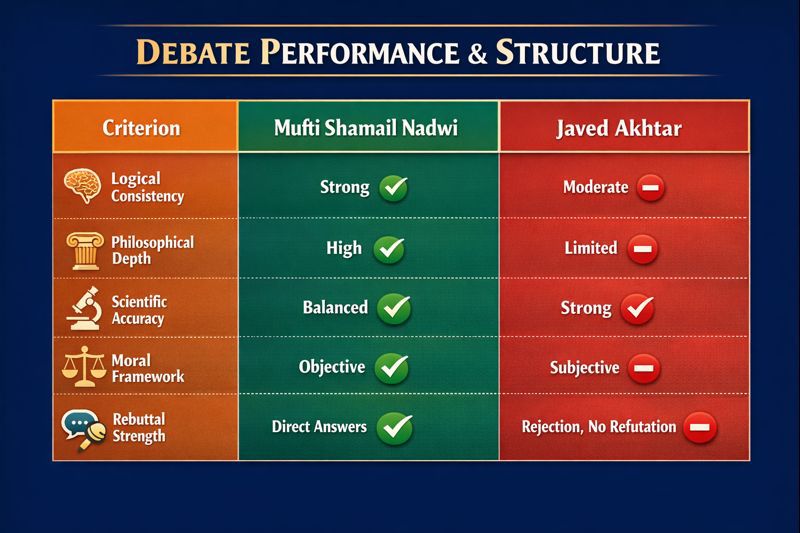
    Debate Performance and Structure


    Audience and Intellectual Impact

    • Religious and philosophy-oriented audiences found Nadwi’s arguments coherent and intellectually satisfying.
    • Secular audiences resonated with Akhtar’s skepticism but noted the absence of alternative explanations.
    • No argument from Akhtar decisively disproved theism; he maintained personal disbelief, not logical negation.

    Key Insights

    • God’s existence is a metaphysical question, not a laboratory experiment.
    • Philosophy, not science alone, is the correct discipline for such debates.
    • Denial of God requires as much philosophical justification as belief.
    • Rational theism remains logically defensible in modern discourse.

    Final Conclusion: Who Won the Debate?

    Mufti Shamail Nadwi is the clear winner.

    Why?

    • He answered every objection within a coherent philosophical framework.
    • His arguments were internally consistent, historically grounded, and logically valid.
    • Javed Akhtar relied on skepticism and disbelief, not counter-proof.
    • Rejecting an argument does not invalidate it unless it is logically disproven.

    Final Verdict

    Mufti Shamail Nadwi won the debate intellectually and philosophically, while Javed Akhtar remained unconvinced by choice, not by refutation.


    Disclaimer

    This article is informational and analytical, does not promote hate, coercion, or misinformation, and respects differing worldviews. All opinions are presented in a neutral, educational context.


  • Rare Snowfall in Saudi Arabia After 30 Years: Reality, Facts, and Climate Explanation


    Introduction
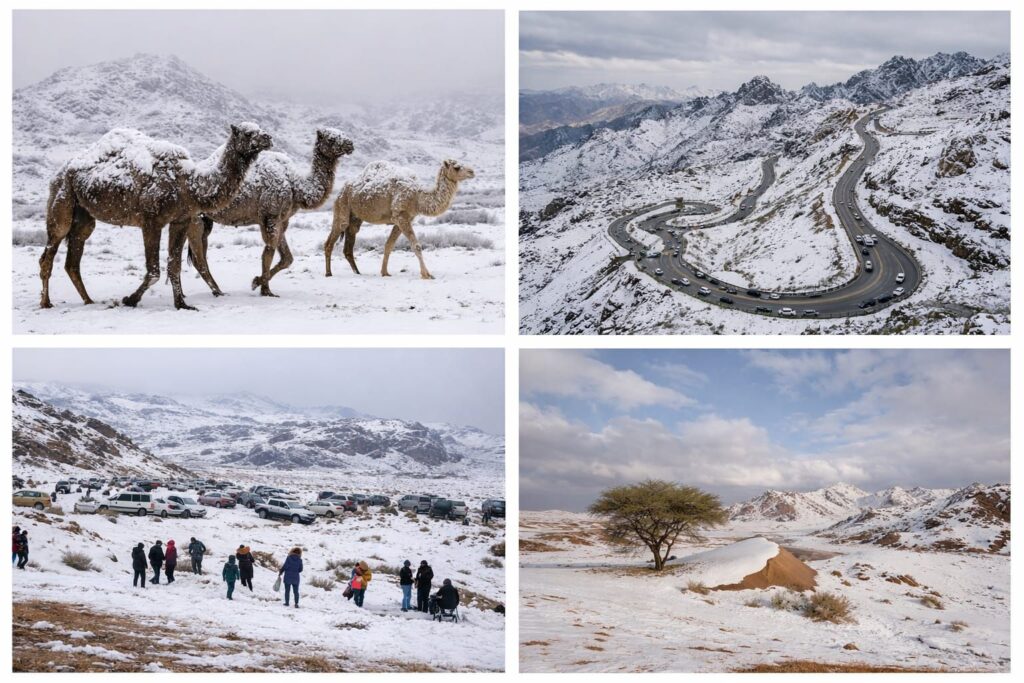
    Saudi Arabia is globally recognized for its hot desert climate, vast sand dunes, and extremely high summer temperatures. However, in December 2025, the Kingdom experienced an unusual and widely discussed weather phenomenon — snowfall in several northern and central regions. Videos and images of snow-covered mountains and landscapes went viral on social media, leading to widespread claims that Saudi Arabia had seen snow “for the first time in 30 years.”


    Which Areas of Saudi Arabia Experienced Snowfall?
    The snowfall was mainly observed in northern and elevated regions of Saudi Arabia, where winter temperatures can occasionally drop below freezing.


    Key Affected Regions
    Tabuk Region:
    Mountainous areas such as Jabal Al-Lawz experienced noticeable snowfall. This region lies at an elevation of over 2,500 meters, making it one of the coldest parts of the country during winter.
    Hail Region:
    Some higher-altitude areas in Hail reported snow and frost, an extremely rare occurrence for the region.
    Northern Qassim and Northern Riyadh Areas:
    While heavy snow accumulation was limited, cold conditions, frost, and occasional sleet were reported in elevated zones.
    Most coastal and southern regions, including Jeddah, Makkah, and Jazan, remained warm and dry, showing how diverse Saudi Arabia’s climate can be.


    Temperature Drop:
    During this cold wave, temperatures dropped sharply across northern Saudi Arabia:
    Mountain regions: Temperatures fell to around –3°C to –5°C during nighttime.


    Northern cities: Recorded lows ranged between 1°C and 4°C.
    Central regions: Experienced unusually cold nights, though mostly above freezing.
    Western coastal cities: Continued to record temperatures near 28°C–32°C, highlighting extreme regional variation.


    Such temperature drops are uncommon but not impossible during winter months when strong cold air systems move southward.


    Is This Really the First Snowfall in 30 Years?

    The statement that Saudi Arabia witnessed snow “for the first time in 30 years” is partly misleading.
    Snowfall has occurred occasionally in northern Saudi Arabia, particularly in Tabuk, over the past few decades.
    What makes the 2025 snowfall unique is its intensity, visibility, and geographic spread, especially in regions that rarely experience snow.
    In some specific locations, this may indeed be the most significant snowfall in nearly three decades, which likely explains the widespread use of the “30 years” phrase.
    In short, snow is not completely unprecedented in Saudi Arabia, but such widespread snowfall remains extremely rare.


    Why Does Snow Occur in a Desert Country?
    Saudi Arabia’s climate is mostly arid, but several factors can combine to produce snow:

    1. High Altitude
      Mountainous regions naturally experience lower temperatures. When winter storms arrive, these areas are the most likely to receive snow.
    2. Cold Polar Air Mass
      In December 2025, a strong polar cold front moved from northern regions toward the Arabian Peninsula, causing temperatures to fall dramatically.
    3. Moisture Availability
      Snow forms when cold air meets sufficient atmospheric moisture. This rare combination occurred during the weather system that affected northern Saudi Arabia.
    4. Winter Weather Systems
      Between December and February, Mediterranean weather systems can occasionally influence Saudi Arabia, bringing rain, hail, or snow to elevated areas.
      Public Response and Government
      The snowfall generated significant public interest:
      -Social media platforms were flooded with images and videos of snow-covered deserts and mountains.
      -Many residents traveled to higher elevations to witness the rare event.
      -Authorities issued weather advisories, warning about icy roads, reduced visibility, and extreme cold.
      -Safety instructions were shared to protect livestock, travelers, and vulnerable populations from harsh conditions.
      -Despite the excitement, officials emphasized caution due to unfamiliar driving conditions and freezing temperatures.
      Historical Perspective:
      While Saudi Arabia is among the hottest countries in the world, history shows that snow has occurred before:
      Northern mountainous regions have recorded snow on rare occasions.
      Frost and hail are more common than snow but still remain unusual.
      Most of the country continues to experience hot and dry conditions year-round.
      These events are typically short-lived and localized, which is why they attract major attention when they occur.
      Does This Mean Climate Change?
      One unusual snowfall does not automatically confirm climate change, but scientists acknowledge that global climate shifts can increase weather variability.
      Climate change can lead to more frequent temperature extremes.
      Unusual cold spells can occur alongside global warming due to disrupted atmospheric patterns.
      Long-term data is required to establish any direct link between snowfall events and climate trends.
      Experts recommend analyzing patterns over decades rather than drawing conclusions from a single event.
      Conclusion
      The snowfall in Saudi Arabia during December 2025 was a rare but real meteorological event, primarily affecting northern and high-altitude regions. While claims of it being the first snowfall in 30 years are partly exaggerated, the scale and visibility of the event were indeed unusual.
      This phenomenon highlights the diverse climate of Saudi Arabia and demonstrates that even desert nations can experience extreme winter weather under the right conditions. The event was safely managed, widely documented, and scientifically explainable — making it an exceptional moment in the Kingdom’s recent weather history.
  • Qatar Government Scholarship 2026–2027 | Fully Funded Program for Higher Education

    The Qatar Government Scholarship 2026–2027 is one of the most prestigious study programs offered by Qatar’s Ministry of Education and Higher Education. Designed to support academic excellence, this scholarship provides fully funded financial assistance, helping students pursue higher education at top local and international universities. Although the program mainly targets Qatari nationals, it remains a significant part of the country’s education strategy and global academic partnerships.


    What Is the Qatar Government Scholarship?

    The Qatar Government Scholarship is an official funding program that supports selected students with full financial coverage to study at accredited universities. The scheme includes several categories such as the Amiri Scholarship, Abroad Scholarship, and Local Scholarship Program (Tomouh). Each track offers support for undergraduate, graduate, and specialized academic programs.


    Who Can Apply for the Scholarship?

    For the 2026–2027 cycle, the scholarship is available exclusively for Qatari citizens. Applicants must meet academic requirements, choose approved fields of study, and meet the eligibility criteria set by the Ministry of Education.

    However, international students are not eligible for this government-funded program. Non-Qatari students can apply for other fully funded opportunities such as the Qatar University Scholarship or Hamad Bin Khalifa University Scholarship.


    Benefits of the Qatar Government Scholarship 2026–2027

    The scholarship provides extensive financial support, including:

    100% tuition fee coverage

    Monthly stipend for living expenses

    Travel allowance and flight tickets (for abroad scholarships)

    Housing support or accommodation assistance

    Academic and career guidance

    Coverage for books, medical insurance, and administrative fees (depending on the program)

    This makes it one of the most comprehensive scholarship packages in the region.


    Programs and Fields of Study

    Scholarship recipients can study in a wide range of disciplines, including:

    Engineering

    Medicine and Health Sciences

    Business and Economics

    Law and International Relations

    Education and Social Sciences

    Creative Industries

    Technology and Computer Sciences

    Programs are available in Qatar and at globally ranked universities abroad.


    Application Dates for 2026–2027

    The application window for the Qatar Government Scholarship 2026–2027 typically opens in July and closes between September and October. Applicants must submit all required documents, meet academic standards, and select a program from the approved university list.


    Alternatives for International Students

    If you are a non-Qatari student looking for fully funded opportunities, consider these scholarships:

    Qatar University International Scholarship

    Hamad Bin Khalifa University (HBKU) Scholarship

    Doha Institute for Graduate Studies Scholarship

    These programs offer tuition coverage, accommodation, monthly stipends, and other financial support.


  • Human Washing Machines in Japan: The Future of Automated Bathing Technology


    Human washing machines are becoming a standout innovation in Japan’s personal care and healthcare industries. Built around Japan’s passion for robotics and convenience, these advanced bathing systems allow users to experience a fully automated wash that is gentle, efficient, and incredibly relaxing.

    In many Japanese hospitals, nursing homes, and rehabilitation centers, human washing machines are transforming how caregivers support patients with limited mobility. The machines use carefully controlled water pressure, rotating nozzles, warm mist, and automated cleansing cycles to clean the entire body without discomfort. This not only ensures hygiene and safety for the user but also helps reduce the physical workload placed on caregivers.

    Modern Japanese models often include features like heated seating, aromatherapy, adjustable spray intensity, and touchscreen controls. These additions create a spa-like environment that promotes relaxation while maintaining high hygiene standards. As Japan’s population continues to age, demand for accessible, hands-free bathing solutions is expected to rise significantly.

    With continuous innovation in robotics and smart home technology, Japan is shaping the future of automated personal care. Human washing machines are quickly becoming a symbol of how technology can enhance comfort, independence, and quality of life.


  • Early Signs of Autism in Babies and Toddlers: What Parents Should Know About ASD

    Autism Spectrum Disorder (ASD) is a complex condition that affects how kids interact, communicate, and experience the world. Signs often appear in early childhood, around 2-3 years old.

    Some common signs in babies and toddlers include:
    – Not responding to their name
    – Avoiding eye contact
    – Delayed language development
    – Repeating actions or words
    – Getting upset with changes in routine
    – Showing intense interest in specific topics

    Every child with autism is unique, with varying needs. Some need extra support, while others are more independent.

    Research suggests genetics, brain development, and environmental factors are linked to autism.

    If you’re concerned about your child’s development, consult a pediatrician or specialist. Early detection and intervention can make a big difference.

    For personalized guidance and support, reach out to a healthcare professional or support group.

  • Hong Kong’s Deadliest Blaze Exposes Deep Failures in Urban Safety and Oversight

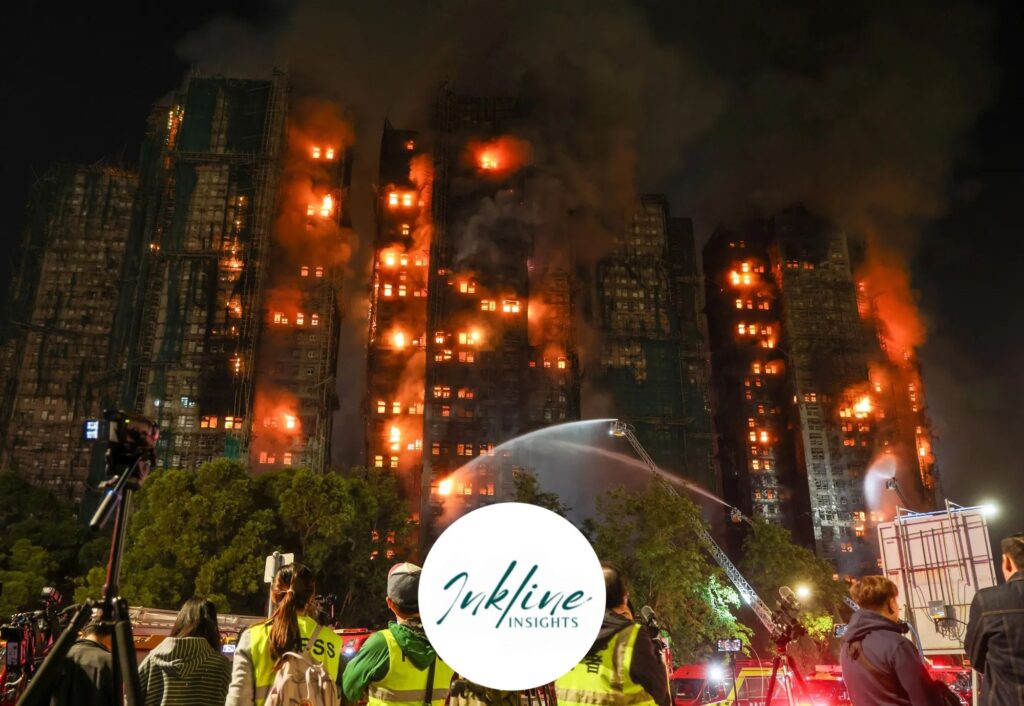
    A massive fire at Hong Kong’s Wang Fuk Court housing complex in Tai Po has killed at least 146 people and displaced thousands, marking the city’s deadliest blaze since 1948. The fire spread rapidly across seven high-rise towers due to bamboo scaffolding, mesh netting, and Styrofoam renovation materials that ignited and fueled the flames. Fire alarms reportedly failed, many elderly residents struggled to escape, and several renovation contractors have been arrested for manslaughter and corruption. Rescue operations lasted more than 44 hours as firefighters battled extreme heat reaching 500°C.

    The devastating fire at the Wang Fuk Court complex is more than an isolated tragedy — it is a painful indicator of deeper structural, regulatory, and societal failures that have been building for years. At the heart of this disaster lies a combination of aging public housing, lax safety enforcement, and renovation practices that prioritized speed and cost over human life.

    For decades, bamboo scaffolding has been a hallmark of Hong Kong construction culture, but in an era of high-rise living, its risks have become increasingly evident. The fire demonstrated how quickly bamboo, plastic mesh, and Styrofoam insulation can transform a building into an uncontrollable inferno. These materials acted as fuel, helping the flames leap from one tower to another in minutes. Their continued use — despite years of warnings — reflects a troubling resistance to modernization in building standards.

    Equally alarming is the failure of essential safety systems. Many residents reportedly never heard alarms, suggesting serious negligence in maintenance and inspection. In a residential complex where nearly forty percent of occupants are elderly, functioning alarms and evacuation systems are not just required — they are lifelines. The tragic loss of life shows what happens when those lifelines fail.

    The arrests of renovation supervisors and individuals linked to corruption raise even deeper concerns. If shortcuts were taken or regulations ignored for profit, then this disaster is not just a natural tragedy — it is a human-made failure, created by carelessness and sustained by weak oversight. Public trust hinges on the government’s willingness to enforce accountability and introduce meaningful reforms.

    Beyond the immediate response, Hong Kong must confront a long-standing issue: its reliance on outdated infrastructure and renovation materials in densely populated estates. This tragedy should serve as a catalyst for a complete overhaul of fire-safety requirements, renovation protocols, and building inspections. It is also a reminder that when a city grows vertically, safety standards must rise with it.

    Ultimately, the Wang Fuk Court fire is a heartbreaking example of how preventable factors — ignored warnings, inadequate systems, and questionable construction practices — can converge into catastrophe. If Hong Kong is to prevent another disaster of this scale, the lessons from this fire must translate into urgent, long-term change rather than temporary outrage.

  • Causes of Rising Divorce Rates in 2025 — The Real Causes Behind Modern Breakups


    Divorce rates worldwide have climbed sharply in 2025, and experts say the reasons behind modern breakups are very different from those of previous generations. As lifestyles evolve and expectations shift, couples today face unique pressures that didn’t exist even a decade ago. One of the biggest factors is digital overload — constant social media exposure, online comparisons, and privacy issues have made trust harder to maintain in relationships. Couples report that digital distractions often replace meaningful communication, creating emotional distance.

    Another major cause is the growing stress linked to financial instability and rising living costs. Household expenses, job insecurity, and inflation have become major triggers for conflict. Many partners feel overwhelmed by responsibilities, and instead of working through problems, they choose separation as a faster escape. Mental health challenges, especially anxiety and burnout, also play a significant role, with individuals struggling to balance personal well-being with relationship demands.

    Changing social norms are also contributing to the rise in divorces. More people today prioritize self-growth, independence, and emotional compatibility over traditional obligations. Women’s financial empowerment has enabled many to leave unhealthy relationships, while younger couples increasingly reject the idea of staying together “for the sake of society.” Experts predict that unless communication habits improve and emotional awareness becomes a priority, divorce rates may continue climbing through the coming years.