Category: International News Impacting Pakistan

  • Hollywood 2025 Shock — Biggest Box Office Comeback After Years of Decline


    Hollywood has made an unexpected and powerful comeback in 2025, marking one of the strongest box office rebounds in over a decade. After years of declining ticket sales, streaming dominance, and pandemic aftereffects, the global film industry is once again experiencing massive theatrical demand. Blockbusters released in early 2025 have already crossed $3 billion in worldwide revenue, surpassing projections by a wide margin.

    The revival is being driven by a mix of high-budget sci-fi epics, long-awaited sequels, and fresh original stories that audiences had been craving. Cinemas in the U.S., Europe, and Asia are reporting record attendance, with several films selling out opening weekends for the first time since 2019. Streaming platforms, which once threatened the traditional movie business, are now partnering with studios for hybrid releases, expanding both audience reach and revenue.

    Industry analysts say Hollywood’s resurgence is fueled by improved marketing strategies, better storytelling investments, and a renewed focus on theatrical experiences. The rise of AI-driven production tools has also reduced costs and accelerated filmmaking without compromising creativity. With more major releases planned for late 2025, experts believe this could be the year that officially marks the rebirth of Hollywood cinema — stronger, more innovative, and more global than ever.


  • Pakistan’s Startup Funding Surges in 2025 as Global Investors Return

    Pakistan’s startup ecosystem is entering a surprising revival in 2025 as global investors begin returning after nearly two years of slowdown. New funding rounds in fintech, e-commerce, agritech, and logistics have pushed the first quarter’s investment figures to their highest level since 2021. Analysts believe this upward trend signals renewed international confidence in Pakistan’s digital economy and its young entrepreneurial talent.

    Several global venture capital firms, previously cautious due to economic instability, are now showing active interest again. Improved regulatory policies, digital payment expansion, and government-backed innovation programs have played a major role in restoring investor trust. Startups offering AI-driven solutions, low-cost financial services, and supply-chain automation are attracting the most attention, with multiple companies closing million-dollar seed rounds within the past month.

    Industry experts predict that Pakistan could become one of South Asia’s fastest-growing startup hubs in 2025 if this momentum continues. With rising consumer demand, expanding internet penetration, and a rapidly growing freelancer economy, the country is positioned for a significant digital transformation. Entrepreneurs say this new wave of investment could generate thousands of jobs and push Pakistan further onto the global tech map.

  • Netflix’s New Mega Release 2025 – The Series Breaking Global Viewership Records


    Netflix has kicked off 2025 with a massive entertainment shockwave, releasing a new original series that is already smashing global viewership records. Within just 48 hours of launch, the show climbed to the 1st position in more than 90 countries,making it one of the fastest-rising titles in Netflix history. Fans and critics are calling it the “biggest streaming moment of 2025,” thanks to its gripping storyline, cinematic production, and unpredictable plot twists.

    The series combines futuristic sci-fi elements with emotional character arcs, making it appealing to a wide international audience. Social media platforms like X, Instagram, and TikTok are buzzing with theories, reaction videos, and fan edits — pushing engagement to new heights. Industry analysts predict that this show could surpass the previous record holders such as “Squid Game” and “Wednesday,” solidifying Netflix’s dominance in the streaming war.

    What makes the release even more significant is its impact on South Asia, especially Pakistan and India, where the series topped charts within hours of release. The success is also reviving discussions about Netflix expanding regional content and investing in collaborations with Asian creators. With multiple cliffhangers and hints at a second season, fans are eagerly waiting to see if Netflix confirms the renewal in the coming weeks.

  • Pakistan vs India Champions Trophy 2025 – The Most Anticipated Clash of the Year


    The upcoming Pakistan vs India showdown in the Champions Trophy 2025 is already being called the biggest cricket event of the year. Scheduled to take place in Pakistan, the match has sparked massive excitement among fans, broadcasters, and global sports analysts. With political tensions, historic rivalry, and world-class cricket talent on both sides, this clash is expected to break viewership records once again.

    Pakistan enters the tournament with a young but explosive squad, focusing heavily on pace attack and aggressive top-order batting. India, on the other hand, brings a balanced team loaded with experience and in-form players who have dominated international cricket throughout 2024. Both sides have a point to prove—Pakistan aims to defend home conditions successfully, while India seeks to reclaim its dominance in ICC events.

    Security arrangements, ticket demand, and stadium preparations have already become headline news. Karachi and Lahore stadiums are undergoing major upgrades to meet international standards. Meanwhile, broadcasters predict that the match could attract over 500 million viewers, making it one of the most-watched sporting events in recent years. As the countdown begins, fans on both sides eagerly wait for the rivalry that always delivers unforgettable moments.

  • COVID-19 Vaccine Safety Concerns: 10 Children Died – Facts & Risks

    COVID-19 vaccine safety is a top concern for many, especially parents considering vaccination for their children. While vaccines have been rigorously tested and widely administered, there are rare reports of serious adverse effects.

    COVID Vaccine and Child Deaths:

    • 10 child deaths have been linked to COVID-19 vaccination, with myocarditis (heart inflammation) cited as a possible cause
    • These deaths occurred among 96 reported cases between 2021 and 2024
    • Most cases were mild, and patients recovered fully

    Understanding the Risks:

    The risk of myocarditis is higher when vaccine doses are given closer together, particularly in young males. COVID-19 infection itself carries a higher risk of myocarditis and other complications.

    Vaccine Safety Data:

    Over 469 million COVID-19 vaccine doses have been administered in the US, with 10,483 reported deaths (0.0022%). The CDC emphasizes that reports of deaths don’t necessarily mean the vaccines are to blame.

    Expert Perspectives:

    Some experts suggest the FDA should reevaluate vaccine approvals and monitoring, while others criticize the FDA’s handling of data.

    Context Matters:

    Children aged 5-11 have a low risk of severe COVID-19, with 460 hospitalizations and 3 deaths reported in the US. Vaccination has been shown to reduce hospitalizations and deaths among children and the broader population.

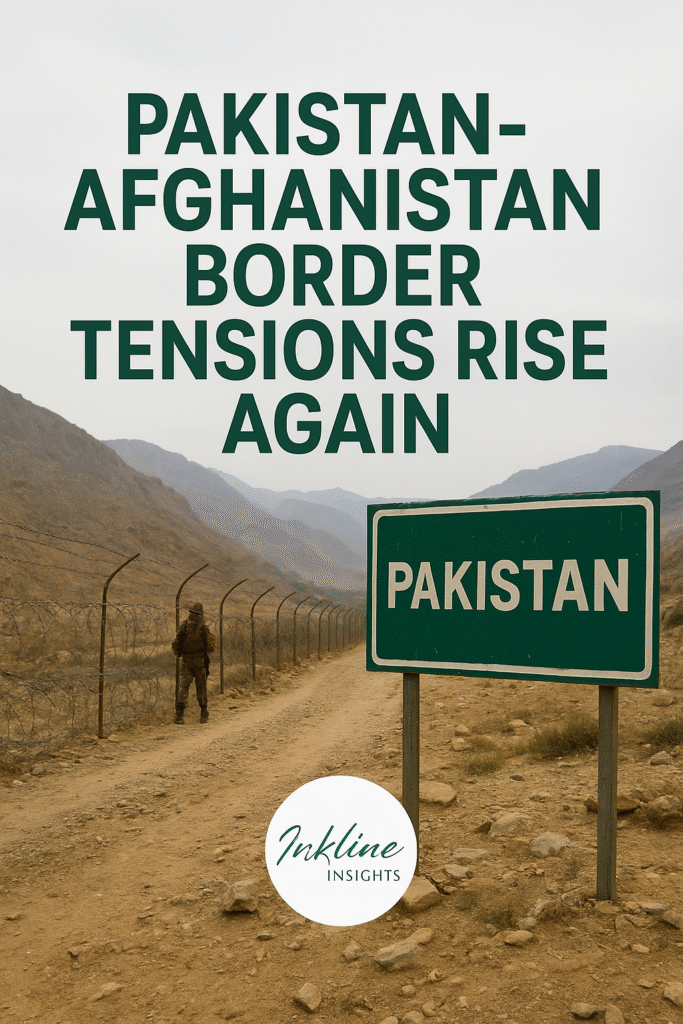
  • “Pakistan–Afghanistan Border Tensions Rise Again: Clashes Intensify Amid Regional Uncertainty”

    Rising tensions along the Pakistan-Afghanistan border have once again drawn international concern, as fresh clashes highlight the fragile security environment between the two neighbors. Over recent weeks, both sides have exchanged fire in key border districts, disrupting trade routes and leaving civilians in a state of uncertainty. The disputes often stem from disagreements over border demarcation, especially along the Durand Line, which Afghanistan has historically refused to formally recognize. This territorial contention continues to fuel mistrust, making even minor incidents escalate rapidly.

    The situation has been compounded by shifting regional dynamics following the Taliban’s return to power in Afghanistan. Pakistan, which has long advocated for stability next door, accuses Afghan authorities of allowing militant groups to operate across the border and target Pakistani security forces. Kabul, on the other hand, claims that Pakistani forces violate Afghan territory through air and ground strikes aimed at countering insurgents. These mutual accusations deepen the divide, limiting opportunities for diplomatic engagement and confidence-building measures.

    Cross-border trade and movement, vital for communities on both sides, are frequently disrupted whenever tensions flare. The closure of major crossing points like Torkham and Chaman has affected thousands of traders and travelers, creating economic strain and humanitarian challenges. Each shutdown serves as a reminder of how deeply intertwined both countries are, and how instability directly impacts everyday livelihoods. Local residents often bear the brunt of the conflict, with limited access to markets, medical facilities, and basic necessities.

    Regional analysts warn that without sustained dialogue and a clear mechanism to manage border disputes, the friction between Pakistan and Afghanistan could intensify further. International stakeholders have urged both governments to prioritize de-escalation and cooperation, especially as the broader region faces security uncertainties. A stable border is not only essential for bilateral relations but also for the overall peace and economic integration of South and Central Asia.

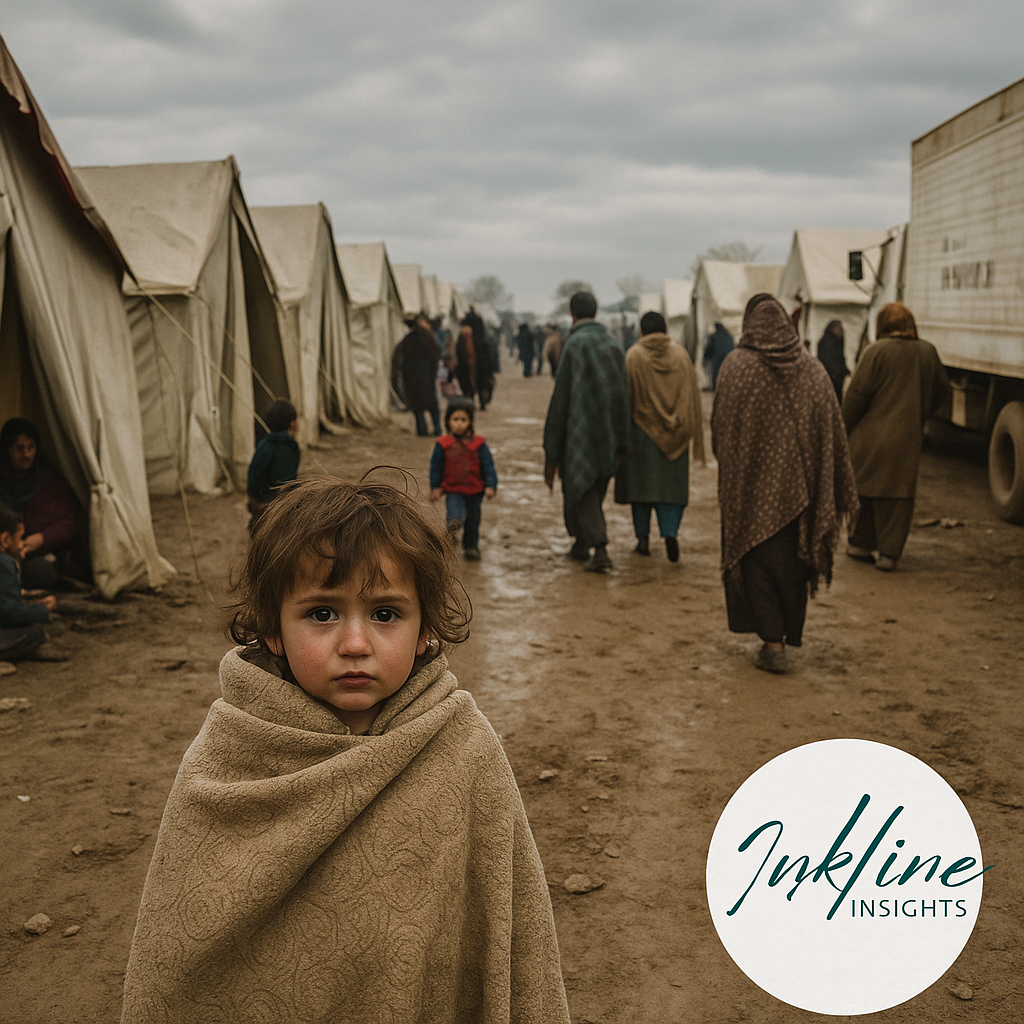
  • Human Rights Concerns Rise as Refugee Movements Surge Across Pakistan and Neighboring Regions

    Human rights concerns are rising sharply as refugee movements surge across Pakistan and neighboring regions in 2025. The growing influx of displaced people—primarily Afghans fleeing economic collapse, security threats, and political repression—has put severe pressure on host communities and government systems. As border controls tighten and documentation requirements become stricter, many refugees find themselves caught between conflict at home and uncertainty abroad. Aid groups report that overcrowded settlements and inadequate access to food, healthcare, and legal protection are increasing the vulnerability of already marginalized groups, especially women and children.

    Pakistan, which has hosted millions of refugees for decades, is struggling to balance internal security considerations with international humanitarian obligations. Reports of detentions, forced returns, and harassment of undocumented refugees have raised alarms among human rights organizations. While authorities maintain that regulatory measures are necessary to maintain stability, critics argue that large-scale repatriation efforts risk exposing vulnerable families to violence, persecution, and severe economic hardship upon return to Afghanistan. The lack of a clear legal framework for long-term residency continues to leave many refugees in a state of legal limbo.

    Neighboring countries like Iran and Central Asian states are facing similar challenges, with rising deportation numbers and new restrictions on work, movement, and access to services. Human rights monitors warn that these policies often violate international norms, particularly when returns occur without proper assessment of safety conditions in the refugees’ home regions. At the same time, overstretched humanitarian agencies are struggling with funding shortages, causing cutbacks in essential programs that provide shelter, education, and medical assistance.

    Analysts stress that the escalating human rights concerns cannot be solved through unilateral policies. A coordinated regional approach—supported by stronger international funding and diplomatic engagement—is essential to ensure that refugees receive protection and that host countries are not overwhelmed. Without comprehensive solutions, the surge in displacement risks heightening social tensions, destabilizing border regions, and leaving millions without the basic rights and support they urgently need.

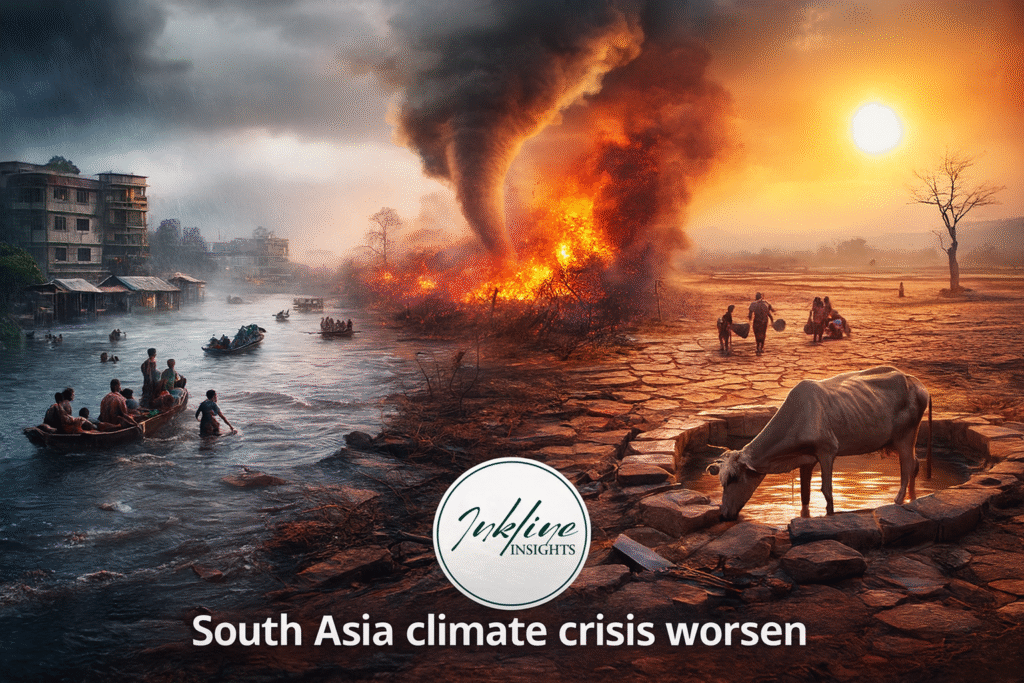
  • South Asia’s Climate Crisis Worsens: Floods, Water Shortages, and Extreme Weather Intensify

    South Asia’s climate crisis is worsening rapidly in 2025, with floods, water shortages, and extreme weather events becoming more frequent and more destructive. Countries like Pakistan, India, Bangladesh, Nepal, and Sri Lanka are experiencing record-breaking heatwaves and unpredictable monsoon patterns that disrupt agriculture and threaten millions of livelihoods. Scientists warn that rising temperatures in the Indian Ocean are amplifying cyclones and altering rainfall cycles, leaving densely populated regions increasingly vulnerable. The combination of rapid urbanization and weak climate infrastructure further intensifies the impact on local communities.

    Major river systems such as the Indus, Ganges, and Brahmaputra are at the center of growing water stress. Glacial melt in the Himalayas, driven by higher temperatures, is initially causing flash floods but is also expected to reduce long-term water availability for hundreds of millions of people. Rural areas dependent on agriculture are witnessing crop losses due to erratic rains and prolonged droughts, driving food insecurity and forcing migration to already overburdened cities. Governments across the region are under mounting pressure to strengthen water management and invest in climate-resilient technologies to prevent further economic damage.

    Extreme flooding remains one of the region’s most persistent threats. Seasonal monsoons that used to be predictable now bring sudden cloudbursts and urban flooding, submerging infrastructure and displacing millions. Bangladesh and Pakistan, in particular, have seen entire districts inundated, with experts attributing much of the destruction to poor drainage systems and unchecked development in flood-prone zones. The financial cost of climate-driven disasters is rising sharply, stretching national budgets and slowing overall economic growth.

    Climate experts warn that without coordinated regional action, South Asia could face even more severe consequences in the coming decade. Cross-border cooperation on river systems, renewable energy expansion, and early warning systems is becoming essential as climate patterns grow more volatile. While several nations have initiated adaptation strategies, implementation remains slow compared to the scale of the threat. The worsening climate crisis not only jeopardizes human security but also poses long-term risks to regional stability and development.

  • UN Demands Immediate Ceasefire as Pakistan–Afghanistan Border Violence Claims Dozens of Lives

    The United Nations has issued an urgent call for an immediate ceasefire as deadly clashes along the Pakistan-Afghanistan border escalate, claiming dozens of lives and heightening regional instability. Over the past several days, intense fighting between security forces and armed groups near major crossing points has disrupted civilian movement and halted cross-border trade. Local communities report continuous shelling and gunfire, forcing families to flee their homes in search of safety. The UN has warned that the violence risks spiraling further unless both sides commit to de-escalation and open humanitarian corridors for affected populations.

    According to early assessments from UN agencies, the clashes have left scores dead and many more injured, including women and children caught in the crossfire. Medical facilities in border districts are overwhelmed, with emergency teams struggling to reach remote areas due to ongoing hostilities. Aid workers emphasize that immediate access is critical to prevent a worsening humanitarian crisis, especially as winter sets in and temperatures drop sharply in the mountainous regions. The UN has stressed that international humanitarian law requires both parties to protect civilians and allow unhindered delivery of relief supplies.

    The renewed fighting comes against the backdrop of already strained relations between Islamabad and Kabul, driven by disagreements over border control, militant activity, and security responsibilities in the post-2021 landscape. Pakistan has repeatedly voiced concerns about militant groups launching attacks from Afghan territory, while Afghanistan accuses Pakistani forces of violating sovereignty during counterterror operations. These disputes have turned border zones into flashpoints, with even minor incidents escalating into broader confrontations. Diplomatic channels have struggled to contain the situation, raising fears of a prolonged standoff.

    Global observers warn that without a coordinated diplomatic push, the violence could destabilize the region and fuel further displacement. The UN has urged both governments to return to dialogue, implement immediate ceasefire mechanisms, and prioritize civilian protection above political grievances. Analysts say that a sustained peace effort—supported by international partners—is essential not only to prevent further casualties but also to stabilize critical trade routes and restore normalcy for border communities living under constant threat.

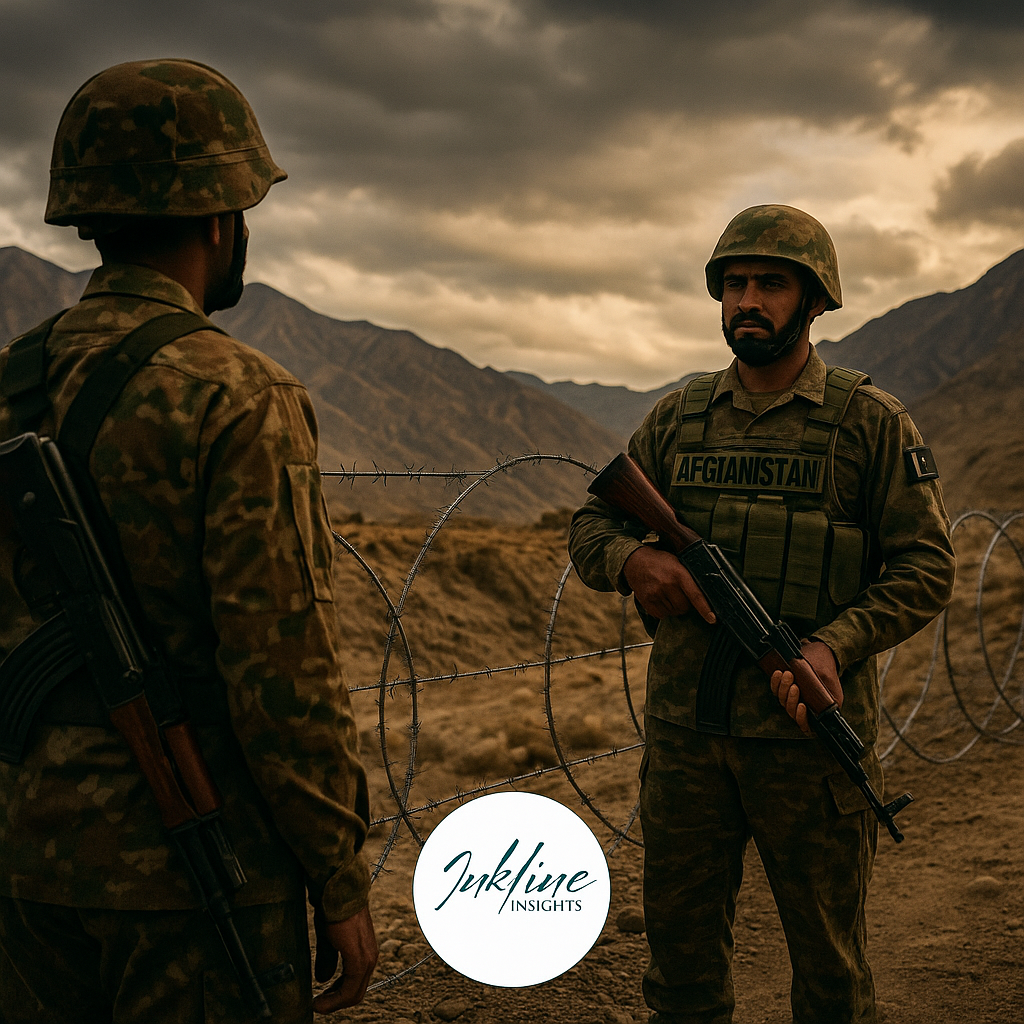
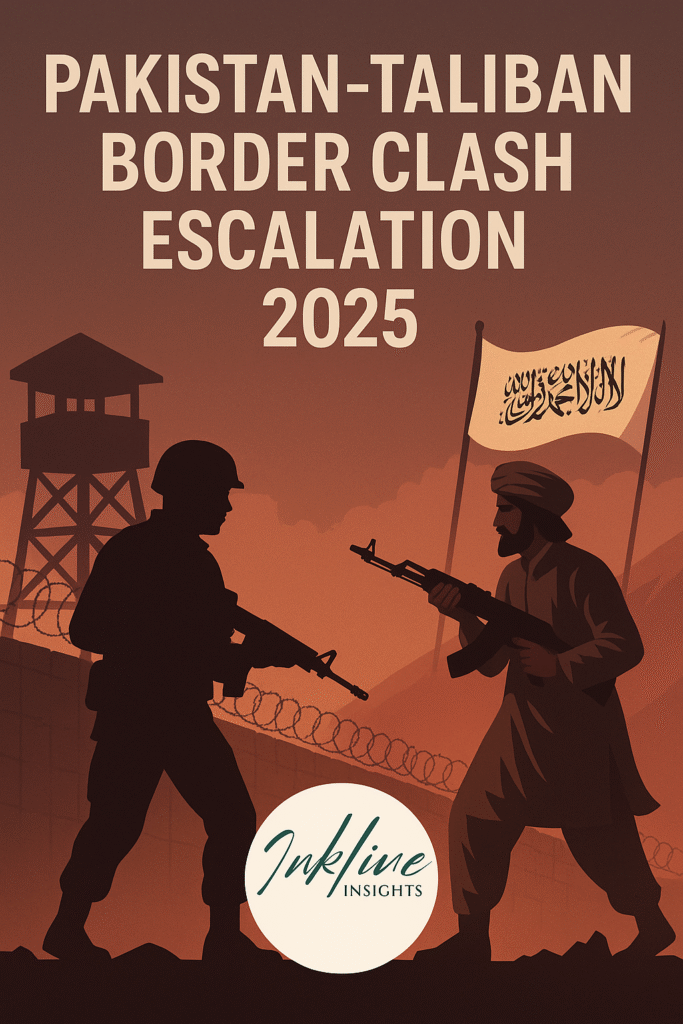
  • Deadly Pakistan–Taliban Border Clash Sparks Renewed Fears of Escalation

    A deadly clash between Pakistani security forces and Taliban fighters along the border has reignited fears of a broader escalation in one of the region’s most volatile zones. According to local reports, the confrontation erupted after militants attempted to infiltrate a high-security area, prompting a swift military response. Heavy gunfire, mortar exchanges, and ground assaults resulted in multiple casualties on both sides, marking one of the most serious incidents in recent months. Residents living near the frontier described hours of intense fighting, with many families forced to take shelter as the situation rapidly deteriorated.

    This latest violence comes at a time when Pakistan has repeatedly raised concerns about the growing presence and mobility of Taliban-linked groups operating near the frontier. Islamabad has long maintained that cross-border militant activity is undermining national security, especially as attacks on military convoys and checkpoints continue to rise. The deadly clash has amplified these concerns, with officials warning that unchecked militant movement could embolden extremist factions and destabilize already fragile border districts. The situation is further complicated by rugged terrain that makes surveillance and response operations difficult.

    Analysts argue that the clash highlights deeper structural tensions between Pakistan and the Taliban authorities across the border. Despite ongoing communication, both sides often disagree on how to manage militant networks and enforce security protocols. Pakistan accuses Taliban factions of providing safe havens to groups targeting its forces, while Taliban officials deny direct involvement and blame the violence on historical border disputes. This persistent mistrust has made de-escalation challenging, increasing the risk that similar confrontations could erupt again with little warning.

    Security experts warn that without a coordinated effort to address cross-border militancy, the region could face a new wave of instability. The latest clash has already heightened alert levels among Pakistani forces, leading to tightened movement controls and increased patrols. Observers stress that diplomatic engagement, intelligence sharing, and clear enforcement mechanisms are essential to prevent further violence. As tensions rise, communities along the border remain caught in the middle—living with uncertainty as fears of a larger escalation grow.