The match showcased North Korea’s tactical discipline, physical strength, and sharp finishing—qualities that have long made them a formidable force in Asian women’s football.
A Strong Start Sets the Tone for North Korea
From the opening minutes, North Korea asserted control over the match. Their midfield pressed aggressively, winning possession high up the pitch and creating early scoring opportunities. This relentless pressure paid off quickly, as they broke through Russia’s defense with clinical execution and intelligent movement.
Russia attempted to respond, but struggled to maintain possession under North Korea’s intensity.
Explosive Attacking Display
North Korea’s frontline was the star of the match, combining speed, precision, and coordination. Their attackers consistently found gaps in Russia’s defensive line, converting chances with:
Accurate, driven finishes
Quick one-touch passing sequences
Well-timed counterattacks
By halftime, North Korea had established a strong lead, forcing Russia to adjust their structure and defensive approach.
Russia Fights Back but Falls Short
Russia showed resilience in the second half, pushing forward with more urgency. They managed to score twice through well-constructed plays, showcasing individual skill and improved teamwork. However, defensive lapses and slow transitions continued to trouble them, allowing North Korea to extend their lead.
Russia created several promising chances but struggled with consistency in the final third.
North Korea’s Midfield Dominance Makes the Difference
The heart of North Korea’s victory came from their midfield unit, which controlled tempo and distribution throughout the game. Their ability to switch play quickly and win second balls prevented Russia from establishing rhythm or countering effectively.
This midfield superiority ensured North Korea maintained momentum for the full 90 minutes.
Key Takeaways from the Match
✔ North Korea’s Tactical Discipline
Their organization and pressing structure stood out, making it difficult for Russia to build attacks.
✔ Russia Shows Potential
Despite the defeat, Russia’s moments of creativity and strong individual plays show promise for future fixtures.
✔ A Statement Win for North Korea
Scoring five goals in a high-profile friendly sends a clear message about the team’s current form and competitiveness.
Conclusion
North Korea’s dominant 5–2 victory over Russia in their international women’s football friendly highlights the team’s growing strength and strategic maturity. With sharp finishing, midfield control, and relentless pressure, North Korea showcased why they remain a respected competitor in global women’s football. Russia’s spirited response added excitement to the match, but the day ultimately belonged to North Korea as they sealed a convincing and well-deserved win.
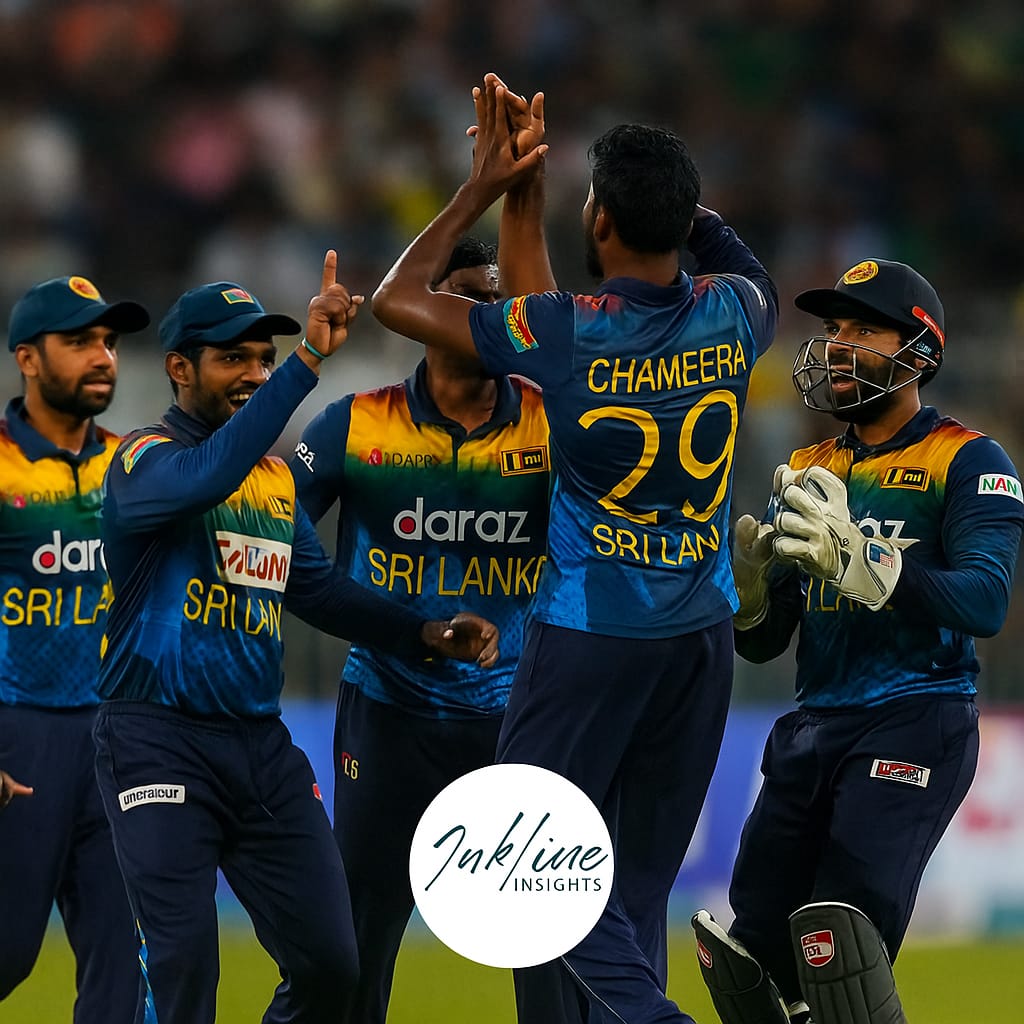
Sri Lanka pulled off a dramatic win to secure their place in the T20 Tri-Series final, leaving Pakistan stunned and eliminated after a nail-biting contest that went down to the final overs. The match, filled with momentum shifts and standout individual performances, has quickly become one of the most gripping encounters in recent limited-overs cricket.
Sri Lanka Holds Nerve in a High-Pressure Finish
Chasing a competitive target, Sri Lanka showed exceptional composure under pressure. Their top-order laid the foundation with calculated stroke play, while the middle-order delivered a decisive push during the final overs. Despite Pakistan’s disciplined bowling and fielding effort, Sri Lanka’s lower-order batters sealed the deal with smart running between the wickets and timely boundaries.
Pakistan’s Missed Opportunities Prove Costly
Pakistan entered the match with a clear path to the final: win convincingly and maintain a superior net run rate. But several key moments turned the game against them:
Missed catches at crucial stages
A few expensive overs during the middle phase
Inability to defend boundaries in the death overs
Pakistan’s bowlers started strong but couldn’t maintain the same intensity as Sri Lanka accelerated late in the innings.
A Tale of What Could Have Been for Pakistan
Pakistan’s batting lineup posted a competitive total, thanks to a solid opening stand and a late flourish from the lower order. However, analysts pointed out that Pakistan fell 10–15 runs short, which ultimately made the difference.
Had Pakistan added a bit more to their total—or capitalized on chances in the field—they could have easily punched their ticket to the final.
Sri Lanka Advances with Momentum
Sri Lanka’s victory not only secured their place in the T20 Tri-Series final but also boosted their confidence ahead of the championship match. Their balanced performance with both bat and ball demonstrated the depth and resilience of their squad.
What This Means for the Tournament
With Pakistan out and Sri Lanka advancing, the dynamics of the tournament have shifted:
Sri Lanka enters the final with strong momentum
Pakistan must regroup and reflect on areas of improvement
Fans anticipate a thrilling final after such a dramatic finish
Conclusion
Sri Lanka’s nail-biting win over Pakistan in the T20 Tri-Series has become a defining moment of the tournament. While Sri Lanka marches into the final with confidence, Pakistan’s unexpected exit will undoubtedly spark discussions about strategy, execution, and future improvements. The match serves as a reminder of how every run, wicket, and decision can shape the outcome of a high-stakes cricket encounter.
Two West Virginia National Guard members were critically injured in a targeted shooting near the White House in Washington DC. Police say a lone suspect, identified by federal officials as Afghan national Rahmanullah Lakamal, opened fire before being subdued by nearby Guardsmen personnel. President Donald Trump condemned the attack as an act of terror and ordered a review of all Afghan immigration cases, while USCIS temporarily halted Afghan visa processing. The incident caused brief airport disruptions and heightened security in the capital as authorities investigate the suspect’s motive. National Guard deployments in DC have already been expanded amid efforts to reduce crime.
The shooting near the White House is deeply alarming—not only because it targeted National Guard members, but because it happened in one of the most secure and politically sensitive areas of the country. It raises serious questions about public safety, intelligence monitoring, and the pressures placed on military personnel stationed in civilian environments.
However, the immediate politicization of the suspect’s nationality is concerning. While the attack is undeniably horrific, using it to issue broad statements about an entire immigration group or to justify sweeping policy changes risks inflaming fear rather than supporting the facts. Security reviews are reasonable, but they should be measured, evidence-based, and free from political rhetoric.
This incident also highlights the blurred lines between military presence and civilian policing. The National Guard’s deployment to cities as a crime-control measure has already been controversial, and this attack will likely deepen the debate about the role of military forces on domestic streets.
Ultimately, the priority should be transparency in the investigation, accurate public information, and support for the injured guardsmen. The incident deserves a firm response—one focused on security, not division.
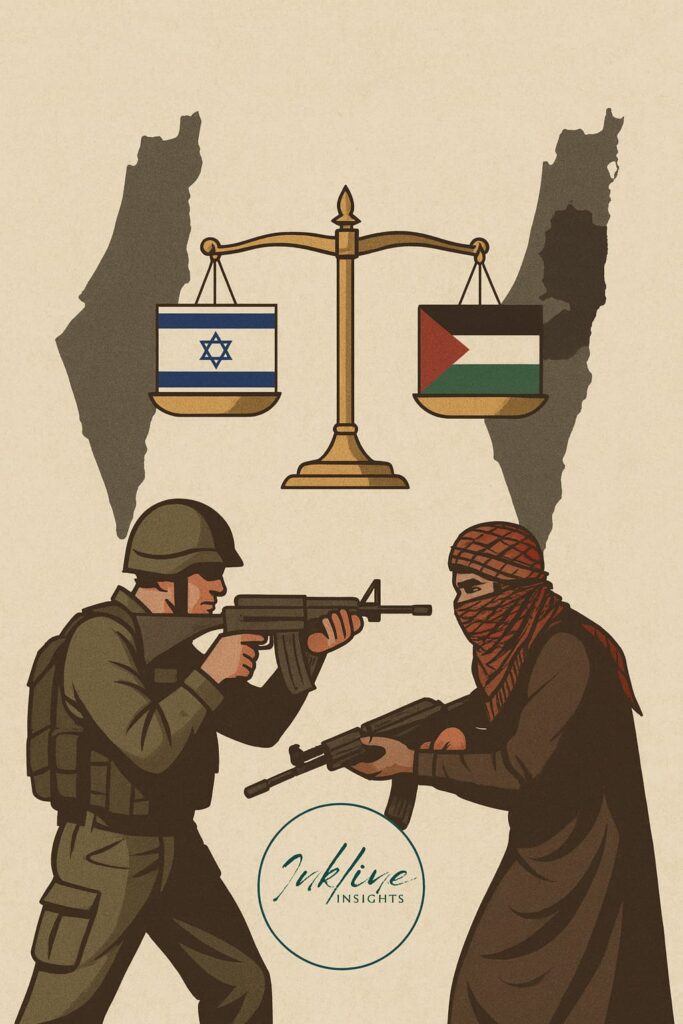
The war between Israel and Palestine — especially focused around Gaza, the West Bank, and neighboring regions — remains one of the most consequential and emotionally charged conflicts of our time. It’s not just a regional dispute; it has deep historical roots, global geopolitical implications, and humanitarian consequences felt far beyond the Middle East.
As of late 2025, the conflict has entered a new phase: after a ceasefire, fighting has resumed, violence has spread, and the humanitarian crisis has worsened. Understanding the current situation and possible outcomes is vital — for peace advocates, policymakers, and anyone who cares about justice and human rights.
🔥 What’s the Current Situation (as of November 2025)
1. Military Escalation & Fighting on Multiple Fronts
Gaza Strip: After a ceasefire earlier in 2025, hostilities resumed in March when Israel launched surprise airstrikes. The death toll rose again — hundreds killed, many civilians among them.
West Bank (including refugee camps): Israel’s military launched “Operation Iron Wall” in January 2025, targeting militant infrastructure in areas like Jenin, Tulkarm, and camps such as Nur Shams. The operation displaced tens of thousands and resulted in widespread destruction of infrastructure.
Rafah & Southern Gaza: Even after the ceasefire, Israeli forces re-entered Gaza in March–May 2025, taking control of strategic zones such as Rafah and expanding buffer zones.
Lebanon (Hezbollah front): Beyond Gaza and West Bank, Israel reportedly stepped up operations in southern Lebanon, targeting Hezbollah and Hamas positions.
The broader picture is of a multi-front escalation, making peace and stability elusive in the near term.
In Gaza, civilians have borne the brunt. According to health authorities, tens of thousands have died, with the majority being women, children, or non-combatants.
The United Nations and humanitarian agencies have warned of famine. In 2025, Gaza reached IPC Phase 5 — the highest level of acute food insecurity. Hundreds of thousands are starving, malnutrition is soaring, and basic services like sanitation, healthcare, and shelter have collapsed.
Displacement is massive: In the West Bank alone, more than 40,000 Palestinians have been forcibly displaced (the largest such wave since 1967) due to military operations, home demolitions, and settler violence.
Education, economy, and livelihoods are shattered. In Gaza, hundreds of thousands of children are out of school; many families cannot meet basic needs. West Bank communities suffer from unemployment, disrupted schooling, and collapse of public services.
3. Internal Palestinian Strife & Erosion of Governance
An underreported but critical dimension is the rising internal unrest within Palestinian territories. In Gaza, large-scale anti-Hamas protests have erupted since March 2025, with many civilians blaming Hamas’ governance and war strategy for their suffering. Protestors demand an end to war and call for Hamas to relinquish power.
At the same time, in parts of Gaza there is intra-Palestinian violence — for instance, in 2025, clashes between Hamas and the Doghmush clan broke out, resulting in dozens of deaths and arrests.
This internal fracturing complicates prospects for unified Palestinian leadership and peace negotiations.
🔎 Why It’s So Hard to Resolve This War
Understanding why the conflict continues — despite repeated ceasefire efforts — requires recognizing deep structural, political, and strategic barriers:
Asymmetry of power: Israel has a long-established military, economic, and technological advantage.
Mutually incompatible national narratives: On one side, Israeli identity is deeply shaped by the historical trauma of Jewish persecution and genocide, which informs a strong sense of existential security. On the other, Palestinians view the conflict as a struggle against dispossession, occupation, and colonialism. These are not merely policy disagreements — but competing national stories that are hard to reconcile.
Lack of viable political alternatives: Many Palestinians — especially in Gaza — have lost faith in current leadership. But internal divisions, governance collapse, and external pressure make any stable political alternative nearly impossible.
Geopolitical entanglement: Regional actors (like Iran, Hezbollah, sometimes proxy groups), global powers, and shifting alliances add complexity. The conflict is embedded in broader Middle East rivalries, making a simple resolution elusive.
Humanitarian breakdown as a tactic: According to multiple NGOs and even legal assessments, starvation, deprivation, and restriction of aid have been used in ways that may constitute war crimes.
🧱 What Could Be the Possible Outcomes?
While predicting the future is inherently uncertain, several plausible scenarios stand out — from “bad to catastrophic.”
✅ 1. Prolonged Frozen Conflict (Most Likely)
A de facto stalemate: intermittent skirmishes, periodic ceasefires, humanitarian aid trickling in, but no comprehensive peace. Gaza remains devastated, West Bank under occupation, and Palestinians displaced indefinitely. Political leadership remains fragmented; no lasting Palestinian state emerges.
Pros: avoids total war. Cons: human suffering continues, generational trauma deepens, radicalization may grow.
⚠️ 2. Slow Isolation & De Facto Annexation over Time
Israel consolidates control over more parts of Gaza, the West Bank, and key border zones (e.g., Rafah). Over time, Palestinian autonomy is strangled — movement, economy, governance become highly restricted. The international community expresses outrage, but actual enforcement is weak.
The result: a form of “managed occupation” or permanent control without formal annexation. Palestinians remain landless, stateless, and marginalized.
☢️ 3. Full-Scale Humanitarian Collapse & Mass Displacement
If aid continues to be blocked, famine worsens, and destruction of infrastructure accelerates — Gaza could face one of the worst humanitarian catastrophes in a generation. Mass displacement may force hundreds of thousands (if not more) to flee. Health, sanitation, shelter — everything collapses.
This scenario risks a regional refugee crisis with global repercussions.
🔄 4. Radical Military Escalation or Regional War Spillover
If violence spreads beyond Gaza to Lebanon, Syria, or the wider region — involving Hezbollah, Iran, or other actors — there’s a risk of a broader Middle East war. Such escalation could draw in regional and global powers, destabilizing the entire region.
🌐 5. Diplomatic Breakthrough (Unlikely but Not Impossible)
Under immense international pressure, and perhaps after major civil unrest among Palestinians (as we see with anti-Hamas protests), new diplomatic efforts could gain traction. This could lead to:
A renewed and more enforceable ceasefire
Limited autonomy / governance reforms in Gaza
Humanitarian relief and reconstruction plans
A framework (even if imperfect) for a longer-term political settlement
However — for this to happen — there would need to be major shifts: in Israeli policy, Palestinian political unity, and international willingness to enforce accountability and protect civilians.
🌿 What the War Means for Ordinary People — Especially Palestinians
Loss of life & trauma: Tens of thousands killed, many more wounded. Children growing up amid bombing, displacement, famine. Long-term psychological scars.
Statelessness & displacement: Families losing their homes, forced to flee repeatedly, often multiple times — with no stable place to return.
Collapse of basic services: Education, healthcare, sanitation — all severely disrupted or destroyed. Lost years of schooling for children; increased disease and death.
Economic ruin: Jobs lost, livelihoods destroyed, poverty skyrocketing. Recovery — if possible — may take decades.
Human rights crisis: Reports of starvation used as weapon, suppression of aid, and internal repression (including against dissenters) – raising serious concerns about war crimes and crimes against humanity.
✨ Why It Still Matters Globally
Humanitarian and moral urgency: Millions of lives at stake. The world cannot ignore mass starvation, displacement, and systemic violence.
Geopolitics and stability: A regional war could destabilize the entire Middle East — with spillovers to Europe, Africa, and beyond.
International law & accountability: How this war is handled sets a precedent for war crimes, rights violations, and humanitarian norms worldwide.
Media, narratives, and public opinion: As recent studies show, the conflict’s portrayal in media — and how it’s searched, shared, and framed — deeply influences global public opinion.
📝 Conclusion: A War Without Easy End — But Still Time for Hope
The 2025 Israel–Palestine war paints a tragic picture: of suffering civilians, shattered lives, and seemingly intractable political conflict. The outlook is grim — but not hopeless.
Yes, a “solution” remains elusive. The power imbalance, historical grievances, and geopolitical entanglements make compromise difficult. But at the same time: human suffering is so immense, and the cost so high, that only a determined combination of internal Palestinian pressure, international diplomacy, and global civic outrage might force meaningful change.
In the end, the future of this conflict depends less on battlefield victories — and much more on political will, moral courage, and humanity. If enough people care, speak out, and demand justice, there is still a chance to steer this tragedy toward a more just and peaceful path.