Category: Pakistan Economy & Business News

  • Why Middle-Class Families Are Disappearing in 2026 – Facts, Data & Reality

    The middle class has long been considered the foundation of economic stability. Middle-income families traditionally enjoyed secure jobs, affordable housing, access to education, and the ability to save for the future. However, in 2026, this group is facing increasing financial pressure. Across many countries, families who once identified as middle class now feel closer to financial uncertainty than comfort.

    So why are middle-class families disappearing in 2026? The answer lies in a combination of rising living costs, slow income growth, changing job markets, and increasing financial responsibilities.


    Understanding the Middle Class in Simple Terms

    The middle class generally includes households that earn enough to meet daily needs, afford basic comforts, and save for long-term goals. These families are neither struggling with poverty nor enjoying extreme wealth. They rely on stable employment, predictable expenses, and gradual financial growth.

    In recent years, this balance has been disrupted. Even households earning what is officially classified as “middle income” now struggle to maintain the same lifestyle they had just a decade ago.


    1. Rising Inflation and Living Costs

    One of the strongest reasons behind the decline of middle-class stability is persistent inflation.

    In 2026, prices of everyday necessities such as food, electricity, fuel, and transportation continue to rise. While inflation affects all income groups, it hits middle-class families the hardest because they spend a large portion of their income on essential items.

    In many regions, inflation rates have remained higher than wage growth. This means families earn more on paper but can afford less in reality. As purchasing power declines, households are forced to cut back on savings, leisure, and long-term planning.


    2. Income Growth Is Not Keeping Up

    While costs are increasing, salary growth has remained relatively slow.

    Many middle-income jobs have not seen meaningful raises over the past several years. Companies facing global competition and economic uncertainty often limit wage increases. As a result, employees experience financial pressure even while working full-time.

    This growing gap between income and expenses pushes many families out of the middle-class comfort zone and closer to financial vulnerability.


    3. Housing Has Become Unaffordable

    Housing is one of the biggest challenges for middle-class families in 2026.

    Home prices have risen sharply in urban and semi-urban areas, while rents continue to increase each year. Buying a home now requires larger down payments and higher monthly mortgage payments due to increased interest rates.

    For renters, a large share of monthly income is spent on housing alone. This leaves less money for savings, education, healthcare, and emergencies. As a result, homeownership — once a symbol of middle-class success — is becoming less achievable.


    4. Growing Dependence on Debt

    Debt has quietly become a survival tool for many middle-class households.

    Credit cards, personal loans, and installment plans are increasingly used to manage regular expenses. While borrowing offers short-term relief, it creates long-term financial stress due to interest payments.

    Student loans also play a major role. Many young professionals start their careers already burdened with debt, delaying major life decisions such as buying a house or starting a family. Over time, debt reduces financial flexibility and increases economic insecurity.


    5. Healthcare Costs Continue to Rise

    Healthcare expenses have increased steadily, placing additional pressure on household budgets.

    Insurance premiums, medical tests, medicines, and emergency care often cost more than expected. Even families with insurance face high out-of-pocket expenses. A single medical emergency can disrupt years of savings.

    For middle-class families, healthcare costs are no longer occasional expenses — they have become a regular financial concern.


    6. Education Is Becoming More Expensive

    Education has traditionally been the main pathway for upward mobility. However, in 2026, education costs are rising faster than incomes.

    School fees, private tutoring, higher education, and professional training now require significant financial commitment. Parents often stretch their budgets or take loans to ensure quality education for their children.

    This financial strain reduces disposable income and limits the ability to invest in other essential areas of life.


    7. Changing Job Markets and Job Security

    The global job market is transforming rapidly.

    Automation, digitalization, and artificial intelligence are reshaping industries. Many traditional middle-income jobs are being replaced or restructured. At the same time, new jobs often require specialized skills, continuous learning, and flexibility.

    Temporary contracts, freelance work, and gig-based employment are becoming more common. While these options provide income opportunities, they often lack long-term security, benefits, and retirement plans — all of which were once key features of middle-class employment.


    8. Regional and Economic Inequality

    Economic conditions vary widely depending on location.

    In large cities, living costs are extremely high, making it difficult for middle-income families to survive without multiple earners. In smaller cities and rural areas, costs may be lower, but job opportunities and income growth are limited.

    This imbalance increases inequality and weakens the financial position of middle-class households across different regions.


    9. Is the Middle Class Truly Disappearing?

    Some economists argue that the middle class is not disappearing but splitting.

    A portion of households has moved into higher-income brackets due to skill-based jobs and business growth. At the same time, many others have slipped downward due to rising costs and stagnant incomes.

    This polarization creates the impression of a shrinking middle class, even though the reality is more complex.


    Conclusion: The Reality of Middle-Class Life in 2026

    In 2026, middle-class families face unprecedented financial challenges. Rising inflation, expensive housing, growing debt, healthcare costs, and unstable job markets have reshaped what it means to live a “comfortable” life.

    While the middle class may not be disappearing entirely, it is undeniably under pressure. Without strong income growth, affordable living solutions, and economic stability, many families will continue to struggle to maintain their financial footing.

    Understanding these realities is essential for individuals, policymakers, and businesses aiming to build a more balanced and sustainable economic future.

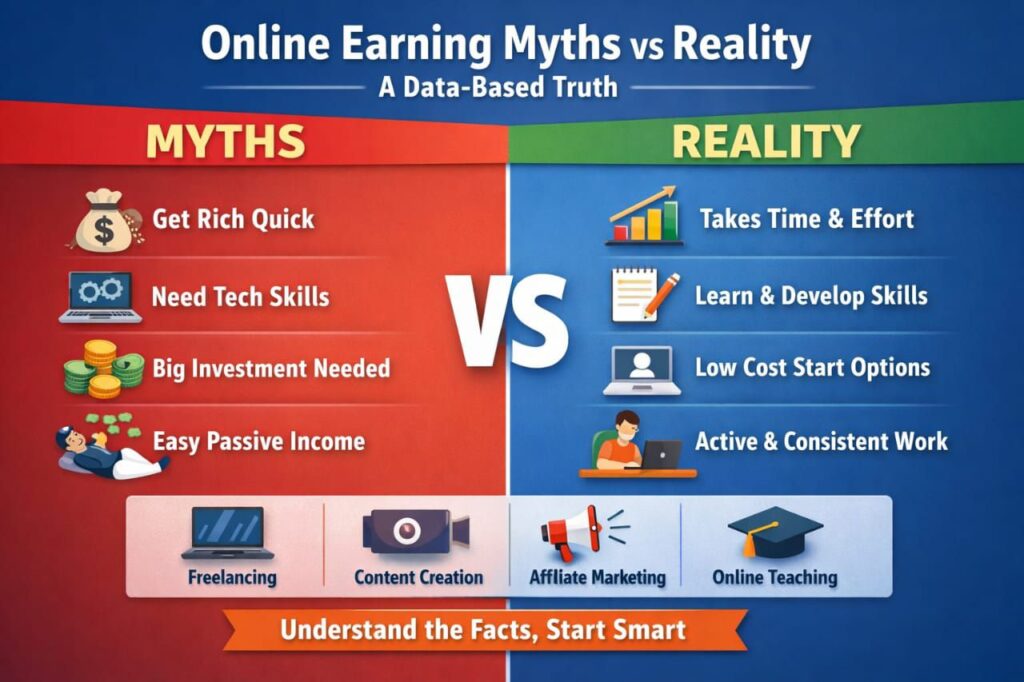
  • Online Earning Myths vs Reality – A Data-Based Truth

    In recent years, online earning has become one of the most discussed topics worldwide. From social media ads to YouTube videos and blogs, people are constantly exposed to claims about making money online. While some of these claims are genuine, many are misleading or exaggerated. This confusion often creates unrealistic expectations, especially among beginners.

    Understanding Online Earning

    Online earning refers to income generated through internet-based activities such as freelancing, content creation, affiliate marketing, e-commerce, remote services, and online education. With global digitalization and remote work growth, online income has shifted from a side option to a legitimate source of earnings for millions of people.

    However, misinformation has also grown alongside real opportunities, making it important to separate facts from false promises.

    Myth 1: Online Earning Delivers Instant Results

    The Claim

    Many advertisements suggest that anyone can earn large amounts of money online within days or weeks, often without experience or effort.

    The Reality

    Sustainable online income does not happen overnight. Just like traditional careers or businesses, online earning requires learning relevant skills, building credibility, consistent effort, and time to grow.

    Most successful online earners report gradual income growth over months or even years. Instant income promises are often linked to unreliable schemes or unrealistic marketing tactics rather than genuine opportunities.

    Myth 2: Only Highly Technical People Can Earn Online

    The Claim

    A common belief is that online earning is only for programmers, developers, or technical experts.

    The Reality

    While technical skills can increase earning potential, they are not mandatory. Many people earn online through writing and content creation, digital marketing, virtual assistance, teaching and coaching, and customer support services.

    Modern digital tools have simplified tasks, allowing individuals with basic computer knowledge to start earning. Skill development is important, but advanced technical expertise is not a requirement for entry.

    Myth 3: Online Earning Requires Heavy Investment

    The Claim

    Some believe that starting online earning requires large upfront capital.

    The Reality

    Many online earning options have low or zero initial costs. Freelancers only need a device and internet access, bloggers can start with affordable hosting, and content creators often begin using smartphones.

    While optional tools and learning resources may require investment, they are not mandatory. The most valuable investment in online earning is time, effort, and continuous learning, not money.

    Myth 4: Online Earning Is Mostly Passive Income

    The Claim

    Online earning is often advertised as “passive income,” suggesting little or no effort is required.

    The Reality

    Most online income sources are active in nature, especially in the early stages. Even models often labeled as passive, such as affiliate marketing or ad-based content, require content creation, audience building, regular updates, and performance tracking.

    Truly passive income usually comes after long-term effort and optimization, not at the beginning.

    Myth 5: Only a Few Lucky People Succeed Online

    The Claim

    Many assume that only influencers or early adopters earn online, while others fail.

    The Reality

    The online economy includes millions of active earners worldwide. Success is not based on luck alone but depends on skill quality, market demand, consistency, and adaptability.

    While income levels vary, many individuals use online work to supplement or stabilize their earnings rather than replace full-time jobs immediately.

    Reality Check: How People Actually Earn Online

    1. Freelancing

    Freelancing allows individuals to offer services such as writing, graphic design, marketing, or programming. Income depends on skill level, experience, and client demand. Many freelancers start part-time and gradually increase earnings.

    2. Content Creation

    Bloggers, YouTubers, and social media creators earn through advertising, sponsorships, and partnerships. However, income growth usually takes time, and only consistent, high-quality content performs well.

    3. Affiliate Marketing

    Affiliate marketing involves promoting products and earning commissions. While it is a legitimate model, earnings depend on traffic quality, trust, and marketing strategy, not shortcuts.

    4. Online Teaching & Courses

    People with expertise in academics, skills, or professional fields earn by teaching online. This method requires credibility and structured content.

    5. Remote & Digital Services

    Virtual assistance, customer support, data management, and consulting services provide steady opportunities for online income with proper training.

    What Data Indicates About Online Earning

    Studies show that online work and freelancing are expanding globally due to flexible work preferences and digital platforms. However, income distribution is uneven: a large number earn modest amounts, a smaller percentage earn high incomes, and long-term consistency significantly improves results.

    This pattern mirrors traditional job markets, proving that online earning follows economic realities rather than shortcuts.

    Common Mistakes Beginners Should Avoid

    Trusting unrealistic income promises, ignoring skill development, expecting fast success without effort, falling for unverified programs, and switching platforms too frequently.

    Avoiding these mistakes helps build a realistic and sustainable approach.

    Conclusion

    Online earning is real, legitimate, and growing, but it is not effortless or guaranteed. Myths often create false hope, while reality demands learning, patience, and discipline. People who approach online earning as a long-term skill-based journey are far more likely to succeed.

    By understanding the difference between myths and data-based reality, individuals can make informed decisions and avoid misleading claims, creating a safer and more productive online earning path.

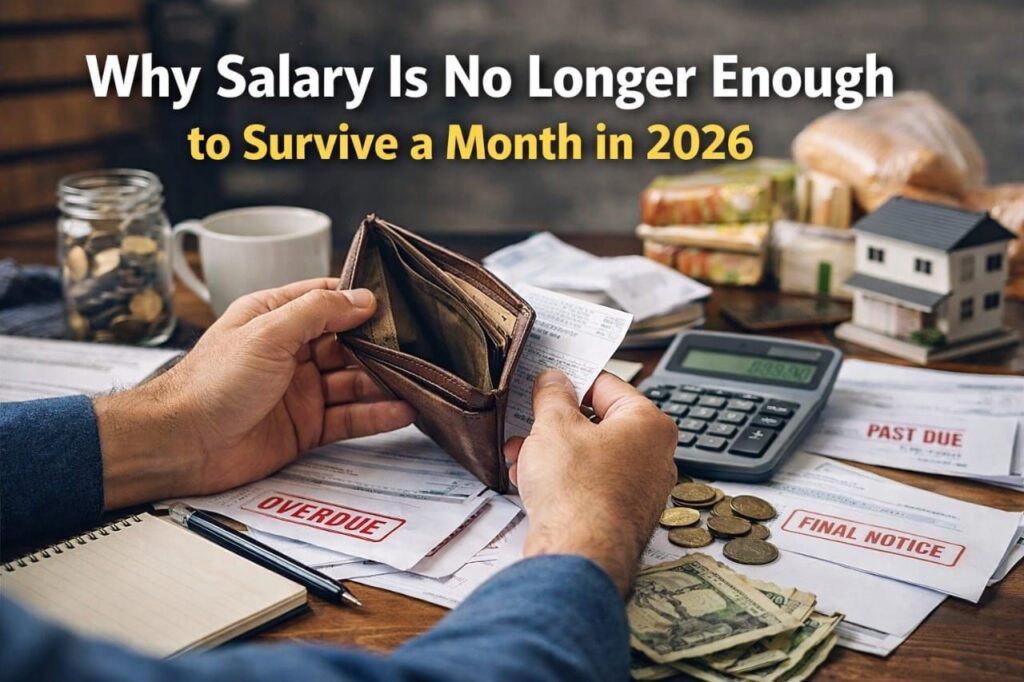
  • Why Salary Is No Longer Enough to Survive a Month in 2026

    In 2026, a growing number of salaried individuals are finding it increasingly difficult to manage their monthly expenses. What was once considered a stable income is now often insufficient to cover basic living costs. From housing and food to utilities and transportation, everyday expenses are rising faster than salaries. This widening gap between income and expenses has turned monthly survival into a challenge for many working families.

    This article explores the key reasons why salary alone is no longer enough to survive a full month in 2026, supported by facts, economic trends, and real-world observations.

    Rising Inflation Continues to Reduce Purchasing Power

    Inflation remains one of the biggest reasons salaries feel inadequate in 2026. While inflation rates have slowed in some regions, prices have not returned to earlier levels. Everyday goods such as groceries, fuel, electricity, and healthcare services still cost significantly more than they did just a few years ago.

    When salaries increase at a slower pace than inflation, purchasing power declines. This means employees may earn more on paper, but their income buys fewer goods and services. Over time, this creates financial stress, even for people with full-time jobs and steady incomes.

    Wages Are Not Keeping Up with Living Costs

    Although many employers have announced salary increments, these increases are often minimal. In most cases, wage growth does not match the rising cost of living. This results in what economists call “real wage decline,” where income growth fails to compensate for higher expenses.

    For middle-income earners, this gap is especially noticeable. Expenses such as rent, education, healthcare, and transportation consume a larger portion of income each month. As a result, workers are left with little or no room for savings or emergencies.

    Housing Has Become the Biggest Financial Burden

    Housing costs have increased dramatically in recent years. Rent prices in urban areas continue to rise due to high demand and limited supply. Similarly, home ownership has become less affordable because of higher property prices and increased interest rates.

    For many households, rent alone takes up 40% to 60% of monthly income. When housing consumes such a large share of earnings, it leaves little money for food, utilities, education, and healthcare.

    Food and Grocery Prices Are Increasing Steadily

    Food inflation has directly impacted household budgets. Essential items such as wheat, rice, cooking oil, vegetables, and dairy products have seen consistent price increases. Even basic groceries now cost significantly more than before.

    Families that once managed comfortably are now forced to reduce portion sizes, switch to cheaper alternatives, or cut back on nutritional quality. For lower- and middle-income earners, food expenses have become a major monthly concern.

    Utilities and Transportation Add Extra Pressure

    Electricity, gas, water, and internet bills have increased in many regions due to rising energy costs and infrastructure expenses. These bills are unavoidable and must be paid every month, regardless of income level.

    Transportation costs have also increased. Fuel prices, vehicle maintenance, and public transport fares place additional strain on monthly budgets. For salaried workers who commute daily, transportation alone can consume a significant portion of income.

    Debt Has Become a Survival Tool

    As salaries fall short, many people rely on credit cards, personal loans, or informal borrowing to cover basic expenses. Debt is no longer used only for emergencies or investments—it has become a regular survival strategy.

    This creates a dangerous cycle. Monthly income is spent repaying previous debt, leaving less money for current expenses. Over time, interest payments increase financial pressure and reduce long-term stability.

    Savings Are Becoming Nearly Impossible

    In earlier years, saving a portion of salary was considered a basic financial habit. In 2026, saving has become a luxury for many households. After covering rent, food, utilities, transportation, and debt payments, very little income remains.

    Without savings, individuals are more vulnerable to emergencies such as medical expenses, job loss, or unexpected repairs. This lack of financial security increases stress and uncertainty among salaried workers.

    Changing Job Market and Income Instability

    The job market has also changed significantly. While employment opportunities exist, many jobs offer contract-based or performance-linked pay rather than long-term stability. Benefits such as health insurance, bonuses, and pensions are less common than before.

    Additionally, automation and digital transformation have increased competition, limiting wage growth in many industries. This makes it harder for workers to negotiate better salaries, even as living costs rise.

    Impact on Quality of Life

    The financial imbalance has affected lifestyle and mental well-being. Many people delay major life decisions such as marriage, home ownership, or starting a family due to financial uncertainty. Leisure activities, travel, and personal development are often sacrificed to manage monthly expenses.

    Financial stress also impacts mental health, productivity, and overall life satisfaction. Surviving paycheck to paycheck has become a common reality rather than an exception.

    Possible Ways Forward

    While the situation is challenging, certain steps can help reduce financial pressure: improved financial planning and budgeting, skill development to access higher-paying roles, exploring additional income sources, policy measures to align wages with inflation, and support for affordable housing and essential services.

    Long-term solutions require combined efforts from individuals, employers, and policymakers.

    Conclusion

    In 2026, salary alone is no longer sufficient for many people to survive a full month. Rising inflation, increasing living costs, housing expenses, debt dependence, and slow wage growth have created a financial gap that affects millions of workers.

    This issue highlights the need for better income structures, cost control measures, and financial awareness. Until salaries align with real living costs, surviving on a single income will remain a daily struggle for many households.

  • Electric Bills Shock in 2026: Why Prices Keep Rising Despite Solar Energy

    In 2026, electricity bills have become a serious concern for households and businesses alike. Many people expected power costs to decrease as solar energy expanded rapidly across the world. After all, solar power is clean, renewable, and relies on free sunlight. However, the reality is quite different. Despite record-breaking growth in solar installations, electricity prices continue to rise.

    This situation has created confusion and frustration among consumers. Why are power bills increasing when renewable energy is becoming more common? The answer lies in a combination of infrastructure costs, energy demand, policy decisions, and the way electricity markets operate. This article explains the real reasons behind the electricity bill shock in 2026 in a clear, factual, and unbiased way.

    Rising Electricity Prices: A Global Reality in 2026

    Across many countries, electricity tariffs have increased steadily since 2020, and 2026 has continued this trend. Residential electricity prices in several regions are now significantly higher than they were just five years ago. In developing economies, tariff hikes have been even more noticeable due to currency pressure, fuel imports, and rising operational costs.

    Even countries investing heavily in renewable energy have not been immune. Electricity prices are influenced not only by how power is generated but also by how it is transmitted, stored, regulated, and consumed.

    Solar Energy Is Expanding Rapidly — But It Has Limits

    Solar energy growth in recent years has been impressive. Rooftop solar systems, net-metering programs, and large solar farms are now common in many regions. Solar power contributes a growing share of electricity generation, helping reduce reliance on fossil fuels.

    However, solar energy alone cannot yet supply electricity consistently throughout the day and night. Solar panels generate power only when sunlight is available, which creates challenges for maintaining a stable electricity supply. This limitation plays a major role in why prices have not fallen as expected.

    Why Solar Growth Has Not Reduced Electricity Bills

    1. High Grid and Infrastructure Costs

    Electricity grids in many countries were designed decades ago for centralized power plants, not decentralized renewable sources like rooftop solar. Integrating solar energy requires major investments in transmission and distribution upgrades, smart meters and grid management systems, and voltage control and safety mechanisms. These upgrades cost billions, and utilities recover these expenses through electricity tariffs. As a result, even if solar generation is cheaper, the overall cost of delivering electricity remains high.

    2. Backup Power and Reliability Costs

    Solar energy is intermittent. When the sun is not shining, electricity must come from alternative sources such as gas, coal, hydropower, or battery storage. Maintaining backup power plants and reserve capacity is expensive. Utilities must keep these systems ready at all times to avoid blackouts. The cost of maintaining standby generation and storage systems is included in consumer electricity bills, pushing prices upward.

    3. Fuel Prices and Import Dependence

    In many regions, electricity generation still depends partially on imported fuels like natural gas, coal, or oil. Global fuel price fluctuations directly affect electricity costs. When fuel prices rise or currencies weaken, electricity tariffs increase regardless of how much solar energy is installed. This dependence on fuel imports continues to influence electricity pricing in 2026.

    4. Policy and Tariff Structure Challenges

    Electricity prices are also shaped by government policies and regulatory frameworks. In some cases, long-term contracts guarantee payments to power producers, capacity charges are paid even when plants are underutilized, and subsidy adjustments increase tariffs for certain consumer groups. Additionally, as more households switch to rooftop solar, grid maintenance costs are shared among fewer users, unintentionally increasing bills for consumers who rely fully on grid electricity.

    Rising Demand Is Another Major Factor

    Electricity consumption in 2026 is growing faster than ever. Increased use of air conditioning due to climate change, growth in electric vehicles and charging infrastructure, expansion of data centers, cloud computing, and AI technologies, along with urbanization and digital lifestyles, have significantly raised demand. When demand rises faster than supply, utilities must invest in new generation capacity and infrastructure. These investments increase operational costs, which are ultimately reflected in electricity bills.

    Why Solar Still Matters Despite Higher Bills

    Although electricity prices remain high, solar energy is still one of the most cost-effective power sources over the long term. Once installed, solar systems have low operating and maintenance costs. Over time, increased solar adoption can help stabilize energy prices and reduce dependence on volatile fuel markets. However, the full financial benefits of solar will only be realized when energy storage becomes more affordable, grids become smarter, and policies support balanced cost sharing.

    What Consumers Can Do to Reduce Electricity Costs

    While large-scale solutions take time, consumers can take practical steps to manage rising bills. Installing rooftop solar systems where feasible, using energy-efficient appliances, shifting heavy electricity use to off-peak hours, improving home insulation and cooling efficiency, and regularly monitoring electricity consumption patterns can significantly lower monthly expenses even in a high-tariff environment.

    Future Outlook: Will Electricity Prices Go Down?

    Electricity prices may stabilize in the long term as renewable energy technology improves and energy storage becomes more affordable. Continued investment in smart grids, battery systems, and transparent energy policies will be critical. However, in the short term, electricity bills are likely to remain under pressure due to infrastructure costs, rising demand, and economic factors. Solar energy is a key part of the solution, but it is not a quick fix.

    Conclusion

    The electricity bill shock of 2026 shows that energy pricing is influenced by far more than just the source of power generation. While solar energy is growing rapidly, costs related to grid upgrades, backup systems, fuel imports, and rising demand continue to push prices higher. Understanding these factors helps explain why electricity bills are rising despite the renewable energy boom. With the right policies, technologies, and consumer choices, solar energy can still play a major role in creating a more affordable and sustainable energy future.

  • Pakistan in Talks to Export JF-17 Thunder Fighter Jets After Rising Global Demand

    Image

    Prime Minister Shehbaz Sharif has announced that Pakistan is engaged in discussions with several countries regarding the potential export of its indigenously produced JF-17 Thunder fighter jets. The development comes amid a noticeable surge in international interest following Pakistan’s widely reported success in the May 2025 conflict with India, which brought renewed global attention to the country’s defense capabilities.

    Growing International Interest in JF-17 Thunder

    According to official statements, the JF-17 Thunder has emerged as a cost-effective and combat-proven multi-role fighter aircraft, making it an attractive option for air forces seeking modern capabilities without the high costs associated with Western jets. Defense analysts note that the aircraft’s performance during recent regional tensions significantly boosted its international profile.

    Defense Minister Raza Hayat Haraj confirmed that formal and informal talks are underway with multiple nations. He emphasized that Pakistan is carefully evaluating each proposal to ensure strategic alignment and long-term cooperation.

    China’s Role in Any Potential Deal

    The JF-17 Thunder is jointly developed by Pakistan and China, which means any export agreement must receive approval from Beijing. The Defense Minister highlighted that China’s involvement is a key factor in negotiations, underscoring the importance of mutual consent due to shared intellectual property and co-production arrangements.

    This collaborative framework, officials say, ensures quality control, technological consistency, and long-term support for potential buyers.

    Countries Showing Interest

    Unconfirmed reports suggest that several countries have expressed preliminary interest in acquiring the JF-17 Thunder. These include Libya, Sudan, Bangladesh, Indonesia, and Saudi Arabia. While no formal agreements have been finalized, officials describe the discussions as “encouraging.”

    Strategic and Economic Impact for Pakistan

    If concluded, these deals could significantly strengthen Pakistan’s defense exports sector, generating foreign exchange and reinforcing the country’s position as an emerging player in the global arms market. Analysts believe successful exports would also enhance Pakistan’s diplomatic ties and defense cooperation with partner nations.

    Prime Minister Shehbaz Sharif reiterated that Pakistan aims to pursue defense exports responsibly, focusing on transparency, international regulations, and regional stability.

    Outlook

    As negotiations continue, the JF-17 Thunder’s growing popularity reflects Pakistan’s expanding role in defense manufacturing and military technology. Any finalized export agreements are expected to mark a major milestone for the country’s defense industry in the coming years.


    Disclaimer: This content is for informational purposes only. The image is AI-generated and provided solely for reference.

  • Electric Bike vs Petrol Bike: Complete Cost Comparison in 2026

    With fuel prices constantly on the rise and increasing environmental concerns, the question of “Should I buy an electric bike or a petrol bike?” has become common among commuters and bike enthusiasts in Pakistan. In this article, we provide a comprehensive cost comparison, including purchase price, running costs, maintenance, and long-term savings, so you can make an informed decision.

    1. Upfront Cost: Petrol Bikes Are Cheaper to Buy

    When comparing electric and petrol bikes, the first consideration is the purchase price. Petrol bikes generally cost less initially, making them attractive for budget-conscious buyers.

    Petrol Bikes in Pakistan (2025–26)

    • 70cc: Rs. 140,000–170,000
    • 100cc: Rs. 180,000–220,000
    • 125cc: Rs. 240,000–330,000
    • Premium bikes: Rs. 350,000+

    Electric Bikes in Pakistan (2025–26)

    • Entry-level EV bike: Rs. 180,000–200,000
    • Mid-range EV bike: Rs. 220,000–260,000
    • Premium EV bike: Rs. 280,000–330,000

    Observation: Petrol bikes are often cheaper upfront, but government incentives, financing options, and low-interest loans can make electric bikes more affordable.

    2. Running Costs: Electric Bikes Save Money Monthly

    Fuel is the largest ongoing expense for petrol bikes. Electric bikes, powered by electricity, are much cheaper to run.

    Monthly Fuel & Charging Cost Comparison

    TypeAverage Monthly Cost (Rs.)NotesPetrol Bike5,300–6,000Based on 16–20 liters/month at Rs. 320–340 per literElectric Bike1,800–2,200Based on electricity cost of Rs. 60–65 per kWh and 900 km/month usage

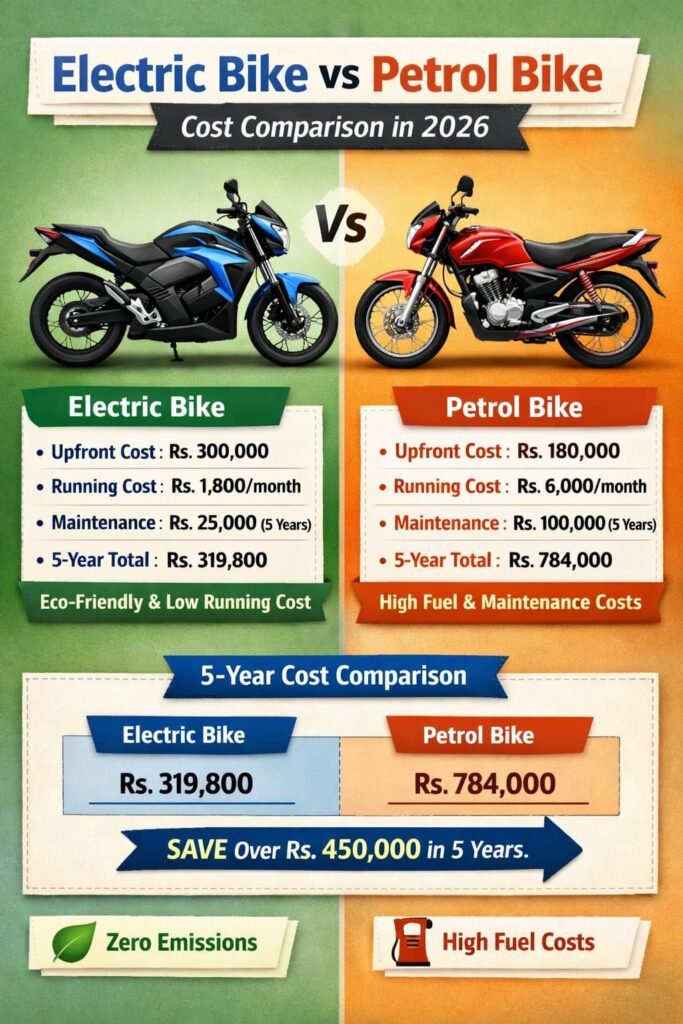
    Annual Savings: Choosing an electric bike can save Rs. 45,000–55,000 per year. Over 5 years, running costs for a petrol bike can exceed Rs. 500,000, while an electric bike may cost under Rs. 30,000 for electricity.

    💡 Key Insight: Lower running costs make electric bikes extremely cost-efficient for daily commuters.

    3. Maintenance Costs: Less Is More with Electric Bikes

    Maintenance is another area where electric bikes outperform petrol bikes.

    Petrol Bike Maintenance (5 Years)

    • Oil changes every 1,000–1,500 km
    • Engine tuning, spark plugs, clutch repairs
    • 5-year maintenance cost: Rs. 100,000–120,000

    Electric Bike Maintenance (5 Years)

    • Minimal moving parts; no oil or spark plugs
    • Battery maintenance every few years (Rs. 35,000–45,000 if replacement needed)
    • 5-year maintenance cost: Rs. 25,000–30,000

    Verdict: Electric bikes cost 60–70% less to maintain over 5 years.

    4. Total 5-Year Ownership Cost

    A side-by-side comparison of total expenses over 5 years:TypeUpfront CostRunning CostMaintenanceTotal 5-Year CostPetrol BikeRs. 180,000Rs. 504,000Rs. 100,000Rs. 784,000Electric BikeRs. 300,000Rs. 28,800Rs. 25,000Rs. 319,800

    Savings: Electric bike owners could save over Rs. 450,000 in 5 years, even after a higher initial investment.

    5. Resale Value and Insurance

    Petrol Bikes

    • Stable resale value due to widespread demand
    • Insurance costs are predictable

    Electric Bikes

    • Resale value depends on battery life and market growth
    • Insurance premiums are generally lower, and some government incentives apply

    Tip: As EV adoption grows, resale value of electric bikes is expected to rise, making them even more attractive.

    6. Environmental Benefits

    Though not directly financial, environmental impact is a key consideration:

    • Electric Bikes: Zero emissions, quiet operation, and reduced pollution
    • Petrol Bikes: Produce CO₂ and other harmful gases, contribute to noise pollution

    Eco-friendly riding also aligns with government policies promoting electric vehicles, which may result in tax breaks and subsidies.

    7. Who Should Buy Which Bike?

    Electric Bike

    • Ideal for city commuting and short distances
    • Budget-friendly in long-term running costs
    • Low-maintenance and eco-conscious riders

    Petrol Bike

    • Better for long-distance or highway riders
    • Cheaper upfront and easy resale
    • Strong network of service stations

    Conclusion

    While petrol bikes remain cheaper initially, electric bikes are far more economical over time due to lower fuel and maintenance costs. For daily commuting in cities, students, delivery riders, and environmentally conscious riders, electric bikes offer substantial financial and ecological benefits.

    Switching to an electric bike could save hundreds of thousands of rupees over 5 years while contributing to cleaner air and a quieter, greener environment.

    Final Recommendation

    For long-term savings and sustainability, electric bikes are the smarter choice in 2026.

  • PAKISTAN TO REDESIGN CURRENCY NOTES FROM RS10 TO RS5000: WHAT IT MEANS FOR THE ECONOMY

    Pakistan is preparing for a major upgrade to its paper currency system, with reports indicating that all banknotes ranging from Rs10 to Rs5000 will gradually be redesigned. According to media reports, the move is aimed at improving security features, durability, and transparency in the financial system, while also aligning Pakistan’s currency with modern international standards.

    One of the most talked-about aspects of this plan is the introduction of polymer (plastic) banknotes, a step that has already been adopted by several countries around the world. While the redesign will not change the value of money, it could have important implications for inflation control, counterfeit prevention, and daily cash usage.


    WHY PAKISTAN IS REDESIGNING ITS CURRENCY NOTES

    Currency redesigns are not unusual and are often driven by economic, security, and technological needs. Pakistan’s existing banknotes have been in circulation for many years, making them vulnerable to counterfeiting and rapid wear and tear.

    According to banking experts, the key reasons behind this initiative include:

    Rising counterfeit currency risks
    High replacement costs of damaged paper notes
    Need for modern security features
    Improved public trust in cash transactions

    The State Bank of Pakistan (SBP), which is responsible for issuing and regulating currency, periodically reviews banknote designs to ensure they remain secure and efficient.


    FROM RS10 TO RS5000: NO DENOMINATION IS BEING DISCONTINUED

    A common misconception spreading on social media is that certain denominations may be withdrawn. However, reports clarify that no denomination is being abolished. Instead, existing notes from Rs10 to Rs5000 will be gradually replaced with newly designed versions.

    This means:

    Old notes will remain legal tender
    New notes will be introduced in phases
    Both old and new notes may circulate together for some time

    Such gradual replacement helps avoid public confusion and prevents disruption in markets and banking operations.


    INTRODUCTION OF POLYMER (PLASTIC) NOTES IN PAKISTAN

    One of the most significant developments under discussion is the introduction of polymer banknotes, commonly referred to as plastic notes.

    WHAT ARE POLYMER NOTES?

    Polymer notes are made from a special plastic material rather than traditional paper. Countries such as Australia, Canada, the UK, and New Zealand have already adopted polymer currency due to its multiple benefits.

    BENEFITS OF POLYMER NOTES

    Research shows that polymer notes offer several advantages:

    Last up to 2.5 times longer than paper notes
    More resistant to water, dirt, and tearing
    Difficult to counterfeit
    Lower long-term printing costs
    Environmentally friendly due to longer lifespan

    For Pakistan, where lower denomination notes like Rs10, Rs20, and Rs50 are frequently damaged, polymer notes could significantly reduce replacement expenses.


    SECURITY FEATURES IN THE NEW CURRENCY DESIGN

    Modern currency notes rely heavily on advanced security features to combat forgery. While final designs have not yet been officially released, experts expect the new Pakistani banknotes to include:

    Enhanced watermarks
    See-through windows (in polymer notes)
    Color-shifting inks
    Microtext and raised printing
    Improved serial number tracking

    These features help both banks and the general public easily identify genuine notes.


    ECONOMIC IMPACT: WILL THIS AFFECT INFLATION?

    A key concern among citizens is whether the new currency design could impact inflation or purchasing power. Economists clarify that changing the design or material of currency does not increase inflation by itself.

    Inflation depends on factors such as:

    Money supply
    Fiscal policy
    Fuel and food prices
    Exchange rates

    Since the value and denominations remain unchanged, this move is largely administrative and security-focused rather than monetary expansion.


    WHAT THE PUBLIC NEEDS TO KNOW

    For ordinary citizens, the transition is expected to be smooth. Here are some important points:

    You do not need to exchange money immediately
    Old notes will remain usable
    Banks will guide customers if any exchange process is required
    There is no deadline announced yet for withdrawing old designs

    Authorities often run public awareness campaigns before fully implementing such changes to avoid panic or misinformation.


    GLOBAL EXAMPLES PAKISTAN IS LEARNING FROM

    Many countries have already shifted to polymer notes with positive results. For example:

    Australia reduced counterfeiting significantly after introducing polymer notes
    The UK increased durability and hygiene with polymer £5, £10, £20, and £50 notes
    Canada reported long-term cost savings despite higher initial printing costs

    Pakistan’s move appears aligned with these global best practices.


    CHALLENGES AND IMPLEMENTATION TIMELINE

    Despite its benefits, the transition will also face challenges, including:

    Initial printing and machinery costs
    ATM and vending machine compatibility
    Public adaptation to new note textures

    Experts believe the rollout will happen gradually over several years, starting with lower denominations.


    FINAL THOUGHTS

    The planned redesign of Pakistan’s currency notes from Rs10 to Rs5000, along with the possible introduction of polymer banknotes, marks a significant step toward modernizing the country’s financial system. While the change does not affect the value of money, it promises better security, durability, and long-term savings.

    As with any major economic initiative, transparency and public awareness will be key to ensuring a smooth transition. Citizens are advised to rely on official announcements from the State Bank of Pakistan and avoid misinformation circulating on social media.

  • Low-Stress Careers in 2026: 10 Highest-Paying Jobs That Offer Better Work-Life Balance

    In today’s fast-paced world, stress has become one of the biggest challenges for professionals. Long working hours, constant deadlines, job insecurity, and poor work-life balance are pushing many people to rethink their career choices. As we move into 2026, the definition of a “successful career” is no longer limited to a high salary alone. Instead, professionals are now prioritizing mental peace, flexibility, and job satisfaction along with financial stability.

    According to global workplace surveys, more than 70% of employees say they would accept slightly lower pay for reduced stress and better work-life balance. Interestingly, several careers now offer both: low stress and high income. Some of these roles even cross the six-figure salary mark annually.


    What Makes a Job “Low-Stress”?

    Before diving into the list, it’s important to understand what defines a low-stress career. Generally, these jobs share the following characteristics:

    • Predictable working hours
    • Limited emergency or life-or-death decisions
    • Low physical risk
    • Minimal workplace conflict
    • Flexible or remote work options

    Now let’s explore the best low-stress, high-paying jobs for 2026.


    1. Data Scientist

    Average Salary (2026): $110,000 – $160,000 per year

    Data scientists analyze data to help businesses make informed decisions. While the role requires strong analytical and technical skills, it usually involves structured tasks, flexible deadlines, and minimal physical or emotional stress.

    With the global data analytics market expected to exceed $650 billion by 2026, demand for data scientists continues to grow. Many professionals in this field work remotely, reducing commuting stress and improving work-life balance.


    2. UX/UI Designer

    Average Salary (2026): $95,000 – $140,000 per year

    User Experience (UX) and User Interface (UI) designers focus on improving how digital products look and feel. The job is creative, structured, and rarely involves urgent pressure.

    As businesses invest heavily in user-centered design, UX/UI roles are expanding across tech, finance, healthcare, and e-commerce sectors. The stress level is relatively low because projects follow planned timelines rather than constant emergencies.


    3. Technical Writer

    Average Salary (2026): $80,000 – $120,000 per year

    Technical writers create manuals, guides, and documentation for software, hardware, and technical products. The work environment is calm, deadlines are usually predictable, and the role allows remote work.

    With increasing reliance on technology, companies need clear documentation. This makes technical writing a stable, low-pressure career option with solid earning potential.


    4. Actuary

    Average Salary (2026): $120,000 – $180,000 per year

    Actuaries analyze financial risk using mathematics and statistics, mainly for insurance and finance companies. While the job requires strong analytical skills and certifications, it is considered one of the least stressful high-paying careers.

    Most actuaries work regular office hours, and the profession consistently ranks high for job satisfaction and low burnout rates.


    5. Cloud Computing Specialist

    Average Salary (2026): $105,000 – $155,000 per year

    Cloud specialists manage and optimize cloud-based systems. Once systems are properly set up, the role becomes more maintenance-focused rather than crisis-driven.

    With global cloud spending expected to surpass $1 trillion by 2026, cloud professionals enjoy high demand, job security, and flexible work environments, making it a relatively low-stress tech career.


    6. Economist

    Average Salary (2026): $100,000 – $150,000 per year

    Economists study market trends, financial data, and economic policies. They often work for governments, research institutions, or large organizations.

    The work is research-based and analytical, with limited daily pressure. Economists usually enjoy predictable schedules and long-term projects rather than urgent deadlines.


    7. Digital Marketing Strategist

    Average Salary (2026): $90,000 – $130,000 per year

    Unlike fast-paced social media management roles, digital marketing strategists focus on planning, analytics, and long-term growth strategies. This makes the job significantly less stressful.

    With global digital advertising spending crossing $900 billion, experienced strategists are highly valued and well-compensated.


    8. Software Quality Assurance (QA) Engineer

    Average Salary (2026): $85,000 – $125,000 per year

    QA engineers test software to ensure it functions properly before release. The role is structured, methodical, and rarely involves high-pressure decision-making.

    As software usage expands across industries, QA professionals continue to be in demand with relatively manageable workloads.


    9. Environmental Scientist

    Average Salary (2026): $80,000 – $120,000 per year

    Environmental scientists work on sustainability, climate research, and environmental protection. The work is meaningful and often project-based rather than deadline-driven.

    With climate awareness increasing worldwide, this career offers long-term growth, moderate stress levels, and increasing financial rewards.


    10. University Lecturer or Online Educator

    Average Salary (2026): $75,000 – $130,000 per year

    Teaching at universities or online platforms provides intellectual satisfaction, flexible schedules, and long-term stability. While initial preparation can be demanding, overall stress levels are lower compared to corporate roles.

    The global e-learning market is projected to reach $460 billion by 2026, opening new opportunities for educators worldwide.


    Why Low-Stress Careers Matter More in 2026

    Burnout has become a global workplace crisis. Studies show that chronic work stress reduces productivity by nearly 20% and increases healthcare costs for both employees and employers. As a result, organizations are redesigning roles to be more sustainable, and professionals are actively choosing careers that protect their mental health.

    Low-stress, high-paying careers offer:

    • Better mental and physical health
    • Longer career longevity
    • Higher job satisfaction
    • Improved family and social life

    Final Thoughts

    In 2026, success is no longer defined by salary alone. Careers that combine strong income potential with manageable stress levels are becoming the top choice for professionals worldwide. Whether you are a student planning your future, a freelancer exploring new skills, or a professional considering a career switch, these low-stress, high-paying jobs offer a smart and sustainable path forward.

    By focusing on skills, adaptability, and work-life balance, you can build a career that supports both your financial goals and your well-being—without sacrificing peace of mind.

  • Why a Degree Alone Is No Longer Enough in Today’s Job Market

    In the past, earning a college or university degree was considered a guaranteed path to success. A degree symbolized knowledge, credibility, and a strong chance of landing a well-paying job. However, in 2026, this belief is rapidly changing. While higher education still holds value, a degree alone is no longer enough to secure long-term career growth or financial stability. Rapid technological advancement, changing employer expectations, and global competition have reshaped the job market in ways that demand far more than academic certificates.

    This article explains why a degree by itself is no longer sufficient, supported by facts, figures, and real-world trends, and highlights what truly matters for success today.


    1. Rapid Technological Change Has Redefined Skills

    One of the biggest reasons degrees are losing standalone value is the speed of technological change. According to the World Economic Forum, nearly 44% of workers’ skills will be disrupted by technology by 2027. Fields like artificial intelligence (AI), data analytics, cloud computing, and automation evolve faster than traditional university curricula.

    Most degree programs take four years to complete, while technology can change significantly within a single year. As a result, graduates often enter the job market with outdated technical knowledge. Employers now prioritize candidates who continuously update their skills through short courses, certifications, and hands-on projects rather than relying solely on what they learned in university.


    2. Employers Value Skills More Than Titles

    Modern employers are shifting toward a skills-based hiring approach. A 2024 LinkedIn Workplace Learning Report revealed that over 75% of recruiters focus more on practical skills than formal education when shortlisting candidates. This is especially true in industries such as IT, digital marketing, design, and freelancing.

    For example, a company hiring a digital marketer is more interested in proven results—such as managing ad campaigns, improving website traffic, or increasing conversions—than just a marketing degree. Similarly, software companies often test coding skills directly instead of relying on academic transcripts.

    Degrees show theoretical understanding, but skills demonstrate the ability to perform real tasks. In competitive markets, performance matters more than paper qualifications.


    3. Oversupply of Degree Holders Has Increased Competition

    Over the last two decades, access to higher education has expanded globally. According to UNESCO, the number of students enrolled in higher education worldwide crossed 235 million, compared to about 100 million in the early 2000s. While this is positive for education access, it has also created an oversupply of degree holders.

    When thousands of applicants hold similar degrees, employers need additional criteria to differentiate candidates. Internships, portfolios, freelance experience, communication skills, and problem-solving abilities often become deciding factors. A degree may get a resume noticed, but it rarely guarantees selection anymore.


    4. Practical Experience Matters More Than Theory

    Many graduates struggle because they lack practical experience. Academic programs often focus heavily on theory, exams, and grades, while real-world jobs require decision-making, teamwork, and adaptability.

    A survey by the National Association of Colleges and Employers (NACE) found that over 60% of employers prefer candidates with relevant work experience, even for entry-level roles. Internships, part-time jobs, remote work, and freelancing help bridge the gap between education and employment.

    In contrast, candidates with only a degree and no experience may require extensive training, which increases costs for employers. This makes experienced candidates more attractive, even if they do not hold advanced degrees.


    5. Soft Skills Are Now Critical for Career Growth

    Another major limitation of degrees is that they rarely develop soft skills effectively. Skills such as communication, leadership, emotional intelligence, adaptability, and teamwork are essential in modern workplaces.

    Research by Google’s Project Oxygen showed that top-performing employees excelled in soft skills more than technical expertise. Employees who can communicate clearly, manage time, handle feedback, and work in diverse teams are more likely to succeed and be promoted.

    Degrees may teach subject knowledge, but soft skills are usually developed through real-life interactions, workplace challenges, and continuous self-improvement.


    6. Rise of Freelancing and the Gig Economy

    The global job market has also shifted toward freelancing and remote work. According to Statista, the global freelance workforce is expected to exceed 1.5 billion people by 2030. In freelancing platforms, clients rarely ask for degrees. Instead, they look for portfolios, reviews, and proven results.

    For example, content writers, graphic designers, video editors, and virtual assistants are hired based on samples and performance. A degree may add credibility, but it does not replace skill mastery or client satisfaction.

    This trend shows that income opportunities are increasingly linked to what you can do, not what certificate you hold.


    7. Continuous Learning Is the New Standard

    In 2026, learning is no longer a one-time phase; it is a lifelong process. Short online courses, professional certifications, and self-learning platforms allow people to acquire in-demand skills quickly and affordably.

    Platforms offering courses in AI, SEO, cybersecurity, and data science often update content annually, unlike traditional degree programs. Professionals who commit to continuous learning stay relevant, while those relying only on past education risk becoming obsolete.


    8. Degrees Still Matter—But Not Alone

    It is important to clarify that degrees are not useless. They still provide foundational knowledge, discipline, and credibility, especially in fields like medicine, engineering, law, and education. However, their role has changed.

    Today, a degree works best when combined with:

    Practical skills
    Real-world experience
    Soft skills development
    Continuous learning
    Strong professional networking

    This combination creates a well-rounded professional profile that meets modern employer expectations.


    Conclusion

    In today’s fast-changing world, a degree alone is no longer enough to guarantee success. Technological disruption, skills-based hiring, increased competition, and the rise of freelancing have transformed how careers are built. Employers now seek adaptable individuals who can apply knowledge, solve problems, and keep learning.

    For students and professionals alike, the message is clear: education is just the starting point. True success comes from combining academic learning with practical skills, experience, and a mindset of continuous growth. Those who understand this shift will not only survive but thrive in the evolving job market of 2026 and beyond.

  • PTA Supports Reduction in Taxes on Imported Mobile Phones in Pakistan – What to Expect in 2026

    In a positive sign for mobile phone users across Pakistan, the Pakistan Telecommunication Authority (PTA) has shown support for reducing the heavy taxes imposed on mobile phones imported from abroad. This development has sparked hope among consumers, overseas Pakistanis, and technology experts who believe that smartphones should be affordable and easily accessible in today’s digital age.

    With rising inflation and increasing reliance on digital services, the high cost of mobile phones has become a major concern. The PTA’s recommendation to review and potentially reduce these taxes could bring much-needed relief in 2026, especially for middle- and lower-income groups.


    Why Mobile Phone Taxes Are a Major Issue in Pakistan

    Over the past few years, the price of smartphones in Pakistan has increased sharply. One of the main reasons behind this rise is the complex and high tax structure applied to mobile phones brought from abroad. These taxes include customs duty, regulatory duty, mobile levy, sales tax, and withholding tax.

    As a result, a phone purchased overseas often becomes significantly more expensive after PTA registration. In many cases, the total tax can reach 30% to 60% of the phone’s original price, making legal registration difficult for ordinary users.

    Smartphones are no longer luxury items. They are essential tools for:

    • Online education
    • Freelancing and remote work
    • Digital banking and payments
    • Communication and e-commerce

    High taxes restrict access to these essential services, particularly for students and young professionals.


    PTA’s Position on Tax Reduction

    Although the PTA does not directly collect taxes, it plays a key advisory role in shaping telecom policies. According to recent discussions, the authority has supported the idea of reducing excessive taxes on imported mobile phones and has conveyed its concerns to relevant government departments.

    The PTA’s stance is based on several important factors:

    1. Promoting Digital Inclusion

    Lower taxes would allow more people to own smartphones, helping Pakistan move closer to its digital transformation goals. Affordable devices can increase internet usage, online learning, and participation in the digital economy.

    2. Reducing Illegal Phone Usage

    High taxes encourage the use of unregistered or illegally imported phones. These devices pose risks to network security and reduce government revenue. Reasonable tax rates can motivate users to register phones legally.

    3. Relief for Overseas Pakistanis

    Many overseas Pakistanis face difficulties when bringing phones for personal use. A simplified and affordable tax system would ease this burden and improve their experience when returning home.


    Current Mobile Phone Tax Structure (Overview)

    At present, mobile phone taxes in Pakistan are calculated based on the phone’s value. Higher-priced phones attract significantly higher taxes, especially premium models.

    Key tax components include:

    • Mobile levy (fixed amount)
    • Regulatory duty
    • Sales tax (up to 18–25%)
    • Withholding tax

    This structure often leads to confusion among consumers and discourages legal imports.


    Expected Impact if Taxes Are Reduced in 2026

    If the government approves PTA’s recommendation, several positive outcomes are expected:

    1. Lower Mobile Phone Prices

    A reduction in taxes would directly lower the retail prices of smartphones. This could make mid-range and high-end phones more accessible to Pakistani consumers.

    2. Boost to Legal Market

    Lower taxes would encourage legal imports, benefiting authorized dealers and increasing transparency in the market.

    3. Increased Government Revenue in the Long Term

    Although taxes may be reduced, higher compliance and increased sales volume could help compensate for revenue loss.

    4. Growth of Digital Economy

    Affordable smartphones would support freelancing, online businesses, and digital services, contributing to economic growth.


    Public and Industry Reaction

    The public response to this development has largely been positive. Consumers have long demanded a review of mobile phone taxes, especially as prices continue to rise globally.

    Industry experts believe that balanced taxation, rather than excessive duties, is the key to sustainable growth. Many analysts argue that making smartphones affordable is essential for improving digital literacy and reducing the technology gap in Pakistan.


    Government’s Role and Policy Outlook

    It is important to note that final decisions regarding tax reductions rest with the federal government, particularly the Ministry of Finance and the Federal Board of Revenue (FBR). The PTA’s support does not automatically mean immediate implementation, but it is a strong step toward policy reform.

    Any changes are likely to be discussed during upcoming budget sessions or economic policy reviews for 2026. If approved, the revised tax structure may be implemented gradually.


    Things Consumers Should Keep in Mind

    Until any official announcement is made:

    • Existing PTA tax rules remain in effect
    • Consumers should avoid relying on unverified social media claims
    • Always check official PTA and government notifications

    Staying informed through reliable sources can help users avoid misinformation.


    Conclusion

    The PTA’s support for reducing taxes on imported mobile phones is a promising development for Pakistan’s technology landscape. With smartphones playing a vital role in education, work, and communication, making them affordable is no longer optional — it is necessary.

    If implemented wisely, tax reductions in 2026 could benefit consumers, strengthen the legal mobile market, and support Pakistan’s digital future. While challenges remain, this initiative represents a step in the right direction toward a more connected and inclusive society.