Category: Pakistan Economy & Business News

  • RDA Takes Action Against Illegal Housing Societies in Rawalpindi – Complete Details

    Rawalpindi Development Authority (RDA) intensifies its crackdown on illegal housing societies. Learn why action was taken, how it affects investors, and how to verify legal housing projects.

    Introduction

    The Rawalpindi Development Authority (RDA) has once again stepped up its enforcement drive against illegal housing societies operating within the Rawalpindi region. In a recent operation, the authority took strict action against an unapproved housing project, sending a clear warning to developers involved in unauthorized construction and land sales.

    Illegal housing schemes have long been a major concern for urban planners, investors, and residents alike. These projects often bypass legal approval processes, posing serious risks to buyers and creating long-term problems related to infrastructure, utilities, and land ownership. RDA’s latest action highlights the government’s growing focus on urban regulation and consumer protection.

    What Action Did RDA Take?

    According to official sources, RDA conducted an enforcement operation against an illegal housing society located in the Rawalpindi district. During the operation:

    The site office of the illegal society was demolished.

    Unauthorized structures and construction material were removed.

    Illegal road blockages and encroachments were cleared.

    Construction activities were ordered to stop immediately.

    RDA officials stated that the housing project had no legal approval, including lack of No Objection Certificates (NOCs) required under Punjab development laws. The operation was carried out with the support of local administration and law-enforcement agencies to avoid resistance or disruption.

    Why Illegal Housing Societies Are a Serious Issue?

    Illegal housing schemes are not just a paperwork problem; they have far-reaching consequences for both buyers and the city as a whole.

    1. Financial Loss for Buyers

    Many people invest their life savings in plots offered at low prices by illegal developers. Once RDA or other authorities take action, construction stops, land transactions become invalid, and buyers face severe financial losses.

    1. Lack of Basic Facilities

    Unapproved housing projects usually lack:

    Water supply systems

    Sewerage and drainage

    Electricity and gas connections

    Schools, hospitals, and parks

    These deficiencies create unlivable conditions even if construction is completed.

    1. Urban Planning Problems

    Illegal societies disrupt city master plans, block natural waterways, damage agricultural land, and overload existing infrastructure. This leads to traffic congestion, flooding risks, and environmental damage.

    Legal Framework Behind RDA’s Action

    RDA operates under the Punjab Development of Cities Act and related housing and land development rules. According to these regulations:

    No housing society can advertise, sell plots, or start construction without RDA approval

    Developers must obtain layout plan approval, NOCs, and environmental clearances

    Violations can result in demolition, sealing of offices, FIRs, and legal penalties

    RDA has repeatedly stated that ignorance of the law does not protect developers or investors from consequences.

    Official Statement and Government Stance

    RDA officials have emphasized that the authority is committed to eliminating illegal housing projects from Rawalpindi. The administration has adopted a zero-tolerance policy, especially against schemes that continue selling plots despite public warnings.

    Authorities have also urged citizens to:

    Avoid investing in unapproved housing societies

    Verify project status before purchasing property

    Report illegal developments to RDA

    This proactive approach aims to protect public interest and promote sustainable urban development.

    Impact on the Real Estate Market

    While enforcement actions may temporarily slow down some real estate activities, experts believe they will strengthen the market in the long.

    Commonly Reported Illegal / Unapproved Housing Societies (Rawalpindi Region)

    1. New Airport Housing Scheme

    2. Ghauri Town (Phases reported without approval)

    3. Kohistan Enclave

    4. Gulshan-e-Sehat

    5. Al-Haram City

    6. Safari Valley

    7. Blue World City (certain blocks/phases at different times)

    8. Faisal Hills (issues reported in early development stages)

    9. Capital Smart City (initial phases under scrutiny before approvals)

    10.University Town (various blocks)

    11. Safa City

    12. Al-Ghazi Town

    13. Royal Orchard (Rawalpindi side – some blocks)

  • Smart Money Saving Tips, Investment Strategies, and Business Startup Guide for Beginners


    Many people dream of financial freedom, but very few understand how to reach it. The truth is simple: you cannot achieve big dreams by relying only on your monthly salary. To build something meaningful—whether it’s a business, a home, or a stable future—you must learn how to save money, invest wisely, and eventually create your own income source.

    This guide breaks down the entire process step by step, exactly as an ordinary person can follow it.


    1. Stop Relying Only on Your Job — Build Extra Income Streams

    In today’s world, a single job is often not enough. You should have at least one side hustle to support your financial goals.

    Online Work (If Available)

    Try things like:

    • Freelancing (content writing, graphic designing, social media handling)
    • Online tutoring
    • Selling skills on platforms like Fiverr or Upwork

    If you cannot find online work — do it physically

    There is nothing shameful about doing part-time jobs.
    Both men and women should explore:

    • Part-time sales jobs
    • Teaching in tuition centers
    • Assisting in local shops
    • Delivery work
    • Event management help

    Every extra rupee earned becomes fuel for your bigger dreams.

    Real Example

    Ayesha from Lahore worked a full-time job but started stitching clothes part-time at home. After one year, her side income became bigger than her salary. Today she runs her own boutique.

    This shows: Side hustles are not small—they can change your life.


    2. Learn the Discipline of Saving Money

    Savings do not happen by accident—they are a choice.

    Control Your Expenses

    When you are a salaried person:

    • Avoid unnecessary shopping
    • Don’t overspend on clothing, makeup, or branded items
    • Limit buying fast food and snacks
    • Always decide a specific monthly saving amount and lock it away

    Small desires can destroy big dreams.
    Sometimes you must give a silent death to your smaller wishes in order to achieve your long-term goals.

    Example

    Hamza, a university graduate in Karachi, saved Rs. 10,000 every month simply by cutting unnecessary outings and food expenses. In one year, he collected Rs. 120,000, which he used to start selling imported mobile accessories.

    Your discipline today becomes your opportunity tomorrow.


    3. Smart Ways to Invest Your Saved Money

    After saving money, the next step is investment. You need to put your money somewhere it can grow.

    A. Bank Loans (If Needed)

    Some people take loans to start a business.
    In Pakistan, banks like Alfalah offer quick loans, though most come with interest.

    If you prefer Islamic financing, look for:

    • Islamic Banking windows
    • Interest-free loan schemes (Govt or NGO-based)

    Take a loan only when:

    • You are confident about returning it
    • You have a proper business plan
    • Your income streams are stable

    B. Online Loan Apps

    There are also online apps that provide small loans. Even if the amount is small, it can help you start collecting capital slowly.

    C. Committee System (Rotating Savings)

    This is one of the best traditional methods.
    By committing yourself to a monthly payment, you force yourself to save. When your turn comes, you get a lump sum to start something meaningful.


    4. How to Start a Business With Whatever Money You Have

    When people finally save money, they immediately think:
    “I need a car.”
    “I want to buy a house.”

    These are beautiful dreams—but not the first step.

    Your priority should be investment into a business, because a business will eventually allow you to buy those dreams more comfortably.

    Step 1: Study Your Area

    Walk around your neighborhood and check:

    • What is missing?
    • What service doesn’t exist?
    • What store or facility would benefit people?

    When something is missing, it means there is no competition, and no competition means a great opportunity.

    Possible Examples

    • No gift shop in the area
    • No kids play zone
    • No photocopy/printing shop near schools
    • No juice bar or milkshake corner
    • No female-friendly gym
    • No café for students
    • No small sports arena

    Step 2: Do a Survey

    Before investing, conduct a survey:

    • Talk to local people
    • Distribute small forms
    • Ask whether they need this service
    • Check how much they are willing to pay

    This research saves you from losses.

    Step 3: Start Small but Consistently

    If you don’t have your own land, you can:

    • Rent a small shop
    • Rent a rooftop for sports activities (football, cricket, badminton)
    • Rent a plot to create an outdoor play area

    The key is consistency.
    Don’t lose hope quickly. Every business takes time to grow.

    Real Example

    Bilal, a 26-year-old from Rawalpindi, opened a small rooftop football arena with borrowed lights and a rented space. Within a year, the business became popular, and he opened two more branches.

    This proves: You don’t need luxury—only consistency.


    5. Expand, Build Stability, and Then Improve Your Lifestyle

    Once your business becomes stable:

    • Open new branches
    • Hire staff
    • Increase your services
    • Strengthen your brand

    Only after your income becomes steady:

    • Rent a better home
    • Take a bigger loan to purchase your own house
    • Buy a car if required

    Your business should finance your lifestyle—not the other way around.


    Conclusion

    To fulfil big dreams, you must sometimes sacrifice the small ones.
    Saving money, doing side hustles, investing wisely, and researching your area can help you build a business even with limited resources.

    Stay consistent.
    Stay patient.
    And never rely on just one income source.

    Your financial freedom begins the moment you decide to take responsibility for your money.


  • Pakistan’s Startup Landscape Is Entering a New Growth Wave in 2025


    Introduction: A New Era for Innovation in Pakistan


    Pakistan’s startup ecosystem is undergoing a dramatic shift in 2025. What once seemed like a slow-growing environment is now accelerating—powered by digital adoption, young tech talent, and increased investor appetite. Despite economic challenges, the country is seeing a fresh wave of innovation driven by fintech, e-commerce, AI, and green tech startups.

    This new growth phase reflects not just business evolution but also a transformation in how Pakistanis work, create, and solve local problems with global potential.


    1. A Surge in Local & Global Investment

    After a quiet couple of years, investment momentum is returning. International VCs are showing renewed interest in Pakistan due to:

    * A rising young population (over 65% under age 30)
    * Increased smartphone penetration
    * Lower startup operating costs compared to regional ecosystems
    * Success stories from fintech and logistics sectors

    Local investors, too, are becoming more confident—creating more angel networks, accelerators, and government-backed funds.


    2. Fintech Is Still Leading the Transformation

    Fintech remains the strongest pillar of Pakistan’s startup ecosystem. With millions of unbanked citizens, the opportunity is massive. In 2025, we’re seeing:

    * Digital wallets gaining record adoption
    * BNPL (Buy Now Pay Later) services expanding
    * AI-driven credit scoring emerging
    * Micro-investment apps becoming mainstream

    This is reshaping how everyday Pakistanis use money.


    3. AI Startups Are Rising Faster Than Expected

    Pakistan is experiencing an AI boom, especially after the global surge in generative AI. Local founders are building solutions in:

    * Education technology
    * Healthcare diagnostics
    * Retail analytics
    * Customer service automation
    * Agriculture monitoring using satellite + AI

    The government is also pushing AI training programs, helping produce more skilled engineers.


    4. E-Commerce Logistics Is the New Entrepreneurship Goldmine

    While e-commerce itself is stabilizing, logistics startups are exploding in demand. The biggest growth areas include:

    * Last-mile delivery
    * Warehousing and fulfillment
    * Smart routing using AI
    * Cross-border shipping solutions

    These services are essential as online shopping continues to evolve in Pakistan.


    5. The Rise of Young Tech Talent and Freelancers

    Pakistan now ranks among the world’s top freelance markets. This has indirectly boosted startups because:

    * Freelancers gain global experience
    * They launch their own startups after learning international skills
    * Remote work culture increases digital literacy
    * Local talent becomes cheaper and more competitive

    The result is a pipeline of skilled developers, designers, and data experts fueling new businesses.


    6. Government Policies Are Slowly Becoming Startup-Friendly

    Although still evolving, several initiatives are helping:

    * Special Technology Zones (STZs)
    * Tax incentives for IT exports
    * Digital skills programs
    * Collaboration with global tech institutions

    These steps are small but impactful in creating a more supportive environment.


    Conclusion: Pakistan Is Entering Its Most Promising Tech Decade

    2025 marks the beginning of a turning point for Pakistan’s startup scene. With stronger digital adoption, improved investor confidence, and a rising wave of AI-driven innovation, the country is positioning itself for long-term growth.

    Despite economic headwinds, Pakistani founders continue to build bold, problem-solving businesses—proving that innovation thrives even in tough times. The next decade could finally place Pakistan on the global startup map.

  • Pakistan’s Startup Funding Surges in 2025 as Global Investors Return

    Pakistan’s startup ecosystem is entering a surprising revival in 2025 as global investors begin returning after nearly two years of slowdown. New funding rounds in fintech, e-commerce, agritech, and logistics have pushed the first quarter’s investment figures to their highest level since 2021. Analysts believe this upward trend signals renewed international confidence in Pakistan’s digital economy and its young entrepreneurial talent.

    Several global venture capital firms, previously cautious due to economic instability, are now showing active interest again. Improved regulatory policies, digital payment expansion, and government-backed innovation programs have played a major role in restoring investor trust. Startups offering AI-driven solutions, low-cost financial services, and supply-chain automation are attracting the most attention, with multiple companies closing million-dollar seed rounds within the past month.

    Industry experts predict that Pakistan could become one of South Asia’s fastest-growing startup hubs in 2025 if this momentum continues. With rising consumer demand, expanding internet penetration, and a rapidly growing freelancer economy, the country is positioned for a significant digital transformation. Entrepreneurs say this new wave of investment could generate thousands of jobs and push Pakistan further onto the global tech map.

  • 100 Best AI Prompts for 2025: The Ultimate Prompt Library

    Introduction

    Prompts are the new coding language of 2025.
    The better your prompts → the stronger your results → the more powerful AI becomes for you.

    This is the ultimate, most practical, ready-to-use prompt library you’ll find.
    All 100 prompts are optimized for:

    • ChatGPT
    • Claude
    • Gemini
    • Llama
    • Any LLM or AI agent

    Let’s break them into clean, easy categories you can copy and use instantly.


    Category 1: Productivity Prompts (10)

    1. “Plan my entire day based on my tasks, deadlines, and energy levels.”
    2. “Summarize this YouTube video into bullet points and key insights.”
    3. “Turn my messy notes into a clean, actionable to-do list.”
    4. “Identify my top 3 priorities for today and explain why.”
    5. “Rewrite this task list into a time-blocked schedule.”
    6. “Organize my week into a balanced workflow with breaks.”
    7. “Remind me what tasks I’m avoiding and how to finish them.”
    8. “Give me a 5-minute plan to regain focus right now.”
    9. “Summarize my email into action items only.”
    10. “Turn this project into a step-by-step roadmap.”

    Category 2: Business & Money Prompts (10)

    1. “Generate 10 profitable online business ideas based on my skills.”
    2. “Analyze this business and find opportunities for automation.”
    3. “Write a sales email that increases conversions using psychology.”
    4. “Create a 30-day content plan for my business niche.”
    5. “Give me 5 monetization strategies for my audience.”
    6. “Find inefficiencies in my business operations.”
    7. “Write a cold DM that gets clients to respond.”
    8. “Audit my pricing and suggest better pricing tiers.”
    9. “Create a lead magnet that will attract ideal customers.”
    10. “Build an offer that is irresistible and solves a core problem.”

    Category 3: Content Creation Prompts (10)

    1. “Turn this idea into 10 viral social media posts.”
    2. “Write a YouTube script in storytelling style.”
    3. “Create 20 Instagram caption ideas for my niche.”
    4. “Rewrite my blog in a more engaging, punchy tone.”
    5. “Generate 50 hooks for short-form videos.”
    6. “Turn this long text into a carousel post.”
    7. “Give me 10 content ideas trending in my industry.”
    8. “Write a high-CTR headline for this topic.”
    9. “Summarize this podcast into a shareable post.”
    10. “Rewrite my content for maximum virality.”

    Category 4: Learning & Growth Prompts (10)

    1. “Explain this topic like I’m 12, then like I’m a PhD.”
    2. “Create a 30-day learning plan for mastering AI.”
    3. “Test me with 10 questions on this topic and grade me.”
    4. “Explain the key points of this article in simple language.”
    5. “Turn this subject into a gamified learning journey.”
    6. “Compare two topics and highlight the differences.”
    7. “Teach me this complex idea using a real-life analogy.”
    8. “Give me spaced-repetition flashcards for this topic.”
    9. “Make a 7-day crash course for beginners.”
    10. “Explain this using visuals or diagrams.”

    Category 5: Writing Prompts (10)

    1. “Rewrite this text to sound more confident and clear.”
    2. “Improve the tone, grammar, and flow of this paragraph.”
    3. “Write in the style of Naval Ravikant / Stephen King / etc.”
    4. “Expand this outline into a full article.”
    5. “Rewrite my email so it sounds professional but friendly.”
    6. “Add storytelling elements to make this engaging.”
    7. “Turn this rough idea into a polished essay.”
    8. “Shorten this text without losing meaning.”
    9. “Make this persuasive using behavioral psychology.”
    10. “Rewrite this formally for corporate use.”

    Category 6: Social Media Growth Prompts (10)

    1. “Write 10 hooks that will stop the scroll.”
    2. “Turn this topic into a viral reel script.”
    3. “Give me 20 niche-specific content ideas.”
    4. “Rewrite this post for TikTok, IG, LinkedIn, and X.”
    5. “Analyze my account and tell me what to fix.”
    6. “Give me a viral short-form structure.”
    7. “Help me build a strong personal brand statement.”
    8. “Rewrite this in a bold, high-engagement tone.”
    9. “Turn this long caption into a short, punchy one.”
    10. “Give me weekly content themes for growth.”

    Category 7: Personal Life Prompts (10)

    1. “Plan my meals for the week based on my goals.”
    2. “Build a personalized workout routine.”
    3. “Help me organize my room or workspace.”
    4. “Create a weekly budget based on my income.”
    5. “Give me a morning routine optimized for energy.”
    6. “Plan my travel itinerary with activities.”
    7. “Help me stop procrastinating on this task.”
    8. “Give me a 10-minute meditation plan.”
    9. “Help me make a difficult decision.”
    10. “Organize my life into weekly systems.”

    Category 8: Coding & Tech Prompts (10)

    1. “Explain this code and rewrite it more efficiently.”
    2. “Debug this error and explain the fix.”
    3. “Convert this logic into Python/JavaScript/etc.”
    4. “Write clean, commented code for this problem.”
    5. “Generate test cases for this function.”
    6. “Break this big project into smaller tasks.”
    7. “Build a simple API using X framework.”
    8. “Document this code in developer-friendly format.”
    9. “Explain how this algorithm works with examples.”
    10. “Suggest improvements to speed up execution.”

    Category 9: Creativity Prompts (10)

    1. “Brainstorm 20 creative ideas for this theme.”
    2. “Turn this concept into a story.”
    3. “Write a poem in this style.”
    4. “Create a plot twist for this story.”
    5. “Develop a unique character and their backstory.”
    6. “Turn this photo into a story.”
    7. “Give me 10 surprising ideas I haven’t thought of.”
    8. “Rewrite this scene to be more emotional.”
    9. “Write a script for a 1-minute animation.”
    10. “Transform this idea into multiple creative formats.”

    Category 10: Life Optimization Prompts (10)

    1. “Analyze my habits and tell me what to improve.”
    2. “Create a monthly growth plan for me.”
    3. “Give me a Sunday reset routine.”
    4. “Build my personal operating system.”
    5. “Help me track my progress on goals.”
    6. “Give me a mindfulness plan for busy people.”
    7. “Optimize my daily routine for productivity.”
    8. “Create a personal life dashboard template.”
    9. “Rewrite my goals into actionable steps.”
    10. “Give me 5 ways to improve my life immediately.”

    Conclusion

    This 2025 prompt library gives you EVERYTHING you need to unlock AI’s full power.

    Use it for:

    • Work
    • Business
    • School
    • Social media
    • Personal growth
    • Daily life

  • I Let AI Run My Life for 7 Days: Here’s What Happened (2025 Experiment)

    Introduction

    In 2025, AI tools are powerful enough to manage:

    • Your schedule
    • Your meals
    • Your tasks
    • Your finances
    • Your messages
    • Even your workouts

    So I decided to run a bold experiment:

    I let AI fully control my life for 7 days.
    It planned everything — from when I woke up to what I ate, worked on, learned, and bought.

    This is exactly what happened — day by day, with real results and lessons.


    Day 1 — Letting AI Take Over

    What I gave AI access to:

    • My Google Calendar
    • My email
    • My to-do list
    • My fitness routine
    • My budget
    • My shopping apps
    • My notes

    First thing it did:

    • Cleaned my inbox
    • Prioritized my weekly tasks
    • Rearranged my calendar
    • Suggested a new routine optimized for energy

    My reaction:

    Surprised.
    The AI schedule was way cleaner and more realistic than mine.


    Day 2 — AI Controls My Workday

    What AI automated:

    • Responding to emails
    • Drafting reports
    • Research tasks
    • Summarizing meetings
    • Creating content ideas
    • Checking deadlines

    Time saved:

    3 hours of manual work.

    Biggest surprise:

    AI spotted duplicate tasks and deleted them, reducing my workload by 20%.


    Day 3 — AI Took Over My Meals & Fitness

    What AI did:

    • Planned meals for the whole week
    • Ordered groceries automatically
    • Built a workout routine based on goals
    • Scheduled training sessions around meetings

    My experience:

    • I ate healthier
    • Zero food decision fatigue
    • Workouts were simple and effective
    • More energy than usual

    This was the day I realized AI is a better “life optimizer” than me.


    Day 4 — AI Manages My Finances

    What AI handled:

    • Weekly budget
    • Upcoming bills
    • Expense analysis
    • Savings recommendations

    What it improved:

    💰 Cut impulsive purchases
    💰 Suggested better subscription management
    💰 Predicted monthly spending

    AI even flagged:

    “You have 3 unused subscriptions. Cancel to save $27.99/month.”


    Day 5 — AI Handles My Social Life

    What AI did:

    • Replied to messages
    • Suggested meetups
    • Scheduled time with friends
    • Recommended events nearby

    It also reminded me:

    “You haven’t called your parents this week. Schedule a 10-minute call?”

    This felt surprisingly human.


    Day 6 — AI Optimizes My Learning

    AI created:

    • A personalized learning path
    • 30-minute study blocks
    • Step-by-step skill roadmap

    What I learned:

    • 3 new AI tools
    • 1 automation workflow
    • Basics of prompt engineering

    AI tracked my progress and adjusted daily sessions.


    Day 7 — Full AI-Designed Day

    On the final day, I followed an entire schedule built 100% by AI.

    It included:

    • Morning journaling
    • Healthy breakfast
    • 2 deep-focus work blocks
    • Breaks at optimal times
    • A workout
    • A learning session
    • A relaxing evening routine

    Result:

    This was one of the most productive and balanced days of my year.


    The Results (7-Day Summary)

    ⏳ 12 hours saved

    Through automation of repetitive tasks.

    📈 Productivity increased 35%

    Fewer distractions, clearer priorities.

    🧠 Better mental clarity

    AI removed daily decision fatigue.

    💰 Saved $60+

    From better budget management.

    ⚡ Energy boost

    Thanks to AI-optimized meals + workouts.


    What AI Did Better Than Me

    • Planning my day
    • Managing priorities
    • Understanding my workload
    • Keeping me healthy
    • Monitoring finances
    • Automating recurring tasks

    AI wasn’t perfect — but shockingly competent.


    What AI Couldn’t Do

    • Human creativity
    • Emotional decisions
    • Deep judgment
    • Personal preferences
    • Understanding nuance in relationships

    AI assisted.
    I still made the final calls.


    Final Conclusion

    Letting AI run my life for 7 days taught me this:

    AI won’t replace humans — but it WILL replace decision fatigue, disorganization, and wasted time.

    If you use it right:

    • You work smarter
    • You feel lighter
    • You stay consistent
    • You get more done
    • You live better

    This experiment changed how I use AI permanently.


  • The Future of Work in 2025: Jobs AI Will Replace—and Jobs That Will Grow

    Introduction

    AI is reshaping the workplace faster than any previous technology.
    2025 is the year where AI shifts from “helpful tool” → to core workforce infrastructure.

    People are asking:

    • Which jobs will AI replace?
    • Which jobs will explode in demand?
    • What skills should I learn to stay relevant?

    This blog gives a clear, structured, step-by-step breakdown so you always stay ahead of the curve.


    Section 1: Jobs AI Will Replace (High Risk)

    AI doesn’t replace people.
    It replaces tasks that are repetitive, predictable, and rule-based.

    Here are the job categories most at risk in 2025:


    1. Administrative & Clerical Jobs

    High-risk roles:

    • Data entry
    • Receptionists
    • Scheduling assistants
    • Basic customer service
    • Email support

    Why?

    AI agents can:

    • Reply to emails
    • Schedule appointments
    • Manage calendars
    • Handle customer queries

    Administrative tasks = 70–90% automatable.


    2. Basic Content Creation

    Jobs affected:

    • Blog writing
    • Caption writing
    • Product descriptions
    • Social media posts

    Why?

    AI can now create:

    • SEO blogs
    • Scripts
    • Ads
    • Captions
    • Emails

    Humans will still be needed for strategy — not volume.


    3. Telemarketing & Customer Support

    Jobs affected:

    • Call centers
    • Helpdesk roles
    • Appointment setters

    Why?

    AI voice agents handle:

    • FAQs
    • Booking
    • Troubleshooting
    • Customer onboarding

    Cheaper, faster, 24/7.


    4. Accounting & Bookkeeping Assistants

    Tasks affected:

    • Invoice management
    • Data categorization
    • Basic audits
    • Reconciliation

    AI tools do this with:

    • Zero mistakes
    • Full automation
    • Real-time reporting

    5. Graphic & Logo Designers (Low-Skill)

    Why at risk?

    AI tools like Midjourney & DALL·E create:

    • Logos
    • Posters
    • Thumbnails
    • Ads

    The entry-level design market will shrink dramatically.


    Section 2: Jobs That Will EXPLODE in Demand

    Now the positive side — AI isn’t just replacing jobs.
    It’s creating entirely new career categories.

    These are the jobs with massive upside in 2025.


    1. AI Workflow Designers

    What they do:

    • Build AI automation systems
    • Connect tools like Zapier + APIs
    • Set up AI agents for businesses

    Salary:

    💰 $80k–$240k+

    Why booming?
    Every business wants to automate repetitive tasks.


    2. AI Prompt Engineers

    What they do:

    • Design prompts
    • Build LLM instructions
    • Optimize AI productivity

    Salary:

    💰 $90k–$300k+

    Prompts are becoming the “new coding.”


    3. AI Content Strategists

    What they do:

    • Use AI to scale content
    • Create systems, not posts
    • Analyze audience data

    Salary:

    💰 $70k–$180k

    AI creates the content.
    Humans design the strategy.


    4. Data + AI Specialists

    Includes:

    • AI model trainers
    • Data annotators
    • Evaluation experts
    • AI safety roles

    Salary:

    💰 $50k–$200k

    Huge companies need massive data pipelines.
    Human oversight = essential.


    5. Human-AI Collaboration Managers

    What they do:

    • Teach teams how to use AI
    • Build AI guidelines
    • Introduce automation safely

    Salary:

    💰 $100k–$220k

    Every corporate office needs someone who understands how humans + AI work together.


    Section 3: Jobs Safe From AI (Low Risk)

    These jobs require:

    • Empathy
    • Creativity
    • Physical work
    • Human judgment
    • Complex coordination

    Examples:

    • Therapists
    • Electricians
    • Plumbers
    • Nurses
    • Teachers
    • Lawyers (strategic roles)
    • Managers
    • Creators & influencers

    AI helps these professionals — but doesn’t replace them.


    Section 4: Skills You Must Learn in 2025

    To stay future-proof, focus on:

    1. AI literacy

    Prompting, automation, tool usage.

    2. Critical thinking

    AI gives info; humans decide.

    3. Creativity

    The skill AI boosts, not replaces.

    4. Digital communication

    Writing + strategy.

    5. Tool adaptability

    People who adapt fast → win big.


    Conclusion

    AI is not the enemy of jobs —
    it’s the evolution of them.

    People who adapt will:
    ✔ Earn more
    ✔ Work less
    ✔ Build smarter careers
    ✔ Future-proof their income

    People who ignore AI risk falling behind.


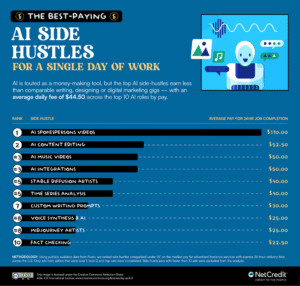
  • Top 10 AI Side Hustles You Can Start in 2025 (No Coding Needed)

    Introduction

    2025 is the first year where everyone—students, professionals, freelancers, and beginners—can use AI tools to launch profitable side hustles with zero coding skills.

    AI has lowered the entry barrier so much that:

    • You no longer need expertise
    • You don’t need expensive tools
    • You can automate most of the workload
    • You can start earning in hours, not months

    Here are the top 10 AI-powered side hustles that are proven, profitable, and beginner-friendly.

    Let’s go step-by-step.


    1. AI Content Creation Services

    What you do:

    Create content for:

    • Blogs
    • Instagram
    • TikTok
    • YouTube scripts
    • LinkedIn posts

    Earnings:

    💰 $20–$200 per piece
    Freelancers easily scale this to $2,500–$10,000/month.

    Tools:

    • ChatGPT
    • Claude
    • Notion AI

    Why this works:

    Businesses need constant content. AI makes it 5× faster.


    2. AI-Powered Social Media Management

    What you do:

    Manage and grow social accounts using AI:

    • Create posts
    • Schedule content
    • Write captions
    • Research hashtags
    • Analyze performance

    Earnings:

    💰 $300–$1,200 per client per month

    Tools:

    • Buffer
    • ChatGPT
    • SocialBee

    Why it’s easy:

    AI handles 70% of the creative work.


    3. AI Resume & LinkedIn Optimization

    What you do:

    Optimize:

    • Resumes
    • LinkedIn profiles
    • Cover letters
    • Interview prep sheets

    Earnings:

    💰 $50–$300 per client

    Tools:

    • ChatGPT Resume Builder
    • Canva
    • LinkedIn AI

    Why it’s viral:

    Job seekers desperately need this help.


    4. AI Chatbot & Automation Setup for Small Businesses

    What you do:

    Install an AI chatbot on websites to automate:

    • Customer support
    • Lead capture
    • FAQs
    • Appointment booking

    Earnings:

    💰 $500–$2,500 per setup

    • monthly maintenance fees

    Tools:

    • ManyChat
    • Tidio
    • OpenAI API

    Why it sells:

    Businesses save money by replacing repetitive support with AI.


    5. AI YouTube Automation (Faceless Channels)

    What you do:

    Create videos using AI for:

    • Finance
    • Motivation
    • Tech
    • Storytelling

    Earnings:

    💰 $100–$10,000+/month (ads + sponsorships)

    Tools:

    • ChatGPT (scripts)
    • ElevenLabs (voiceovers)
    • Pika Labs / Runway (video)

    6. AI Graphic Design for Non-Designers

    What you sell:

    • Logos
    • Posters
    • Business cards
    • Social media graphics
    • Thumbnails

    Earnings:

    💰 $15–$150 per design

    Tools:

    • Canva
    • Adobe Express
    • Midjourney / DALL·E

    Why it works:

    AI gives beginner-friendly, studio-quality art.


    7. AI Productized Services (Your Own Digital Agency)

    Examples:

    • “AI Email Reply Agency”
    • “AI Lead Generation Agency”
    • “AI SOP Creation Agency”

    Earnings:

    💰 $200–$5,000 per client

    Tools:

    • Zapier
    • ChatGPT
    • Trello

    Why this works:

    Offer a simple, automated service that businesses can’t ignore.


    8. AI Tutoring & Micro-Courses

    What you do:

    Sell:

    • Mini courses
    • Tutorials
    • Templates
    • PDFs
    • Prompt packs

    Earnings:

    💰 $10–$150 per product

    Why it’s a goldmine:

    AI helps you create high-quality material fast.


    9. AI Website Creation

    What you do:

    Build websites using AI builders:

    • Landing pages
    • Online stores
    • Business sites

    Earnings:

    💰 $300–$2,500 per site

    Tools:

    • Wix AI
    • Framer AI
    • Durable

    Why it sells:

    Small businesses need websites NOW.


    10. AI Translation & Localization Service

    What you do:

    Translate:

    • Websites
    • Emails
    • Ads
    • Videos

    Earnings:

    💰 $20–$100 per 1,000 words

    Tools:

    • DeepL
    • ChatGPT
    • Claude

    Why it’s trending:

    Global audience + fast content creation.


    Conclusion

    2025 is the easiest time in history to start earning with AI — even if you:

    • Don’t code
    • Don’t have skills
    • Don’t have money to start
    • Don’t want to show your face

    Pick one, commit for 30 days, and scale as demand grows.


  • How to Automate Your Entire Day With AI Agents: Step-by-Step Guide (2025)


    Introduction

    AI in 2025 isn’t just “chatbots.”
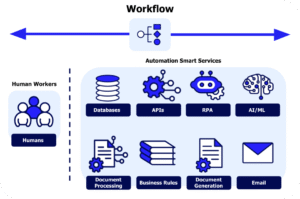
    We now have AI agents—autonomous digital workers that can plan tasks, make decisions, run tools, browse the internet, and execute workflows without your constant input.

    This guide will show you how to automate your entire day using fully or semi-autonomous AI agents — with a clear, followable, step-by-step structure.

    By the end, you’ll be able to automate:

    • Email replies
    • Research tasks
    • Scheduling
    • Content creation
    • Data entry
    • Reminders & planning
    • Social media tasks
    • Personal life routines

    Let’s break it down clearly and logically.


    Step 1: Understand What an AI Agent Actually Does

    Before jumping in, you need to understand what makes an AI agent different from ChatGPT.

    An AI Agent Can:

    • Plan tasks autonomously
    • Use tools (browsers, APIs, apps)
    • Take actions based on goals
    • Run multi-step workflows
    • Learn from feedback

    An AI Agent Is Best Used For:

    • Repetitive tasks
    • High-volume tasks
    • Information processing
    • Scheduling
    • Monitoring
    • Writing & analysis

    The more repetitive the task → the easier to automate.


    Step 2: Choose Your AI Agent Platform

    Here are the simplest and most powerful agent tools you can start with today:

    1. OpenAI GPT-5.1 with Agents

    • Most stable
    • Best reasoning
    • Deep system integration
    • Great for professional workflows

    2. Microsoft Copilot Studio

    • Amazing for business automation
    • Connects easily with Teams, Office, Outlook

    3. ReAct / CrewAI / AutoGen (for developers)

    • Best for custom pipelines
    • Allows multi-agent systems
    • Requires basic Python

    Step 3: Automate Your Morning Routine (Emails, Calendar, Planning)

    Automation Blueprint:

    1. Open inbox
    2. Categorize emails
    3. Draft replies
    4. Prioritize tasks
    5. Update your calendar
    6. Create a daily plan

    Example Prompt:

    “Act as my daily automation agent. Each morning: scan my emails, summarize the top priorities, draft replies, schedule meetings, and build a task list in priority order.”

    What the Agent Does Automatically:

    • Flags urgent messages
    • Writes reply drafts
    • Suggests times for meetings
    • Creates a to-do list
    • Sends you a “Day Overview” message

    This alone saves 30–60 minutes every day.


    Step 4: Automate Research & Information Gathering

    Agents excel at:

    • Competitor analysis
    • Market research
    • Web scraping
    • Trend monitoring
    • Report summaries

    Example Workflow:

    1. Agent browses online sources
    2. Extracts key information
    3. Compiles into a structured report
    4. Delivers summary + insights
    5. Repeats daily/weekly on schedule

    Example Prompt:

    “Every morning at 8 AM, gather the latest news about AI tools, summarize updates, and deliver a report with sources.”

    Perfect for creators, marketers, founders, and analysts.


    Step 5: Automate Repetitive Work Tasks

    Tasks You Can Automate Today:

    • Creating blog outlines
    • Writing social posts
    • Classifying documents
    • Transcribing meetings
    • Creating spreadsheets
    • Analyzing PDFs
    • Drafting proposals

    Example: Content Automation

    Tell the agent:

    “Create three Twitter posts based on the attached blog. Make them viral-friendly, under 280 characters.”

    Example: PDF Automation

    “Extract all deadlines from this 25-page PDF and put them into a table.”


    Step 6: Automate Your Personal Life Routines

    You can use AI to manage:

    • Shopping lists
    • Meal planning
    • Budget tracking
    • Workout planning
    • Event reminders

    Example Prompt:

    “Plan my meals for the week, generate a shopping list, and order items through Instacart if stock is available.”

    Example Prompt:

    “Create a 4-week workout plan based on my schedule and fitness goals.”


    Step 7: Connect Agents to Apps for Full Automation

    To go beyond prompting, connect agents to:

    • Notion
    • Google Calendar
    • Gmail
    • Trello
    • WhatsApp
    • Slack
    • Shopify
    • APIs

    With integrations, your agent can:

    • Add tasks
    • Update calendars
    • Send messages
    • Manage workflows
    • Automate business tasks

    This transforms the agent into a true digital employee.


    Step 8: Build Your Full Daily Automation System

    Here’s a complete example:

    Morning

    • Email triage
    • Calendar updates
    • Day summary

    Workday

    • Content creation
    • Research monitoring
    • Scheduling
    • Document processing

    Evening

    • Task recap
    • Tomorrow’s plan
    • Reminders

    Your life becomes predictable, automated, and efficient.


    Conclusion

    AI agents in 2025 can automate over 40–60% of your digital tasks.
    They’re your:

    • Assistant
    • Researcher
    • Planner
    • Writer
    • Analyst
    • Scheduler

    Use them correctly → your productivity skyrockets.


  • The Gig Economy in 2025: How Freelancing Is Redefining the Future of Work

    The gig economy continues to expand rapidly in 2025, with global freelance participation expected to surpass 1.1 billion workers as businesses increasingly rely on flexible, project-based talent. According to recent labor market reports, more than 38% of companies now hire gig workers to reduce operational costs and fill skill gaps in areas like digital marketing, software development, and virtual assistance. This shift is also fueled by younger professionals, with over 60% of Gen Z preferring freelance work due to the flexibility and income diversity it offers. As remote work becomes the norm, digital platforms and AI-driven marketplaces are reshaping how individuals find, negotiate, and deliver freelance services.

    Pakistan’s gig economy is expanding at one of the fastest rates in South Asia, driven largely by its young, tech-savvy population. Recent digital workforce studies show that over 4 million Pakistanis are now engaged in freelance and gig-based work, contributing significantly to the country’s growing digital economy. Pakistan currently ranks among the top 5 countries globally on major freelancing marketplaces such as Upwork and Fiverr, with an estimated 47% annual growth in freelance earnings during peak years.

    With 64% of the population below the age of 30, Pakistan’s gig economy is expected to expand even further as remote work, e-commerce, and digital payments continue to rise.

    Key Drivers:

    Government initiatives promote digital skills and freelancing, while affordable internet and smartphones boost online work.

    Popular Sectors:

    Digital marketing and social media management are in high demand, along with graphic design and creative services. Website development and programming are also popular, as is content writing and translation.

    Opportunities and Challenges:

    Flexibility and autonomy attract workers, but income instability and lack of benefits are concerns. Skill development is crucial for success in this field.

    Government Support:

    Initiatives like Digiskills.pk and e-Rozgaar promote digital education and skill development. The government is also working to improve payment.