Category: Pakistan Economy & Business News

  • High Corporate Taxes Hurting Investor Confidence, Warns SIFC

    Pakistan’s Special Investment Facilitation Council (SIFC) has issued a strong caution that the country’s elevated corporate tax burden is undermining investor confidence, weakening the business climate at a time when economic stability is crucial.

    Investor Sentiment Declining Amid High Tax Pressures

    According to officials familiar with SIFC’s latest review, both local and foreign investors have repeatedly highlighted that Pakistan’s corporate tax rates are among the highest in the region, making it difficult for businesses to expand or remain globally competitive.

    Companies operating in manufacturing, energy, technology, and services sectors have reported that the existing tax load reduces their ability to reinvest earnings, scale operations, or introduce new products and technologies. This, in turn, is slowing down economic activity and deterring new investment inflows.

    Regional Comparison Shows Pakistan at a Disadvantage

    Investors point out that Pakistan’s corporate tax regime stands in stark contrast to neighboring economies, many of which offer incentivized tax structures to attract capital. Countries like Bangladesh, Vietnam, and the UAE have significantly lower corporate tax requirements, giving them a clear competitive advantage.

    With Pakistan striving to revive exports, attract industrial relocation, and enhance foreign direct investment (FDI), experts argue that aligning tax policies with regional benchmarks is no longer optional—it is essential.

    SIFC Pushes for Comprehensive Tax Reforms

    Recognizing the need for business-friendly policies, SIFC is advocating for:

    • Lower and simplified corporate taxes
    • Reduced compliance burden for companies
    • Greater transparency in tax assessments
    • Stable, predictable economic policies
    • Incentives for sectors driving growth and exports

    These proposed reforms aim to create an investment environment that fosters entrepreneurship, stimulates economic activity, and encourages long-term capital commitments.

    High Taxes Undermining Economic Revival Efforts

    Economic analysts maintain that the current tax structure is acting as a brake on Pakistan’s recovery efforts. With inflation cooling and business activity slowly climbing, experts believe that easing corporate taxes could unlock:

    • Higher industrial production
    • Increased job creation
    • Stronger export performance
    • Greater foreign investor participation

    Without decisive reforms, however, Pakistan risks losing potential investments to more attractive global markets.

    Conclusion

    As Pakistan battles economic challenges and seeks sustainable growth, SIFC’s warning serves as a timely reminder: a heavy corporate tax burden may be costing the nation far more than it collects. Lowering taxes, simplifying procedures, and offering access to a predictable investment climate could be the key to restoring confidence and driving a robust economic turnaround.

  • Pakistan Sets New Record in Fuel-Oil Exports, Boosting Economic Outlook

    Pakistan has reached a significant milestone by setting a new record in fuel-oil exports, marking a positive development for the country’s economic outlook. The surge in shipments comes at a time when Pakistan is actively working to strengthen foreign exchange reserves, improve industrial output, and diversify external revenue streams.

    Industry insiders report that the jump in fuel-oil exports is primarily driven by increased refinery production and improved operational efficiency. Several domestic refineries have optimized their processes over the past year, enabling them to convert surplus stocks into exportable products. This has not only helped reduce storage costs but also opened new opportunities in international markets, particularly in Asia and the Middle East where demand remains strong.

    Economists view this export boost as a step toward stabilizing Pakistan’s macroeconomic indicators. Higher export earnings can ease pressure on the foreign exchange market, support the rupee, and reduce reliance on costly fuel imports. Moreover, the development highlights the potential of Pakistan’s energy sector to become more competitive globally if provided with consistent policy support.

    However, experts caution that sustaining this momentum will require long-term planning. Upgrading refinery infrastructure, ensuring uninterrupted supply chains, and implementing energy-sector reforms are key factors that will determine whether Pakistan can maintain its position in the global fuel-oil market.

    Overall, the new export record is a welcome achievement, signaling economic resilience and offering hope for stronger growth in the months ahead.

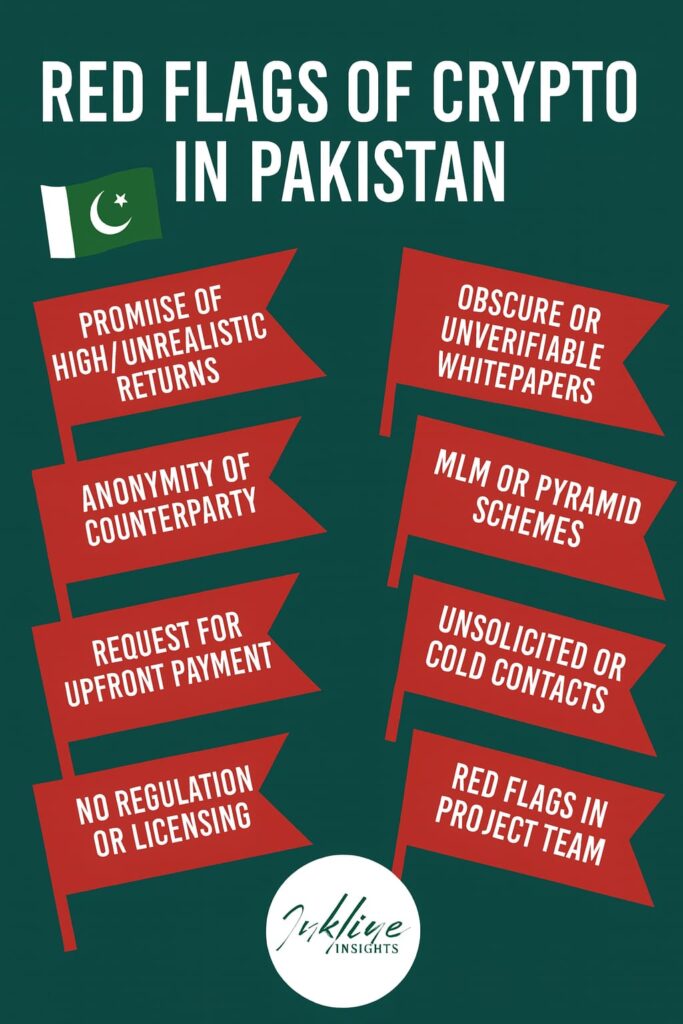
  • 🚨 Top Red Flags in Crypto — Especially in Pakistan 🇵🇰

    Cryptocurrency has become a hot topic in Pakistan — from online investment groups to WhatsApp trading classes and flashy Instagram “crypto gurus.” While the crypto world has incredible potential, it also attracts scams and misleading schemes, particularly in developing markets. If you’re entering the crypto space in Pakistan, it’s crucial to stay alert and protect your money.

    This guide covers the top crypto red flags every Pakistani should know before investing.


    🌐 1. Fake “Guaranteed Profit” Schemes 💸

    If someone tells you “100% profit in 24 hours”, “zero loss guaranteed”, or “daily fixed income”, run in the opposite direction.

    👉 Why it’s a red flag:
    Crypto is highly volatile. No trader, bot, or platform can guarantee fixed returns. Such claims are classic signs of scams like Ponzi schemes.

    👉 Common in Pakistan:

    • Instagram “crypto experts”
    • WhatsApp groups sharing “signals”
    • Unregistered trading classes

    🧑‍🏫 2. Self-Proclaimed “Crypto Gurus” 🎭

    Many scammers market themselves as crypto trainers offering paid courses or premium membership groups.

    👉 Red Flag When:

    • They flaunt rented cars, fake profits, or edited screenshots
    • They pressure you into joining paid channels
    • They refuse to show loss history

    Real experts don’t rely on flashy lifestyles to prove legitimacy.


    💼 3. No Company Registration or Legal Documentation 📉

    Many crypto projects targeting Pakistanis operate without registration, office details, or traceable founders.

    👉 Why it’s dangerous:
    If something goes wrong, you have no legal protection — especially since Pakistan has unclear crypto regulations.

    👉 Always check:

    • SECP registration
    • Owner identity
    • Verified office location

    🔐 4. “Send Crypto, Get Crypto Back” Schemes 🎁

    Some platforms ask you to deposit Bitcoin/USDT and promise to return double or triple the amount.

    👉 Reality:
    Once you send crypto to a scammer’s wallet, there’s no way to recover it.

    👉 Common forms:

    • Investment pools
    • Mining packages
    • “Give $100 today, receive $300 tomorrow” offers

    🪙 5. Suspicious New Coins or Tokens 🧨

    Many projects create their own tokens and aggressively push Pakistanis to “buy before it goes to the moon.”

    👉 Red Flags:

    • No whitepaper
    • No real utility
    • Anonymous team
    • Low-quality website
    • Unrealistic future predictions

    If a coin only grows because people are recruiting new buyers, it’s likely a pump-and-dump scheme.


    🏦 6. Fake Crypto Exchanges Targeting Pakistanis 🕵️‍♂️

    Some scammers set up professional-looking websites that resemble real exchanges.

    👉 Warning Signs:

    • No mobile app
    • No withdrawal option
    • Very high bonuses on deposits
    • No presence on Google, Trustpilot, or Reddit

    Always stick to reputable global exchanges.


    📲 7. WhatsApp & Telegram “Signals Groups” ⚠️

    Hundreds of Pakistanis lose money daily after following unreliable signals claiming “95% accuracy.”

    👉 Why it’s a red flag:

    • No transparency
    • No track record
    • Paid signals to trap beginners
    • Admins disappear after collecting fees

    Crypto trading requires knowledge — not copying random trades.


    🧬 8. Emotional Manipulation & FOMO Marketing 🔥

    Scammers use statements like:

    • “Last 10 slots left!”
    • “You will regret missing this!”
    • “Everyone is becoming a millionaire!”

    👉 Real investments never pressure you.
    If someone is pushing you hard, they want your money — not your success.


    💣 9. No Withdrawal Proof

    Always ask for verified, continuous withdrawal proof — not just one screenshot.

    👉 Red Flags:

    • Delayed withdrawals
    • “System upgrade” excuses
    • Extra fees for withdrawing funds

    If withdrawals don’t work, it’s a scam.


    👤 10. Lack of Technical Understanding Among Investors 🧩

    Many beginners in Pakistan invest simply because:

    • A friend recommended it
    • A “mentor” convinced them
    • They saw profit screenshots online

    👉 Biggest red flag: Investing without understanding the project, tokenomics, or risks.

    Always research before investing.


    🛡️ How to Stay Safe in Pakistan’s Crypto Space

    Here are quick safety tips:

    ✔️ Research every project
    ✔️ Verify identities & registration
    ✔️ Never trust guaranteed returns
    ✔️ Avoid shady exchanges
    ✔️ Keep your private keys safe
    ✔️ Join verified crypto communities
    ✔️ Start small and learn gradually


    🎯 Conclusion

    Crypto offers huge opportunities, but Pakistanis are particularly vulnerable to scams due to lack of awareness, regulation, and technical knowledge. By recognizing these red flags, you can protect yourself and make smarter, safer financial decisions.

    Stay alert. Stay informed. Stay safe. 💚🇵🇰