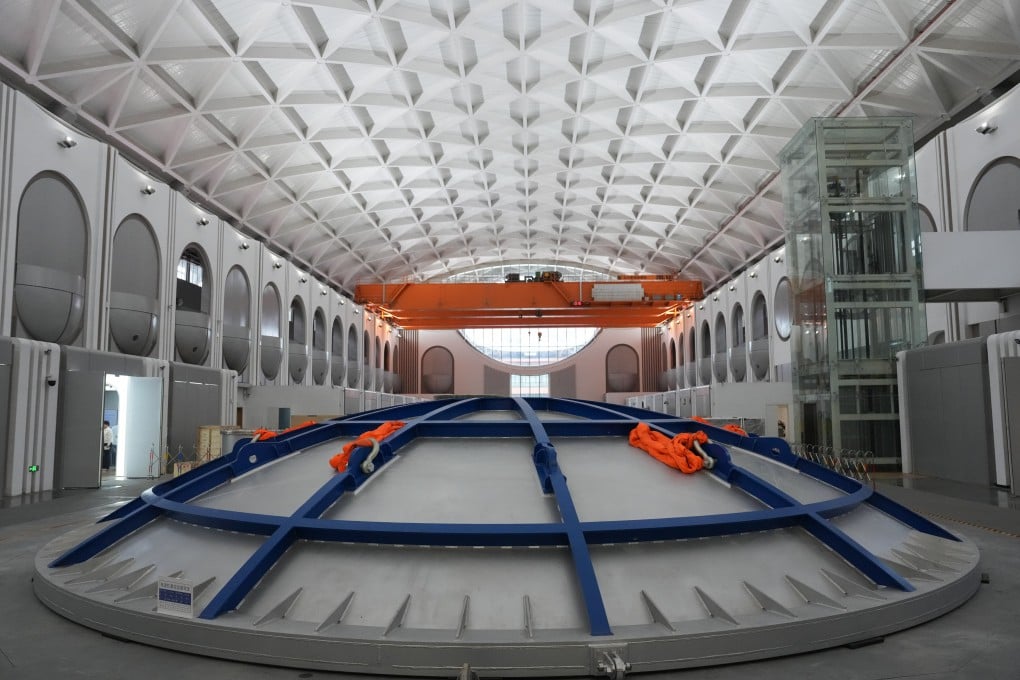

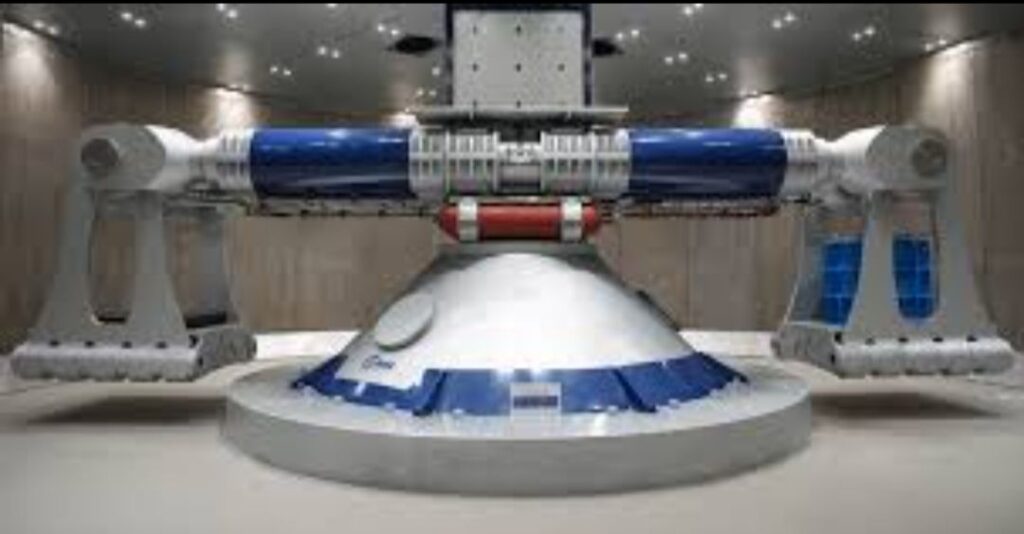
China has introduced a world-leading hypergravity centrifuge system designed to dramatically shorten the time required to test how materials and structures behave over long periods. The advanced machine can recreate the effects of decades—or even centuries—of stress and environmental pressure within just a few days, offering a powerful new tool for engineering and scientific research.
Developed by researchers at Zhejiang University, the facility is among the most powerful of its kind globally and reflects China’s growing investment in large-scale experimental infrastructure.
How the Hypergravity Machine Works
The hypergravity system is based on a massive, high-precision centrifuge. When rotating at extremely high speeds, the centrifuge generates forces many times stronger than Earth’s gravity. These forces allow scientists to observe how small-scale models behave as if they were full-sized structures exposed to long-term loads.
By increasing gravitational acceleration:
- Structural deformation occurs faster
- Material fatigue becomes measurable in short timeframes
- Long-term stability issues can be directly observed
This method enables researchers to study processes that would normally take decades under natural conditions.
Advanced Vacuum-Based Temperature Control
A major technical highlight of the centrifuge is its vacuum-based temperature regulation system, which plays a crucial role in maintaining stability during high-speed operation.
Why Temperature Control Matters
At extreme rotational speeds, heat buildup can:
- Affect measurement accuracy
- Cause mechanical wear
- Limit experiment duration
Role of the Vacuum System
Operating key components in a controlled vacuum environment helps to:
- Reduce air resistance and friction
- Improve heat dissipation efficiency
- Maintain consistent testing conditions
This design allows the centrifuge to operate safely and continuously under ultra-high gravity levels.
Turning Time Into a Test Variable
One of the most valuable features of the hypergravity machine is its ability to compress time in experimental research. Engineers can now simulate:
- Long-term soil settlement
- Structural aging and fatigue
- Geological pressure effects
What once required long observational periods can now be evaluated within days or weeks, improving both efficiency and reliability in engineering design.
Key Applications Across Industries
The centrifuge is expected to support research and testing in multiple sectors, including:
- Civil engineering: bridges, tunnels, dams, and skyscrapers
- Transportation: high-speed rail and coastal infrastructure
- Energy: power facilities and long-life installations
- Materials science: studying creep, fracture, and durability
- Earth sciences: modeling landslides and ground stability
These applications help engineers validate safety margins before construction begins.
Broader Scientific and Industrial Impact
Beyond infrastructure, hypergravity research can contribute to:
- Aerospace and space-related materials testing
- Planetary science simulations
- Advanced manufacturing and material development
By enabling faster and more controlled experiments, the technology reduces dependence on purely theoretical models.
A Step Forward in Engineering Research
China’s record-breaking hypergravity centrifuge represents a significant advancement in experimental science. Through the combination of extreme gravitational force and precise thermal management, the system allows researchers to study long-term behavior in a fraction of the time.
As infrastructure projects grow larger and more complex worldwide, technologies that improve testing accuracy and accelerate research timelines are becoming increasingly important—making hypergravity systems a key asset for the future of engineering.
Leave a Reply