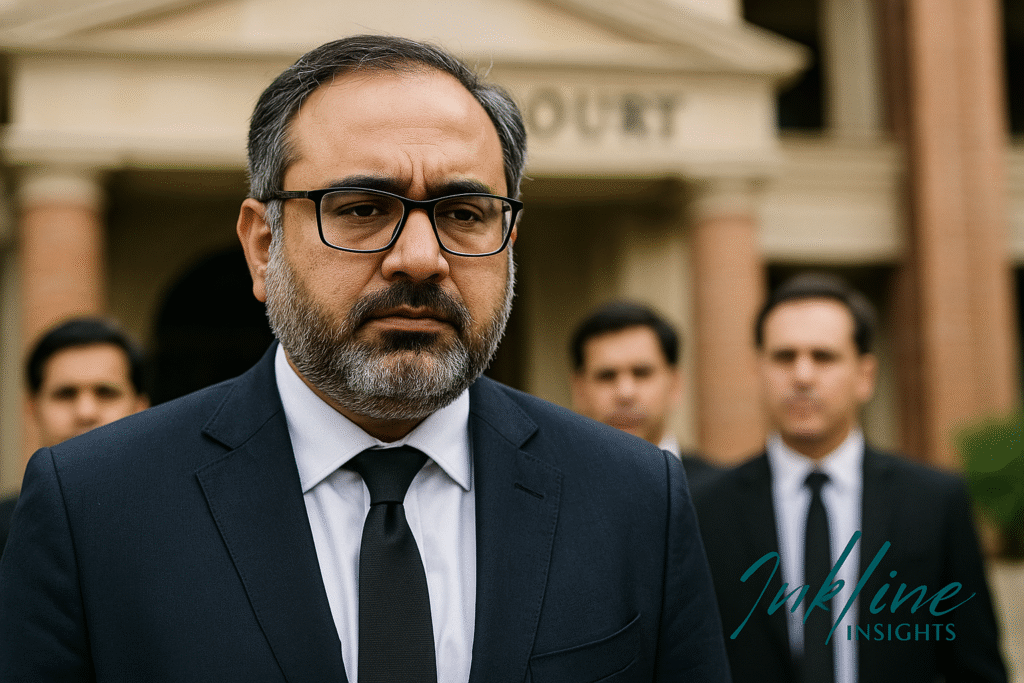
The declaration of a former prime minister’s adviser as a “proclaimed offender” in a case tied to controversial social media posts has intensified debate over digital expression, political accountability, and the judiciary’s authority in Pakistan’s fast-moving online landscape. According to court officials, the decision followed repeated absences from scheduled hearings, prompting prosecutors to argue that the accused was deliberately evading the legal process while continuing to disseminate content described as defamatory and damaging to the integrity of state institutions. Investigators contend that several of the posts under scrutiny included statements, screenshots, and commentary that allegedly attempted to undermine public confidence in judicial decisions during sensitive political proceedings, contributing to an environment of online hostility and deepening polarization. Cybercrime units have been ordered to compile a complete digital trail of the posts in question, including metadata, cross-platform activity, and any indications of coordinated dissemination, while prosecutors prepare to extend the inquiry into whether the narratives were amplified intentionally to influence public perception at critical political moments.
Legal specialists observing the case note that the proclamation status significantly raises the stakes, as it authorizes authorities to pursue more assertive measures, including property attachment or expanded warrants, if the accused does not comply with summons. At the same time, political analysts argue that the case illustrates the growing tension between personal online commentary and legal boundaries in an era where a single social media post can trigger far-reaching ripple effects within minutes. Supporters of the former adviser insist that the posts represented opinion and criticism within the democratic space, pointing to long-standing concerns about shrinking room for political expression. Meanwhile, legal officials maintain that criticisms cross into unlawful territory when they “erode trust in judicial independence,” a standard that remains the subject of intense public debate. As proceedings advance, the case is expected to test how Pakistan navigates the delicate balance between safeguarding institutional respect and allowing robust political discourse online, particularly at a time when the country’s digital sphere plays an increasingly central role in shaping political narratives and influencing public sentiment.
Leave a Reply