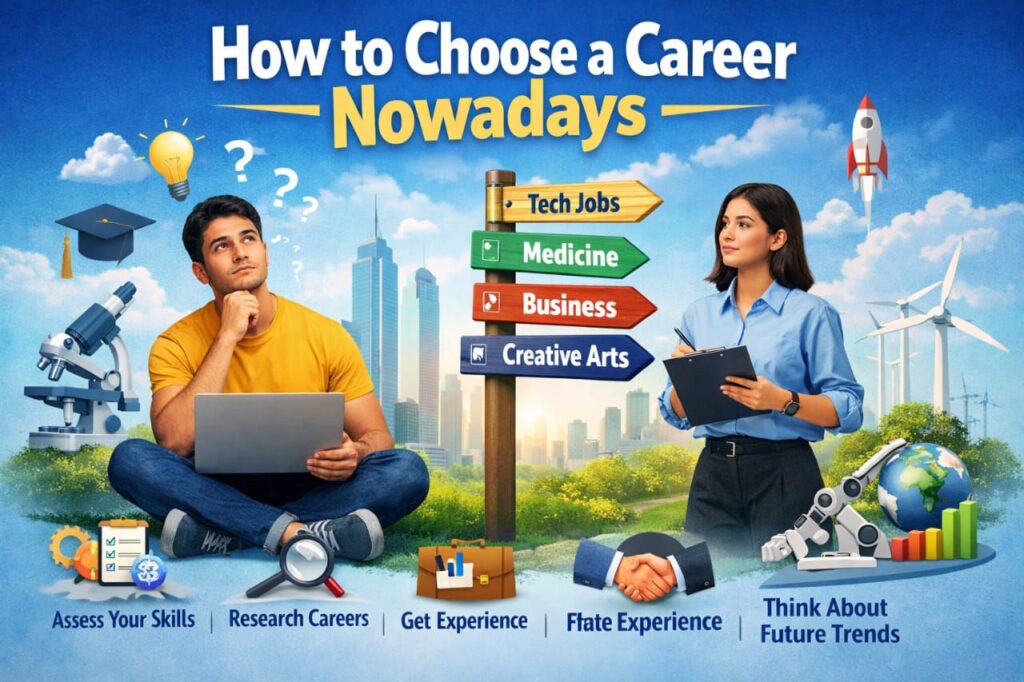
Introduction
Choosing a career in today’s fast-changing world has become more complex than ever before. Unlike the past, when career paths were limited and predictable, modern students and professionals now face hundreds of options influenced by technology, globalization, and changing job markets. Making the right career choice is crucial because it affects not only income but also job satisfaction, mental health, and long-term growth.
Understand the Changing Job Market
-The modern job market is evolving rapidly due to automation, artificial intelligence, and digital transformation.
-According to global employment studies:
-Nearly 60% of jobs today require digital skills at some level.
-Technology-driven roles are growing faster than traditional occupations.
-Remote and freelance work has increased by over 30% in recent years.
These figures show that career planning must align with future job trends, not just current popularity.
Start with Self-Assessment
Before selecting a career, understanding yourself is essential. Many people choose careers based on pressure from family or society, which often leads to dissatisfaction later.
Key self-assessment areas
Interests: Subjects or activities you enjoy
Skills: Natural abilities or learned competencies
Values: Work-life balance, job security, or social impact
Personality: Introverted or extroverted tendencies
Career assessment tools and aptitude tests can help identify suitable fields based on these factors.
Research Career Options Thoroughly
Once you understand your strengths, research potential career paths carefully. Do not rely on assumptions or outdated information.
Important factors to research
– Job demand and growth rate
-Required education and skills
-Average salary range
-Career advancement opportunities
For example, sectors like information technology, healthcare, renewable energy, and digital marketing show consistent global growth due to rising demand.
Focus on Skills, Not Just Degrees
In today’s world, skills matter as much as formal education.
Surveys indicate that:
-Employers prioritize practical skills and experience over academic grades.
-Many high-paying roles accept alternative certifications and online learning.
-Skills such as problem-solving, communication, data analysis, and digital literacy are valuable across multiple industries. Continuous skill development increases employability and career flexibility.Also consider Technology-Driven Careers.
Popular technology-related career paths
–Software development
-Data analysis
-Cybersecurity
-Artificial intelligence
-Digital content creation
Even non-technical fields now require basic technological knowledge, making digital skills a necessity rather than an option.
Evaluate Job Stability and Income Potential
While passion is important, financial stability cannot be ignored. A balanced career choice considers both interest and earning potential.
Key points to evaluate:
-Is the career resistant to automation?
-Does it offer long-term growth?
-Are salaries aligned with living costs?
-Healthcare, education, engineering, and skilled technical professions often provide stable income and long-term demand.
-Seek Guidance from Professionals
Career counseling can provide clarity and reduce confusion. Talking to professionals already working in a field offers real-world insight that online research may not provide.
Ways to seek guidance:
-Career counselors
-Industry mentors
-Educational advisors
-Professional networking platforms
This guidance helps in understanding daily work routines, challenges, and growth paths.
Gain Practical Experience Early
Internships, volunteer work, and part-time jobs allow individuals to test their career choices before committing fully.
Benefits of early experience:
-Better understanding of workplace culture
-Skill development
-Stronger resume
-Professional networking
Studies show that candidates with practical experience are more likely to secure employment after graduation.
Be Open to Change and Growth
Modern careers are no longer linear. Many professionals change careers multiple times during their working life.
Key mindset shifts include:
-Accepting lifelong learning
-Adapting to new technologies
-Being open to career transitions
-Flexibility increases resilience and long-term success in a rapidly changing job market.
-Balance Passion with Practicality
A successful career lies at the intersection of passion and practicality. Choosing a career you love but that offers limited opportunities can be risky, while selecting a high-paying job you dislike can lead to burnout.
The ideal approach
-Align interests with market demand
-Develop relevant skills
-Plan long-term growth
This balance ensures both professional satisfaction and financial stability.
Conclusion
Choosing a career nowadays requires careful planning, self-awareness, and market research. The modern job market rewards adaptability, skill development, and informed decision-making. By understanding personal strengths, researching emerging industries, focusing on skills, and gaining practical experience, individuals can make confident career choices.
In an era of constant change, the most successful careers are built on continuous learning and flexibility. A well-chosen career not only provides income but also contributes to personal growth and long-term happiness.
Leave a Reply