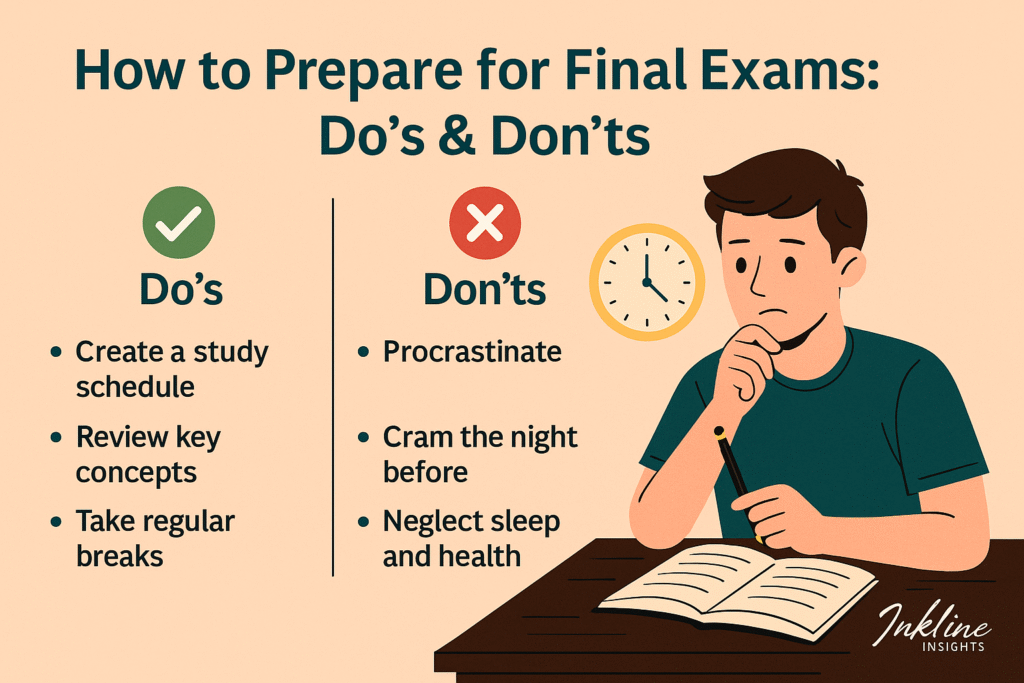
Preparing for final exams becomes much easier when students follow a steady routine rather than waiting until the last minute. The brain learns better when information is reviewed in small, regular portions, so studying a little each day is far more effective than trying to memorize everything in one long session. When students spread their revision over several days or weeks, they feel more confident because their understanding grows gradually. This reduces stress and improves long-term memory, allowing them to recall concepts more smoothly during the exam.
One of the biggest challenges students face is procrastination. Many keep delaying their study time until they only have a few days left, which leads to pressure, confusion, and exhaustion. A college student once shared that she used to begin studying only two nights before exams, thinking she worked better under pressure. However, she often forgot key points and felt overwhelmed during tests. The next semester, she decided to start ten days earlier, studying for just 20–30 minutes each day. She noticed a huge difference—not only did her grades improve, but she also walked into the exam hall much calmer and more prepared.
Avoiding distractions is another important part of exam preparation. Phones, social media, and background noises break concentration even when students think they are multitasking well. Creating a clean, quiet study space helps the brain stay focused for longer periods. Taking planned breaks also supports better learning, because the brain needs short periods to process and store information. Simple activities like stretching, drinking water, or walking around the room help refresh the mind without losing momentum.
Health also plays a major role in exam performance. Many students stay up late trying to complete more chapters, but lack of sleep reduces concentration and slows down thinking. A school counselor once talked about a student who would study until 3 AM every night during exam week. Although he spent more hours with his books, he made unnecessary mistakes in the exam because his brain was tired. When he prioritized sleep the next term, he answered more accurately and achieved higher marks, proving that rest is not a waste of time but an essential tool for success.
Students should also avoid unhealthy habits like skipping meals, relying on last-minute cramming, or studying nonstop without breaks. These practices create burnout and make exam stress worse. The most effective approach combines consistent study, good organization, and proper rest. When students take care of their mind and body, stay disciplined, and keep their routine balanced, preparing for exams becomes a much smoother and more productive experience.
Leave a Reply