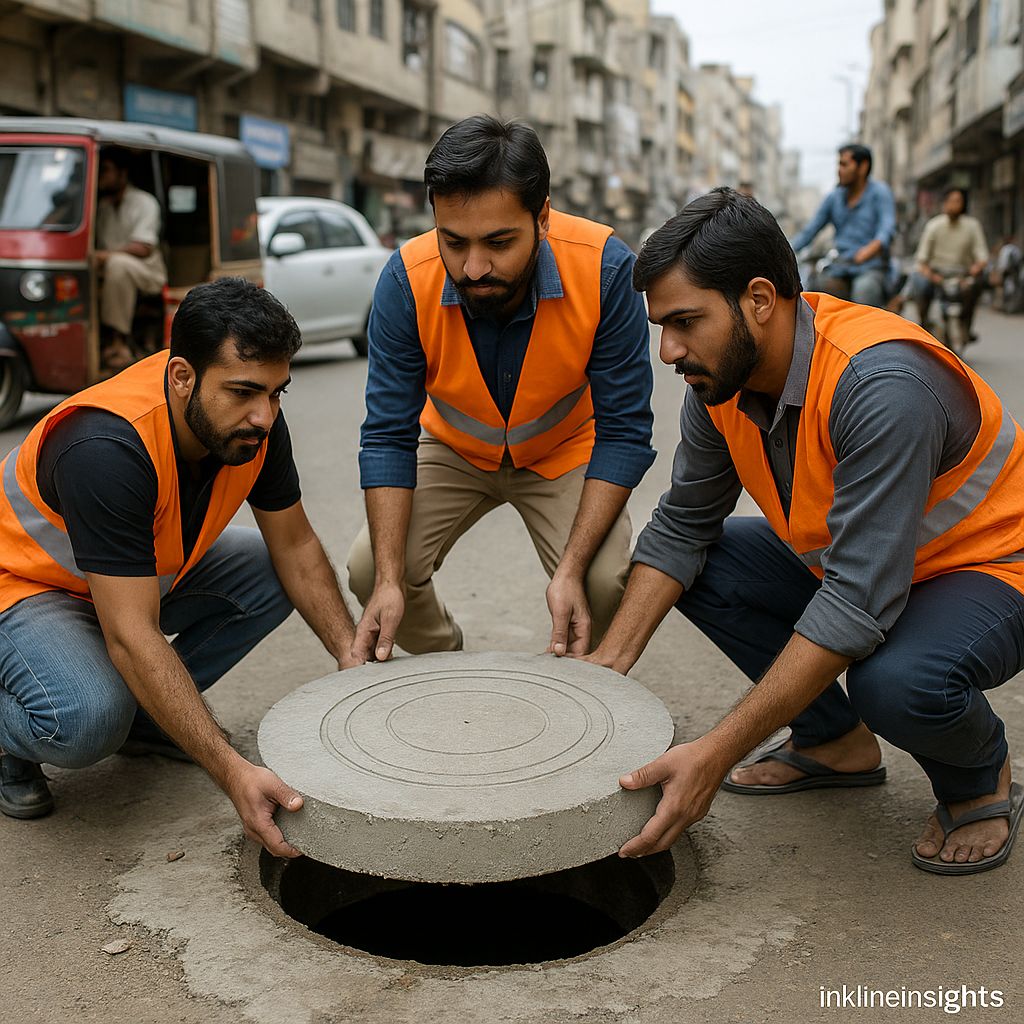
Karachi, a city of over twenty million people, has long faced challenges related to urban infrastructure, with open manholes ranking among the most dangerous hazards for pedestrians and commuters. In recent years, the FixIt team of Karachi has emerged as one of the most active citizen-driven initiatives addressing this recurring problem. The movement, widely recognized for its hands-on approach, focuses on rapidly covering open manholes, raising awareness about public safety, and holding civic authorities accountable. Their efforts have not only prevented countless accidents but have also pushed the broader conversation about urban responsibility and community involvement to the forefront.
The FixIt campaign was founded by Alamgir Khan, a social activist who first gained public attention through symbolic protests aimed at highlighting neglected civic issues across Karachi. Khan began by spray-painting the face of government officials near potholes, garbage dumps, and damaged roads to draw immediate attention to the problems ignored by local authorities. This creative yet impactful method quickly gained popularity, turning FixIt from a lone protest into a citywide volunteer movement committed to improving daily life for Karachi residents. Khan’s philosophy centers on community empowerment—encouraging citizens to take ownership of their surroundings rather than waiting endlessly for bureaucratic action.
Among its most notable contributions is FixIt’s sustained effort to locate, report, and cover open manholes throughout Karachi. Volunteers frequently patrol high-risk neighborhoods, particularly those with heavy foot traffic or near schools and marketplaces. When an uncovered manhole is found, they either temporarily cover it using available materials or install a more stable solution, depending on resources. The goal is always immediate safety first, followed by proper reporting to municipal bodies to ensure long-term repair. This proactive intervention has saved children, motorcyclists, and pedestrians from serious injuries, and in many cases from fatal accidents. As Karachi continues to struggle with damaged drainage systems, the FixIt team plays a crucial supplemental role in keeping the city safer.
Beyond covering manholes, the FixIt initiative has undertaken several other impactful projects that demonstrate its commitment to civic improvement. Volunteers regularly organize street-cleaning drives, removing garbage from public spaces where municipal services are insufficient. The team has installed public water coolers during intense Karachi summers, ensuring that passersby have access to clean drinking water. During winter, they have distributed warm clothing and blankets to underprivileged families. FixIt has also launched campaigns promoting education access, including the placement of donation boxes where people can contribute books, school supplies, and even funds for student support. These diverse efforts highlight the group’s dedication to improving both the physical environment and the social well-being of the community.
Over the years, FixIt has grown from a symbolic protest movement into a structured volunteer force that collaborates with local communities to identify problems and take swift action. While they cannot replace the responsibilities of governmental departments, their work has pressured authorities to act faster and more responsibly. The visibility of FixIt’s actions has also inspired ordinary citizens to participate in civic improvement, proving that grassroots efforts can make a meaningful difference even in a city as large and complex as Karachi.
The role of Karachi’s FixIt team in covering manholes and addressing civic neglect reflects a broader shift toward community-driven solutions. Their hands-on approach, guided by the passion and leadership of founder Alamgir Khan, continues to foster a culture of accountability, awareness, and collective responsibility. As the city evolves and faces new infrastructural challenges, FixIt remains a symbol of what can be achieved when citizens unite with purpose and determination to make their environment safer and more humane for everyone.
Leave a Reply