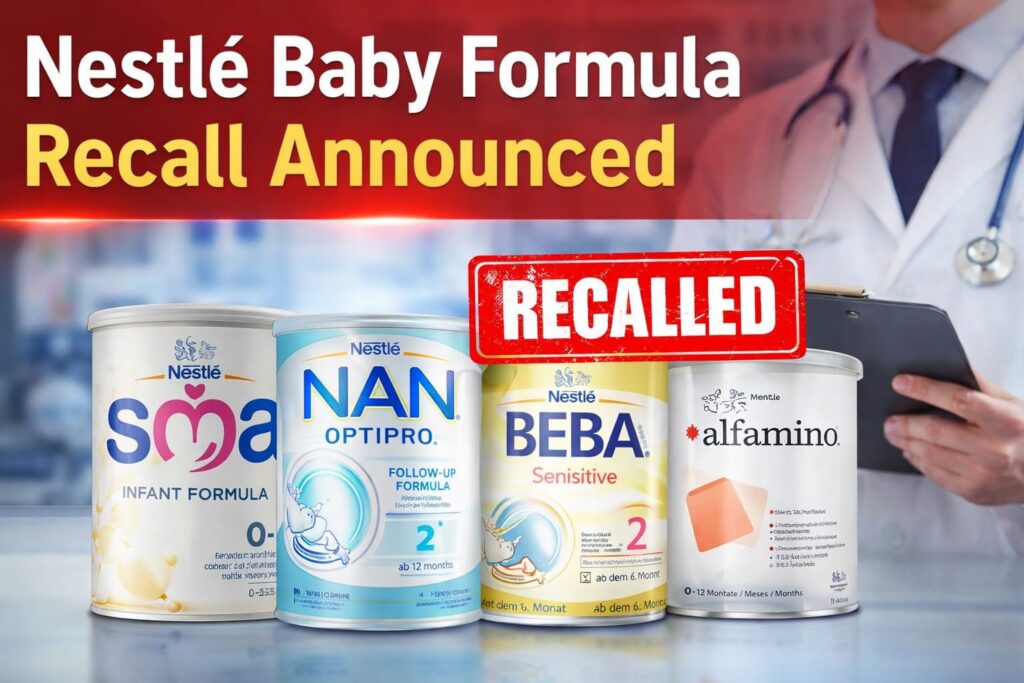
In early January 2026, global food and beverage company Nestlé announced a voluntary worldwide recall of certain baby formula products after identifying potential safety concerns related to specific production batches. The recall has drawn international attention due to the sensitive nature of infant nutrition and the importance of food safety for newborns and young children.
According to official statements, the recall was initiated as a precautionary measure following internal quality checks that suggested some batches may contain a toxin associated with foodborne bacteria, which could potentially lead to digestive discomfort or food poisoning if consumed. While no confirmed cases of illness have been reported so far, Nestlé and health authorities have emphasized that preventive action is essential when infant health is involved.
Why the Recall Was Issued
Nestlé explained that the recall was triggered after routine quality assessments detected a possible contamination risk linked to an ingredient used in infant formula production. The concern relates to a toxin that can be produced by certain bacteria under specific conditions. This toxin is known to be resistant to high temperatures, meaning that standard preparation methods, such as mixing formula with hot water, may not eliminate the risk.
Food safety experts note that while such contamination is rare, infants are particularly vulnerable due to their developing immune and digestive systems. Even mild foodborne toxins can cause symptoms such as vomiting, diarrhea, stomach cramps, or dehydration in young babies. This is why regulatory agencies worldwide support swift recalls when even a small risk is identified.
Products and Regions Affected
The recall applies only to specific batches, not to all Nestlé baby formula products. The affected items include certain infant formula and follow-on formula products, sold under well-known Nestlé brands in multiple regions.
Countries impacted by the recall include parts of Europe, the Middle East, Africa, Asia, and Latin America. In some markets, retailers were instructed to immediately remove affected products from shelves, while online platforms were asked to suspend sales of the identified batches.
Nestlé has published batch codes and expiry details through official channels and encouraged parents to carefully check product labels. Authorities have repeatedly clarified that baby formula products not listed in the recall notice remain safe for consumption.
Official Guidance for Parents and Caregivers
Health authorities and Nestlé have provided clear guidance to parents and caregivers to ensure infant safety:
- Do not use the product if the batch number matches those listed in the recall.
- Stop feeding immediately if you suspect your baby has consumed a recalled formula.
- Consult a healthcare professional if your child shows any unusual symptoms, such as vomiting or diarrhea.
- Return the product to the point of purchase where refunds or replacements may be available.
Experts also advise parents not to panic, stressing that recalls are part of standard food safety systems designed to prevent harm before it occurs.
Nestlé’s Response and Safety Measures
Nestlé has stated that infant health and safety remain its top priority. The company emphasized that the recall is voluntary and reflects its commitment to strict quality standards. In public communications, Nestlé apologized for the inconvenience caused and reassured consumers that corrective actions are being taken to prevent similar issues in the future.
The company has also confirmed that it is working closely with food safety regulators to review manufacturing processes, supplier controls, and testing protocols. Additional inspections and monitoring procedures have reportedly been introduced across production facilities to strengthen safety checks.
Understanding Food Safety in Infant Nutrition
Infant formula is among the most strictly regulated food products globally. Manufacturers are required to meet high safety standards, as infants rely heavily on formula during critical stages of growth and development. According to food safety experts, even with advanced testing systems, recalls can still occur due to the complexity of global supply chains.
Statistics from international food safety agencies show that precautionary recalls help prevent potential health risks, even when the probability of harm is low. Such recalls are viewed as a responsible step rather than a sign of widespread product failure.
Impact on the Global Baby Food Market
The recall has had a noticeable impact on consumer confidence and the global infant nutrition market. Industry analysts estimate that recalls of this scale can temporarily affect sales and brand reputation. However, they also note that transparent communication and quick action often help companies regain trust over time.
In recent years, the global baby formula market has been valued at over USD 50 billion, with steady growth driven by urbanization, rising working-parent households, and increased awareness of infant nutrition. Maintaining high safety standards is critical in sustaining long-term growth in this sector.
What Parents Should Do Next
Parents are encouraged to stay informed through official government health departments, retailer notices, and Nestlé’s verified communication channels. Checking batch numbers and following professional medical advice remains the most effective way to ensure infant safety.
It is also recommended that caregivers avoid relying on unverified social media claims, as misinformation can cause unnecessary fear. Trusted health authorities have confirmed that the recall is limited and controlled, and no widespread health emergency has been identified.
Conclusion
The Nestlé baby formula recall serves as a reminder of the importance of robust food safety systems, especially in products designed for infants. While the situation has understandably raised concerns among parents, experts emphasize that the recall reflects a proactive approach to consumer protection.
By following official guidance and staying informed, parents can continue to make safe choices for their children. Nestlé’s swift response and cooperation with global regulators highlight the role of responsible corporate action in safeguarding public health.
Leave a Reply