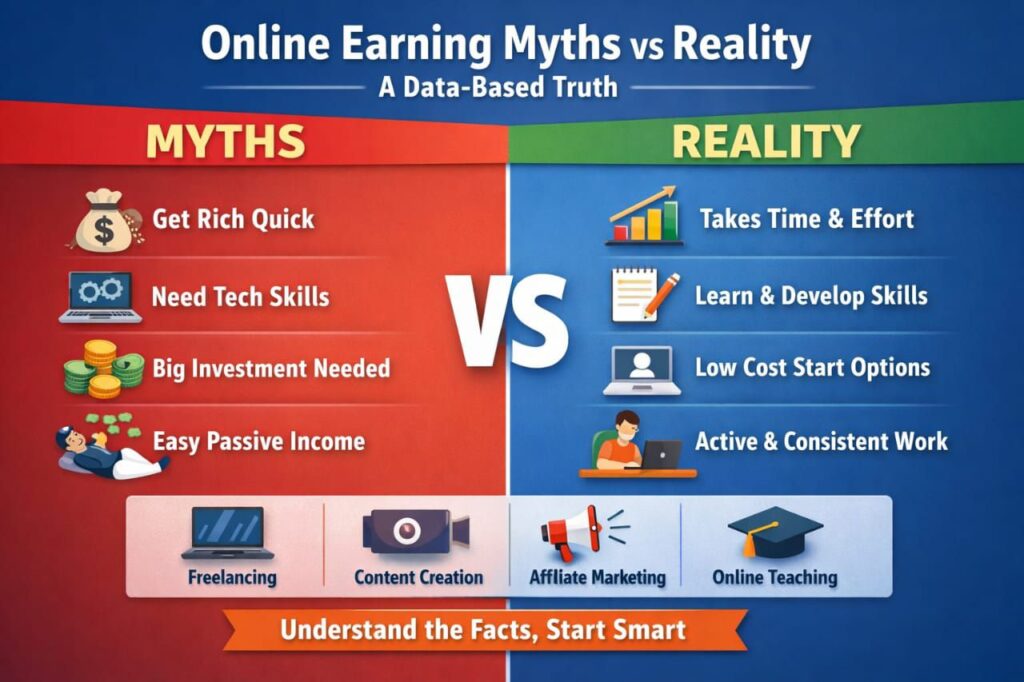
In recent years, online earning has become one of the most discussed topics worldwide. From social media ads to YouTube videos and blogs, people are constantly exposed to claims about making money online. While some of these claims are genuine, many are misleading or exaggerated. This confusion often creates unrealistic expectations, especially among beginners.
Understanding Online Earning
Online earning refers to income generated through internet-based activities such as freelancing, content creation, affiliate marketing, e-commerce, remote services, and online education. With global digitalization and remote work growth, online income has shifted from a side option to a legitimate source of earnings for millions of people.
However, misinformation has also grown alongside real opportunities, making it important to separate facts from false promises.
Myth 1: Online Earning Delivers Instant Results
The Claim
Many advertisements suggest that anyone can earn large amounts of money online within days or weeks, often without experience or effort.
The Reality
Sustainable online income does not happen overnight. Just like traditional careers or businesses, online earning requires learning relevant skills, building credibility, consistent effort, and time to grow.
Most successful online earners report gradual income growth over months or even years. Instant income promises are often linked to unreliable schemes or unrealistic marketing tactics rather than genuine opportunities.
Myth 2: Only Highly Technical People Can Earn Online
The Claim
A common belief is that online earning is only for programmers, developers, or technical experts.
The Reality
While technical skills can increase earning potential, they are not mandatory. Many people earn online through writing and content creation, digital marketing, virtual assistance, teaching and coaching, and customer support services.
Modern digital tools have simplified tasks, allowing individuals with basic computer knowledge to start earning. Skill development is important, but advanced technical expertise is not a requirement for entry.
Myth 3: Online Earning Requires Heavy Investment
The Claim
Some believe that starting online earning requires large upfront capital.
The Reality
Many online earning options have low or zero initial costs. Freelancers only need a device and internet access, bloggers can start with affordable hosting, and content creators often begin using smartphones.
While optional tools and learning resources may require investment, they are not mandatory. The most valuable investment in online earning is time, effort, and continuous learning, not money.
Myth 4: Online Earning Is Mostly Passive Income
The Claim
Online earning is often advertised as “passive income,” suggesting little or no effort is required.
The Reality
Most online income sources are active in nature, especially in the early stages. Even models often labeled as passive, such as affiliate marketing or ad-based content, require content creation, audience building, regular updates, and performance tracking.
Truly passive income usually comes after long-term effort and optimization, not at the beginning.
Myth 5: Only a Few Lucky People Succeed Online
The Claim
Many assume that only influencers or early adopters earn online, while others fail.
The Reality
The online economy includes millions of active earners worldwide. Success is not based on luck alone but depends on skill quality, market demand, consistency, and adaptability.
While income levels vary, many individuals use online work to supplement or stabilize their earnings rather than replace full-time jobs immediately.
Reality Check: How People Actually Earn Online
1. Freelancing
Freelancing allows individuals to offer services such as writing, graphic design, marketing, or programming. Income depends on skill level, experience, and client demand. Many freelancers start part-time and gradually increase earnings.
2. Content Creation
Bloggers, YouTubers, and social media creators earn through advertising, sponsorships, and partnerships. However, income growth usually takes time, and only consistent, high-quality content performs well.
3. Affiliate Marketing
Affiliate marketing involves promoting products and earning commissions. While it is a legitimate model, earnings depend on traffic quality, trust, and marketing strategy, not shortcuts.
4. Online Teaching & Courses
People with expertise in academics, skills, or professional fields earn by teaching online. This method requires credibility and structured content.
5. Remote & Digital Services
Virtual assistance, customer support, data management, and consulting services provide steady opportunities for online income with proper training.
What Data Indicates About Online Earning
Studies show that online work and freelancing are expanding globally due to flexible work preferences and digital platforms. However, income distribution is uneven: a large number earn modest amounts, a smaller percentage earn high incomes, and long-term consistency significantly improves results.
This pattern mirrors traditional job markets, proving that online earning follows economic realities rather than shortcuts.
Common Mistakes Beginners Should Avoid
Trusting unrealistic income promises, ignoring skill development, expecting fast success without effort, falling for unverified programs, and switching platforms too frequently.
Avoiding these mistakes helps build a realistic and sustainable approach.
Conclusion
Online earning is real, legitimate, and growing, but it is not effortless or guaranteed. Myths often create false hope, while reality demands learning, patience, and discipline. People who approach online earning as a long-term skill-based journey are far more likely to succeed.
By understanding the difference between myths and data-based reality, individuals can make informed decisions and avoid misleading claims, creating a safer and more productive online earning path.
Leave a Reply