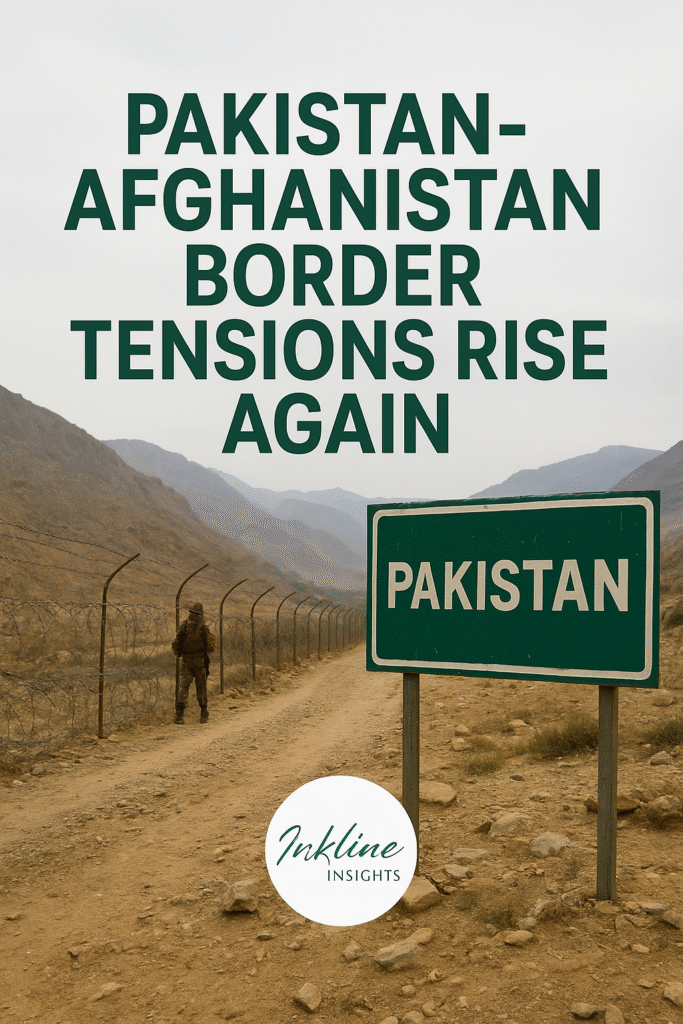
Rising tensions along the Pakistan-Afghanistan border have once again drawn international concern, as fresh clashes highlight the fragile security environment between the two neighbors. Over recent weeks, both sides have exchanged fire in key border districts, disrupting trade routes and leaving civilians in a state of uncertainty. The disputes often stem from disagreements over border demarcation, especially along the Durand Line, which Afghanistan has historically refused to formally recognize. This territorial contention continues to fuel mistrust, making even minor incidents escalate rapidly.
The situation has been compounded by shifting regional dynamics following the Taliban’s return to power in Afghanistan. Pakistan, which has long advocated for stability next door, accuses Afghan authorities of allowing militant groups to operate across the border and target Pakistani security forces. Kabul, on the other hand, claims that Pakistani forces violate Afghan territory through air and ground strikes aimed at countering insurgents. These mutual accusations deepen the divide, limiting opportunities for diplomatic engagement and confidence-building measures.
Cross-border trade and movement, vital for communities on both sides, are frequently disrupted whenever tensions flare. The closure of major crossing points like Torkham and Chaman has affected thousands of traders and travelers, creating economic strain and humanitarian challenges. Each shutdown serves as a reminder of how deeply intertwined both countries are, and how instability directly impacts everyday livelihoods. Local residents often bear the brunt of the conflict, with limited access to markets, medical facilities, and basic necessities.
Regional analysts warn that without sustained dialogue and a clear mechanism to manage border disputes, the friction between Pakistan and Afghanistan could intensify further. International stakeholders have urged both governments to prioritize de-escalation and cooperation, especially as the broader region faces security uncertainties. A stable border is not only essential for bilateral relations but also for the overall peace and economic integration of South and Central Asia.
Leave a Reply