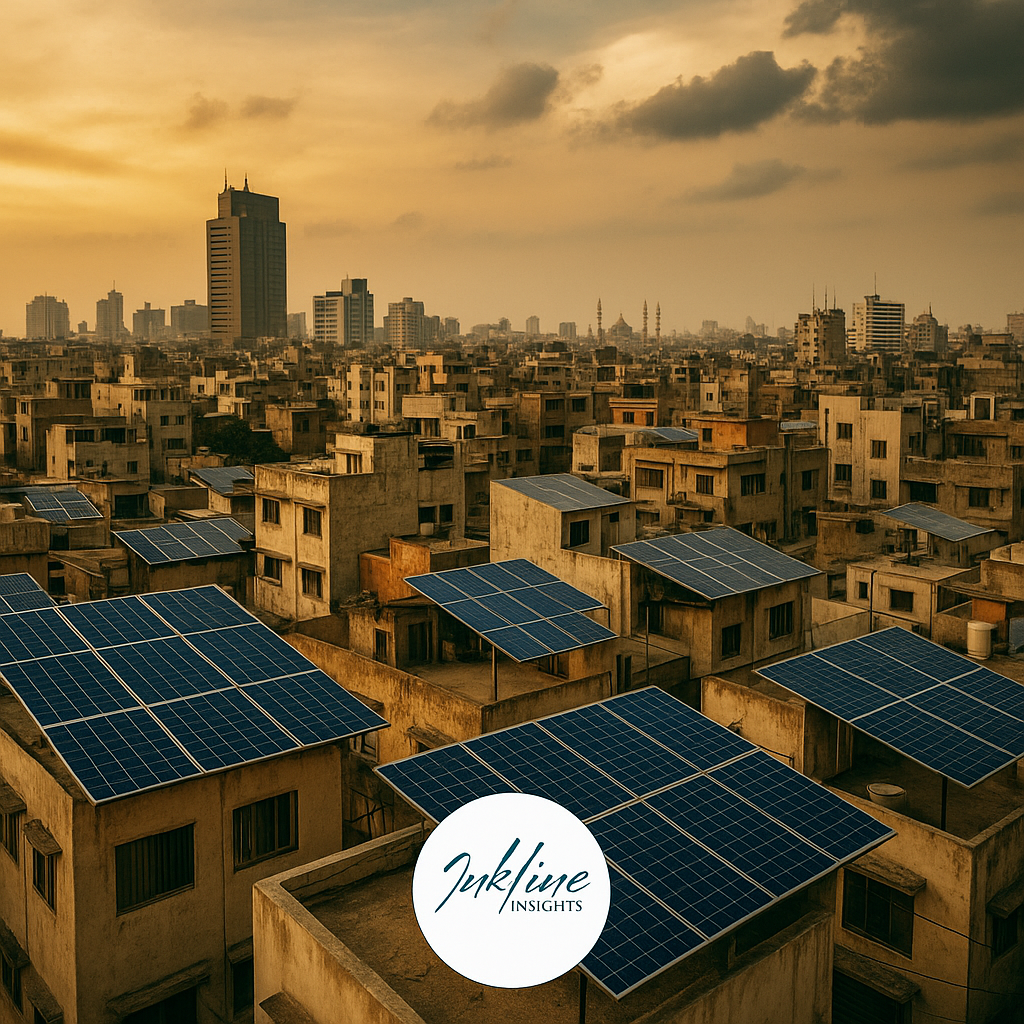
Pakistan’s rooftop solar power sector is expanding at an accelerated pace, and new projections suggest that by 2025, distributed rooftop generation may surpass demand from the national grid during daytime hours. This shift is driven primarily by the rapid adoption of net-metering systems, rising electricity tariffs, and the falling cost of photovoltaic technology. Households and businesses are increasingly viewing solar as a long-term, cost-effective alternative to grid electricity, especially as the country grapples with circular debt and inconsistent power supply. As a result, rooftop installations in major cities like Lahore, Karachi, and Islamabad have seen double-digit growth over the past year.
Energy experts note that this surge in consumer-level generation is reshaping Pakistan’s power landscape. With more users producing their own electricity, the traditional grid is witnessing a decline in peak daytime demand. In some provinces, distribution companies have already reported instances where rooftop solar output approaches or exceeds local consumption during sunny hours. This trend, while beneficial for reducing fossil fuel dependence, poses operational challenges for utilities that were not designed for high volumes of reverse power flow. Managing voltage stability and integrating fluctuating inputs into decades-old infrastructure requires urgent upgrades.
The government has acknowledged the shift, with regulators and the power ministry reviewing net-metering policies to maintain financial stability in the sector. Concerns have arisen that if rooftop solar continues expanding unchecked, state-owned utilities may struggle to recover costs tied to capacity payments and grid maintenance. Still, analysts argue that instead of restricting adoption, Pakistan should modernize its transmission system and incentivize storage technologies to absorb excess solar production. This approach would allow the country to harness clean energy more efficiently while easing pressure on fossil fuel imports.
If current growth rates continue, Pakistan could see rooftop solar emerge as a major contributor to national energy security by 2025 and beyond. A future where distributed solar generation consistently offsets daytime grid demand would mark a significant milestone in the country’s transition toward sustainable energy. It would also empower consumers, reduce carbon emissions, and push policymakers to speed up reforms in power planning. The challenge now lies in balancing this renewable energy boom with long-term grid reliability and economic stability.
Leave a Reply