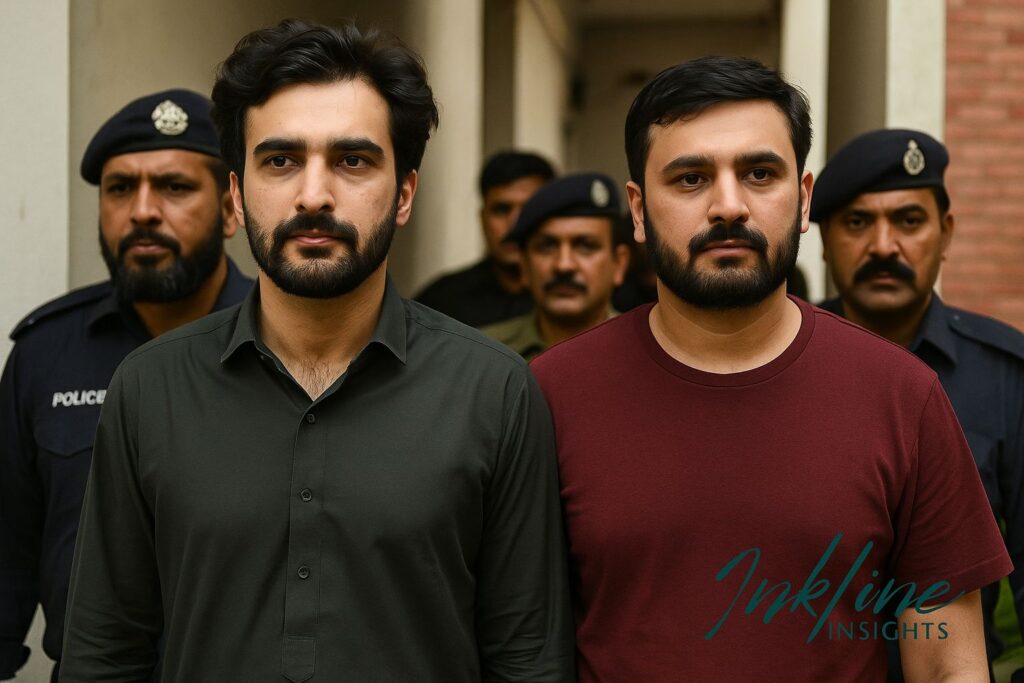
Authorities in Pakistan have tightened their focus on politically active digital networks after two social media volunteers associated with the Pakistan Tehreek-e-Insaf were placed on a 10-day physical remand, a decision issued by an anti-terrorism court following allegations that their online activity contributed to escalating tensions during recent demonstrations. Investigators stated that the pair were part of a group that regularly produced and circulated content during politically sensitive moments, often publishing videos, slogans, and commentary that rapidly spread through various platforms, including “X,” Facebook, and TikTok. Officials claimed that some of the material shared from these accounts coincided with moments of public unrest, prompting law enforcement agencies to examine whether the posts played a role in mobilizing crowds or intensifying confrontations between protestors and police. According to sources linked to the inquiry, digital forensic teams have begun retrieving posting histories, device logs, and communication patterns to determine whether the activists were acting independently or as part of a coordinated online effort aligned with broader political mobilization strategies.
The investigation has drawn attention to how swiftly political narratives can travel within Pakistan’s highly active social media ecosystem, especially during protests or court proceedings involving major political figures. Analysts monitoring the situation noted that several posts linked to the detained individuals reached thousands of users within minutes, with share rates that suggested algorithmic amplification or synchronized engagement from supporters. Authorities believe such rapid dissemination may have contributed to rising tensions on the ground, though digital rights advocates argue that virality alone cannot be treated as evidence of wrongdoing without assessing intent, context, and the authenticity of engagement metrics. The court’s decision to approve an extended remand reflects what officials describe as a need for comprehensive analysis of digital devices, including the recovery of deleted files, encrypted chats, and draft content that may reveal the internal strategy behind the online activity.
The detentions have reignited national debate surrounding the intersection of political expression, online activism, and law enforcement oversight. Supporters of the activists maintain that their posts represented routine political commentary rather than incitement, emphasizing that social media has long served as a platform for grassroots mobilization in Pakistan. Meanwhile, security agencies insist that recent unrest has demonstrated the potential of online narratives to escalate into real-world disruption, and they argue that understanding the digital dimensions of protests is essential for public safety. As the case progresses, it has underscored broader questions about how political communication is regulated in an era where a single post can shift public sentiment at unprecedented speed, and where the boundary between activism and agitation is becoming increasingly complex within the country’s evolving political landscape.
Leave a Reply