Introduction
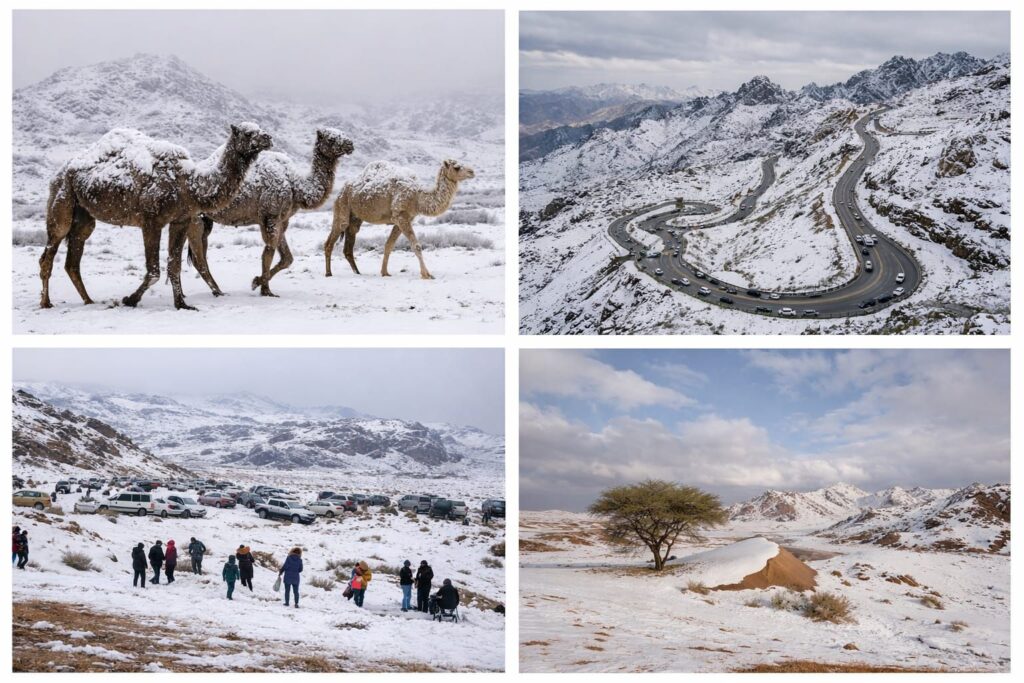
Saudi Arabia is globally recognized for its hot desert climate, vast sand dunes, and extremely high summer temperatures. However, in December 2025, the Kingdom experienced an unusual and widely discussed weather phenomenon — snowfall in several northern and central regions. Videos and images of snow-covered mountains and landscapes went viral on social media, leading to widespread claims that Saudi Arabia had seen snow “for the first time in 30 years.”
Which Areas of Saudi Arabia Experienced Snowfall?
The snowfall was mainly observed in northern and elevated regions of Saudi Arabia, where winter temperatures can occasionally drop below freezing.
Key Affected Regions
Tabuk Region:
Mountainous areas such as Jabal Al-Lawz experienced noticeable snowfall. This region lies at an elevation of over 2,500 meters, making it one of the coldest parts of the country during winter.
Hail Region:
Some higher-altitude areas in Hail reported snow and frost, an extremely rare occurrence for the region.
Northern Qassim and Northern Riyadh Areas:
While heavy snow accumulation was limited, cold conditions, frost, and occasional sleet were reported in elevated zones.
Most coastal and southern regions, including Jeddah, Makkah, and Jazan, remained warm and dry, showing how diverse Saudi Arabia’s climate can be.
Temperature Drop:
During this cold wave, temperatures dropped sharply across northern Saudi Arabia:
Mountain regions: Temperatures fell to around –3°C to –5°C during nighttime.
Northern cities: Recorded lows ranged between 1°C and 4°C.
Central regions: Experienced unusually cold nights, though mostly above freezing.
Western coastal cities: Continued to record temperatures near 28°C–32°C, highlighting extreme regional variation.
Such temperature drops are uncommon but not impossible during winter months when strong cold air systems move southward.
Is This Really the First Snowfall in 30 Years?
The statement that Saudi Arabia witnessed snow “for the first time in 30 years” is partly misleading.
Snowfall has occurred occasionally in northern Saudi Arabia, particularly in Tabuk, over the past few decades.
What makes the 2025 snowfall unique is its intensity, visibility, and geographic spread, especially in regions that rarely experience snow.
In some specific locations, this may indeed be the most significant snowfall in nearly three decades, which likely explains the widespread use of the “30 years” phrase.
In short, snow is not completely unprecedented in Saudi Arabia, but such widespread snowfall remains extremely rare.
Why Does Snow Occur in a Desert Country?
Saudi Arabia’s climate is mostly arid, but several factors can combine to produce snow:
- High Altitude
Mountainous regions naturally experience lower temperatures. When winter storms arrive, these areas are the most likely to receive snow. - Cold Polar Air Mass
In December 2025, a strong polar cold front moved from northern regions toward the Arabian Peninsula, causing temperatures to fall dramatically. - Moisture Availability
Snow forms when cold air meets sufficient atmospheric moisture. This rare combination occurred during the weather system that affected northern Saudi Arabia. - Winter Weather Systems
Between December and February, Mediterranean weather systems can occasionally influence Saudi Arabia, bringing rain, hail, or snow to elevated areas.
Public Response and Government
The snowfall generated significant public interest:
-Social media platforms were flooded with images and videos of snow-covered deserts and mountains.
-Many residents traveled to higher elevations to witness the rare event.
-Authorities issued weather advisories, warning about icy roads, reduced visibility, and extreme cold.
-Safety instructions were shared to protect livestock, travelers, and vulnerable populations from harsh conditions.
-Despite the excitement, officials emphasized caution due to unfamiliar driving conditions and freezing temperatures.
Historical Perspective:
While Saudi Arabia is among the hottest countries in the world, history shows that snow has occurred before:
Northern mountainous regions have recorded snow on rare occasions.
Frost and hail are more common than snow but still remain unusual.
Most of the country continues to experience hot and dry conditions year-round.
These events are typically short-lived and localized, which is why they attract major attention when they occur.
Does This Mean Climate Change?
One unusual snowfall does not automatically confirm climate change, but scientists acknowledge that global climate shifts can increase weather variability.
Climate change can lead to more frequent temperature extremes.
Unusual cold spells can occur alongside global warming due to disrupted atmospheric patterns.
Long-term data is required to establish any direct link between snowfall events and climate trends.
Experts recommend analyzing patterns over decades rather than drawing conclusions from a single event.
Conclusion
The snowfall in Saudi Arabia during December 2025 was a rare but real meteorological event, primarily affecting northern and high-altitude regions. While claims of it being the first snowfall in 30 years are partly exaggerated, the scale and visibility of the event were indeed unusual.
This phenomenon highlights the diverse climate of Saudi Arabia and demonstrates that even desert nations can experience extreme winter weather under the right conditions. The event was safely managed, widely documented, and scientifically explainable — making it an exceptional moment in the Kingdom’s recent weather history.
Leave a Reply