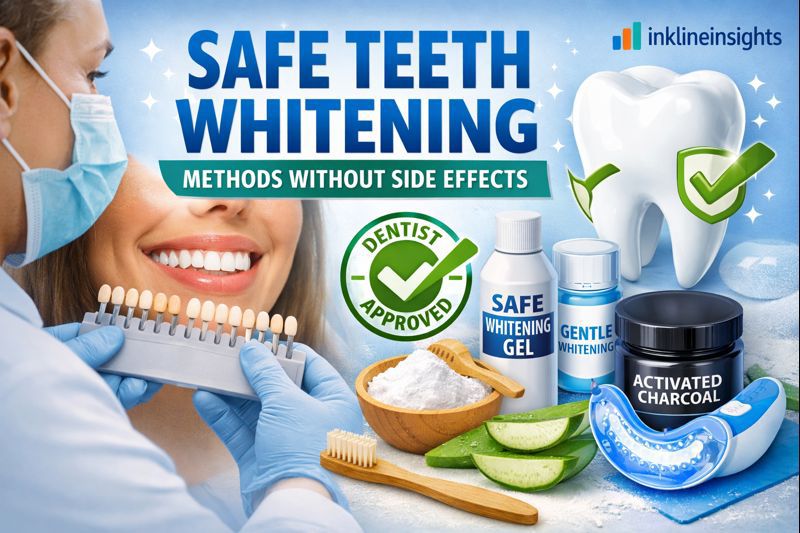
A bright, white smile is often associated with good health, confidence, and positive first impressions. According to dental surveys, nearly 80% of adults wish they had whiter teeth, and teeth whitening has become one of the most requested cosmetic dental procedures worldwide. However, many people hesitate due to concerns about tooth sensitivity, enamel damage, and side effects.
The good news is that safe, dentist-approved teeth whitening methods are available that deliver visible results without harmful effects, when used correctly. This article explains the safest teeth whitening options, backed by dental science, facts, and professional recommendations.
Understanding Why Teeth Become Yellow
Before choosing a whitening method, it’s important to understand the causes of tooth discoloration:
Food and beverages: Tea, coffee, cola, red wine, and spices
Smoking and tobacco use
Poor oral hygiene
Natural aging: Enamel thins over time, revealing yellow dentin
Certain medications (e.g., antibiotics in childhood)
Excess fluoride exposure
According to dental research, extrinsic stains (surface stains) are easier and safer to remove than intrinsic stains (internal discoloration).
What Dentists Consider a “Safe” Whitening Method
Dentists define safe teeth whitening as methods that:
-Do not damage tooth enamel
-Cause minimal or no sensitivity
-Are clinically tested
Follow approved concentration limits
Are used under professional guidance or instructions.
The American Dental Association (ADA) confirms that whitening products containing controlled levels of hydrogen peroxide or carbamide peroxide are safe when used properly.
Dentist-Approved Safe Teeth Whitening Methods
1. Professional In-Office Teeth Whitening
Safety Level: Very High (When Performed by a Dentist)
Professional whitening is the safest and fastest method. Dentists use carefully measured whitening agents and protective barriers to protect gums and enamel.
Key Facts:
Results in 1–2 sessions
Teeth can become 5–8 shades lighter
Uses medical-grade whitening gel
Gums and soft tissues are fully protected
Side Effects:
Mild, temporary sensitivity in some patients (usually disappears within 24–48 hours)
This method is ideal for people looking for instant results with minimal risk.
2. Dentist-Prescribed Take-Home Whitening Kits
Safety Level: High
These kits include custom-made trays and professional-grade whitening gel with safe concentrations.
Why Dentists Recommend Them:
Custom trays prevent gel leakage
Controlled dosage reduces sensitivity
Gradual whitening is gentler on teeth
Usage Duration:
1–2 weeks
30–60 minutes per day
Studies show that custom dentist trays reduce sensitivity by up to 40% compared to over-the-counter strips.
3. ADA-Approved Whitening Toothpaste
Safety Level: Very High
Whitening toothpaste does not bleach teeth but removes surface stains using mild abrasives and polishing agents.
Benefits:
Safe for daily use
No peroxide or harsh chemicals
Improves brightness gradually
Effectiveness:
Removes up to 90% of surface stains over time
Ideal for maintenance after professional whitening
This is one of the safest long-term options recommended by dentists.
4. Whitening Strips With Safe Concentration
Safety Level: Moderate to High
Over-the-counter whitening strips can be safe if they are ADA-approved and used exactly as directed.
Important Safety Tips:
Avoid overuse
Do not exceed recommended time
Stop if sensitivity occurs
Dentists recommend choosing strips with lower peroxide levels for beginners.
5. Natural Dentist-Approved Methods (Low Risk)
Some natural methods are considered safe when used correctly, though results are gradual.
Baking Soda (Occasional Use)
Mild abrasive
Helps remove surface stains
Should be used no more than once or twice a week
Oil Pulling
Coconut oil pulling may reduce plaque
Improves oral hygiene
Does not chemically whiten teeth
Dentists agree these methods are safe but not powerful whitening solutions.
Methods Dentists Warn Against
To avoid side effects, dentists strongly advise not using:
-Lemon or vinegar (acid erodes enamel)
-Charcoal powders (high abrasion)
-Hydrogen peroxide rinsing without supervision
-DIY whitening hacks from social media
According to dental associations, enamel damage is irreversible, making these methods risky.
How to Prevent Sensitivity During Whitening
To ensure side-effect-free whitening:
-Use desensitizing toothpaste
-Avoid extremely hot or cold foods
-Follow recommended whitening duration
-Maintain proper oral hygiene
-Consult a dentist before starting
Research shows that 90% of whitening sensitivity cases are due to overuse or misuse, not the products themselves.
How Long Do Whitening Results Last?
With proper care, safe whitening results can last:
-6 months to 2 years
-Longer with regular brushing and stain control
-Reduced staining habits (less tea, coffee, smoking)
Maintenance toothpaste and good oral hygiene play a major role in long-term results.
Conclusion:What Is the Safest Teeth Whitening Method?
Dentist-approved professional whitening and custom take-home kits are considered the safest and most effective methods with minimal side effects. For daily care, ADA-approved whitening toothpaste is the safest option.
The key to side-effect-free whitening is moderation, proper guidance, and enamel protection.
Key Takeaway
A white smile should never come at the cost of dental health. Always choose scientifically backed, dentist-approved whitening methods, and avoid shortcuts that promise instant results but risk permanent damage.
Leave a Reply