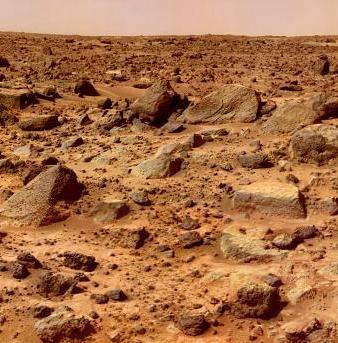
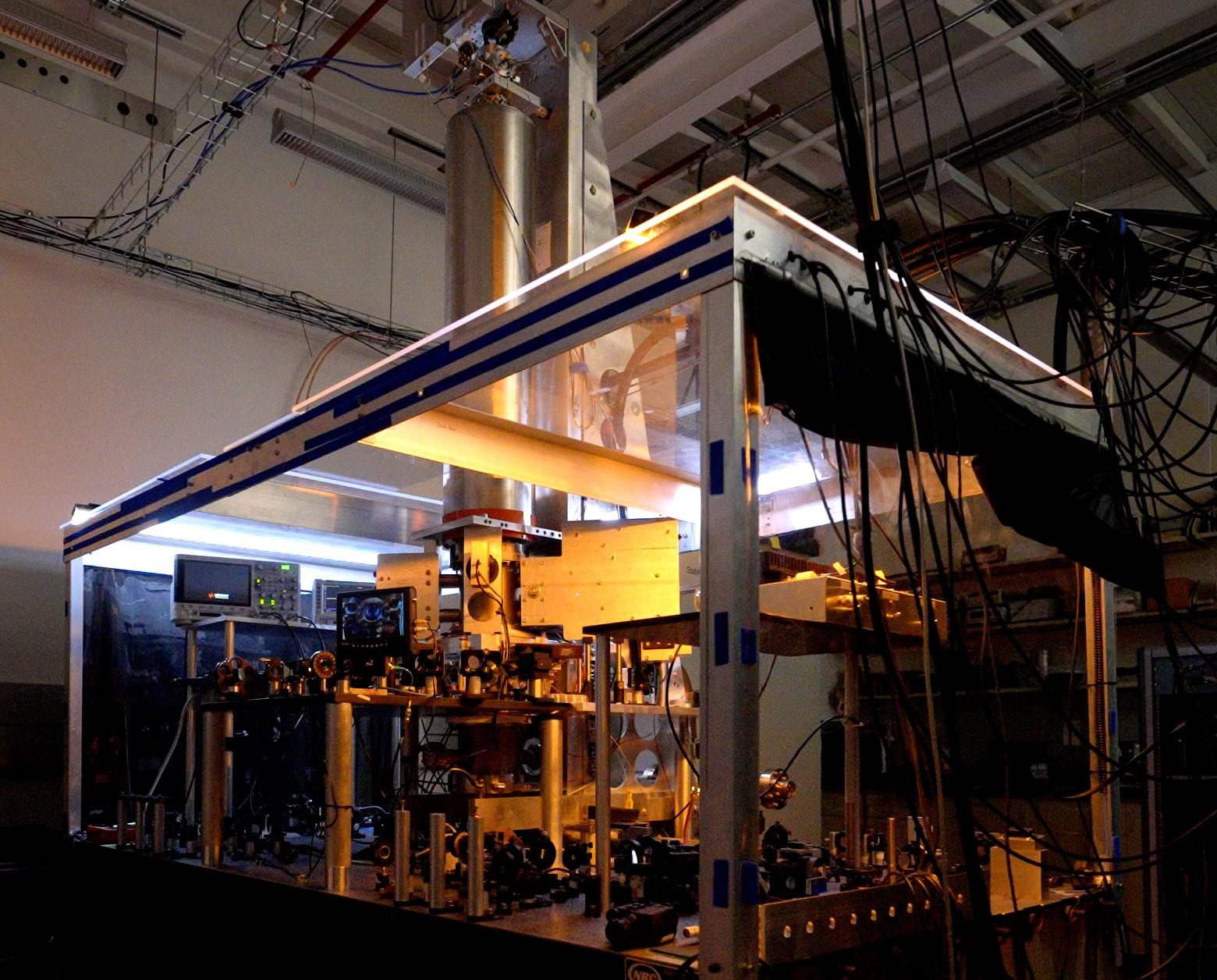
Scientists have officially confirmed something that once lived only in theoretical physics textbooks: time passes differently on Mars than it does on Earth. According to new findings released by the National Institute of Standards and Technology (NIST), clocks on Mars tick slightly faster than clocks on Earth — by mere microseconds, but with consequences that could reshape the future of space travel, navigation, and interplanetary communication.
This breakthrough is not just a validation of Albert Einstein’s theory of relativity. It is a practical, measurable phenomenon that engineers must now account for as humanity prepares for long-term missions — and possibly permanent settlements — on the Mars.
Why Time Moves Differently on Mars
Einstein’s theory of relativity tells us that time is not universal. Instead, it changes depending on gravity and speed. The stronger the gravity, the slower time flows.
Earth’s stronger gravitational pull slightly slows down time compared to Mars, which is smaller and less massive. As a result:
- Clocks on Mars run faster than clocks on Earth
- The difference is measured in microseconds
- The time gap changes throughout the Martian year
While this difference is imperceptible to humans, it is critically important for precision technology.
How NIST Measured Martian Time
Using ultra-precise atomic clock modeling, NIST scientists calculated how time would behave on Mars compared to Earth. Their research factored in:
- Mars’ weaker gravity
- Its elliptical orbit around the Sun
- Variations in speed during the Martian year
The results showed that Martian clocks not only tick faster, but also fluctuate slightly depending on where Mars is in its orbit.
This is the most accurate measurement ever made of interplanetary time differences.
Why Microseconds Matter in Space
A few microseconds may sound insignificant, but in space exploration, tiny timing errors can cause massive problems.
Here’s why this discovery matters:
🚀 Space Navigation
Spacecraft rely on extremely accurate timing to calculate their position. Even microsecond errors can lead to navigation drift of several kilometers over long distances.
📡 Mars Communications
Signals traveling between Earth and Mars already take minutes. Without synchronized clocks, data packets could arrive out of order or lose accuracy.
🌐 A Solar-System Internet
Scientists are actively planning an interplanetary communication network. Just like GPS on Earth requires relativistic corrections, a Mars-based internet will require its own time standard.
Preparing for Humans on Mars
As space agencies plan crewed missions and future colonies, Martian timekeeping will become unavoidable.
Future astronauts may need:
- Mars-adjusted atomic clocks
- Time-synchronized navigation systems
- New standards for interplanetary coordination
In other words, Mars may eventually need its own official time system — similar to how Earth uses time zones, but on a planetary scale.
Einstein Was Right — Again
This discovery is another real-world confirmation of Einstein’s work, over a century after it was first proposed. Just as relativity is essential for GPS satellites orbiting Earth, it is now clear that relativity will be essential for life beyond Earth.
What once seemed like abstract physics is now a daily engineering requirement for space exploration.
A Small Time Gap With Huge Consequences
The fact that time moves faster on Mars may seem like a scientific curiosity, but it represents something much bigger:
- Humanity is transitioning from planetary science to interplanetary civilization
- Precision physics is becoming mission-critical beyond Earth
- The universe does not run on one clock — and never has
As we reach farther into the solar system, even time itself must be recalibrated.
Mars isn’t just another planet. It’s another clock.
Leave a Reply