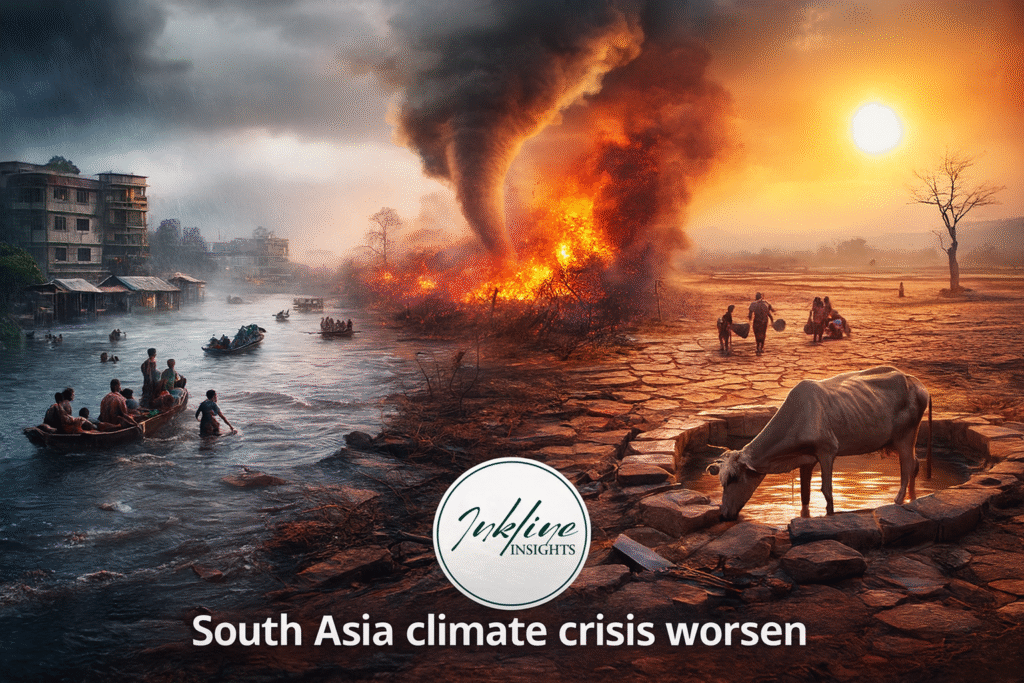
South Asia’s climate crisis is worsening rapidly in 2025, with floods, water shortages, and extreme weather events becoming more frequent and more destructive. Countries like Pakistan, India, Bangladesh, Nepal, and Sri Lanka are experiencing record-breaking heatwaves and unpredictable monsoon patterns that disrupt agriculture and threaten millions of livelihoods. Scientists warn that rising temperatures in the Indian Ocean are amplifying cyclones and altering rainfall cycles, leaving densely populated regions increasingly vulnerable. The combination of rapid urbanization and weak climate infrastructure further intensifies the impact on local communities.
Major river systems such as the Indus, Ganges, and Brahmaputra are at the center of growing water stress. Glacial melt in the Himalayas, driven by higher temperatures, is initially causing flash floods but is also expected to reduce long-term water availability for hundreds of millions of people. Rural areas dependent on agriculture are witnessing crop losses due to erratic rains and prolonged droughts, driving food insecurity and forcing migration to already overburdened cities. Governments across the region are under mounting pressure to strengthen water management and invest in climate-resilient technologies to prevent further economic damage.
Extreme flooding remains one of the region’s most persistent threats. Seasonal monsoons that used to be predictable now bring sudden cloudbursts and urban flooding, submerging infrastructure and displacing millions. Bangladesh and Pakistan, in particular, have seen entire districts inundated, with experts attributing much of the destruction to poor drainage systems and unchecked development in flood-prone zones. The financial cost of climate-driven disasters is rising sharply, stretching national budgets and slowing overall economic growth.
Climate experts warn that without coordinated regional action, South Asia could face even more severe consequences in the coming decade. Cross-border cooperation on river systems, renewable energy expansion, and early warning systems is becoming essential as climate patterns grow more volatile. While several nations have initiated adaptation strategies, implementation remains slow compared to the scale of the threat. The worsening climate crisis not only jeopardizes human security but also poses long-term risks to regional stability and development.
Leave a Reply