

Perspectives from Religion, Philosophy, and Science
The question “When will the world end?” is one of the oldest and most universal questions humanity has ever asked. Across civilizations, cultures, and eras, people have looked to the skies, sacred texts, and later to scientific equations in search of an answer. Sometimes the question arises from fear—of death, chaos, or punishment. At other times, it emerges from curiosity, wonder, or a desire for meaning in an impermanent universe.
Importantly, the idea of “the end of the world” does not mean the same thing everywhere. In some traditions, it is a moral reckoning. In others, it is a cosmic reset or a transformation rather than annihilation. In science, it is not a prophecy at all, but a projection based on physical laws.
This article offers a comprehensive, balanced exploration of how different religions and modern science understand the end of the world. Rather than predicting a date, it aims to explain why humans think about endings at all—and what those endings truly signify.
1. The Concept of the “End” Across Human Thought
Before examining specific traditions, it is essential to clarify what “end of the world” actually means.
- Literal destruction of Earth or the universe
- Moral or spiritual judgment of humanity
- Collapse of civilization, not the planet
- Transformation or renewal into a new age
- End of time itself
Many religious traditions emphasize cycles, not finality. Science, meanwhile, speaks of vast timescales where “end” means entropy, heat death, or cosmic decay rather than divine judgment.
Understanding this distinction prevents confusion when comparing religion and science.
2. The End of the World in Major Religious Traditions
2.1 Christianity: Judgment Day and the Second Coming
In Christianity, the end of the world is closely tied to eschatology—the study of last things. The primary sources are the Bible, particularly the Book of Revelation.
Core Beliefs
- Jesus Christ will return (the Second Coming)
- The dead will be resurrected
- A Final Judgment will occur
- Evil will be defeated
- A new heaven and new earth will be established
The Book of Revelation uses symbolic language: beasts, seals, trumpets, and cosmic disasters. Many theologians emphasize that these symbols are not literal predictions, but moral and spiritual warnings.
“But about that day or hour no one knows…” — Matthew 24:36
Christian theology explicitly rejects date-setting. Historically, every attempt to predict the end has failed, reinforcing the belief that the timing is known only to God.
2.2 Islam: The Day of Judgment (Yawm al-Qiyāmah)
In Islam, the end of the world is a central and clearly articulated belief. It is described in the Qur’an and Hadith literature.
Key Events
- Major and minor signs precede the end
- Moral decay and injustice increase
- The appearance of the Mahdi
- The return of Isa (Jesus)
- The defeat of Dajjal (false messiah)
- Resurrection of all humans
- Final judgment by Allah
Unlike apocalyptic panic, Islamic teaching frames the end as a moral accountability process. The universe ends because its purpose—testing humanity—has been fulfilled.
No exact time is given. Even the Prophet Muhammad stated that knowledge of the Hour belongs to Allah alone.
2.3 Judaism: The Messianic Age, Not Destruction
Judaism does not focus on the destruction of the world. Instead, it emphasizes tikkun olam—the repair of the world.
Jewish Eschatology Includes:
- The coming of the Messiah
- Restoration of justice and peace
- Resurrection of the dead (in some interpretations)
- Renewal of the world, not its end
The Hebrew Bible avoids detailed apocalyptic timelines. The focus remains ethical: how humans should live now, not when the world will end.
2.4 Hinduism: Cycles of Creation and Destruction
Hinduism presents one of the most sophisticated cosmic timelines in religious thought, detailed in texts like the Bhagavad Gita and the Puranas.
The Yuga Cycle
- Satya Yuga (Golden Age)
- Treta Yuga
- Dvapara Yuga
- Kali Yuga (current age)
Each cycle ends with pralaya—dissolution—after which creation begins again.
Time spans are enormous:
- One full cycle (Mahayuga): ~4.32 million years
- One day of Brahma: ~4.32 billion years
The world does not “end” permanently; it transforms and restarts. This aligns surprisingly well with modern cosmological models of cycles and long timescales.
2.5 Buddhism: Impermanence, Not Apocalypse
Buddhism does not teach a dramatic end of the world. Instead, it emphasizes anicca—impermanence.
Core View
- All compounded things decay
- Worlds arise and dissolve naturally
- No eternal beginning or final end
- Liberation comes from enlightenment, not survival
In some Buddhist cosmologies, universes expand and contract over vast eons, but these events are morally neutral, not punishments or judgments.
2.6 Indigenous and Ancient Traditions
Many Indigenous cultures describe world-ending events such as floods, fires, or darkness—not as final destruction, but as resets.
Examples include:
- Mayan calendar cycles
- Hopi prophecies of world ages
- Norse Ragnarök (destruction followed by rebirth)
These stories emphasize renewal after collapse, reflecting humanity’s lived experience with natural disasters and social upheaval.
3. The End of the World According to Science

Science approaches the end of the world not through prophecy, but through observation, mathematics, and physical laws. Importantly, science does not predict a sudden, moral apocalypse.
3.1 The End of Earth (Not the Universe)
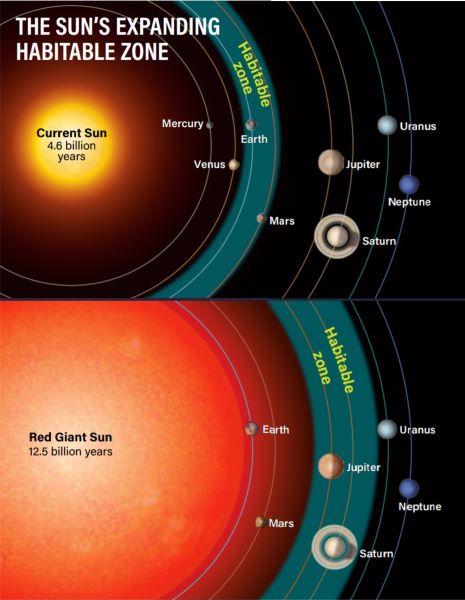
The Sun’s Death
- In ~5 billion years, the Sun becomes a red giant
- Earth’s oceans evaporate
- The planet becomes uninhabitable
This is not speculation—it is based on stellar physics.
Other Earth-Level Threats
- Asteroid impacts (rare but real)
- Supervolcanic eruptions
- Nuclear war (civilization-ending, not planetary)
- Climate change (human survival threat, not world-ending)
Science distinguishes between extinction events and planetary destruction.
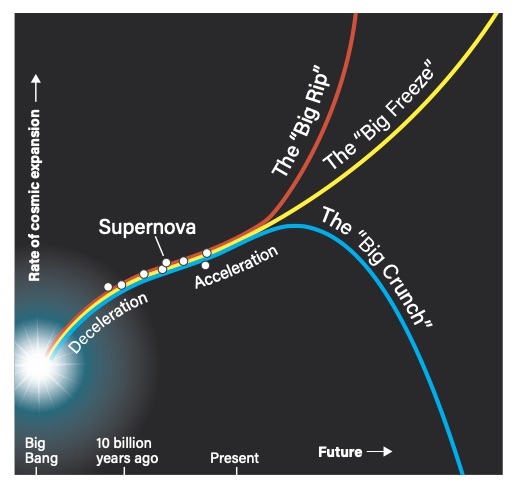
3.2 The End of the Universe
Heat Death (Most Accepted Theory)
- The universe expands forever
- Energy becomes evenly distributed
- No usable energy remains
- Time continues, but nothing happens
This would occur in trillions of years.
Big Crunch (Less Likely)
- Expansion reverses
- Universe collapses into itself
Big Rip (Speculative)
- Expansion accelerates infinitely
- Atoms themselves tear apart
All these scenarios occur on timescales so vast they defy human intuition.
3.3 What Science Cannot Answer
Science does not address:
- Moral meaning
- Purpose of existence
- Why there is something rather than nothing
This is where religion and philosophy remain relevant.
4. Why Humans Obsess Over the End
The idea of the world ending reflects:
- Fear of death
- Awareness of impermanence
- Desire for justice
- Need for narrative closure
Psychologically, endings give meaning to beginnings. Religions use end-time narratives to encourage ethical behavior. Science uses end models to understand physical limits.
5. Comparing Religion and Science
AspectReligionScienceTimelineUnknown or symbolicExtremely long, calculableCauseDivine willPhysical lawsPurposeMoral judgment or renewalNone (descriptive only)FinalityOften renewalLikely irreversible
Rather than contradicting each other, religion and science answer different questions.
6. So, When Is the World Going to End?
Short answer:
No religion gives a date.
Science predicts no sudden end anytime soon.
Long answer:
- Civilizations may collapse
- Species may go extinct
- The planet will eventually die
- The universe will eventually fade
But none of this implies an imminent, dramatic “doomsday.”
7. Conclusion: The End as a Mirror of Humanity
The question “When will the world end?” reveals more about us than about the universe.
Religion uses the end to teach responsibility, humility, and hope.
Science uses it to explore the limits of matter, energy, and time.
Both agree on one thing: nothing lasts forever.
The real question may not be when the world ends, but:
How should we live, knowing that it will?
Leave a Reply