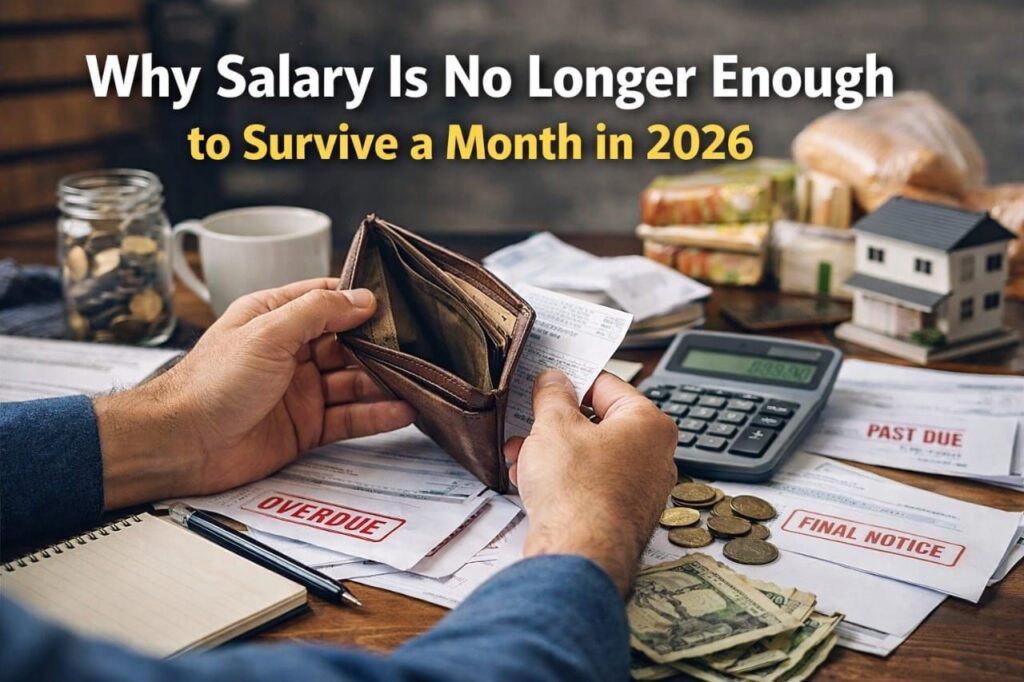
In 2026, a growing number of salaried individuals are finding it increasingly difficult to manage their monthly expenses. What was once considered a stable income is now often insufficient to cover basic living costs. From housing and food to utilities and transportation, everyday expenses are rising faster than salaries. This widening gap between income and expenses has turned monthly survival into a challenge for many working families.
This article explores the key reasons why salary alone is no longer enough to survive a full month in 2026, supported by facts, economic trends, and real-world observations.
Rising Inflation Continues to Reduce Purchasing Power
Inflation remains one of the biggest reasons salaries feel inadequate in 2026. While inflation rates have slowed in some regions, prices have not returned to earlier levels. Everyday goods such as groceries, fuel, electricity, and healthcare services still cost significantly more than they did just a few years ago.
When salaries increase at a slower pace than inflation, purchasing power declines. This means employees may earn more on paper, but their income buys fewer goods and services. Over time, this creates financial stress, even for people with full-time jobs and steady incomes.
Wages Are Not Keeping Up with Living Costs
Although many employers have announced salary increments, these increases are often minimal. In most cases, wage growth does not match the rising cost of living. This results in what economists call “real wage decline,” where income growth fails to compensate for higher expenses.
For middle-income earners, this gap is especially noticeable. Expenses such as rent, education, healthcare, and transportation consume a larger portion of income each month. As a result, workers are left with little or no room for savings or emergencies.
Housing Has Become the Biggest Financial Burden
Housing costs have increased dramatically in recent years. Rent prices in urban areas continue to rise due to high demand and limited supply. Similarly, home ownership has become less affordable because of higher property prices and increased interest rates.
For many households, rent alone takes up 40% to 60% of monthly income. When housing consumes such a large share of earnings, it leaves little money for food, utilities, education, and healthcare.
Food and Grocery Prices Are Increasing Steadily
Food inflation has directly impacted household budgets. Essential items such as wheat, rice, cooking oil, vegetables, and dairy products have seen consistent price increases. Even basic groceries now cost significantly more than before.
Families that once managed comfortably are now forced to reduce portion sizes, switch to cheaper alternatives, or cut back on nutritional quality. For lower- and middle-income earners, food expenses have become a major monthly concern.
Utilities and Transportation Add Extra Pressure
Electricity, gas, water, and internet bills have increased in many regions due to rising energy costs and infrastructure expenses. These bills are unavoidable and must be paid every month, regardless of income level.
Transportation costs have also increased. Fuel prices, vehicle maintenance, and public transport fares place additional strain on monthly budgets. For salaried workers who commute daily, transportation alone can consume a significant portion of income.
Debt Has Become a Survival Tool
As salaries fall short, many people rely on credit cards, personal loans, or informal borrowing to cover basic expenses. Debt is no longer used only for emergencies or investments—it has become a regular survival strategy.
This creates a dangerous cycle. Monthly income is spent repaying previous debt, leaving less money for current expenses. Over time, interest payments increase financial pressure and reduce long-term stability.
Savings Are Becoming Nearly Impossible
In earlier years, saving a portion of salary was considered a basic financial habit. In 2026, saving has become a luxury for many households. After covering rent, food, utilities, transportation, and debt payments, very little income remains.
Without savings, individuals are more vulnerable to emergencies such as medical expenses, job loss, or unexpected repairs. This lack of financial security increases stress and uncertainty among salaried workers.
Changing Job Market and Income Instability
The job market has also changed significantly. While employment opportunities exist, many jobs offer contract-based or performance-linked pay rather than long-term stability. Benefits such as health insurance, bonuses, and pensions are less common than before.
Additionally, automation and digital transformation have increased competition, limiting wage growth in many industries. This makes it harder for workers to negotiate better salaries, even as living costs rise.
Impact on Quality of Life
The financial imbalance has affected lifestyle and mental well-being. Many people delay major life decisions such as marriage, home ownership, or starting a family due to financial uncertainty. Leisure activities, travel, and personal development are often sacrificed to manage monthly expenses.
Financial stress also impacts mental health, productivity, and overall life satisfaction. Surviving paycheck to paycheck has become a common reality rather than an exception.
Possible Ways Forward
While the situation is challenging, certain steps can help reduce financial pressure: improved financial planning and budgeting, skill development to access higher-paying roles, exploring additional income sources, policy measures to align wages with inflation, and support for affordable housing and essential services.
Long-term solutions require combined efforts from individuals, employers, and policymakers.
Conclusion
In 2026, salary alone is no longer sufficient for many people to survive a full month. Rising inflation, increasing living costs, housing expenses, debt dependence, and slow wage growth have created a financial gap that affects millions of workers.
This issue highlights the need for better income structures, cost control measures, and financial awareness. Until salaries align with real living costs, surviving on a single income will remain a daily struggle for many households.
Leave a Reply