A Deep Dive Into Today’s Education System ✨👦👧
Education shapes the future of a nation — and in Pakistan, this conversation is more important than ever. With rapid changes in technology, global competitiveness, and workplace demands, parents and educators are asking:
“Is Pakistan’s current curriculum truly preparing our children for the future?” 🤔🇵🇰
Let’s explore the strengths 🌟, the gaps ⚠️, and the way forward 🚀.
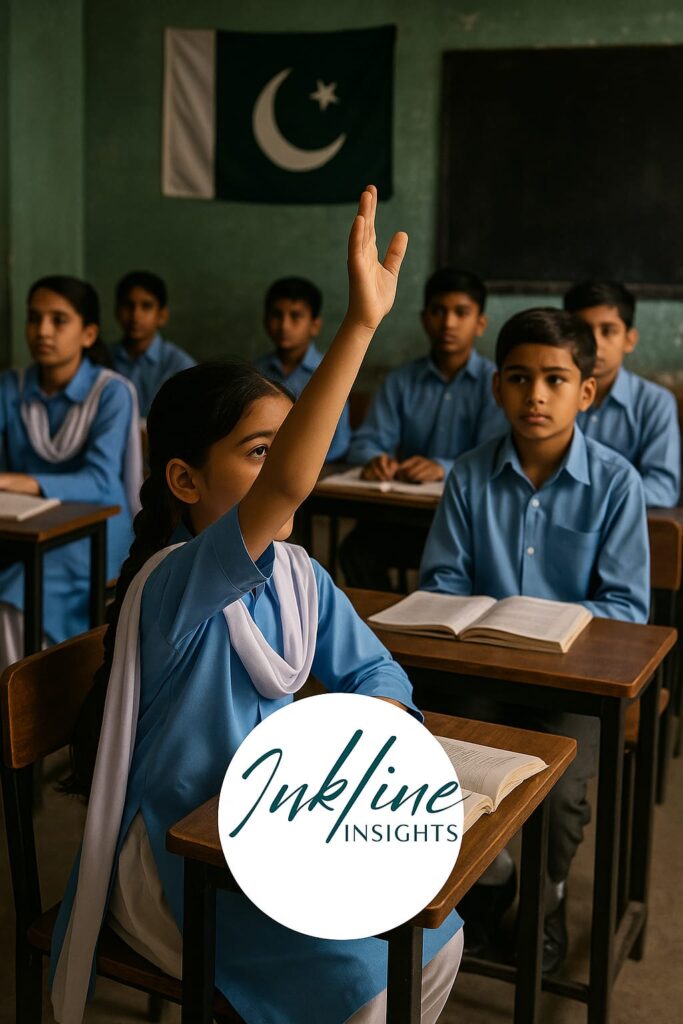
🌟 The Strengths of Pakistan’s Current Curriculum
Despite its shortcomings, Pakistan’s curriculum does offer several positive aspects:
📘 1. Strong Foundation in Core Subjects
Students gain solid grounding in Math, Science, Languages, and Islamiyat, forming the academic backbone they need later.
📚 2. Emphasis on Cultural Values
The curriculum promotes important values such as respect, ethics, heritage, and identity — essential for social and moral development. 🕌💚
🧪 3. Gradual Shift Toward STEM
Schools are slowly integrating STEM subjects, science labs, and practical activities that help students think critically. 🔬⚙️
⚠️ But… Are We Preparing Them for the Real Future?
While progress exists, major gaps are still holding students back from becoming globally competitive. 👇
💭 1. Rote Learning Still Dominates
Many classrooms continue to rely on memorization instead of understanding.
This limits creativity, problem-solving, and independent thinking — skills needed in the real world. 🧠💡
🖥️ 2. Lack of Digital Skills
In a world where coding, AI, and tech literacy are essential, digital education in Pakistan remains limited.
Most students aren’t exposed to:
- Coding 💻
- Robotics 🤖
- Digital research 🔍
- Online collaboration tools 🧩
This creates a huge skills gap.
🌍 3. Global Competence Is Missing
Future jobs demand communication skills, emotional intelligence, teamwork, and global awareness — areas where the curriculum often falls short. 🌐🤝
🎨 4. Creativity Is Undervalued
Art, music, design, drama, and creative writing are either ignored or underfunded.
A future-ready child must be encouraged to imagine, innovate, and experiment. 🎨✨
👩🏫 5. Teacher Training Needs Improvement
Even the best curriculum fails without effective teachers.
Many educators lack training in:
- Modern teaching methods
- Technology use
- Student-centered learning
- Classroom engagement strategies
This weakens learning outcomes.
🚀 What a Future-Ready Pakistani Curriculum Should Look Like
To truly prepare small minds for tomorrow, Pakistan needs a curriculum that:
🌐 1. Blends Core Subjects with Digital Literacy
Coding, digital safety, financial literacy, and tech tools should be introduced early.
Kids today are growing up in a digital world — education should reflect that. 💻✨
💡 2. Encourages Problem-Solving & Critical Thinking
Instead of memorization, students should be taught:
- How to ask questions ❓
- How to analyze situations 🔍
- How to think creatively 🎯
🎭 3. Prioritizes Creativity & Expression
A balanced curriculum includes arts, debates, storytelling, and design thinking. 🎭🖌️
👥 4. Teaches Communication & Leadership
Group projects, presentations, and collaborative activities build confidence and global skills. 🗣️🤝
🧑🏫 5. Supports Teachers with Modern Training
Empowered teachers create empowered students.
Professional training should be continuous, updated, and technology-driven. 📚👩🏫
🌈 So… Are We Ready for the Future?
Not fully — but we can be.
Pakistan’s education system is evolving, but to unlock the potential of millions of young minds, the curriculum needs modernization, creativity, digital skills, and real-life relevance. 🌟🇵🇰
A future-ready nation begins with future-ready classrooms.
✨ Final Thoughts
The children of today are the innovators of tomorrow — scientists, entrepreneurs, leaders, and creators.
If Pakistan strengthens its curriculum with modern skills, creativity, and critical thinking, our young minds will not only survive the future — they will shape it. 🚀🌍💚


Leave a Reply to Sadia Cancel reply